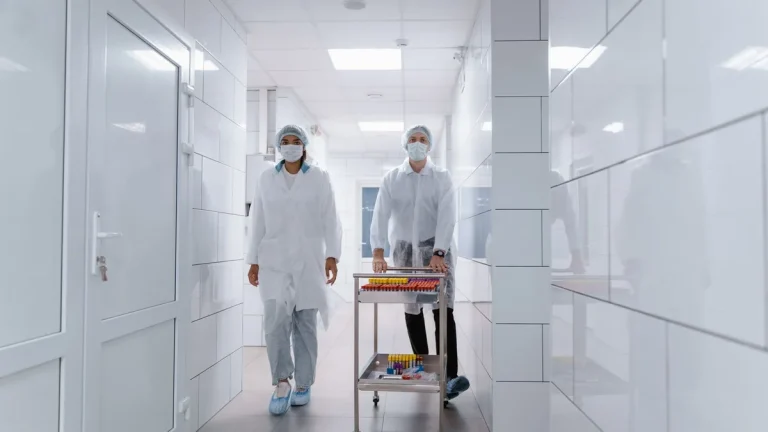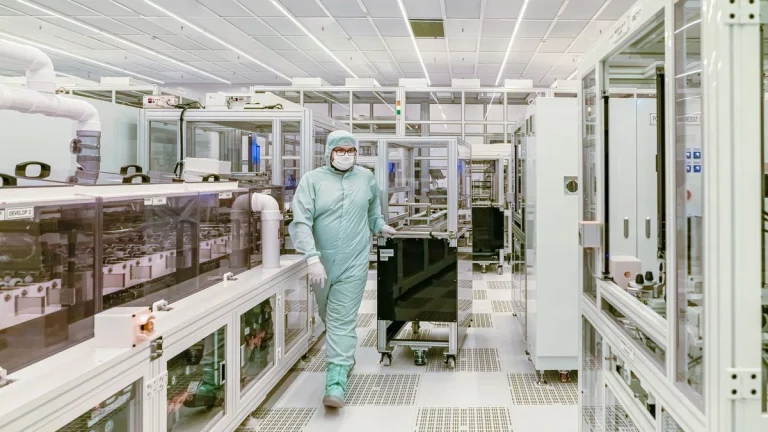
Maintaining biological sterility, environmental containment, and strict particulate control in modern cGMP cleanroom facilities requires seamless architectural coordination between HVAC air balancing, personnel movement, and physical barrier automation. In high-throughput pharmaceutical manufacturing, semiconductor packaging, and hospital surgical suites, manual door operation introduces critical operational bottlenecks. Manually operated doors increase contact bioburden transfer, cause prolonged doorway open durations that collapse differential air pressure cascades, and impede cart transfers.
Table of Contents
- Touch-Free Operation and Contamination Control
- How Automatic Doors Protect Cleanroom Air Pressure
- Brushless DC Motors and Motion Control
- Wave Sensors vs Radar: Choosing the Right Trigger
- Interlocking Doors in Gowning Airlocks
- Emergency Egress and Fire Alarm Integration
- Automatic vs Manual Doors: Cost and Energy Savings
- Upgrade Your Facility with Automated Cleanroom Door Systems
Based on our engineering team’s experience designing and manufacturing custom automated cGMP cleanroom door assemblies for Grade A sterile processing suites, ISO Class 4 microelectronics fabrication bays, and BSL-3 biocontainment facilities, automated door openers deliver measurable operational returns. We compiled this comprehensive engineering guide to analyze why cleanroom doors with automatic openers dramatically improve facility efficiency, energy performance, and contamination control.
Automation earns its place on traffic, not fashion; the manual or automatic cleanroom door decision guide puts upfront cost, hygiene, maintenance and compliance side by side so each opening gets the right answer.
Automation earns its place on traffic, not fashion; the manual or automatic cleanroom door decision guide puts upfront cost, hygiene, maintenance and compliance side by side so each opening gets the right answer.
Touch-Free Operation and Contamination Control
Physical human surface contact represents the primary mechanical vector for microbial and particulate transfer across cleanroom boundaries.
“According to cleanroom microbiology research published by the ISPE, manual door handles and push plates harbor over 80% of surface contact bioburden within personnel transfer airlocks, making touchless door activation a vital cGMP risk mitigation strategy.”
Microbial Transfer Risks from Manual Cleanroom Door Handles
Modern cleanroom automation interfaces directly with Automated Guided Vehicles (AGVs) and Autonomous Mobile Robots (AMRs) using optical infrared beaconing or encrypted 5.8 GHz wireless handshakes. When an approaching AGV is 3.0 meters from the doorway, the automated operator initiates early opening, eliminating material transit stoppages while logging real-time fleet passage telemetry.
- Wireless Handshake: High-reliability optical or RF interface triggering opening at 3.0m vehicle approach.
- Vehicle Safety Interlock: Hold-open command remains energized until the AGV rear safety sensor clears the threshold.
- Traffic Priority Override: Programmable priority logic granting right-of-way to automated transport vehicles.
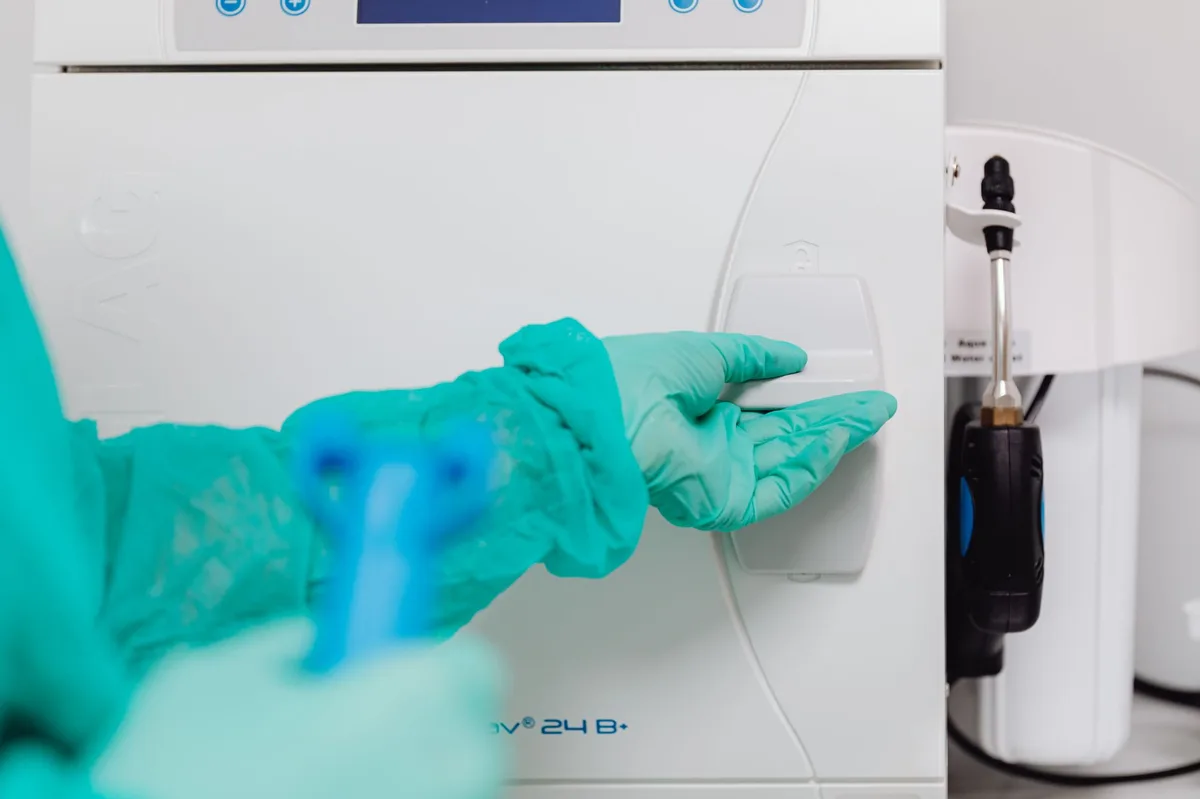
Cleanroom technicians frequently handle sterile product containers, active pharmaceutical ingredients (APIs), or sensitive silicon wafers. Manually pulling door levers or pushing mechanical plates transfers glove residues and skin flakes to hardware surfaces. Subsequent personnel touch these contaminated contact points, spreading viable micro-organisms throughout the controlled envelope.
- Touchless Activation: Optical proximity wave sensors eliminate physical hand contact completely.
- Glove Integrity Protection: Prevents mechanical snagging or tearing of sterile latex and nitrile gloves on lever latches.
- Sanitizer Residue Reduction: Eliminates corrosive disinfectant buildup around exposed mechanical handle escutcheons.
- Electrochemical Durability: Sensor faceplates withstand over 10,000 cyclic wipe-downs with harsh quaternary ammonium and chlorine dioxide solutions.
Hands-Free Hygiene Compliance in cGMP Grade A and B Suites
In Grade A and B aseptic compounding suites, hands-free automation is essential for maintaining zero-colony-forming-unit (CFU) environmental monitoring thresholds. Hands-free automated operation ensures cleanroom operators transit smoothly between gowning stages without breaking aseptic protocols.
How Automatic Doors Protect Cleanroom Air Pressure
Cleanrooms rely on 10 Pa to 50 Pa positive and negative pressure differentials to prevent unfiltered air ingress. Door transit duration directly impacts HVAC air balancing stability.
HVAC Pressure Alert: When personnel leave manual cleanroom doors unlatched or propped open for cart transit, differential air pressure drops instantly to zero, pulling unfiltered corridor air into clean zones and forcing HVAC makeup air handlers to consume up to 40% more energy.
Pressure Decay Physics: Comparing Manual vs. Automated Dwell Times
A standard manual cleanroom door opening cycle typically lasts 12 to 25 seconds as an operator opens the door, steps through with equipment, and turns around to pull it shut. High-speed automatic cleanroom operators complete the entire cycle—accelerating, holding, and closing—within 4 to 8 seconds, cutting the air exchange window by more than 60%.
Automated Hold-Open Timing and Rapid Soft-Close Profiles
State-of-the-art microprocessor-controlled cleanroom automatic operators feature programmable digital dwell timers adjustable from 1.0 to 30.0 seconds. High-speed motion curves open the door at velocities up to 1.0 m/s and execute gentle soft-stop braking curves that prevent air turbulence while ensuring full compression against perimeter silicone gaskets.
- Cycle Duration Optimization: Programmable 3-second hold-open timers for personnel transit and 8-second timers for material cart transfers.
- Laminar Flow Protection: Smooth S-curve acceleration prevents turbulent air eddies that disrupt unidirectional laminar flow hoods.
- HVAC Energy Savings: Minimizing conditioned air loss reduces annual chiller and blower electrical loads by thousands of kilowatt-hours.
Brushless DC Motors and Motion Control
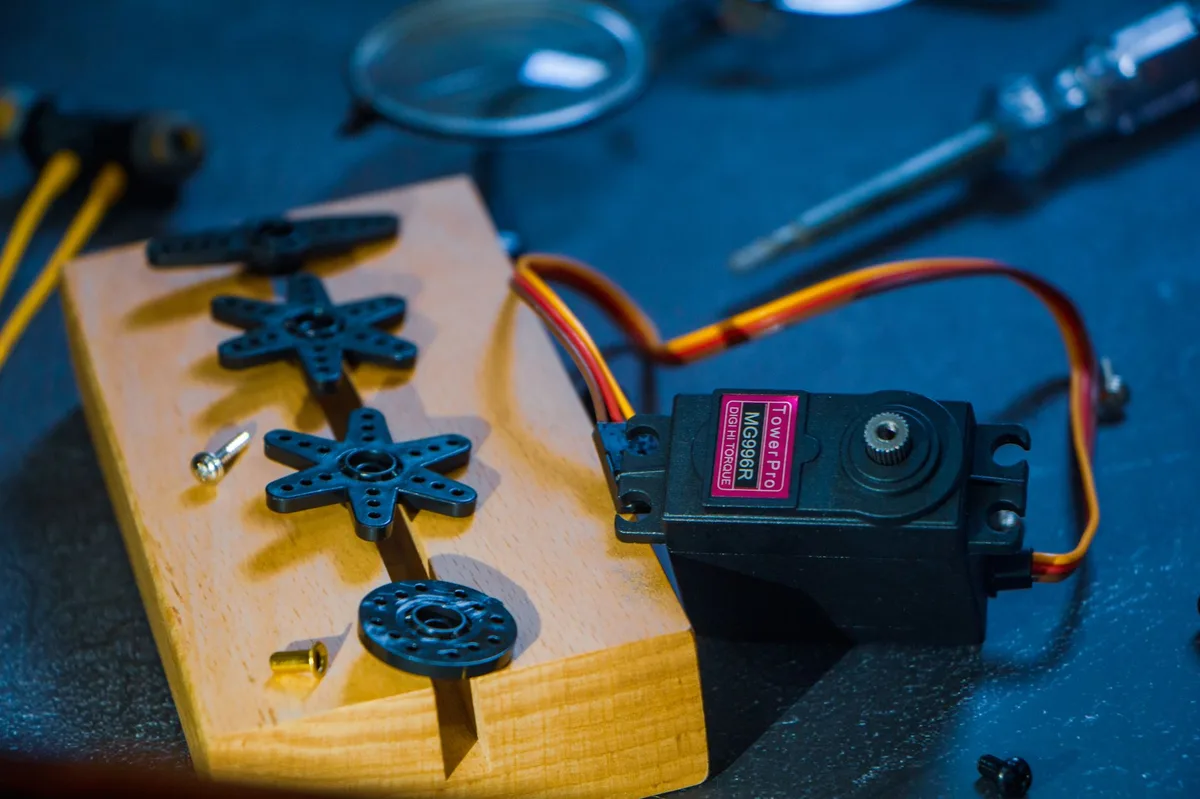
Cleanroom automation mechanisms must deliver whisper-quiet operation, non-particle shedding performance, and high reliability over millions of cycles.
Operator Mounting Tip: Specify fully concealed in-lintel or enclosed sloped stainless steel operator housings (IP54 / IP65 rated) to eliminate horizontal dust ledges and facilitate seamless biocide wipe-downs.
Concealed In-Lintel Operator Enclosures Eliminating Particle Traps
Cleanroom operator lintel profiles incorporate dedicated high-voltage and low-voltage isolation channels, separating 110V/230V mains power feeds from sensitive 24V DC sensor and Modbus communication lines to eliminate electromagnetic noise interference.
- EMC Shielding: Internal aluminum baffles providing >60 dB electromagnetic isolation.
- Modular Terminal Blocks: Pluggable screwless spring terminals for rapid electrical commissioning.
- Service Disconnect Switch: Concealed rotary power isolator facilitating safe operator maintenance.
- Microprocessor Diagnostic Port: Integrated USB/Bluetooth interface enabling wireless parameter calibration and firmware updates without opening sealed lintel panels.
Cleanroom-grade automated operators are housed in flush ceiling lintels or enclosed within 304/316L stainless steel headers with 30-degree sloped top profiles. This sanitary design eliminates flat horizontal surfaces where airborne dust can accumulate and allows direct liquid chemical cleaning.
Digital S-Curve Acceleration and Gentle Gasket Latching Mechanics
The microprocessor servo controller executes high-resolution trajectory algorithms (1,024 pulses per revolution encoder feedback), dynamically adjusting motor torque to compensate for negative or positive room pressure resistance, ensuring positive perimeter gasket latching without motor stalling.
Advanced brushless DC (BLDC) servo motors operate at ultra-low acoustic levels (<45 dB(A)) with high positioning precision:
- Brushless Motor Efficiency: Eliminates carbon brush friction dust, ensuring full compatibility with ISO Class 4 cleanrooms.
- Optical Rotary Encoders: Monitors door position with sub-millimeter precision, eliminating mechanical limit switches.
- Controlled Latching Torque: Delivers high final closing force to compress multi-blade silicone gaskets and automatic drop-down bottom seals without slamming.
Wave Sensors vs Radar: Choosing the Right Trigger
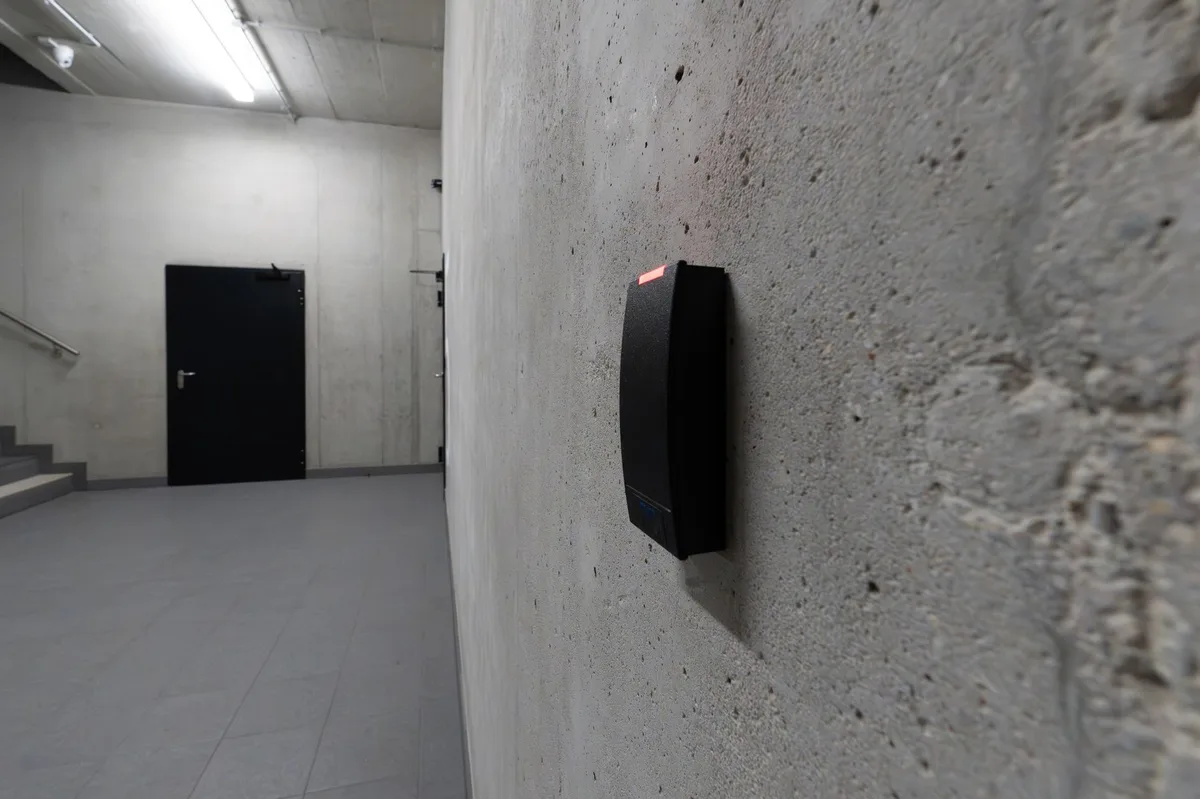
Carefully selecting and calibrating the appropriate touchless activation sensors prevents false actuations while ensuring effortless personnel passage.
Calibrating Optical Wave Detection Zones (50mm to 300mm)
Optical proximity sensors incorporate narrow-beam collimating lenses that restrict the detection field to an angle under 15 degrees, eliminating unintended door openings triggered by personnel walking past the door frame in adjacent cleanroom corridors.
- Narrow Field Angle: <15 degrees directional cone preventing accidental corridor actuations.
- Ambient Light Filtering: Optical notch filters blocking 50/60 Hz fluorescent and LED ambient flicker.
- Response Latency: Ultra-low activation response time (<50 milliseconds) for immediate opening.
Unlike standard commercial radar motion detectors that open doors whenever personnel walk past in adjacent corridors, cleanroom environments require intentional touchless activation:
- Sensor Mounting: Position the infrared proximity switch at 1,100 mm height adjacent to the door jamb for hand or elbow activation.
- Zone Calibration: Adjust the optical sensing field via internal dip switches to a narrow 100 mm to 200 mm cone.
- Interference Filtering: The sensor microprocessor modulates the infrared frequency to eliminate false triggers from shiny stainless steel wall reflections and fluorescent lighting.
- Visual Feedback Confirmation: Dual-color LED indicator rings glow blue in standby mode and illuminate green upon valid gesture command.
IP65 Washdown-Proof and VHP-Resistant Sensor Enclosures
Touchless sensor faceplates are fabricated from solid 316 stainless steel or chemical-grade polycarbonate sealed with silicone O-rings. The IP65-rated assemblies withstand daily sanitization with 70% isopropyl alcohol, peracetic acid, and cyclic Vaporized Hydrogen Peroxide (VHP) decontamination.
Interlocking Doors in Gowning Airlocks
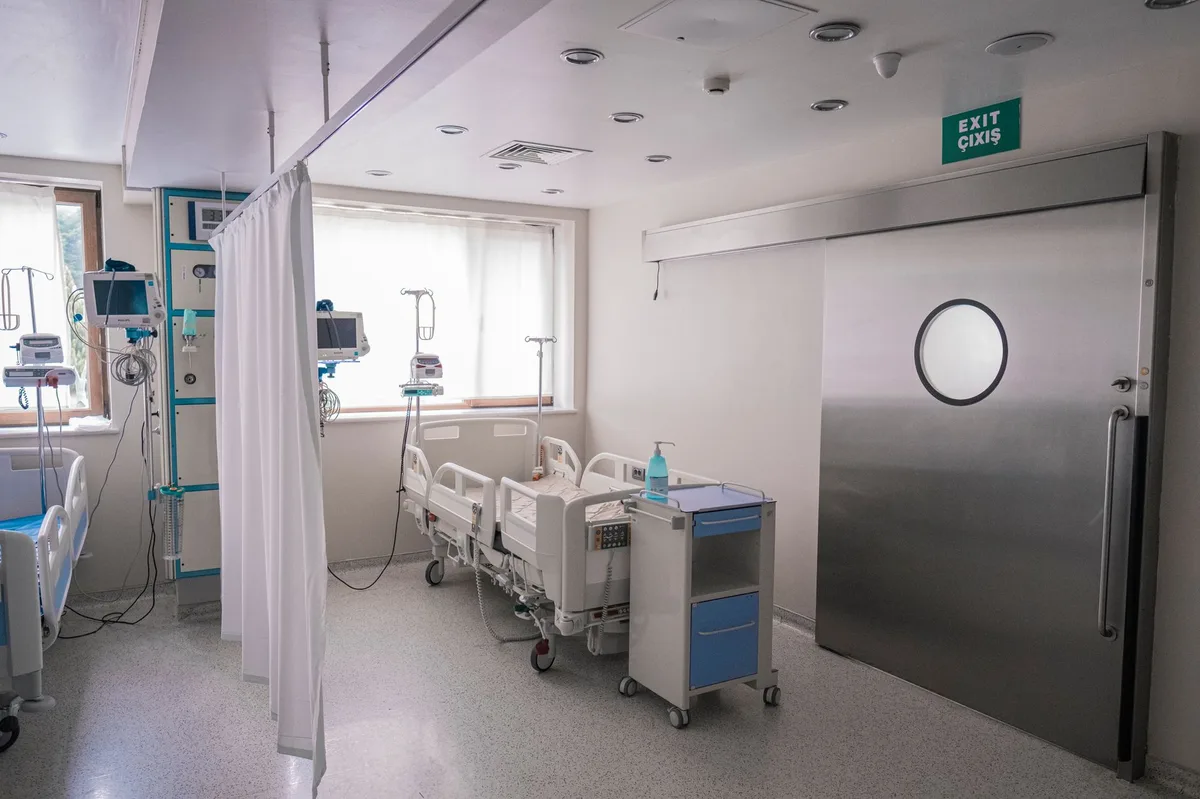
In multi-chamber personnel gowning airlocks (PAL) and material transfer airlocks (MAL), automatic door openers synchronize with electronic interlock controllers to enforce strict containment protocols.
Safety Egress Requirement: All automated cleanroom door operators and electromagnetic interlocks must be hardwired into the central fire alarm system. Upon alarm trigger, the controller must immediately cut power to magnetic locks and enable manual breakout egress.
Cascading Airlock Logic for Personnel and Material Transfer Portals
Integrated programmable logic controllers (PLCs) automate the airlock transit sequence without requiring manual operator intervention:
- Stage 1 (Entry Command): Operator activates the outer airlock wave switch. Door 1 automatically opens while Door 2 remains locked with a red LED status light.
- Stage 2 (Automated Dwell): Operator enters the airlock. Door 1 closes automatically and latches its concealed perimeter drop seal.
- Stage 3 (HEPA Purge Cycle): An automated timer initiates a 15-second air shower or HEPA purge sequence to strip particulates.
- Stage 4 (Exit Release): Upon purge completion, Door 2 status changes to green and opens touchlessly, granting access into the clean core.
HEPA Air Shower Dwell Timing and BMS Telemetry Feedback
Automatic operators communicate real-time status data—including cycle counts, open duration, and seal latching verification—directly to facility Building Management Systems (BMS) via Modbus RS485 or BACnet protocols, providing complete audit trail logging for regulatory inspections.
Emergency Egress and Fire Alarm Integration
Automated cleanroom doors must reconcile sterile containment automation with mandatory life safety and emergency evacuation standards.
EN 16005 and ANSI/BHMA A156.10 Power-Operated Pedestrian Door Standards
Before project dispatch, all automated cleanroom door operators undergo 1,000-cycle continuous burn-in testing and electrical insulation resistance testing (1,500V AC dielectric strength) to ensure flawless reliability prior to international site commissioning.
Cleanroom automatic doors comply with international safety standards governing kinetic energy limits, obstacle detection, and entrapment prevention. Monitored infrared safety presence curtains scan the entire door swing path, reversing motion instantly if an obstruction or cart is detected.
Fail-Safe Mechanical Spring Return and Monitored UPS Backups
Under ISO 3744 acoustic measurement standards, high-grade cleanroom automatic door operators maintain operational sound pressure levels strictly below 45 dB(A) during continuous cycling, preventing acoustic resonance in sensitive biopharmaceutical laboratories.
Under mains power failure conditions, automated cleanroom doors guarantee uninterrupted life safety:
- Integrated UPS Battery Backup: Provides up to 4 hours of continuous automated operation or drives doors to a fail-safe open/closed state.
- Mechanical Spring Breakout: Low-friction internal mechanical springs allow manual push-open breakout force under 65 N (15 lbf).
- Fire Alarm Power Drop: Immediate fail-safe magnetic release upon central building fire alarm activation under NFPA 101 and EN 13637.
Automatic vs Manual Doors: Cost and Energy Savings
The following engineering matrix compares operational performance and energy metrics between manual and automated cleanroom doors.
| Performance Parameter | Automatic Cleanroom Door | Manual Cleanroom Door | Operational Impact & Benefit |
|---|---|---|---|
| Average Door Open Duration | 4.0 – 6.0 Seconds (Automated) | 12.0 – 25.0 Seconds (Manual) | 60% reduction in open exposure window |
| Contact Bioburden Transfer | Zero (Touchless Proximity Sensor) | High (Handle Contact Points) | Eliminates primary cross-contamination vector |
| Pressure Cascade Stability | Maintained (Rapid Recovery <10s) | Volatile (Frequent Pressure Dips) | Guarantees continuous ISO/cGMP compliance |
| Personnel Transit Efficiency | Hands-Free (No cart stopping) | Slow (Requires stopping to pull/push) | Saves 4 to 8 seconds per transit cycle |
| HVAC Air Loss & Energy Cost | Minimal ( – / year / door) | High ( – ,200 / year / door) | Reduces conditioned air makeup electrical load |
| Gasket & Hardware Service Life | Controlled (Encoder S-Curve Braking) | Variable (Prone to hard slamming) | Extends silicone seal life beyond 500k cycles |
| Audit Trail & BMS Integration | Full (Real-time telemetry logging) | None (Unmonitored manual transit) | Automated compliance logging for FDA audits |
Frequently Asked Questions About Automatic Clean Room Doors
How do automatic door openers improve cleanroom operational efficiency?
Automatic door openers eliminate manual stopping during cart transit, reduce doorway open duration by 60%, preserve differential air pressure cascades, and prevent touch cross-contamination on door handles.
What sensors are used for touchless cleanroom door opening?
Cleanrooms utilize optical infrared proximity wave switches with narrow detection zones (50 mm to 300 mm) to prevent false openings while enabling hands-free gloved activation.
What happens to automatic cleanroom doors during a power failure?
Automated cleanroom doors incorporate fail-safe battery backups (UPS) and mechanical spring-return systems that allow effortless manual push-open egress under NFPA 101 life safety standards.
Can automatic cleanroom door openers withstand chemical VHP disinfection?
Yes. Cleanroom operators feature sealed 316 stainless steel enclosures and IP65-rated sensor faceplates engineered to resist daily wipe-downs with 70% IPA, sporicides, and cyclic VHP gas.
How do automatic doors integrate with cleanroom airlock interlocks?
Automatic door operators connect to central programmable logic controllers (PLCs) that enforce cascading airlock rules, holding inner doors locked until outer doors close and HEPA air purge cycles elapse.
Upgrade Your Facility with Automated Cleanroom Door Systems
Upgrading to clean room doors with automatic openers provides proven operational returns by protecting critical differential air pressure cascades, eliminating contact bioburden vectors, and accelerating material transfers. Advanced brushless DC servo drives, concealed operator housings, and touchless proximity sensors deliver reliable sterile performance across millions of operating cycles.
Our engineering division designs and manufactures custom automated cleanroom door systems tailored to pharmaceutical, microelectronics, and healthcare facility requirements. Explore our automated cleanroom door systems or contact our technical specialists today to request automated CAD submittals, motion controller specifications, and project quotations.