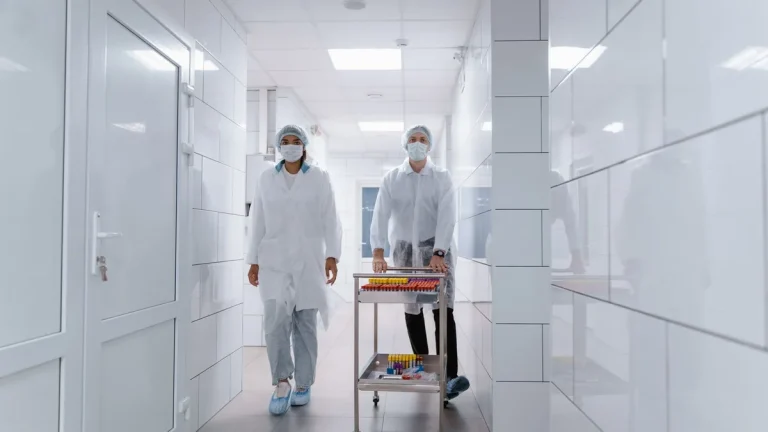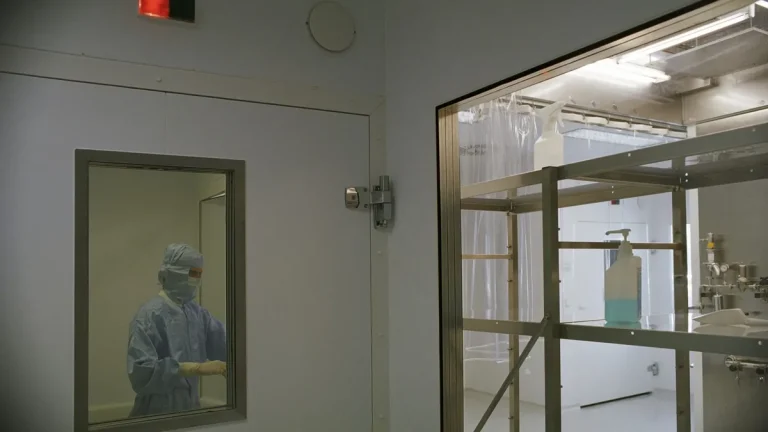
An auditor opens the compliance file for a newly finished suite and asks for the door documentation first. The folder holds brochures, packing lists and a photograph of a very clean corridor. What it does not hold is a certificate that matches the doors actually installed, and the room fails its walk-through for a part that swings on hinges.
That gap is avoidable, and the way to avoid it is to treat the purchase itself as the compliance step. This guide translates ISO 14644 cleanroom door requirements into buying decisions. It covers what the standard family demands, how to match a door to class, industry and budget, which materials and seals hold up, and which documents to demand before signing.
Specification also means choosing how the leaf moves; the manual or automatic cleanroom door decision guide weighs cost, traffic, hygiene, maintenance and EN 12453 compliance per opening.
Specification also means choosing how the leaf moves; the manual or automatic cleanroom door decision guide weighs cost, traffic, hygiene, maintenance and EN 12453 compliance per opening.
What ISO 14644 Demands From a Cleanroom Door
ISO 14644 cleanroom door requirements start with the room, not the catalogue. The standard family does not sell doors; it grades rooms. The first part of the standard classifies air cleanliness by particles of 0.5 microns and larger per cubic metre. An ISO 5 room tolerates 3,520 of them, ISO 7 tolerates 352,000, and ISO 8 tolerates 3,520,000. Those thresholds are set at the room level, which means every component that opens and closes in the envelope, the door above all, is asked to defend them.
The fourth part of the family, ISO 14644-4, covers design, construction and start-up. It treats the room as a set of components that must work together from requirements through handover. ISO 14644 cleanroom door requirements enter the specification at that stage. The leaf, frame, seal and operation all become items the room’s classification depends on.
Reading the ISO 14644-4 overview is the fastest way to see why door decisions cannot wait. They belong in the same phase as the walls.
One supplier active in this market reads ISO 14644-7 as naming cleanroom doors as critical control points that need documented leakage classifications. Whatever weight you give that reading, the practical takeaway is the same: the door’s sealing performance should exist on paper, with numbers, before the door exists on site. That is the root of every requirement in the sections below.
Match the Door to Class, Industry and Budget
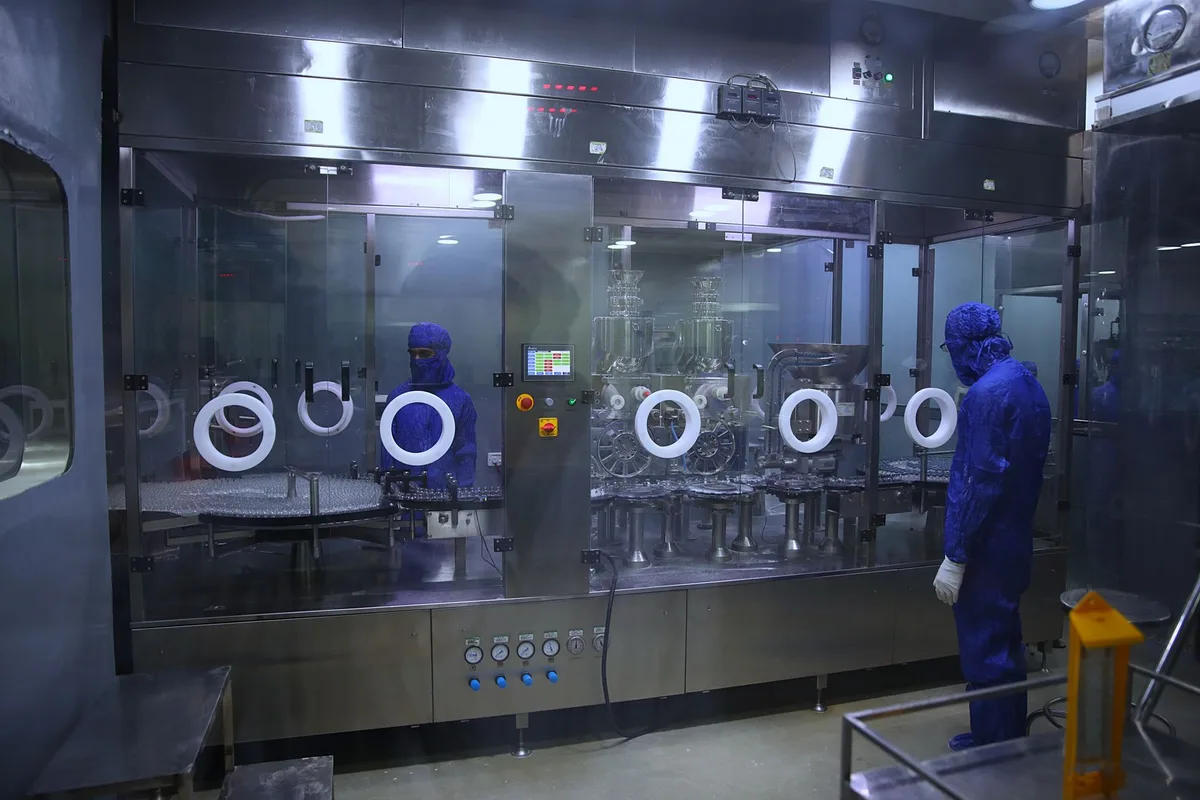
The same leaf cannot serve an ISO 5 filling line and an ISO 8 packaging hall. Cleanroom door suppliers publish class-by-class mapping guides for exactly this reason, and the pattern is consistent. The lower the class, the more airtightness, surface quality and automation the door must carry. The table below is a buying-level translation, not a substitute for your validation plan.
| Room class | Typical use | Door requirements that follow |
|---|---|---|
| ISO 5 | Aseptic filling, sterile core | Hermetic sealing, flush seamless surfaces, automatic operation, interlocks |
| ISO 6 | Sterile preparation | Airtight gasket line, washdown-safe facing, powered sliding or swing leaf |
| ISO 7 | Bulk pharma, medical devices | Compression seals, smooth wipeable panels, vision panel flush both faces |
| ISO 8 | Packaging, electronics assembly | Sealed leaf with coated steel or HPL facing, manual or automatic options |
Industry bends the mapping. Pharmaceutical suites add washdown and disinfectant resistance to every class, because GMP cleaning regimes are harsher than the particle counts alone suggest. Electronics plants care about low particle shedding from the panel surface itself. Food plants push corrosion resistance and high-frequency washing to the top of the list, which changes the material conversation before anything else.
Budget then works through material and automation choices rather than through grade relaxation, which is why ISO 14644 cleanroom door requirements are best settled before quotations arrive. The honest cost ladder runs from coated steel, through HPL, to stainless steel, with automation adding a step at any grade. Buying a cheaper facing for an ISO 8 gowning room is a legitimate trade. Spend the saving on a hermetic leaf where the cascade lives. Buying the cheapest door in the suite and hoping the classification survives is not.
Materials and Surface Finishes That Pass Audits
Auditors read surfaces the way accountants read receipts. They look for ledges that collect dust, seams that trap disinfectant, and panels that have started to shed what they are supposed to contain. Stainless steel in 304, or 316 where chlorine-based disinfectants are in daily use, remains the reference facing for the demanding classes because it survives both the chemistry and the scraping. High-pressure laminate earns its place on mid-grade doors by offering a flush, wipeable face at a friendlier number.
Our own range reflects that ladder. We build clean room doors with SS304 and SS316 leaves, HPL facings, PU foam cores and 6063-T5 aluminium frames. Where the grade allows it, powder-coated galvanized steel is available, and every finish comes in the full RAL chart for projects that need to match a wall system. The material matters less than the geometry: flush glazing, radiused corners and a frame that meets the wall without a shadow line are what an audit actually inspects.
The failure chain is worth memorizing before you compare quotations. A panel that cracks lets moisture reach the core, the edge swells, the gasket line loses its seat, and a cosmetic blemish becomes a containment finding. Gasket materials themselves, silicone versus EPDM versus neoprene, are a materials decision of their own, covered in our guide to cleanroom door gasket materials. What belongs in the purchase decision is simpler: pick a facing whose damage behavior matches your traffic, and put impact-prone leaves where the carts are not.
Sealing, Pressure Cascades and Airtightness Ratings
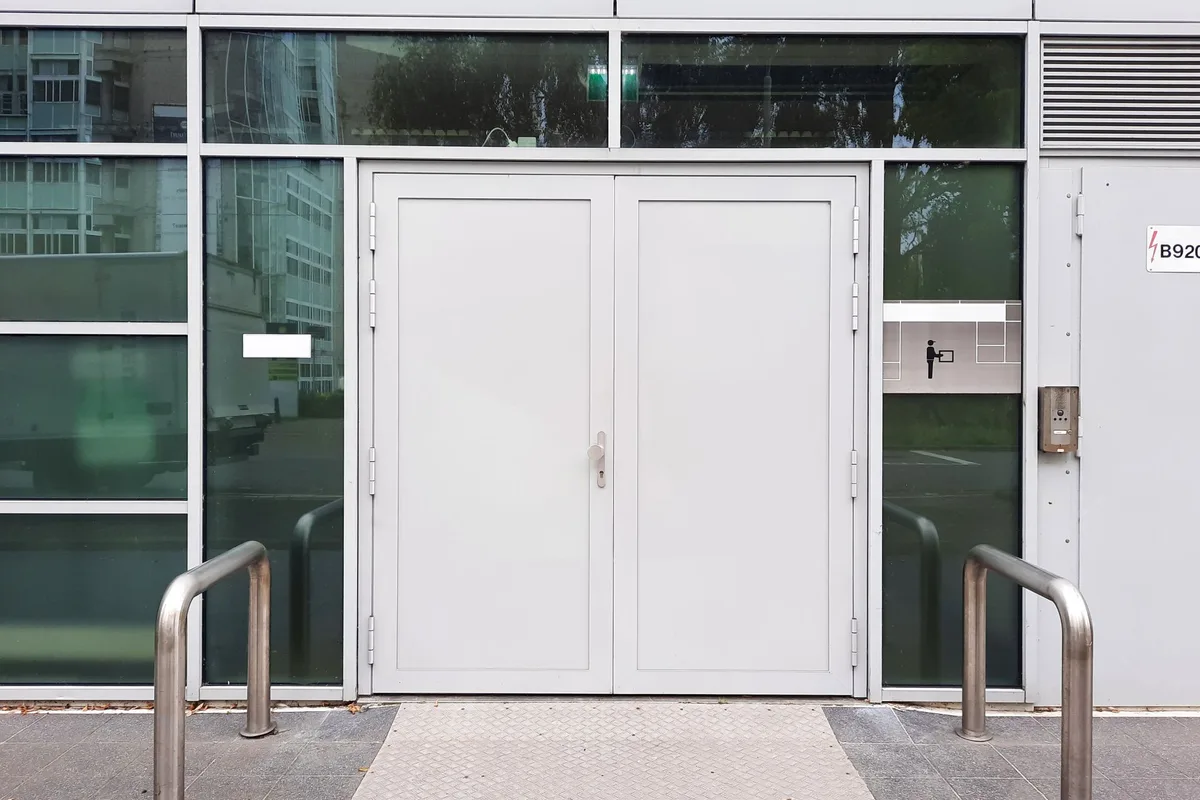
Most cleanrooms run their rooms at different pressures, so the door is the moving wall of the cascade. One manufacturer’s calculation puts the stakes in plain numbers. A door with a continuous gap of half a millimetre can leak up to 0.3 cubic metres of air per hour at a 15 pascal differential. Spread that arithmetic across every leaf in the suite and the HVAC budget explains itself.
Sealing performance is a system of parts. Compression gaskets around the leaf, drop seals under the bottom edge, and a frame that holds both in alignment do the work. The airtightness classification of the assembly is what you buy. When you compare quotations, ask for the leakage class and the test basis, not the adjective. One supplier’s checklist for this is worth borrowing: material documentation, certificates of compliance, and validation protocols that show how the door performs under operating conditions.
Expect the seal to be a maintenance item, not a permanent feature. Field surveys of failing doors keep finding the same shortlist. Gaskets hardened, flattened or lost compression. Corner joints were poor, and frames were never quite square, so the gasket never compressed evenly.
The engineering background to the ratings lives in our guide to cleanroom door airtightness and EN 12207. For the purchase decision, the rule is to write the seal specification and its verification method into the order, so the claim arrives with a number attached.
Certification Documents to Demand From Suppliers
This is where buying an ISO-compliant door differs from buying a good door, and where ISO 14644 cleanroom door requirements become deliverables rather than adjectives. The documents are not paperwork that follows the shipment; they are part of the product, and a supplier who hesitates to list them is telling you something. The set a regulated project needs is short enough to put in a purchase order as a deliverables line.
Insist on six items. First, the CE declaration of conformity with the EN 13241 test report behind it, covering the industrial door safety standard. Second, EN 12453 documentation for the powered safety functions of the operator. Third, material certificates, SGS test reports for the panel materials, or the equivalent from an accredited body.
Fourth, the factory inspection report for your specific doors, covering operation, appearance and function. Fifth, the first article confirmation with pre-assembly photographs, so you can compare what was approved with what ships. Sixth, the installation package: English manuals, CAD drawings and wiring diagrams your contractor can build from.
Fire capability needs one careful sentence in the same order. Ratings described as EI60 or EI120 name a capability that must be verified per project under EN 1634-1 testing; they are not certificates that a door ships with by default. Writing that boundary into the specification prevents the most expensive kind of misunderstanding, the kind that surfaces during an audit rather than before it. Every item above is standard output from our factory, and the clean room doors range page lists the airtight, stainless and interlocked models those documents attach to.
Keep the document list versioned against the delivery. Certificates name models and batches, and an audit compares names. If the certificate says one thing and the nameplate on the leaf says another, you own the discrepancy, so check it while the supplier still can fix it.
Evaluating a Cleanroom Door Supplier on Five Dimensions
Two suppliers can quote the same leaf and deliver very different projects. Five questions separate them, and none of the five is price. One: is this a manufacturer or a trader, because the party that bends the steel is the party that can change it. Two: can they supply the document list above for their standard production, or does every certificate become a special request.
Three: how far does customization reach, because real cleanrooms have real wall thicknesses. A supplier who takes single-unit custom orders without minimum quantities is easier to work with on renovations than one who sells only container lots.
Four: what do lead times and warranty terms look like in writing? Ask for sampling within one to two weeks, first orders in four to five weeks, and warranty terms that separate the leaf, the operator and the motor. Five: how long do they keep your drawings and tooling on file? A second order that needs no new tooling is cheaper and faster than a first order with a new supplier.
Ask each supplier to answer in writing, against your project, not in a brochure. The answers rank themselves quickly, and the ranking holds up when the project gets complicated, which cleanroom projects reliably do.
Acceptance Checks Before You Sign the Delivery Note
Acceptance is where the paper and the steel finally meet, and it deserves a script rather than a signature. Step one: compare the delivered leaves against the first article photographs and the nameplates against the certificates, batch by batch. Step two: walk the gasket line on every leaf, look for even compression, and check the frame for the shadow gaps that predict future leakage.
Step three: cycle each door through its full stroke and watch the closing and latching. Then measure the pressure cascade recovery with the HVAC crew, and confirm every room returns to its setpoint within the validated time. Step four: test the hardware suite, vision panels, kick plates, interlocks if specified, against the approved drawings. Step five: file the complete document set against the delivery note before final payment, so the compliance file is born complete rather than reconstructed later.
Facilities that buy this way end the audit conversation before it starts. The door choice was tied to the class. The materials were chosen for the chemistry they will meet, and the documents arrived with the doors they describe.
That is the whole of ISO 14644 cleanroom door requirements in practice. Compliance is bought twice, once in steel and once in paper. Only the purchase order guarantees you get both.

For the shorter shopping-list view of the same decision, use our five-point guide to choosing a clean room door. It condenses the checks into a single page you can take to a supplier meeting.
Cleanroom Door ISO Compliance Questions
Which ISO 14644 class drives cleanroom door requirements?
The room’s class does. Lower classes demand hermetic seals, flush seamless surfaces and automatic operation, while ISO 8 rooms can accept coated steel or HPL facings with compression seals. Map every door to its room before comparing prices.
What documents should a cleanroom door supplier provide?
Six items: the CE declaration with its EN 13241 report, EN 12453 operator documentation, material certificates or SGS reports, and a factory inspection report for your batch. Add first article photos plus the installation package with CAD drawings and manuals.
Are stainless steel cleanroom doors required for every class?
No. Stainless 304 or 316 earns its cost in low classes and where disinfectants or washdown are daily work. Mid and upper classes are well served by HPL or coated steel facings with flush, cleanable geometry.
How airtight does a cleanroom door need to be?
Airtight enough to hold the pressure cascade your validation plan defines. Ask for the leakage class and its test basis in writing rather than accepting airtight as an adjective, and verify recovery after installation.
Do fire-rated cleanroom doors ship with a certificate?
EI60 and EI120 describe a capability that must be verified per project under EN 1634-1 testing. Treat any quotation that presents the rating as a default certificate as a question to resolve before ordering.
How should I evaluate a cleanroom door supplier?
Five dimensions: manufacturer or trader, willingness to issue the document list, customization reach without minimum quantities, and lead times and warranty in writing. The fifth is how long drawings and tooling stay on file for repeat orders.