
A dent tells on a clean room door. Walk any controlled facility three months after handover and you can read the purchase decision off the leaf. There is a dent where a pallet truck caught the corner. Gasket residue gathers in a crevice nobody can wipe, and a hinge line sags because the traffic outgrew the hardware. None of that shows up on a datasheet, and all of it traces back to the order stage.
Specifying a clean room door gets easier when you treat it as five checks instead of one purchase. Work through the traffic, the open time, the surfaces, the installation site and the support behind the price. Each check below turns into questions you can answer before you sign, and the right specification usually selects itself once the five answers are on paper.
Thing 1: Match the Door Type to Traffic
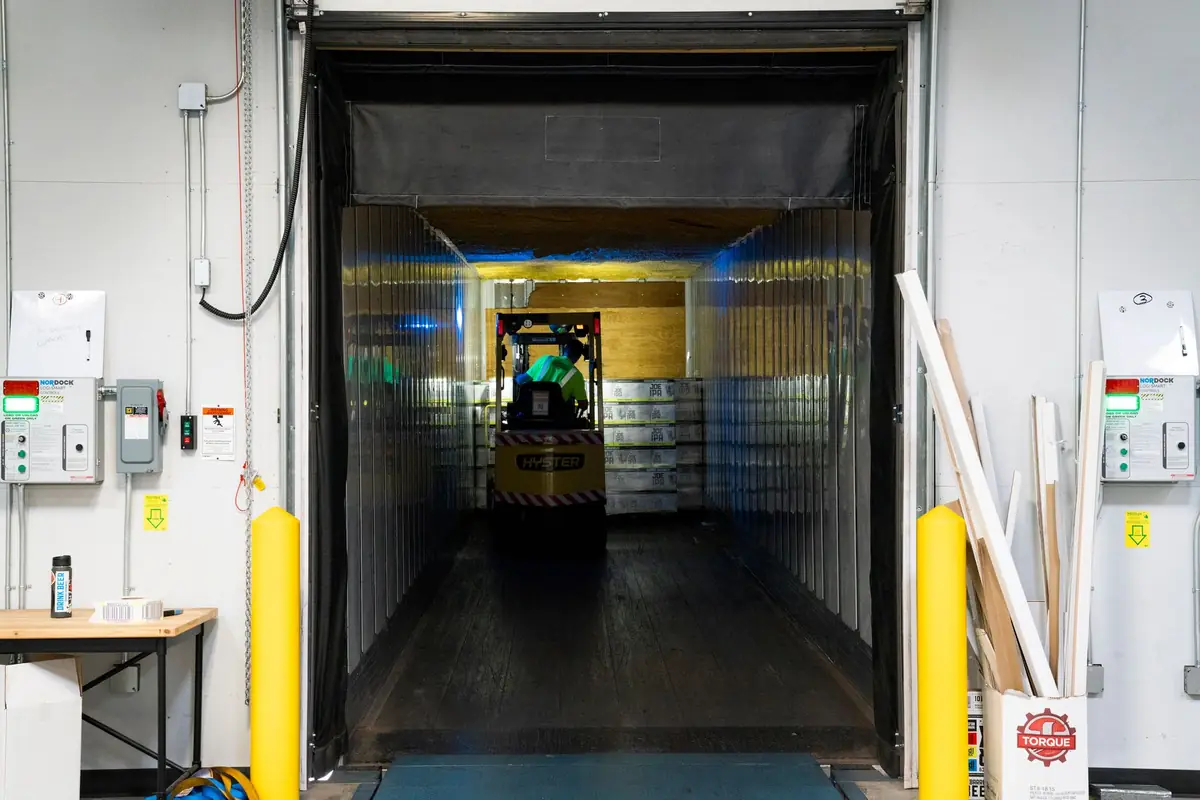
Start with who and what passes through the opening, because everything else follows from that answer. A gowning corridor carries people at a steady trickle, while a material route takes carts and totes all shift long. An equipment pass moves loads that barely fit the frame. Cleanroom door suppliers organize their ranges around exactly these jobs, and the door types behind them behave very differently once traffic rises. That is why traffic is the first thing to settle when specifying a clean room door.
Count a typical shift before you look at any model. Note how many openings a day the passage sees and whether loads are pushed by hand or driven through. Ask whether the opening has to stay usable while a trolley is parked in it. A manual swing leaf that feels premium in a quiet lab becomes a bottleneck on a route where every opening is a collision risk.
As a rule of thumb, people routes suit swing or sliding leaves. High-frequency material routes point toward automatic sliding or high-speed roll-up doors instead. The trade-offs between the sliding options, including air leakage and layout, are set out in our cleanroom sliding and swing door comparison. Whichever clean room door type you shortlist, confirm the leaf and frame are rated for the traffic you counted, never the traffic you hope for. Suppliers can size hardware correctly once the cycle count is honest, and most premature wear starts with an optimistic estimate.
Thing 2: Opening Speed and Time Left Open
Speed only matters because of what it buys you: less time with the door standing open. Cleanroom engineers size this with a simple formula where annual open time equals daily cycles times seconds per opening times operating days. A door cycling 200 times a day and standing open for 8 seconds over 250 days accumulates roughly 111 hours of open time in a year. Every one of those hours is charged back to the air system. A tight room recovers in minutes; a leaky one never quite does.
Turn that math into a question for your own floor. How many seconds does each opening actually last today? How long does the HVAC take to pull the room back after a busy hour? If either answer feels uncomfortable, an automatic or high-speed clean room door shortens each cycle, and faster recovery follows.
Ask any supplier for the opening and closing speeds of the exact model, not a product family. Powered doors in the high-speed class commonly work in the 0.8 to 2.5 meters per second band. The gap between the bottom and top of that band compounds across a full shift, so speed deserves its own line in any comparison. Our manual versus automatic cleanroom doors guide walks through when the automation pays for itself. The preventative maintenance checklist shows what keeps it paying.

Thing 3: Flush Surfaces and Everyday Cleanability
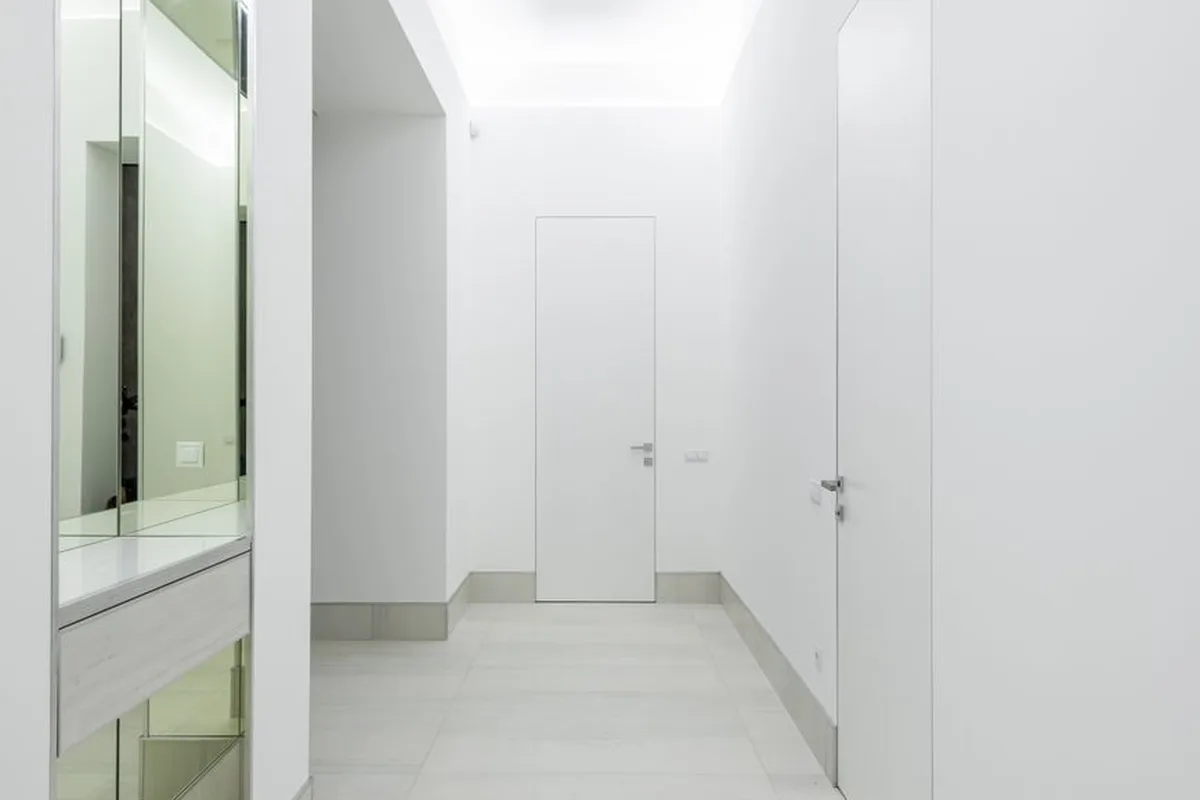
Cleaning regimes punish detail. Flat, flush surfaces without crevices are easier to wipe down. Raised trim, exposed fasteners and sharp internal corners hold disinfectant residue and shed particles back into the room. This is why a clean room door face is specified flat before it is specified attractive.
Look at three details in particular. The face should be smooth and non-porous, which is why stainless steel and high-pressure laminate dominate controlled environments. The frame-to-wall junction should close with flush trim and a compatible low-VOC sealant so there is no cleaning dead zone. The threshold should either be flush or protected so trolleys do not chew it apart.
Surface families behave differently under the same rag. Stainless faces in SS304 or SS316, with sealed HPL alternatives, tolerate daily wipe-downs far better than painted mild steel once regimes get aggressive. RAL-matched powder coatings keep the hygiene spec without losing the color scheme your architects promised, though every coating choice should be justified against your actual cleaning regime. Our flush cleanroom door design guide covers the geometry in depth. To see how these surfaces come together in a configurable range, the clean room doors line lists airtight, stainless and interlocked models side by side.

Thing 4: Installation Fit With Walls and Floors
The best-built door fails on a bad opening. Before any order, verify the clear opening width and height, the wall construction and the thickness of that wall. Check the space the leaf needs to swing or slide clear. Modular sandwich panels in the common 50 to 100 millimeter range each need their own frame detail. A frame designed for masonry will fight the wall instead of sitting in it.
The floor gets overlooked and then blamed. Bottom seals need a flat threshold to compress against, and installation guidance puts floor flatness at the threshold within about plus or minus 1.5 millimeters. Beyond that, drop seals jam or leak, and the blame lands on the door. Check headroom for sliding and roll-up tracks and confirm the power supply for powered leaves. Agree where sensors and control boxes will sit before the frame is ordered, not after it is hung.
Because we manufacture to order rather than install, we treat your site data as part of specifying a clean room door. Send opening dimensions, panel thickness, floor condition and voltage with the inquiry. The factory can then match frames and trims to the wall instead of guessing at it. A clean room door that arrives drilled for the wrong panel thickness costs everyone a week. Rework inside a live cleanroom costs far more than the drawing review that prevents it.
Thing 5: Lifecycle Support Beyond the Price Tag
A clean room door is a long relationship, not a parcel. Doors in controlled areas take daily abuse from traffic, moisture and disinfectant. What matters after commissioning is how fast you can get gaskets, hinges, curtains and controls when something wears out. Ask each supplier to state maintenance intervals, warranty coverage and spare-part availability in writing. Those are the lines that disappear in a sales conversation.
Compare the terms, not just the price, and read the warranty schedule before the brochure. Our own structure is straightforward on paper: the door leaf carries two years, operators and motors three, and servo motors five. In-warranty spare parts dispatch by DHL or FedEx within 5 to 7 days, and first orders run 20 to 35 days after drawing approval. Repeat orders run 15 to 20 days, and CAD drawings stay archived for five years, so a replacement leaf never starts from zero. These numbers belong in the contract, because verbal promises do not survive staff turnover and only the terms that reach the purchase order count.
Documentation belongs in the same conversation, and it is cheap to ask for now and expensive to chase later. Certificates for the quality system, ISO 9001, and for the product, CE under EN 13241, should ship with the door. Engineered-to-order leaves should be available without minimum order quantities, so a single critical opening can be specified properly. That flexibility matters when specifying a clean room door for a retrofit, where volumes are small and the cost of a wrong guess is high. Support, in the end, is what turns a door from a purchase into an asset.
Clean Room Door Questions, Answered
When specifying a clean room door, how much traffic justifies automation?
A workable rule: a passage that carries steady cart or forklift traffic for most of a shift usually justifies an automatic sliding or high-speed door. That includes any route where openings run back to back. Count a full shift before you decide.
What site data should I send a supplier before ordering?
Clear opening width and height, wall type and thickness, swing or slide clearance, headroom, floor flatness at the threshold, and the voltage for powered doors. Photos of the opening help the factory confirm frame details.
Which door surface is easiest to keep clean?
Flush stainless steel or HPL faces with sealed edges and low-VOC silicone at the frame leave few crevices for disinfectant residue. Avoid exposed fasteners and raised trim during daily wipe-downs.
What warranty should a clean room door carry?
Expect at least two years on the door leaf and hardware, with longer terms on operators and motors. Ask for warranty coverage, spare-part availability and dispatch times in writing.
How long does a custom clean room door take to build?
Engineered-to-order leaves commonly run three to five weeks after drawing approval, with repeat orders shorter. Dimensional sign-off is usually the pacing item, not fabrication.