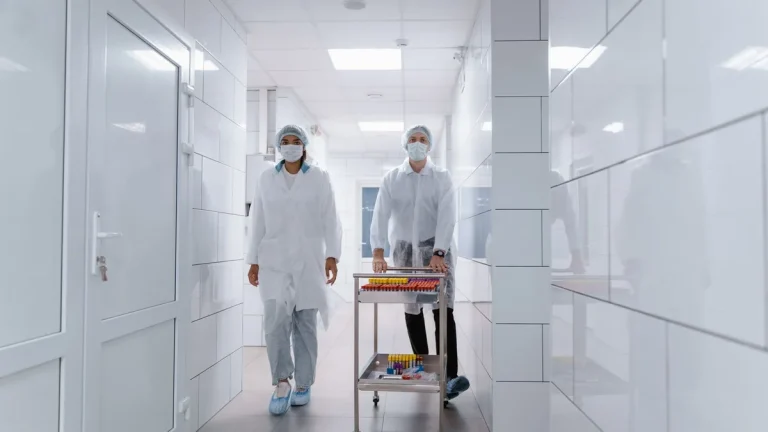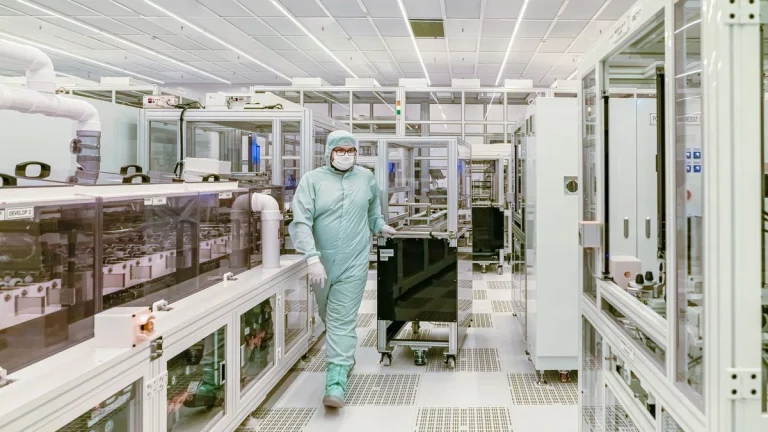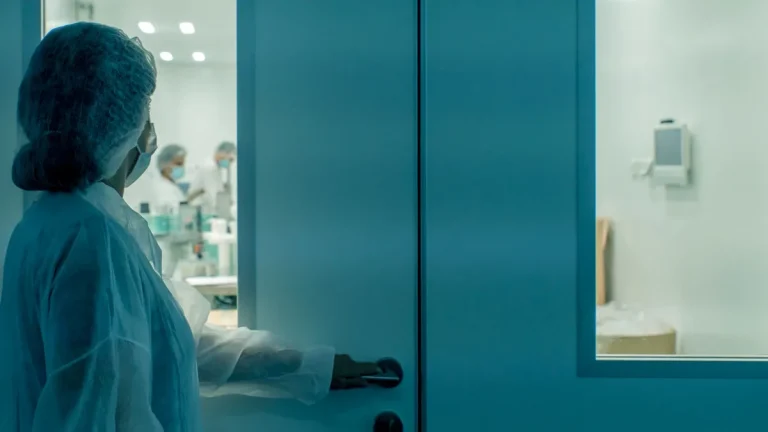
One quotation sheet lands on the desk with two cleanrooms on it. The first is a positive pressure packaging suite, the second a negative pressure isolation room behind an airlock. If both orders list the same door model, one room is already mis-specified.
Choosing a clean room door is not about finding the best one in a catalogue. It is about listing the special conditions of your application first, then matching sealing, materials and documentation to them. That is how to choose a clean room door for special applications that holds its grade. The four condition groups below decide the specification, and the page ends with the checklist to send a supplier.
How that choice splits by door family is mapped in our comparison of clean room doors vs industrial doors, dimension by dimension.
Special Conditions That Decide the Door
Most door guides start with door types, and that is why they fail buyers. A swing door, a sliding door and a roll-up door can all reach the same cleanliness class. Yet they behave completely differently once pressure, chemistry or moisture enter the picture. The honest way to specify a clean room door for special applications is to describe the environment first and let the environment pick the hardware.
Four condition groups cover nearly every special application. Pressure direction and differential decide how tight the sealing must be. Temperature and humidity decide the core and skin. Chemical exposure from cleaning and disinfection decides the surface and the gaskets.
Industry regulation then decides which documents must ship with the door. Each group maps to a concrete specification decision, as the sections below show.
Doors for Pressure Cascades and Containment Zones
Start with the numbers on your ventilation drawing. EU GMP guidance expects at least 10 Pa between adjacent rooms of different grades. FDA guidance typically cites 10 to 15 Pa, and ISO 14644-4 recommends 5 to 20 Pa between zones of different classification. A leaking door lets the cascade decay whenever the HVAC cycles down, so the leakage figure matters more than any descriptive word on a datasheet.
Direction changes the hardware too. In a positive pressure suite, the room pushes air out and seals work from the inside. Containment and isolation rooms run deliberately lower than their surroundings. Air then forces its way inward, and the door must hold from the outside in.
Those projects need gasketed edges, drop seals and usually an interlocked airlock, which is why pressure cascades and door sequences are engineered together rather than purchased separately. Our airlock and pressure cascade design guide covers the room layout side in depth, and the differential pressure troubleshooting guide shows what failure looks like.
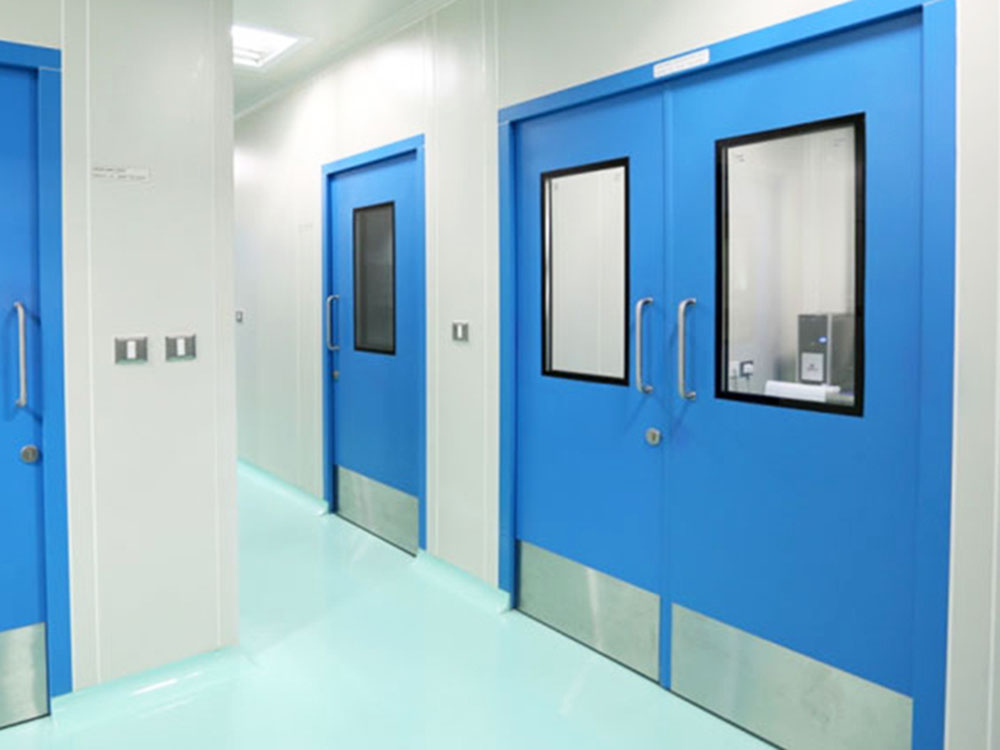
Temperature and Humidity Demands on Doors
Cleanroom humidity follows the product, not a single number. Moisture-sensitive operations often hold 30 to 40 percent RH, while general and aseptic rooms commonly run 40 to 60 percent, per EU GMP Annex 1 and industry guidance. Many processes also add washdown routines or chilled product zones. Doors live at the worst corner of that climate, because they bridge the conditioned room and a warmer corridor. A leaf that absorbs moisture swells and loses the very seal the pressure cascade depends on.
The material answer is straightforward. Polyurethane foam cores do not drink water, which is why they remain the default for doors facing humidity swings or temperature gradients. Stainless steel skins shrug off condensation, while coated steel suits drier ambient zones at lower cost. Where a cold process meets a warm room, specify an insulated leaf with thermal separation at the frame. Then check that the gasket material stays flexible at the lowest temperature the doorway will actually see.
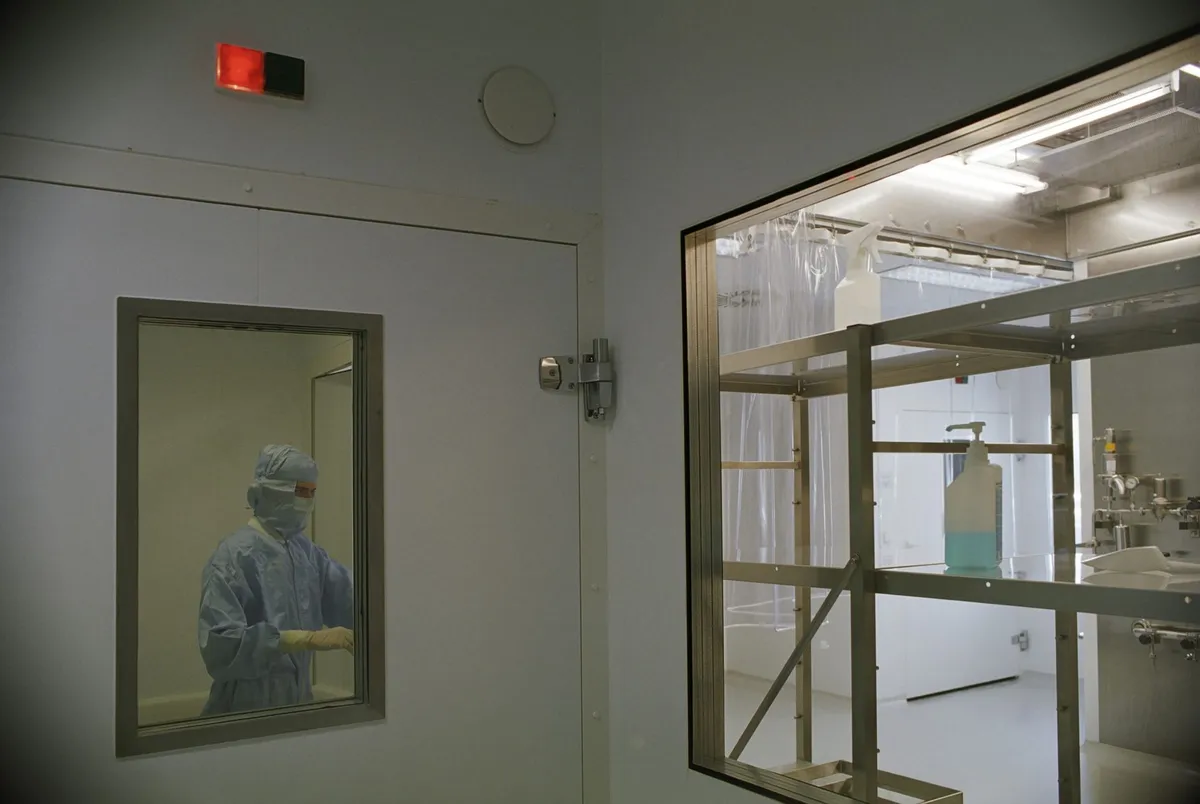
Chemical Exposure and Disinfectant Regimes
List every chemical your door will meet, including the ones applied by the cleaning crew. Pharmaceutical environments demand compatibility with chlorinated disinfectants and vaporized hydrogen peroxide, and the door surface and gaskets sit closest to the spray. A surface that passes a wipe test can still fail a daily regime, so judge compatibility against the full cycle, not a single exposure.
Failure follows a predictable pattern. Repeated peroxide and chlorine cycles swell gaskets, embrittle them or set them permanently compressed, and the seal then leaks at a differential it used to hold. For those regimes, stainless steel faces with silicone or EPDM gaskets are the resilient specification, while high-pressure laminate suits milder chemistry and lighter duty. Our gasket material comparison breaks the elastomer choice down, and the cleaning validation guide shows how to prove the whole package under a cGMP regime.

Airtightness Classes and Compliance Documents
Adjectives are not specifications. Ask each supplier to state leakage at a defined pressure, tested with a recognized method. Where European projects apply, ask for classification of the door assembly under EN 12207; our EN 12207 airtightness guide explains the classes. For ISO 5 to ISO 7 zones, request test reports in the 10 to 30 Pa range rather than the word hermetic. Classification against ISO 14644 then ties the room, airlock and doors into one auditable package.
Documents close the loop. Product safety for powered industrial doors sits under EN 13241, with safe use under EN 12453. Fire performance should be quoted as a capability verified per project under EN 1634-1, as RaxDoor states for its EI60 and EI120 capability. Ask for the same trio on every order: a leakage report at design pressure, the safety certificates, and the fire verification path for the installation.
Condition Checklist for Four Cleanroom Industries
The four condition groups read differently by industry, which is where special applications diverge. The table compresses the checklist into one view per sector.
| Industry | Decisive conditions | Door specification focus |
|---|---|---|
| Pharmaceutical and biotech | 10-15 Pa cascade, VHP and chlorine regimes, GMP documentation | SS316 faces, compatible gaskets, leakage reports |
| Food processing | Daily washdown, humidity, hygiene zoning | Washdown-safe skins, sealed edges, drainage-safe frames |
| Electronics and optics | Particle control, static concerns, stable humidity | Low-shedding smooth faces, tight perimeter seals |
| Hospitals and labs | Isolation pressure, frequent traffic, hygiene | Hermetic sliding leaves, hands-free operation, interlocks |
Treat the industry label as a starting point, because two pharmaceutical suites can demand different doors once their chemicals and pressure directions differ. The condition list, not the label, is what a supplier can quote against. It is also what turns a vague enquiry into comparable offers.

Specifying a Door for Your Application
A specification that leads with the condition list gets a clean room door for special applications instead of a catalogue guess. Write down the pressure differential and its direction, the temperature and humidity band, every chemical in the cleaning regime, and the documents your auditor expects. Attach it to the enquiry, with opening size, traffic and preferred operation, through the clean room door product range.
Suppliers respond to a complete list with complete answers, and the differences between offers become technical instead of commercial. A manufacturer that engineers the sealing, materials and interlocks to order can quote a single door against that list with no minimum batch. We have done so since 1999 across 70-plus countries. Doors shipped with leakage reports and certificates also arrive ready for qualification, shortening the path from installation to a released room.
Frequently Asked Questions
What pressure differential should a clean room door hold?
EU GMP guidance expects at least 10 Pa between adjacent rooms of different grades; FDA guidance typically cites 10-15 Pa, and ISO 14644-4 recommends 5-20 Pa. Ask for tested leakage at your design differential, not a catalogue claim.
Which door material survives hydrogen peroxide disinfection?
Stainless steel faces and silicone or EPDM gaskets tolerate vaporized hydrogen peroxide far better than porous laminates or unpainted steel. For sporicidal chlorine-based agents, specify SS316 surfaces and verify gasket compatibility against your actual cycle, not generic ratings.
Do negative pressure clean rooms need different doors?
Yes. A negative pressure room pulls air inward, so seals must hold from the outside in. Containment doors need gasketed edges, drop seals and usually interlocked airlocks so pressure survives door openings.
What airtightness class should I ask for?
State the differential pressure and allowable leakage, and ask for classification under a recognized test such as EN 12207. For ISO 5-7 zones, request reports at 10-30 Pa rather than descriptive words like hermetic.
How does humidity affect clean room door choice?
Cleanroom humidity follows the product: moisture-sensitive zones often hold 30-40% RH and general rooms 40-60%, with EU GMP Annex 1 requiring conditions appropriate to the product. Damp or washdown areas swell laminate edges, so polyurethane-cored leaves with stainless skins are the safer specification, and condensation risk rises with cold processes.
Choosing a clean room door for special applications comes down to one discipline: describe the room honestly before describing the door. Pressure, climate, chemistry and regulation form the four-line condition list that every other decision follows back to. Send that list with the enquiry, and the right door is usually the one quoted against it line by line.