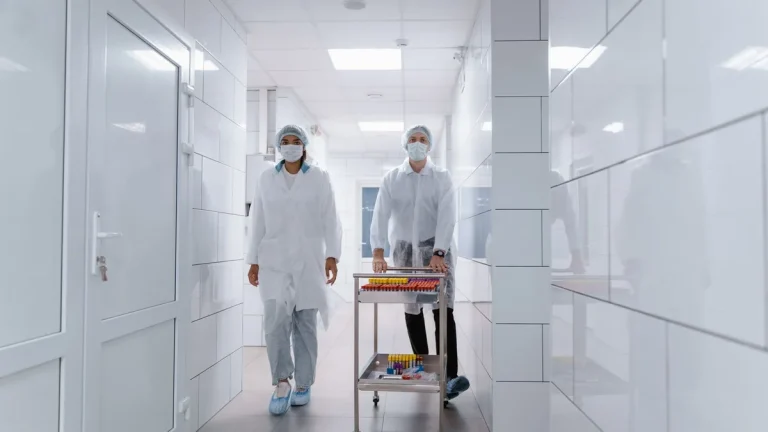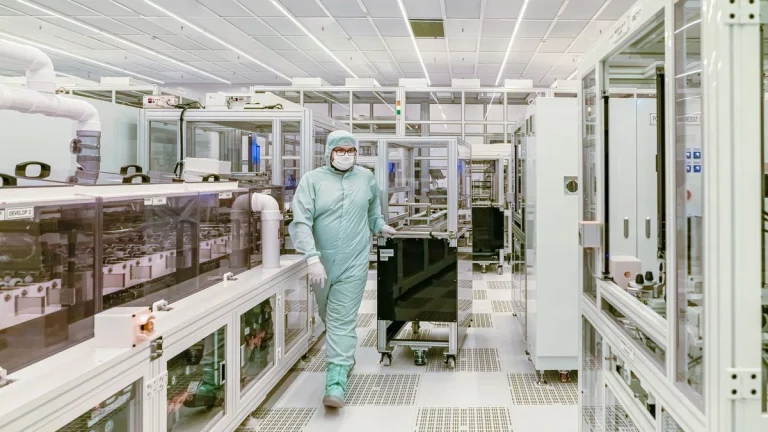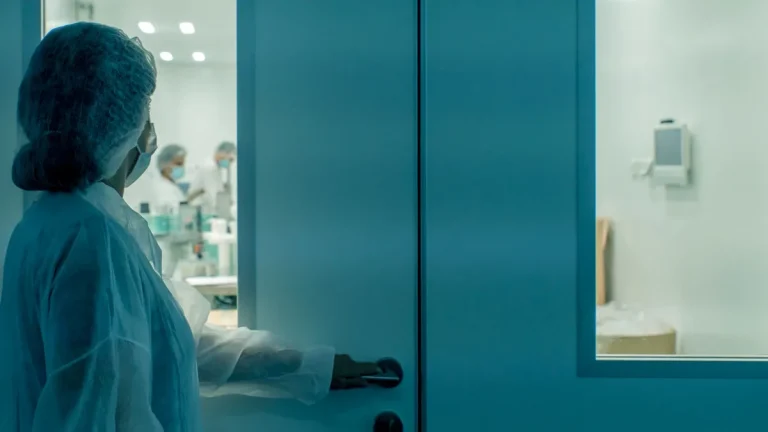
At RAX Door Technology, manufacturing specialized cleanroom door assemblies since 1999 across our 11,000-square-meter facility, we engineer non-porous barrier skins designed to withstand daily chemical disinfection without surface degradation. In sterile pharmaceutical manufacturing, biological containment suites, and medical device processing plants, environmental cleaning validation is a fundamental regulatory requirement. Architectural access doors represent one of the most critical mechanical touchpoints in any controlled facility. Unlike stationary wall panels, door leaves, handles, push plates, and perimeter frame gaskets experience frequent human handling, trolley contact, and airflow turbulence. Without validated sanitation protocols and chemically compatible materials, door surfaces can harbor microbial bio-films, accumulate chemical residues, or suffer corrosive degradation under repeated sporicidal exposure.
Modern regulatory mandates, including EU GMP Annex 1 and FDA Guidance for Industry on Sterile Drug Products, require facilities to demonstrate that cleaning and disinfection regimens effectively eliminate microbiological contaminants without leaving toxic residues or degrading envelope integrity. Establishing a validated cleaning program requires aligning door material science with disinfectant chemistry, establishing standard operating procedures (SOPs) for mechanical wiping, and verifying cleanliness through quantitative surface swab sampling and Total Organic Carbon (TOC) analysis.
Regulatory Framework for Cleaning Validation
Pharmaceutical cleaning validation is governed by stringent international quality standards designed to ensure patient safety and product sterility. EU GMP Annex 1 Section 4 explicitly dictates that all surfaces within classified cleanrooms—including doors, viewing panels, and door frames—must be smooth, non-porous, and free from cracks or crevices to facilitate effective cleaning and disinfection. Additionally, Annex 1 emphasizes that the design of access points must minimize particle shedding and prevent microbial harborage. Facility engineers align specifications with HSE Control of Substances Hazardous to Health (COSHH) regulations.
Regulatory inspectors evaluate cleanroom doors against rigorous physical criteria. Doors installed in Grade A and Grade B aseptic processing cores must exhibit surface roughness averages (Ra) below 0.4 micrometers, achieved through precision mechanical polishing or electrochemical polishing. At this sub-micron smoothness, microbial cells and chemical precipitates find no microscopic fissures in which to anchor, allowing mechanical wiping and sanitizing chemicals to achieve full contact kill efficacy.
Specifying fully compliant cleanroom door systems guarantees that door leaf facings, wrap-around subframes, and seamless vision panel transitions satisfy these cGMP geometric cleanability standards, eliminating regulatory audit concerns during qualification handovers.
Disinfectant Chemical Compatibility and Degradation
At RAX Door, our technical team conducts accelerated immersion coupon tests with 6% hydrogen peroxide and 0.2% peracetic acid on all panel finishes, verifying that 304 and 316L grades maintain passivity without galvanic attack or surface roughness alteration. Cleanroom sanitation programs utilize aggressive chemical formulations designed to denature bacterial cell walls, disrupt fungal mycelia, and destroy bacterial endospores. However, chemicals that effectively eliminate stubborn biological contaminants can also attack cleanroom construction materials if surfaces are improperly specified. Understanding chemical compatibility prevents premature surface pitting, polymer embrittlement, and cosmetic discoloration.
Austenitic AISI 316L stainless steel provides the highest level of chemical tolerance among metallic alloys. The addition of 2% to 3% molybdenum to the nickel-chromium matrix provides strong resistance against chloride-induced crevice corrosion and localized pitting caused by sodium hypochlorite bleach. In contrast, standard AISI 304 stainless steel can suffer rapid micro-pitting if bleach solutions dry on surfaces without adequate water-for-injection rinsing.
Solid High Pressure Laminate (HPL) with melamine surface resins exhibits exceptional tolerance toward alcohols, quaternary ammonium compounds, and mild acidic detergents. However, continuous exposure to concentrated sporicides or frequent gaseous hydrogen peroxide (VHP) cycles can induce faint surface yellowing or micro-porosity over multi-year operational cycles. Perimeter elastomeric gaskets also face chemical breakdown; silicone rubber maintains elastic memory under VHP exposure, whereas standard neoprene or lower-grade EPDM swells and cracks when subjected to strong oxidizing agents.
Critical material engineering principles for chemical degradation prevention include:
- Alloy Molybdenum Passivation: Specifying 316L stainless steel maintains passive chromium oxide films that resist chemical oxidation from aggressive vaporized sterilants.
- Chloride Pitting Prevention: Implementing mandatory water-for-injection rinses within 15 minutes of bleach application prevents chloride salt crystallization.
- Elastomer Crosslink Stability: Selecting platinum-cured silicone compression gaskets prevents polymer hardening and permanent compression set under continuous VHP exposure.
- Phenolic Edge Encapsulation: Factory-sealed anodized aluminum edge trims shield compact laminate cores, preventing liquid disinfectant absorption and core swelling.
| Sanitizing Agent | Active Chemical Mechanism | 316L Stainless Steel | Compact HPL Phenolic | Pharmaceutical Silicone Gasket |
|---|---|---|---|---|
| 70% Isopropanol (IPA) | Cell Membrane Disruption | Inert (Zero Corrosion) | Inert (No Swelling) | Excellent (Rapid Evaporation) |
| Sodium Hypochlorite (0.5%) | Protein Oxidation & Denaturing | Very Good (Requires Water Rinse) | Good (Prompt Wiping Mandated) | Good (Rinse to Prevent Salt Crusts) |
| Peracetic Acid (PAA 0.2%) | Lipid Membrane Peroxidation | Exceptional (Passivates Metal) | Good (Contact Time < 15 min) | Very Good (Maintains Flexibility) |
| Quaternary Ammonium (Quat) | Surfactant Cell Lysis | Inert (Leaves Sticky Film) | Excellent (Residue Rinse Needed) | Excellent (Zero Swelling) |
| Vaporized Hydrogen Peroxide | Hydroxyl Free Radical Oxidation | Exceptional (No Surface Attack) | Moderate (Potential Slight Yellowing) | Excellent (Optimal Gaseous Resistance) |
Evaluating this compatibility matrix allows facility operations to balance disinfectant kill efficacy against structural envelope longevity, preventing expensive architectural asset replacement.
Sporicidal Rotation and Dwell Kinetics
A fundamental tenet of pharmaceutical microbiology is the scheduled rotation of sanitizing chemistries. Relying exclusively on standard broad-spectrum disinfectants, such as 70% isopropanol or quaternary ammonium solutions, risks selecting for resistant bacterial spore populations, including Bacillus subtilis and Paenibacillus species. Consequently, GMP regulations mandate incorporating validated sporicidal agents into sanitation schedules.
A typical validated rotation schedule pairs a daily or weekly broad-spectrum bactericidal agent with a monthly or bi-weekly sporicidal agent (such as stabilized peracetic acid or hydrogen peroxide blends). For a disinfectant to achieve its validated log-reduction claim (typically a 4-log to 6-log reduction in bio-burden), the surface must remain visibly wet throughout the validated contact dwell time, which typically ranges from 5 to 15 minutes depending on laboratory qualification data.
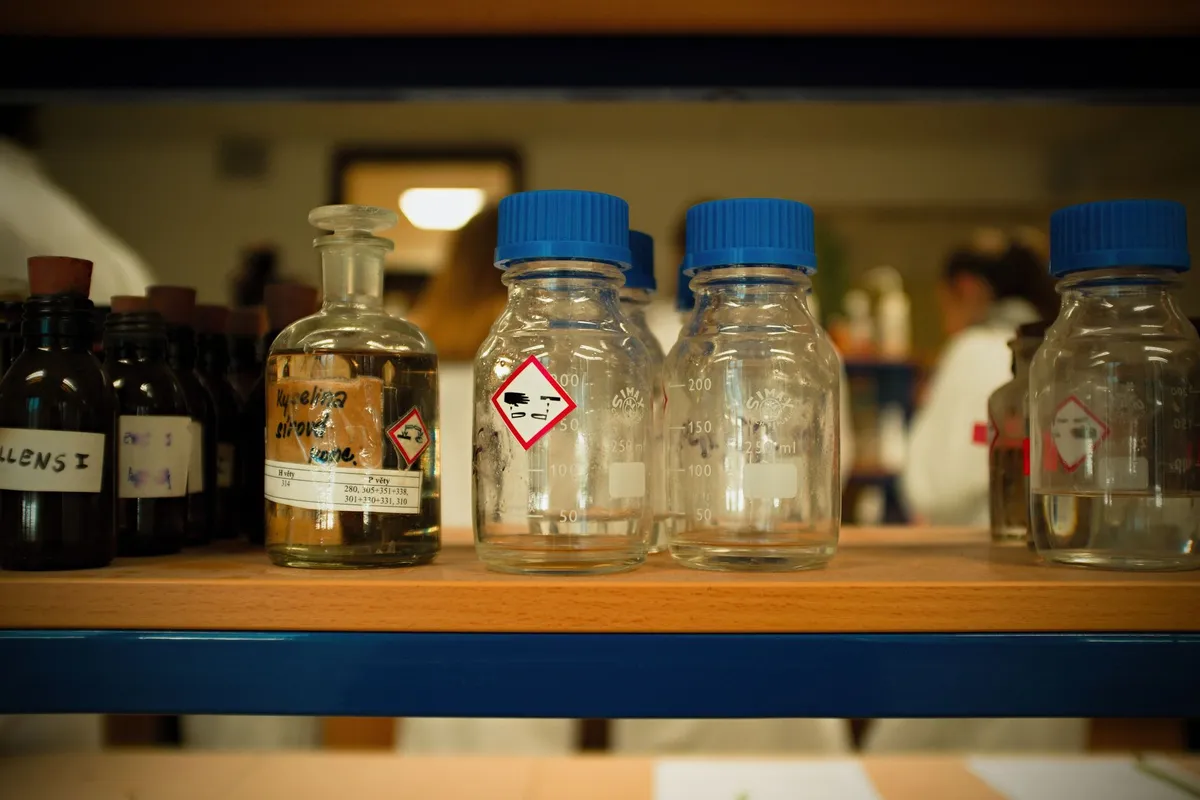
Key microbiological and operational parameters governing disinfectant rotation include:
- Validated Liquid Dwell Time: Surfaces must maintain continuous liquid contact for the full registered contact duration without premature evaporation under high cleanroom airflow.
- Chemical Residue Accumulation: Quaternary ammonium salts leave microscopic sticky films that trap airborne dust particles if not rinsed systematically with purified water.
- Microbiological Kill Kinetics: Fast-acting oxidizing sporicides achieve spore inactivation within 5 minutes, minimizing chemical exposure duration on metallic substrates.
- Neutralization Verification: Swab testing media must incorporate specific chemical neutralizers (such as lecithin and polysorbate 80) to halt antimicrobial action immediately upon sampling.
Residue Removal Directive: Non-oxidizing disinfectants like quaternary ammonium formulations leave continuous surfactant residues that degrade cleanroom aesthetic clarity and promote microbial resistance. Facility SOPs must mandate a purified Water-for-Injection (WFI) or 70% IPA rinse following every sporicide or disinfectant application on stainless steel door leaves.
Windows beside the doors follow the same validated regime, as set out in our guide to clean room windows.
Standard Wiping and Sanitation Protocols
Chemical selection alone cannot guarantee surface cleanliness; mechanical wiping action is essential to dislodge adhered particulate matter, bio-film matrices, and dried chemical residues. The physical wiping methodology employed by sanitation operators must adhere to strict contamination control protocols to prevent re-contaminating sanitized surfaces.
Operators utilize gamma-irradiated, continuous-filament polyester or microfiber cleanroom wipes pre-saturated with validated sanitizing solution. Circular or scrubbing wiping motions are strictly prohibited in GMP suites because they spread dislodged particles back over cleaned surfaces. Instead, technicians employ unidirectional overlapping parallel strokes, moving systematically from top to bottom and from clean zones toward dirty zones.
The structured table below details the sequential operational steps required to sanitize cleanroom doors during routine GMP changeover cycles.
| Operational Stage | Target Surface Element | Sanitation Methodology | Target Wiping Technique |
|---|---|---|---|
| Stage 1: Frame & Header | Top Header & Vertical Jambs | Microfiber Pre-Saturated with Sporicide | Unidirectional downward parallel strokes |
| Stage 2: Vision Glazing | Double Flush Glass Panel | Lint-Free Polyester Wipe with 70% IPA | Horizontal overlapping passes (50% overlap) |
| Stage 3: Door Leaf Surface | Push Face & Pull Face | Flat Mop / Wipes with Rotational Agent | Vertical passes from top header to floor sill |
| Stage 4: Hardware & Latches | Lever Handles, Push Bars, Latches | Detailed Hand Wiping with Neutralizer | 360-degree wrap wipe around gripping surfaces |
| Stage 5: Perimeter Gaskets | Silicone Compression Gaskets | Sterile Wipe with Purified WFI | Gentle linear wipe along gasket groove |
Following the active disinfectant contact dwell time, the entire door assembly undergoes a final rinse wipe with sterile 70% IPA or Water-for-Injection to remove dried salts and surfactant films, leaving a streak-free, passivated surface.
Validating Door Surfaces for Aggressive Sporicides?
Consult RAX Door technical specialists to select 316L electropolished stainless or chemical-resistant phenolic skins that withstand daily sanitation.
Surface Swab Sampling and Recovery
Proving that a cleaning procedure consistently achieves acceptable cleanliness requires analytical and microbiological validation. Environmental monitoring teams execute surface sampling protocols to quantify bio-burden and chemical residues, establishing historical control limits for regulatory documentation.
Microbiological monitoring utilizes Replicate Organism Detection and Counting (RODAC) contact plates filled with Tryptic Soy Agar (TSA) containing neutralizers. The convex agar surface is pressed firmly against the door leaf for 5 to 10 seconds under standard pressure (approximately 500 grams force), transferring viable bacteria and fungi onto the growth medium. Plates are then incubated at 20-25°C and 30-35°C to quantify colony forming units (CFU).
Critical analytical and microbiological validation protocols include:
- Swab Recovery Factor Determination: Inoculating known bacterial concentrations onto coupon test materials establishes the recovery efficiency (typically 60% to 85%) of swab sampling on specific door substrates.
- Total Organic Carbon (TOC) Analysis: Low-background polyester swabs wipe 100 cm² surface grids to detect trace chemical residues down to parts-per-billion (ppb) sensitivity.
- Touchpoint Bio-Burden Limits: Operating limits for Grade A and B door handles enforce zero detectable CFU per plate, with action levels triggered by any colony detection.
- Visual Cleanliness Criteria: Inspection under high-intensity grazing light verifies the complete absence of particulate haze, streaks, or liquid pooling.
Risk Assessment and Audit Pitfalls
During regulatory audits by the FDA, EMA, or national health authorities, cleanroom doors are subjected to intense physical and documentary scrutiny. Because doors are high-touch mechanical interfaces, auditors frequently inspect hardware cutouts, door sills, and closer arms for visible rust, paint flaking, or chemical salt encrustation.
Quality assurance teams deploy Failure Mode and Effects Analysis (FMEA) to identify and mitigate cleaning validation risks across door assemblies. The checklist below highlights the standard verification workflow executed during routine GMP cleaning audits:
- Audit Hardware Fastener Hygiene: Inspect exposed screws and hinge plates. Confirm all fasteners are fabricated from 316L stainless steel with passivated flush heads, eliminating galvanic rust.
- Inspect Gasket Crevice Niches: Verify that perimeter silicone gaskets seat tightly in continuous channels without adhesive gaps, mold accumulation, or chemical crystallization.
- Review Swab Sampling Trending Logs: Analyze 12-month rolling data for door contact plates, identifying emerging bio-burden trends before action limits are breached.
- Check Operator Wiping Technique: Conduct routine visual observation audits to confirm cleaning technicians execute unidirectional overlapping strokes without circular re-wiping.
Common audit citations stem from failing to rinse chemical residues, using aggressive chlorine bleach on non-passivated 304 steel, or overlooking the underside of horizontal push bars during routine sanitation cycles.
Cleaning Validation Summary: Sustaining cGMP compliance for cleanroom doors requires an integrated program: specifying electropolished 316L stainless steel or solid phenolic HPL, executing validated sporicide rotation with mandatory WFI rinses, enforcing standardized unidirectional wiping protocols, and documenting surface bio-burden via quantitative swab recovery validation.
Frequently Asked Questions
Why is 70% IPA alone insufficient for cleanroom door disinfection?
While 70% Isopropyl Alcohol (IPA) is an excellent broad-spectrum bactericide and virucide, it lacks sporicidal efficacy. It cannot destroy bacterial endospores (such as Bacillus spores). Facilities must rotate IPA with validated oxidizing sporicides to prevent spore-forming bio-burden buildup.
How can facilities remove disinfectant chemical residues from stainless steel doors?
Chemical residues from quaternary ammonium or bleach solutions should be removed using sterile Water-for-Injection (WFI) or 70% IPA applied with continuous-filament polyester wipes. Periodic wiping with mild citric acid passivation solutions removes localized rouge and restores original surface luster.
What is a typical swab recovery factor on cleanroom door surfaces?
During analytical cleaning validation, recovery studies on electropolished 316L stainless steel typically demonstrate swab recovery efficiencies between 70% and 85%. Compact HPL melamine surfaces generally achieve recovery rates between 65% and 80%, maintaining continuity with GMP compliant steel cleanroom doors.
Do aggressive sporicides damage cleanroom door silicone gaskets?
Medical-grade silicone gaskets withstand routine contact with peracetic acid and VHP. However, concentrated sodium hypochlorite can cause gradual surface hardening if allowed to crystallize. Implementing a water rinse cycle preserves gasket elasticity over years of operation, maintaining continuity with flush cleanroom door design standards.
How frequently should cleanroom doors be swab sampled for bio-burden?
In Grade A and Grade B aseptic production zones, high-touch door handles and push plates are sampled on every production shift. General door leaf surfaces are sampled weekly or monthly, with comprehensive trend analysis reviewed quarterly, maintaining continuity with cleanroom HPL vs stainless steel doors.
The cleaning regime is one clause among several. Why cGMP facilities ban standard industrial doors maps the full set of requirements a boundary door must satisfy.