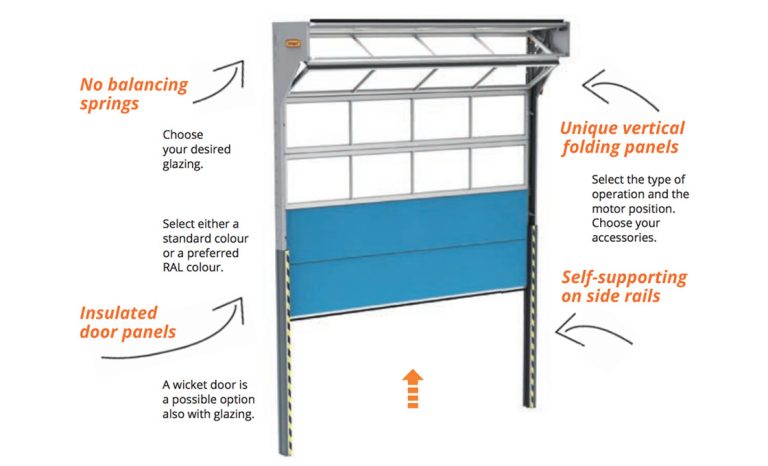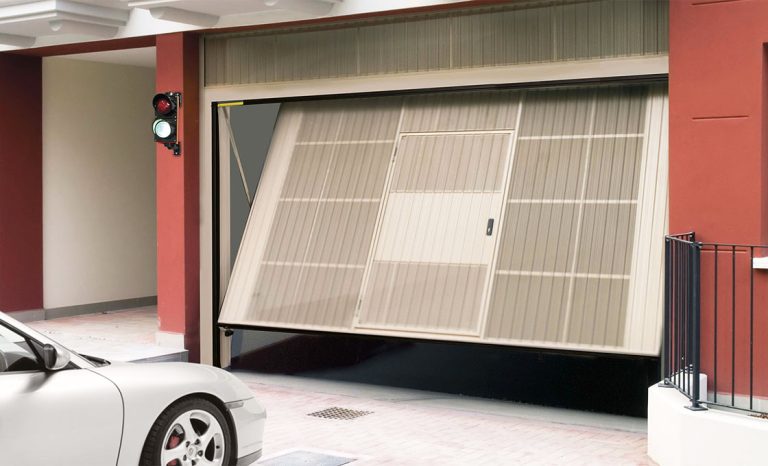
Choosing the right garage door opener depends entirely on the design and movement of your garage door. While modern residential and commercial properties overwhelmingly use multi-panel sectional doors, millions of older homes and custom architectural outbuildings still feature traditional single-panel one-piece (tilt-up) doors. Installing an automated opener on these two door styles involves vastly different mechanical considerations, hardware linkages, and safety requirements.
A common mistake property owners make is assuming any standard opener from a home improvement store will bolt onto any garage door. In reality, matching an overhead motor to an incompatible door mechanism can lead to bent hardware, severe motor burnout, or catastrophic mechanical failure. This comprehensive guide covers drive compatibility, mounting hardware, horsepower sizing, and clearance requirements for both sectional and one-piece garage doors.
Key Engineering Takeaways:
- Trolley Openers Work for Both: Ceiling-mounted belt, chain, and screw-drive openers can operate both sectional and one-piece doors, provided the correct linkage arm is installed.
- Jackshaft Openers are Sectional-Only: Wall-mounted jackshaft (direct-drive) operators require a live rotating torsion shaft with cable drums and cannot be used on one-piece doors.
- Bow Arm Adapters Required for Canopy Doors: One-piece canopy doors require a specialized bow arm adapter to translate linear trolley pulling into a curved swing arc.
- Higher Starting Force on One-Piece Doors: One-piece doors experience peak resistance at the initial opening angle, requiring at least 1/2 HP to 3/4 HP DC motors with soft-start capability.
Sectional vs. One-Piece Doors: How Door Motion Affects Opener Choice
The fundamental distinction between sectional and one-piece garage doors lies in their mechanical trajectory during opening and closing cycles. Understanding this movement determines how an electric opener transfers force to the door structure.
Sectional Garage Doors: Constructed from 3 to 5 horizontal insulated steel, aluminum, or timber panels hinged together. The door travels along vertical and horizontal steel tracks via steel or nylon rollers. Because the door flexes around the track radius, its travel path stays strictly parallel to the wall and ceiling. The pulling point moves linearly along the center trolley track, creating a uniform, predictable load throughout the cycle.
One-Piece (Tilt-Up) Garage Doors: Fabricated as a single rigid slab. One-piece doors generally use one of two hardware systems:
- Jamb-Type (Retractable) Hardware: Heavy pivot arms and side springs guide the entire panel into the garage interior along horizontal overhead tracks.
- Canopy-Type Hardware: Vertical side tracks with no overhead tracks allow the door to swing outward, leaving roughly one-third of the panel protruding outside as a canopy.
Because one-piece panels pivot as a solid rigid unit, the top edge of the door follows an elliptical arc. A standard linear trolley cannot directly pull a canopy door without binding unless fitted with specialized linkage adapters.
Drive Type Compatibility: Belt, Chain, Screw, and Direct-Drive Openers
Different motor drive mechanisms deliver power in distinct ways. Selecting the optimal drive depends on door weight, noise tolerance, and mechanical balance.
| Drive Mechanism | Sectional Door Suitability | One-Piece Door Suitability | Noise & Performance Profile |
|---|---|---|---|
| Belt Drive (Steel-Reinforced) | Universal (Excellent) | Recommended for Retractable | Ultra-quiet (<55 dBA), smooth soft-start/stop |
| Chain Drive (Full Roller) | Universal (Heavy Duty) | Best for Heavy Solid Wood Tilt-Up | High tensile strength, moderate noise (~68 dBA) |
| Screw Drive (Direct Thread) | Universal (Fast Travel) | Suitable with Soft-Start Motors | Fewer moving parts, sensitive to freezing grease |
| Wall-Mount Jackshaft | Universal for Torsion Springs | Strictly Incompatible (Dangerous) | Frees overhead ceiling space, ultra-quiet DC |
Why Wall-Mount Jackshaft Openers Only Work on Sectional Doors
Wall-mounted jackshaft openers (such as LiftMaster 8500W or commercial Raxdoors side-mount units) have grown rapidly in popularity because they mount directly to the wall beside the door opening, eliminating ceiling rails and preserving overhead storage space. However, contractors and homeowners must understand that jackshaft openers are strictly engineered for sectional doors with standard torsion spring assemblies.

A jackshaft opener works by rotating the steel torsion tube mounted above the door header. When the motor spins the shaft, the grooved aluminum cable drums wind or unwind steel aircraft cables attached to the bottom corners of the door panels. This mechanism requires three non-negotiable physical conditions:
- A Live Torsion Spring Shaft: The door must balance its weight via torsion springs mounted over a center-supported rotating solid or hollow tube.
- Continuous Cable Tension: The door panels must move smoothly down vertical tracks under gravity to maintain constant cable tension on the drums.
- No Lateral Spring Kicking: Counterbalance forces must apply purely through linear vertical cable pull.
One-piece doors rely on heavy side-mounted extension springs or pivot kick-out hinges anchored to the door jambs. They do not have an overhead torsion tube or cable drums. Attempting to retrofit a jackshaft motor onto a one-piece door is impossible without completely replacing the door with a sectional track system.
Trolley Mounting and Hardware: Standard J-Arms vs. Canopy Bow Arm Adapters
Ceiling-mounted trolley openers connect the traveling carriage to the garage door panel using a steel linkage arm. The geometry of this linkage differs significantly between door types.
1. Sectional Door Connection (Standard J-Arm)
Sectional doors connect to the opener carriage using a two-piece adjustable steel drawbar arm commonly called a J-arm. The curved section attaches to the door bracket, and the straight section attaches to the trolley traveler. Key installation rules include:
- Top Section Strut Reinforcement: The top panel must be reinforced with a full-width steel strut or heavy-duty operator reinforcement bracket (ORB) to prevent the motor from tearing or bowing the top section during opening cycles.
- Arm Angle: When the door is fully closed, the drawbar arm should tilt slightly toward the opener motor head at an angle of roughly 60 to 75 degrees from horizontal.
2. One-Piece Door Connection (Bow Arm Adapter)
If your one-piece door is a canopy style (swings outwards and lacks horizontal ceiling tracks), a standard straight J-arm will bind against the top header as the panel arcs outward. To automate a canopy door safely, you must install a Canopy Bow Arm Adapter:
- The bow arm consists of an arched steel bracket that mounts to the top edge of the door panel and links to the opener rail.
- As the trolley moves backward, the sliding bow arm glides along the arc of the door, absorbing the outward swing without pushing the door against the lintel.
- Retractable one-piece doors (with horizontal ceiling tracks) can often use a standard extended straight arm, provided the pivot points are adjusted to avoid pinching.
Motor Horsepower and Sizing: Lifting Weight and Initial Breakaway Force
A common misconception is that a garage door opener lifts the full deadweight of the door. In a properly installed system, the counterbalance springs offset 90% to 95% of the door weight. The motor provides guidance, overcomes rolling friction, and manages starting acceleration.
| Door Type & Construction | Approximate Door Mass | Recommended Motor Rating | Motor Architecture Recommendation |
|---|---|---|---|
| Single-Car Steel Sectional (Uninsulated) | 80 – 130 lbs (36 – 59 kg) | 1/2 HP or 600N DC | Standard Belt or Chain Drive |
| Double-Car Insulated Sectional (2-Layer/3-Layer) | 160 – 250 lbs (72 – 113 kg) | 3/4 HP or 800N DC | Steel-Reinforced Belt Drive |
| Heavy Wood Sectional or Full-View Glass | 300 – 450+ lbs (136 – 204+ kg) | 1 HP to 1-1/4 HP (1000N–1200N) | Heavy-Duty Chain or Jackshaft |
| Single-Car Steel One-Piece (Tilt-Up) | 100 – 160 lbs (45 – 72 kg) | 1/2 HP to 3/4 HP (800N DC) | DC Belt with Soft-Start Capability |
| Heavy Solid Timber One-Piece Door | 250 – 400+ lbs (113 – 181+ kg) | 3/4 HP to 1-1/4 HP (1000N–1200N) | Heavy-Duty Continuous Roller Chain |
The Breakaway Force Difference: Sectional doors roll through curved tracks smoothly, with resistance distributed across multiple articulated panels. In contrast, one-piece doors experience peak resistance during the first 10 inches of upward travel before the side springs reach optimal lever advantage. To avoid jerking the panel or tripping electronic safety overload sensors, always select a modern DC motor with smooth ramp-up acceleration rather than an abrupt AC induction motor.
Headroom and Clearance Requirements: Ceiling Height and Driveway Swing Space
Physical clearance inside the garage and outside on the driveway is a decisive factor when planning an automated door installation.

Before purchasing an opener, verify these four spatial dimensions:
- Headroom (Header to Ceiling): Standard sectional doors require 12 to 15 inches of headroom for standard track radius plus an additional 2 inches for the opener rail. Low-headroom double-track kits can reduce this to 4.5 to 7 inches. One-piece doors require at least 2 to 5 inches above the highest arc of travel.
- Backroom (Depth into Garage): Sectional doors require door height plus roughly 4 feet for trolley rail and powerhead mounting (approx. 10 to 11 feet for a standard 7-foot door).
- Exterior Swing Clearance (Kick-Out Arc): Sectional doors move straight up with zero outward swing, allowing vehicles to park right against the exterior door face. One-piece canopy doors swing outward by 3 to 4 feet during opening, requiring vehicles in the driveway to park at least 5 feet back to avoid impact.
- Ceiling Obstructions: Check for HVAC ducts, ceiling joists, plumbing pipes, or overhead storage racks along the centerline of the door opening.
Retrofit vs. Full Replacement: Converting from One-Piece to Sectional
Property owners dealing with an aging one-piece door often face the dilemma: should you add an opener and keep the existing slab, or replace the entire system with a modern insulated sectional door?
| Evaluation Factor | Retrofit Opener on Existing One-Piece Door | Full Conversion to Insulated Sectional Door |
|---|---|---|
| Upfront Project Cost | $350 – $700 (Opener + Bow Arm Bracket) | $1,400 – $3,200 (New Door, Tracks, Springs & Opener) |
| Thermal Insulation (R-Value) | Poor (R-0 to R-4), large perimeter air gaps | Excellent (R-12 to R-18.4 Polyurethane core) |
| Driveway Usable Space | Restricted (Requires 4–5 ft vehicle setback) | Full utilization (Park bumper directly against door) |
| Safety & Code Compliance | Higher pinch hazard along side jamb springs | Fully enclosed hinges, UL 325 photo eyes, pinch-resistant joints |
| Home Resale ROI | Minimal (~30% value recovery) | Industry-leading (~93% to 102% ROI per Remodeling Cost vs. Value report) |
When to Keep the One-Piece Door: If your home features an architectural mid-century modern custom wood slab in pristine structural condition, retrofitting a high-torque DC belt opener with a bow arm adapter is a cost-effective way to add automation while preserving original exterior character.
When to Replace with Sectional: If the existing door suffers from wood rot, rusted hardware, drafts, or lacks weather-stripping, converting to a sectional door with a direct-drive or belt-drive opener provides superior thermal efficiency, quiet operation, and enhanced property security.
Frequently Asked Questions About Garage Door Opener Compatibility
Can you put a regular garage door opener on a one-piece tilt-up door?
Yes, standard ceiling-mounted trolley openers (belt, chain, or screw drive) can automate one-piece doors. However, canopy-style one-piece doors require an arched bow arm adapter kit to translate the straight pulling motion into the door’s swinging radial arc without binding against the ceiling header.
Why won’t a wall-mount jackshaft opener work on a one-piece door?
Jackshaft openers mount beside the door opening and turn a live overhead torsion spring shaft to wind lifting cables. One-piece doors use side-mounted extension springs or pivot hinges without an overhead torsion tube, making jackshaft operators mechanically impossible to install.
What horsepower opener is needed for a heavy one-piece wooden garage door?
Heavy solid wood one-piece doors weighing over 250 lbs require at least a 3/4 HP to 1-1/4 HP DC motor (or 800N to 1200N force rating). DC motors with soft-start programming are highly recommended to absorb initial starting inertia without jerking the mounting hardware.
Do sectional garage doors require a special mounting bracket for openers?
Yes, all sectional doors require an operator reinforcement bracket (ORB) or full-width steel horizontal strut attached to the top panel. Connecting an opener directly to the thin top sheet metal without reinforcement will bow or crease the panel over time.
How much driveway clearance does a one-piece garage door need?
One-piece canopy doors swing outward by 3 to 4 feet as they open, requiring vehicles in the driveway to park at least 5 feet back. Sectional doors travel straight up within vertical tracks with zero outward protrusion, allowing vehicles to park flush against the opening.