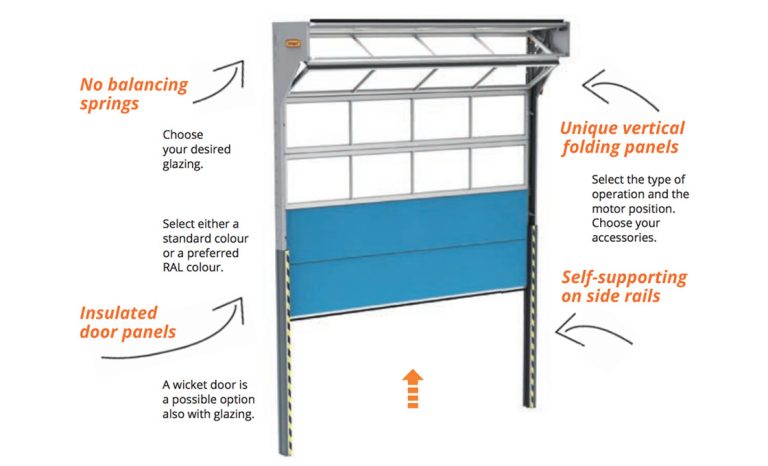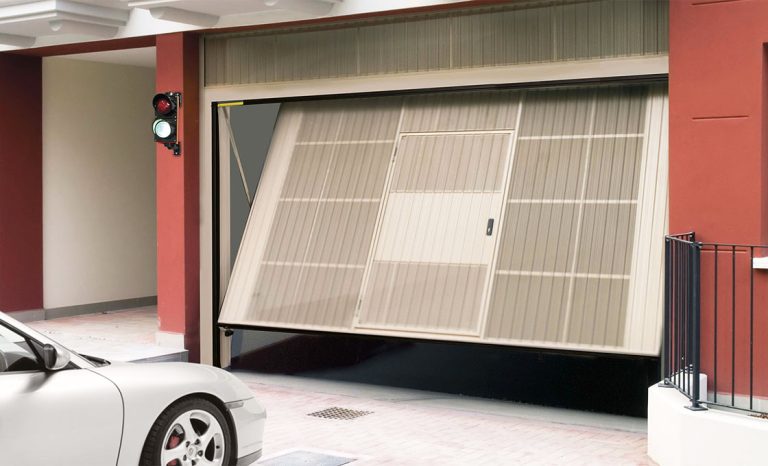
An automatic garage door opener is one of the most frequently operated electromechanical appliances in modern residential and commercial properties. On average, a residential garage door opens and closes 1,500 to 2,500 times per year, serving as the primary entryway for over 70% of suburban homeowners. Yet despite its daily use, the actual operation, internal components, and engineering principles behind an overhead opener are widely misunderstood.
A widespread myth is that the electric opener motor physically deadlifts the entire 150 to 400-pound weight of the door. In reality, an electric opener acts as a precision regulator and guidance controller. The heavy lifting is performed by high-tension counterbalance springs, while the motorized powerhead provides the controlled starting torque, directional travel, electronic safety monitoring, and security locking. This comprehensive guide breaks down how openers work, their primary drive systems, motor technologies, safety standards, and selection criteria.
Key Engineering Takeaways:
- Springs Lift, Motors Guide: Counterbalance springs offset 90% to 95% of door mass. The opener only exerts 10 to 20 pounds of force to initiate and control movement.
- DC Motors Dominate Modern Openers: 24V Brushless DC (BLDC) motors offer quieter operation (<55 dBA), soft-start/soft-stop deceleration, and seamless battery backup integration compared to legacy AC induction motors.
- Drive Type Dictates Noise: Steel-reinforced polyurethane belts provide near-silent operation for living spaces above garages, while heavy steel chains offer maximum durability for uninsulated detached garages.
- Mandated Safety Systems: Modern openers must comply with UL 325 and regional mandates (such as California SB 969 battery backup requirements) with dual-point monitored auto-reverse mechanisms.
What Does a Garage Door Opener Actually Do? (The Counterbalance Truth)
To understand a garage door opener, you must first look at the counterbalance system. Whether a garage door is made of lightweight uninsulated aluminum or heavy solid oak, the door is suspended by heavy-duty torsion springs or side-mounted extension springs that store mechanical potential energy when the door is closed.
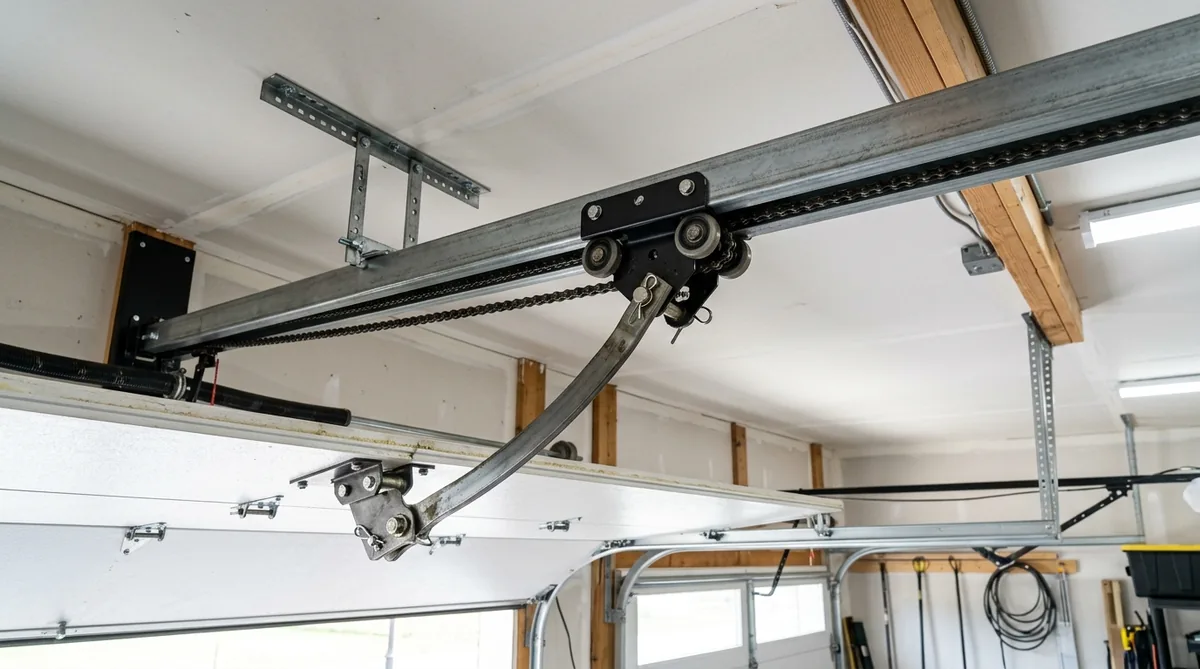
When properly wound and calibrated, these springs counterbalance the door weight so perfectly that a person can easily lift a 300-pound door with one hand using only 10 to 15 pounds of physical effort. The electric opener serves three vital functions:
- Overcoming Inertia: Delivering controlled initial torque to break the door out of its stationary resting position.
- Speed and Position Regulation: Maintaining a steady travel speed (typically 7 to 9 inches per second) and decelerating smoothly at travel limits to prevent slamming.
- Security and Positive Locking: Locking the drive trolley or engaging an internal mechanical gear reduction that prevents intruders from manually forcing the door open from the outside.
The 6 Core Components of an Overhead Garage Door Opener
An automated overhead opener is an integrated electromechanical system consisting of six primary subsystems:
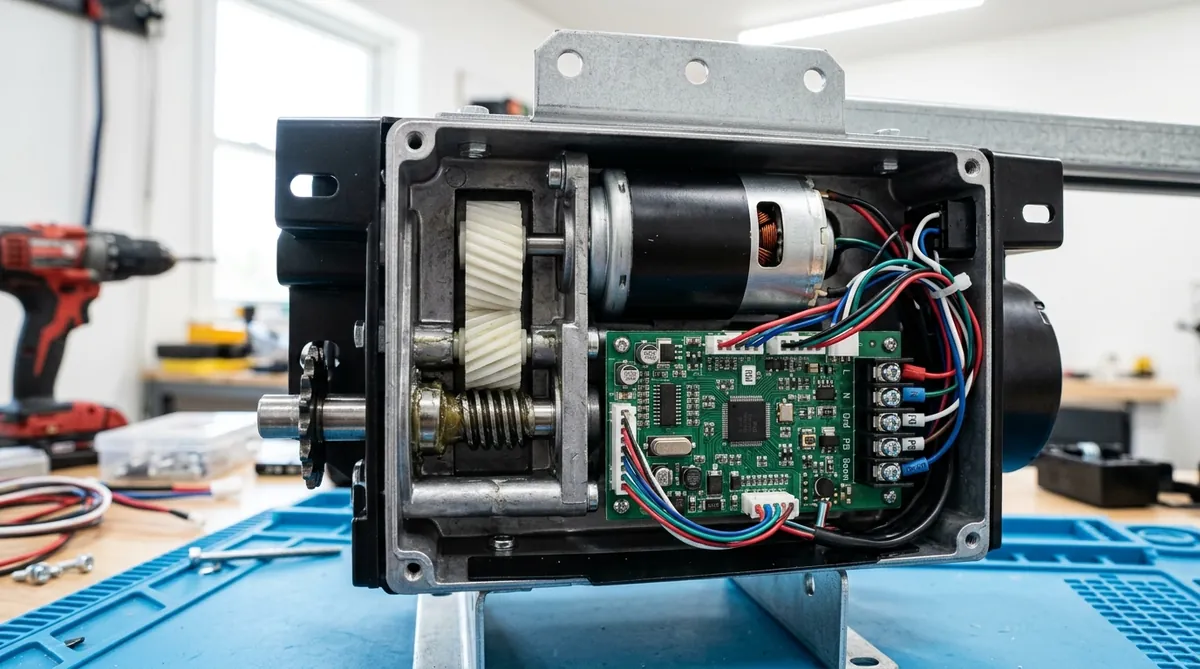
- 1. Electric Motor Powerhead: The central housing containing the electric motor (AC or DC), thermal overload protection, and an internal reduction gearbox (typically a steel worm gear driving a composite helical gear) that converts high-speed motor rotation into high-torque pulling power.
- 2. Structural Boom & Drive Assembly: A rigid steel T-rail, I-beam, or multi-piece C-channel extending from the powerhead to the front wall header. It supports the drive medium (chain, rubber belt, or threaded steel screw) and guides the traveling carriage.
- 3. Trolley Carriage & Drawbar Linkage: A sliding shuttle that rides along the rail. It connects to the top door panel via an adjustable steel drawbar (J-arm) and includes a mechanical disconnect cord for manual operation during power outages.
- 4. Electronic Control Logic Board: The micro-controller brain that processes signals from wireless remote controls, wall consoles, and security sensors. It manages optical travel limits, dynamic electronic force sensing, and smart home connectivity.
- 5. Optical Entrapment Protection Sensors (Photo Eyes): Infrared transmitter and receiver units mounted 6 inches above the garage floor across the opening to project an invisible safety beam.
- 6. Wall Control Console & Wireless Remotes: Multi-function wall panels with motion-activated lighting, lock mode switches, and rolling-code wireless radio transmitters (typically operating on 310/315/390 MHz frequencies).
Drive Types Compared: Belt, Chain, Screw, and Wall-Mount Jackshaft
Selecting the right drive configuration directly affects noise levels, long-term maintenance requirements, and spatial clearance inside the garage.
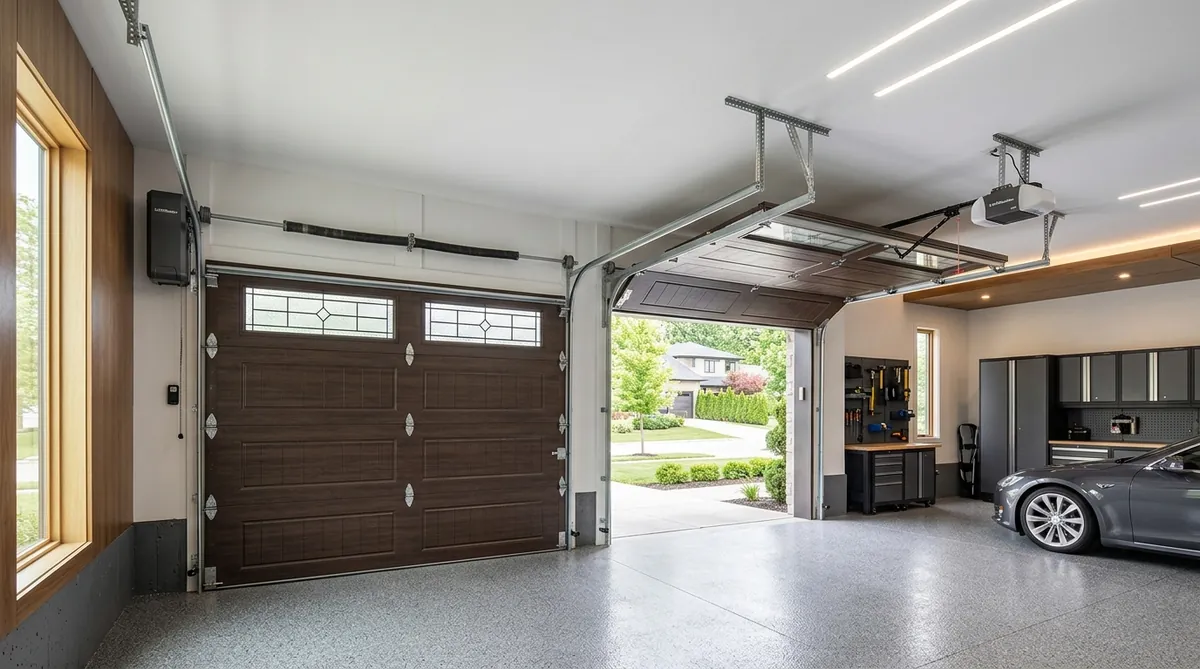
| Drive Mechanism | Acoustic Noise (dBA) | Maintenance Level | Best Application |
|---|---|---|---|
| Belt Drive (Steel-Reinforced) | Ultra-Quiet (<52 dBA) | Low (No lubrication required) | Attached garages with bedrooms directly above or adjacent |
| Chain Drive (Full Roller Chain) | Moderate (65 – 72 dBA) | Medium (Annual chain lube & tensioning) | Detached garages, heavy solid wood doors, cost-conscious buyers |
| Screw Drive (Direct Thread) | Moderate (58 – 65 dBA) | Low (Periodic lithium grease on rod) | Regions with consistent temperatures, wide double-car doors |
| Wall-Mount Jackshaft | Ultra-Quiet (<50 dBA) | Low (Direct shaft coupling) | High-lift tracks, cathedral/vaulted ceilings, overhead storage preservation |
Motor Types: AC Induction vs. 24V DC Brushless Motors
The internal electric motor is the heart of the opener powerhead. Over the past decade, the garage door automation industry has transitioned from legacy AC induction motors to sophisticated 24V Brushless DC (BLDC) motors.
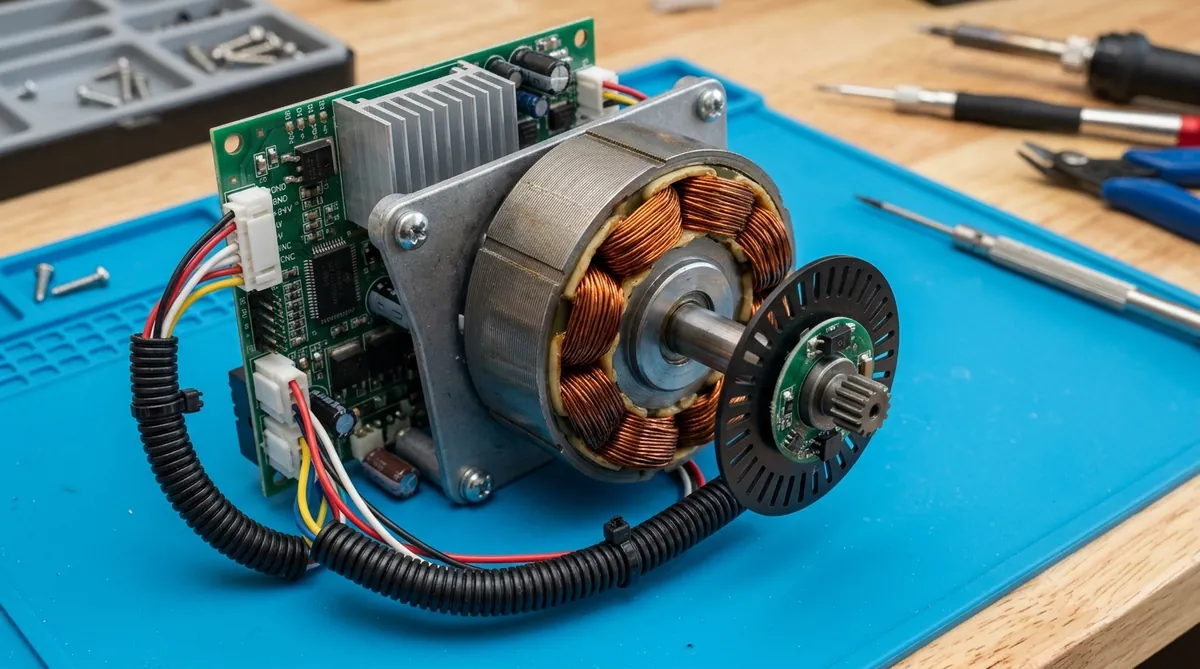
AC Induction Motors (110V/220V): Single-phase induction motors utilize a starting capacitor to generate rotational torque. They run at a fixed rotational speed (typically 1,725 RPM) with an on/off operational profile. When activated, an AC motor starts with an abrupt mechanical jerk and stops abruptly at the limit switch. While extremely robust and simple, AC motors produce notable vibrational hum through ceiling framing.
24V Brushless DC Motors: DC motors utilize permanent neodymium magnets and electronic commutation. They deliver distinct operational advantages:
- Variable Speed & Soft-Start/Stop: The microprocessor gradually accelerates the motor during the first foot of travel and ramps down speed before contact with the floor, eliminating slamming and extending spring/hinge life.
- Seamless Battery Backup: Because the motor natively runs on 24V direct current, it integrates directly with internal 12V/24V sealed lead-acid or lithium battery backup modules during grid outages.
- Dynamic Force Monitoring: The motor controller continuously samples current draw thousands of times per second. If an obstruction creates resistance exceeding a preset threshold, the motor reverses within milliseconds.
Safety Features & Legal Standards: Auto-Reverse, Photo Eyes, and Battery Backup
Because a garage door is the heaviest moving object in a residential structure, automated openers are governed by strict safety mandates designed to prevent entrapment and injury.
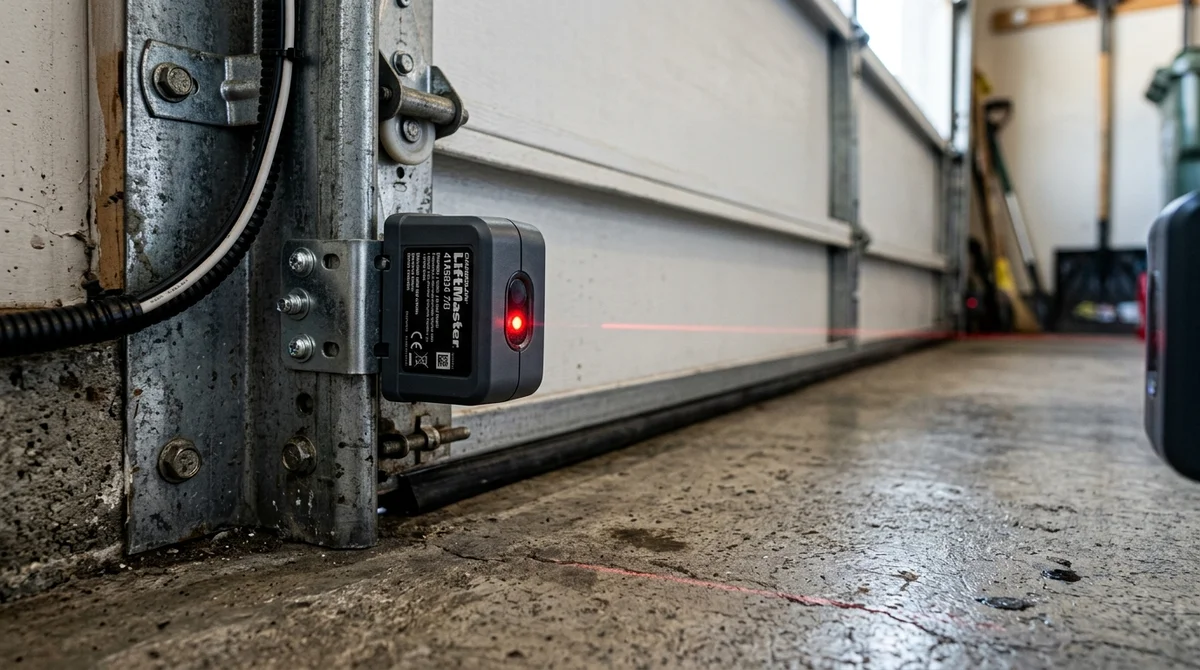
Under federal standard UL 325 (and European standard CE EN 12453), all automated openers manufactured after 1993 must incorporate dual independent entrapment protection systems:
- Contact Mechanical Reversal: If the descending door strikes an object at least 1.5 inches high (such as a 2×4 board laid flat on the floor), the powerhead must detect resistance and reverse the door to full open within 2 seconds.
- Non-Contact Photoelectric Eyes: Monitored infrared sensors mounted no higher than 6 inches above the floor must project an uninterrupted beam across the threshold. If a child, pet, or vehicle breaks the beam while the door is closing, the opener instantly stops and reverses travel.
- California SB 969 Mandate: In response to wildfire evacuations where power outages trapped residents, California enacted SB 969 requiring all newly installed residential garage door openers to include an integrated battery backup system capable of operating the door during a utility failure.
How to Size an Opener for Your Door: Horsepower & Force Guide
Choosing the correct motor rating ensures long-term reliability and prevents premature gear wear or thermal overload trips.

| Door Size & Material | Approximate Weight | Minimum Rating | Recommended Opener Specification |
|---|---|---|---|
| Single-Car Steel (8×7 or 9×7 Uninsulated) | 75 – 120 lbs | 1/2 HP or 500N | 1/2 HP DC Belt or Chain Drive |
| Double-Car Insulated Steel (16×7 or 16×8) | 150 – 240 lbs | 3/4 HP or 800N | 3/4 HP Equivalent DC Belt Drive with Battery Backup |
| Carriage House Solid Wood or Glass/Aluminum | 280 – 450+ lbs | 1 HP to 1-1/4 HP | 1-1/4 HP (1200N) Heavy-Duty Chain or Wall-Mount Jackshaft |
| Commercial Sectional / Rolling Steel (12×12+) | 400 – 1000+ lbs | 1.5 HP to 2+ HP | Continuous-Duty 3-Phase Industrial Jackshaft Operator |
Common Opener Problems and Contractor Troubleshooting Solutions
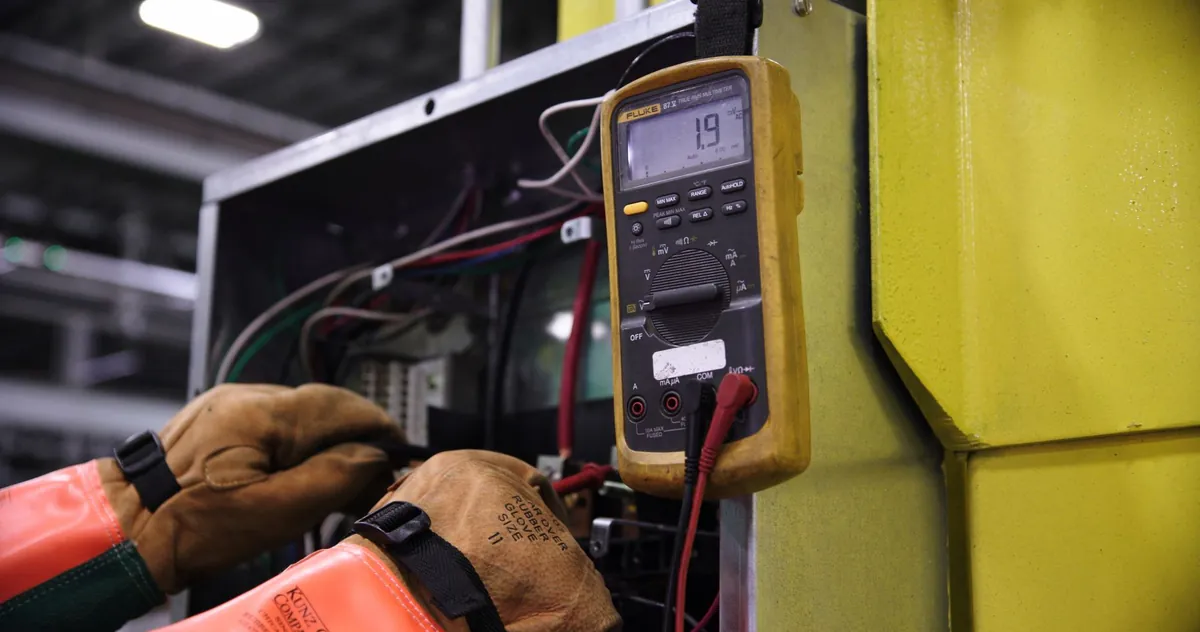
When an automated garage door opener malfunctions, systematic diagnosis can distinguish between minor electrical misalignments and serious mechanical failures.
| Observed Symptom | Probable Root Cause | Recommended Corrective Action |
|---|---|---|
| Door opens fully but will not close (lights flash 10 times) | Photo eye sensor misalignment, dirty lenses, or obstructed infrared beam | Clean sensor lenses and adjust wing nuts until amber sending and green receiving LEDs glow solid with no flickering. |
| Motor hums for 2–3 seconds but door does not move | Broken torsion spring, locked slide bolt, or stripped nylon drive gear | Pull emergency release cord to test manual door balance. If door is extremely heavy, replace broken spring before running opener. |
| Door hits floor and immediately reverses back to open | Down travel limit set too far down, triggering ground force resistance | Turn down travel adjustment screw counter-clockwise or reprogram digital electronic limit travel so door seals gently against floor. |
| Remote controls only work within 5 feet of the garage | LED light bulb radio frequency interference (RFI) or weak remote battery | Replace standard residential LED bulbs in powerhead with shielded garage door-rated LED bulbs and replace remote CR2032 lithium cells. |
Frequently Asked Questions About Garage Door Openers
What is the primary function of a garage door opener?
The primary function of an electric opener is to regulate, guide, and lock the door movement. The door’s heavy deadweight is lifted by the counterbalance springs, while the opener provides starting torque, speed regulation, automatic safety reversal, and secure locking.
What is the quietest type of garage door opener?
Belt-drive openers powered by 24V DC brushless motors are the quietest overhead systems, operating at under 52 dBA. Wall-mounted jackshaft direct-drive openers are also virtually silent because they eliminate overhead ceiling rail vibrations entirely.
How long do garage door openers typically last?
Quality residential garage door openers have an average operational lifespan of 10 to 15 years (roughly 15,000 to 25,000 cycles). Regular lubrication of door rollers, proper spring balancing, and using DC soft-start motors can extend opener life past 15 years.
Can I replace a garage door opener myself?
Yes, a handy homeowner can replace an overhead opener using basic hand tools in 3 to 5 hours. However, servicing or adjusting the high-tension torsion counterbalance springs is hazardous and should always be handled by a trained door technician.
Why does my garage door opener reverse before touching the floor?
Premature reversal is almost always caused by misaligned safety photo eyes, dirty lenses, or an excessively sensitive down force setting. If the infrared beam is momentarily broken or track friction exceeds the force limit, the opener reverses for safety.