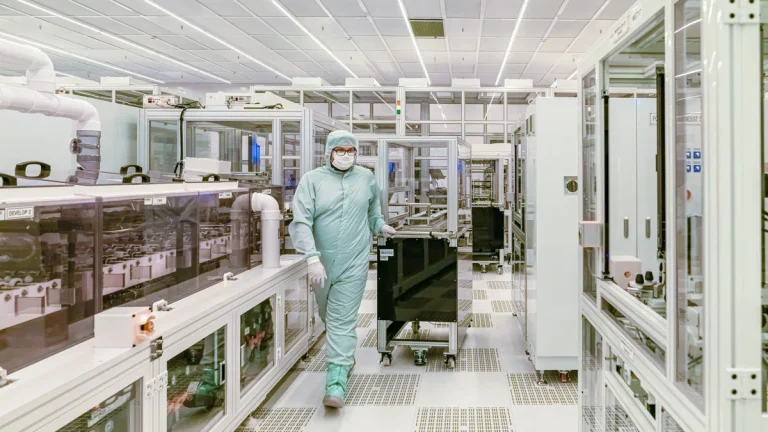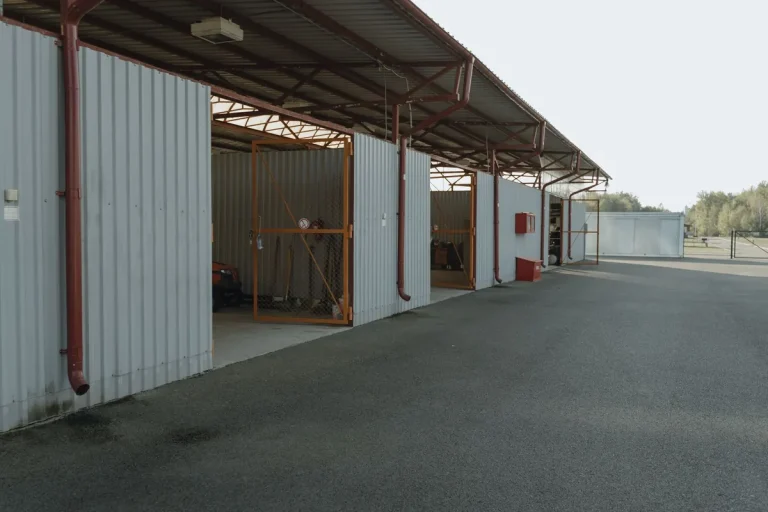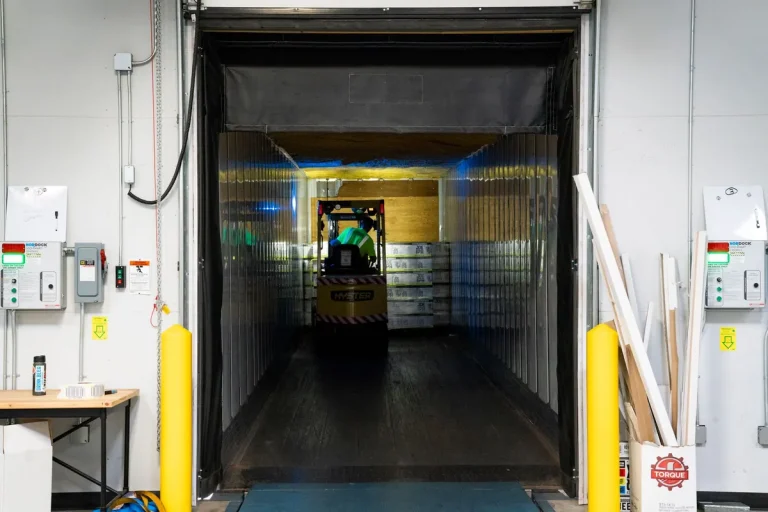
A general contractor finishes the drawing set for a new sterile suite and copies the door schedule from the warehouse block. Same leaf, same hardware, same painted steel. Nothing on the page looks wrong, and that is exactly the problem, because the door only fails after the room around it has passed every other test.
The reason that swap is not allowed has less to do with door catalogues than with the text of the regulations themselves. Current good manufacturing practice never names a door, yet cGMP cleanroom door requirements fall out of its clauses almost line by line. This article follows that logic. It lays out what the rules demand, and shows where a standard industrial door breaks each one.
What cGMP Text Says About Doors
Start with the American rule. 21 CFR 211.42 requires that buildings used for drug production be of suitable construction to facilitate cleaning and maintenance. For aseptic processing areas it asks for smooth, hard, easily cleanable surfaces throughout the classified space.
The wording targets floors, walls and ceilings, but a door leaf is a wall that moves several times an hour. Whatever standard applies to the panel beside it also applies to the panel that swings in it. That reading is the entry point for cGMP cleanroom door requirements.
The European text tightens the screws. EU GMP Annex 1 requires that cleanrooms hold positive pressure relative to the lower-grade background under all operational conditions. The guidance minimum is 10 pascals between adjacent rooms of different grades.
Annex 1 also governs airlocks directly. Entry and exit doors must not open simultaneously, and grade A and B airlocks require an interlocking system. Where segregation depends on it, a defined time delay between closing and opening of interlocked doors should be established.
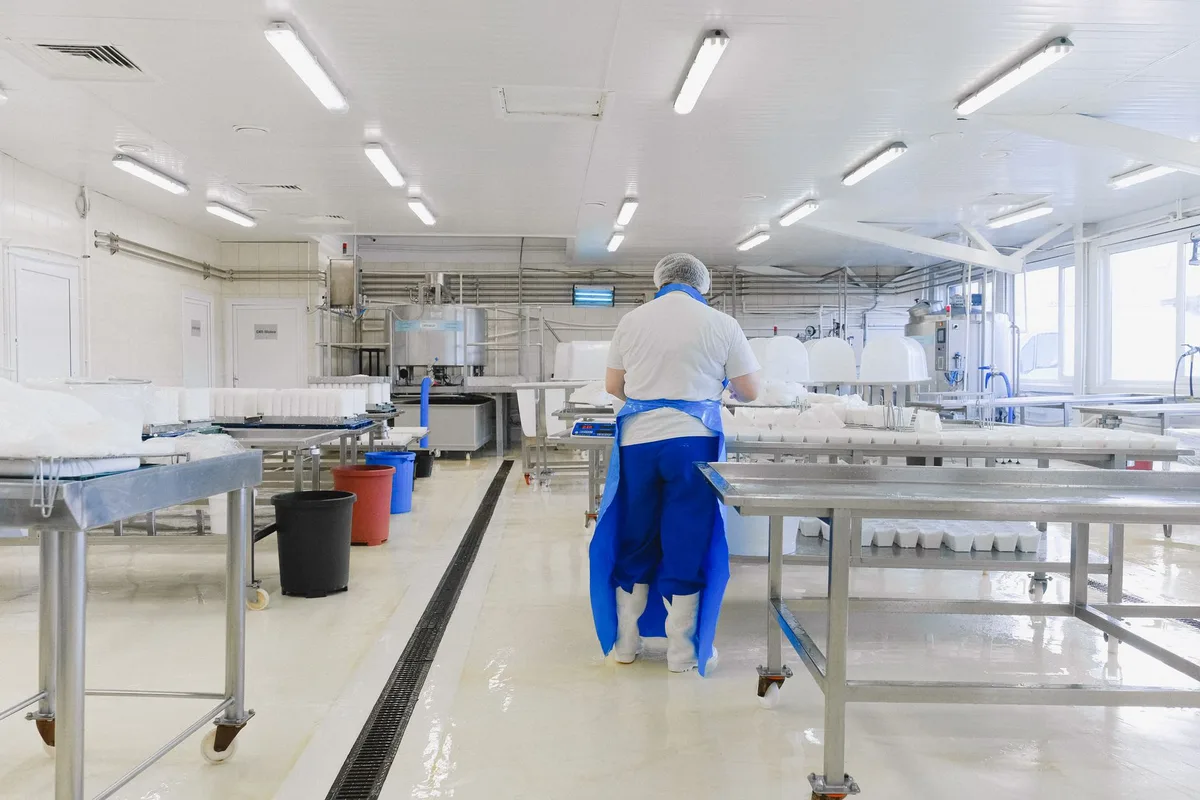
Read those clauses together and cGMP cleanroom door requirements assemble themselves. A door that leaks, that sheds, that stays open long enough to equalize two rooms, or that cannot survive daily disinfection, breaks requirements the text states explicitly. Regulators never wrote the words “standard industrial doors are prohibited.” They did not need to. The prohibition is inferred, clause by clause, and that inference is what an inspector will apply to your door schedule. You can read the Annex 1 text itself and check each clause against the hardware you plan to buy.
Door Open Time and the Air You Lose
Annex 1 asks for the pressure cascade to hold under all operational conditions, and the door is the only part of the envelope that regularly defeats it. Every opening event exchanges air between rooms of different grades. The volume traded depends far less on the doorway width than on how long the leaf stands open. A 10 pascal differential moves modest air through a gap, but it moves a great deal through an open hole.
This is where open time becomes a regulatory number. A manually operated industrial door takes tens of seconds per passage once a person approaches, unlocks, rolls, and re-closes it. A high speed door from our factory’s 0.8 to 2.5 m/s range completes the same cycle in seconds. That is an order of magnitude less time for two graded rooms to breathe into each other. The savings repeat with every trip, on every shift.
Annex 1 then makes the behavior itself controllable. Where segregation requires it, the text expects a time delay between the closing and opening of interlocked doors. That turns door timing from a habit into an established, documented parameter. One engineering source summarizes ISO 14644-4 as recommending 5 to 20 pascals between rooms, a reminder that the cascade is engineered, not assumed. A door that is too slow to let that engineering hold is not a variant choice; it is a compliance gap with a number attached.

Why Cleanability Disqualifies Standard Panels
The American clause asks for smooth, hard, easily cleanable surfaces, and most standard industrial doors fail it on geometry alone. Corrugated shutter slats, ribbed panel skins, exposed rails, and bolt heads give disinfectant somewhere to pool and particles somewhere to lodge. Every ledge is a cleaning task that ends in a swab result.
Hygienic door construction inverts the geometry. Cleanroom curtains and leaves are typically flush, single-plane surfaces with concealed fixings. Vision panels sit bonded flush to the leaf, and frames are designed without dust traps. Supplier literature converges on that pattern.
A high speed roll-up door in a clean configuration keeps its entire curtain as one smooth wipeable face. That is why food and pharma plants running washdown regimes put them at wet boundaries. The comparison is not aesthetic; the smooth version exists because the clause demands the result.
Frequency makes it worse for the standard door. A cGMP cleaning regime does not wipe a boundary door weekly; it may disinfect it several times per shift. Any surface detail that survives one cleaning becomes a groove after five hundred. The door that looked acceptable at handover reads as a contamination reservoir by the next audit. Cleaning validation for cleanroom doors is its own discipline for precisely this reason.

Material Compatibility With Harsh Disinfectant Regimes
Smoothness answers the clause on geometry, but the agents that deliver the cleaning attack the material itself. The disinfectants common in cGMP rotation, oxidizing agents and chlorine compounds among them, dull cheap powder coatings, cloud the wrong plastics, and pit low-grade steel. The damage accumulates over months of contact. The failure is slow, which makes it expensive: a door specified once is cleaned thousands of times before anyone measures the damage.
The material ladder in the industry is therefore a resistance ladder. Stainless steel leads it, with 316 preferred where chlorinated agents are in daily rotation and 304 standard elsewhere. HPL faces serve well where impact and chemicals are moderate, and coated steel sits at the bottom as the industrial default. Gaskets and seals need the same screening, since a corroded frame behind a sound curtain still sheds.
We run stainless clean room doors and galvanized industrial shutters on the same factory line. From that seat, the hierarchy plays out in warranty claims rather than in brochures.
For the harshest boundaries, the door and the wall converge on the same answer. A stainless steel GMP flush door exists because the wall next to it is stainless too. The auditor expects the moving panel to argue its case at the same standard. Material choice is where cGMP cleanroom door requirements stop being abstract and start appearing on the quote.
Audit Trails: The Door as Regulated Equipment
The last pillar is the quietest. Under 21 CFR 211.68, automatic, mechanical and electronic equipment must run to an established program and keep records of its checks and maintenance. An automated cleanroom door with interlocks, safety sensors and a time delay is exactly that kind of equipment. Its settings and service history belong in the same controlled documentation as the filling line.
Annex 1 points the same direction. The word “established” in the time delay clause is not decoration. It means the delay exists on paper, with a value, a rationale and a check. A door that cannot produce its own parameters, inspection records and material certificates forces the quality unit to defend it with a brochure. That is usually the moment a standard industrial door is reclassified as a deviation rather than a component, the last of the cGMP cleanroom door requirements.
None of this requires a special category of hardware. It requires a supplier who treats the door as equipment. That means test reports matching the serial numbers, material certificates for every contacting surface, and installation documents that survive a records request. The hardware difference between a compliant door and a standard one is visible; the documentation difference is decisive.
What This Means When You Specify
Put the five pillars together and the reasoning closes. The regulations demand cleanable surfaces, stable pressure under all conditions, controlled door behavior and records that prove all three. A standard industrial door misses each requirement by design, because it was engineered for weather, security and cost, and no clause in cGMP cares about any of those.
The practical conclusion is not that every classified door must be the most expensive one. It is that every classified door must be arguable. It must be fast enough for the validated cascade and smooth enough for the written cleaning regime. It must also resist the agents actually rotated, and carry documents strong enough to enter the quality system.
Where a performance comparison helps sizing that argument, our side-by-side performance comparison lays out the numbers. The full buying chain for ISO-compliant doors handles procurement from class to acceptance. cGMP does not prohibit a door model. It prohibits a door you cannot defend, and the defense is built in before the quote arrives.
Frequently Asked Questions
Do cGMP regulations explicitly prohibit standard industrial doors?
No. The text never names a door type. It requires cleanable surfaces, pressure under all operational conditions, interlocked airlocks and equipment records. A standard industrial door fails those requirements by design, so the prohibition is a clause-by-clause inference inspectors will apply.
How fast must a cleanroom door open?
No regulation sets a speed. The test is whether the pressure cascade holds and recovers as your validation plan defines, under all operational conditions. Faster open cycles reduce air exchange, which is why seconds-level high speed doors are favored at graded boundaries.
Why is stainless steel preferred in cGMP facilities?
Because it resists the oxidizing and chlorinated disinfectants rotated in cleaning regimes while staying smooth and hard. Stainless 316 is preferred where chlorine compounds are daily work; HPL and coated steel serve milder regimes lower on the resistance ladder.
Are high speed doors automatically cGMP compliant?
No. Speed addresses only the open-time clause. Compliance is a combination: cleanable geometry, compatible materials, interlocks with an established time delay. It also takes a document trail that lets the door enter the quality system as regulated equipment.
What does EU GMP Annex 1 require for airlock doors?
Entry and exit doors must not open simultaneously. For airlocks leading to grade A and grade B areas, the Annex specifies an interlocking system and a visual warning system. No regulation sets a minimum configuration for grade C and D airlocks; they follow the site’s contamination control strategy. A time delay between closing and opening should be established where area segregation requires it.