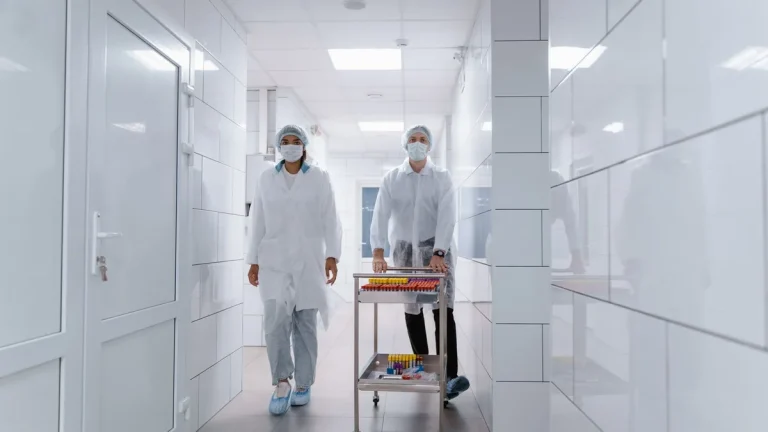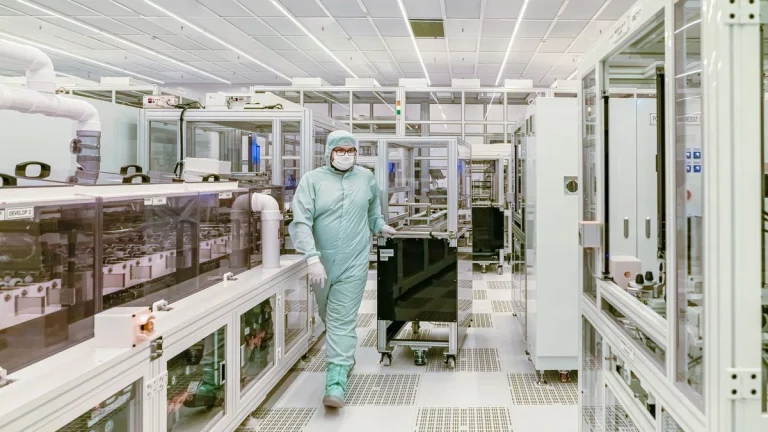
Controlled environment facility managers, pharmaceutical engineers, and contamination control specialists face an enduring specification dilemma when planning critical envelope barriers. At RAX Door Technology, engineering custom cleanroom barrier systems since 1999 across our 11,000-square-meter manufacturing plant, we see firsthand how the choice between compact High Pressure Laminate (HPL) and austenitic stainless steel door leaves directly dictates containment integrity, facility longevity, and lifecycle maintenance expenditure. Both construction methodologies provide proven contamination prevention, yet their engineering limits diverge under intense chemical wipe-downs, rolling cart impacts, and airlock pressure differentials.
Modern cleanroom architectures dictate that architectural access points maintain surface cleanliness without generating microscopic particulates or harboring microbial contaminants. Selecting the right door assembly requires examining mechanical properties, surface roughness specifications, resistance to aggressive chemical sporicides, and integration with dynamic pressure cascade systems. Evaluating these structural assemblies against ISO 14644-1 particulate limits, EU GMP Annex 1 sterility mandates, and HSE workplace health and safety risk assessment principles ensures long-term operational integrity across biopharmaceutical processing, semiconductor fabrication, and medical device manufacturing.
Core Cleanroom Door Material Evaluation
Cleanroom envelope integrity relies on materials that demonstrate zero porosity, high structural rigidity, and resistance to environmental degradation. High Pressure Laminate door leaves are manufactured by stacking multiple layers of kraft paper saturated with thermosetting phenolic resins, consolidated under simultaneous temperatures exceeding 130 degrees Celsius and hydraulic pressures above 9 megapascals. The exterior decorative face is fused with a transparent melamine overlay that forms an impenetrable, inert barrier against moisture, stains, and environmental humidity.
In contrast, stainless steel cleanroom doors are fabricated from austenitic alloys, predominantly AISI 304 or molybdenum-bearing AISI 316L. At RAX Door, our technical team fabricates fully welded stainless door skins encasing an aluminum honeycomb core on automated CNC lines, ensuring every assembly achieves certified structural squareness and passes helium mass spectrometer tightness testing before dispatch. Stainless steel exhibits a continuous metallic lattice protected by a self-healing chromium oxide passive film, which yields superior tensile strength, fire resistance, and surface smoothness down to 0.4 µm Ra.
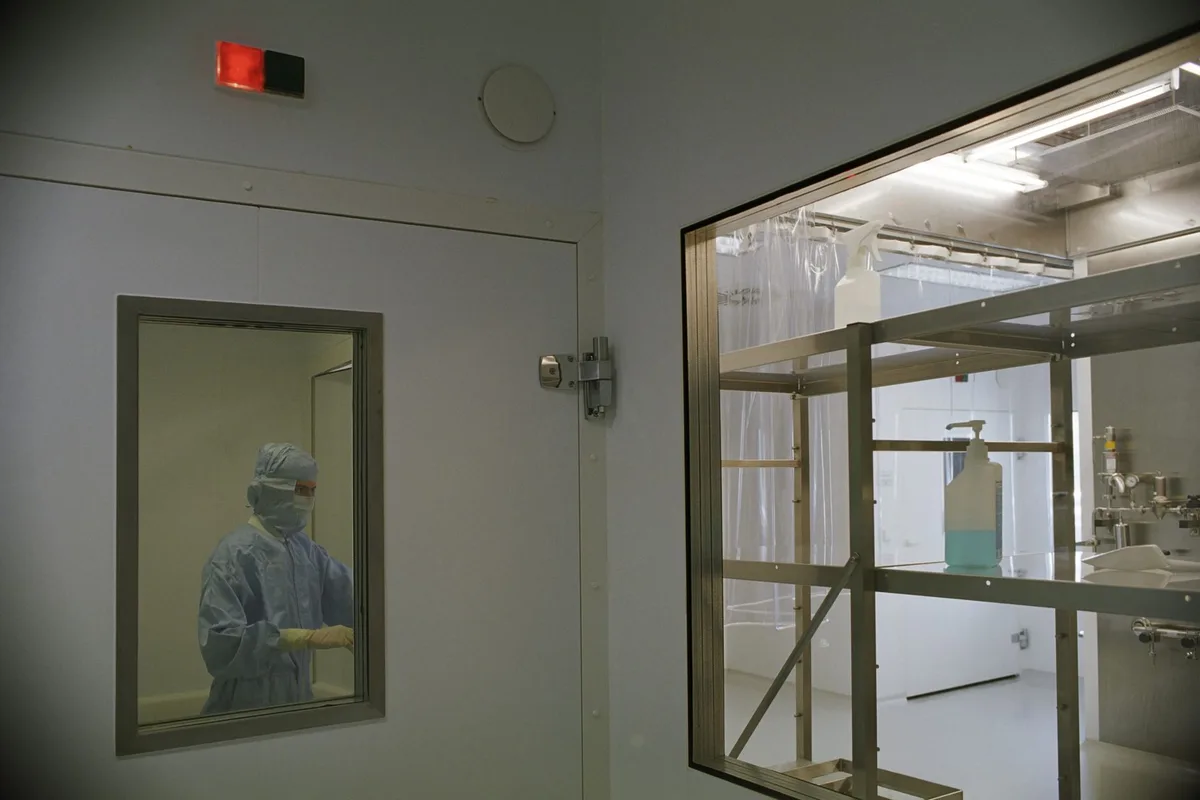
To establish an objective engineering baseline, technical specifiers examine core physical and metallurgical properties across standard manufacturing batches. The table below outlines fundamental engineering characteristics defining each construction methodology under standard cleanroom operating conditions.
| Engineering Parameter | Solid High Pressure Laminate (HPL) | AISI 304 Stainless Steel | AISI 316L Stainless Steel |
|---|---|---|---|
| Core Material Density | 1,350 to 1,450 kg/m³ (Solid Phenolic) | 7,930 kg/m³ (Sheet) / Honeycomb Core | 8,000 kg/m³ (Sheet) / Honeycomb Core |
| Surface Roughness (Ra) | 0.8 to 1.2 µm (Smooth Matte) | 0.4 to 0.6 µm (Satin Grain 240) | 0.2 to 0.4 µm (Electropolished) |
| Impact Resistance (EN 438) | Exceptional (Elastic Resin Absorption) | High (Risk of Permanent Denting) | High (Risk of Permanent Denting) |
| Thermal Expansion (10⁻⁶/K) | 18 to 22 (Requires Edge Clearances) | 16.5 to 17.5 (Predictable Movement) | 16.0 to 16.5 (High Thermal Stability) |
| Flammability Rating | Class B-s1, d0 (Self-Extinguishing) | Class A1 Non-Combustible | Class A1 Non-Combustible |
Understanding these fundamental characteristics helps structural engineers evaluate how door leaves respond to operational pressures within busy cleanroom environments. Where phenolic resin panels excel in mechanical energy dissipation without structural denting, stainless steel assemblies deliver non-combustible protection and micro-smooth hygienic finishes demanded by the highest grade cleanroom suites.
High Pressure Laminate Performance Profile
High Pressure Laminate door systems have gained immense traction across secondary pharmaceutical suites, microelectronics cleanrooms, and research laboratories due to their balance of mechanical toughness and aesthetic flexibility. The thermosetting curing reaction creates irreversible molecular crosslinks, converting the paper pulp and phenolic matrix into an ultra-dense solid panel that will not rot, delaminate, or soften when exposed to wet washing environments.
A primary mechanical advantage of compact HPL cleanroom doors lies in their remarkable impact resilience. In high-traffic material transfer airlocks where automated guided vehicles, mobile stainless steel trolleys, and transport carts frequently pass, inadvertent collisions are inevitable. Traditional hollow metal doors frequently suffer unsightly plastic deformation, surface creases, and denting that can compromise perimeter gasket alignment. Solid phenolic HPL doors absorb kinetic energy elastically, rebounding without structural dents or chipped coatings.
Key operational and architectural advantages of high pressure laminate systems include:
- Through-Body Impact Tolerance: Solid core resin matrices disperse shock loads throughout the panel thickness, eliminating the hollow reverberation and denting common to metallic doors.
- Anodized Aluminum Perimeter Wrapping: Precision extruded aluminum profiles encase the door edges, mechanical latches, and vision panels, preventing edge chipping and shielding core boundaries.
- Chemical Inertness to Solvents: Melamine surfaces resist broad organic solvent exposure, including isopropyl alcohol wipes, acetone spot cleanings, and mild acidic solutions.
- Color Coding Capabilities: Decorative resin facings facilitate visual zoning across facility airlocks, differentiating personnel gowning passages from material equipment airlocks.
Despite these engineering benefits, specifiers must account for design limitations inherent to resin-based composites. Compact laminate doors exhibit higher thermal expansion coefficients than metals and require meticulous machining for embedded hardware. If lock mortises or hinge cutouts expose unfinished phenolic cores to continuous moisture without proper sealant barriers, localized edge swelling can occur over prolonged operational lifecycles.
Need Custom Cleanroom Door Engineering?
Evaluate HPL versus stainless steel specifications against your facility chemical exposure and pressure regime with RAX Door technical engineers.
Stainless Steel Structural Integrity Advantages
At RAX Door, our technical team subjects all welded stainless steel door leaves to helium mass spectrometer testing and automated dimensional tolerance checks across our factory production lines, ensuring structural honeycomb cores remain hermetically sealed under continuous cleanroom differential pressures. Austenitic stainless steel remains the benchmark specification for primary sterile suites, biological safety facilities, and cleanroom zones subject to continuous fumigation. The inherent metallurgy of stainless steel provides structural rigidity, zero chemical absorption, and unmatched temperature tolerance, making it indispensable for high-containment envelope designs.
Engineering stainless steel cleanroom doors involves seamless fabrication techniques that eliminate bacterial harborage sites. Premium doors feature outer face sheets of 1.2 mm to 1.5 mm thickness that are formed, laser-cut, and continuous TIG welded at all corners. The welds are ground smooth and polished to match the surrounding sheet grain, producing a monolithic hygienic shell. When paired with high-performance cleanroom door systems, these assemblies deliver dependable airtight isolation under positive or negative differential pressures.
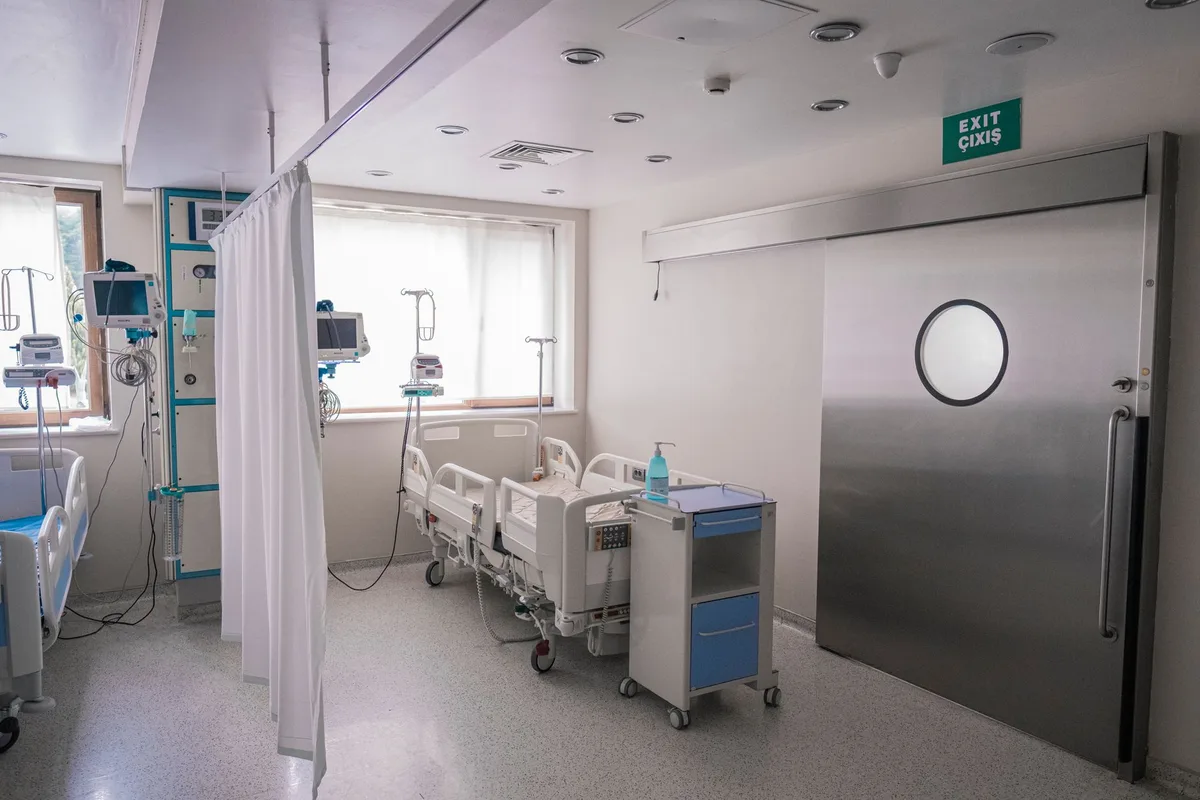
The structural and hygienic benefits of stainless steel assemblies encompass several critical engineering aspects:
- Sub-Micron Surface Polish: Electropolished finishes achieve surface roughness below 0.4 Ra, preventing biofilm adhesion and ensuring rapid rinse-down validation.
- Hermetic Seal Integration: Welded perimeter leaf frames maintain millimeter-precise gaps with matching stainless frames, optimizing pneumatic or silicone compression gaskets.
- Non-Combustible Fire Barrier: Metallic door construction provides certified fire resistance ratings up to 120 minutes without structural warping or toxic off-gassing.
- Heavy Hardware Anchorage: Welded internal reinforcing steel plates allow heavy-duty overhead closers, motorized operators, and electronic shear locks to remain securely anchored under continuous duty.
Specifiers must note that stainless steel requires careful alloy selection based on anticipated chemical exposure. While AISI 304 performs reliably in standard cleanrooms, environments utilizing chlorine-based sanitizers or aggressive sporicides demand AISI 316L with added molybdenum to prevent micro-pitting and crevice corrosion.
Chemical Resistance and Decontamination Protocols
Decontamination protocols represent the most demanding operational stress placed on cleanroom doors. Biopharmaceutical facilities, vaccine processing suites, and compounding pharmacies routinely employ potent sanitizers, rotating disinfectants, and gaseous sterilization cycles to eliminate biological contamination. Selecting an incompatible door surface leads to pitting, discoloration, micro-cracking, and subsequent microbial harborage.
High Pressure Laminate surfaces withstand frequent exposure to quaternary ammonium compounds, amphoteric surfactants, and alcohols such as 70% isopropanol without structural alteration. However, prolonged direct contact with concentrated sodium hypochlorite or aggressive hydrogen peroxide vapor can slowly degrade melamine surface gloss, leading to subtle yellowing or micro-porosity over years of intensive decontamination cycles.
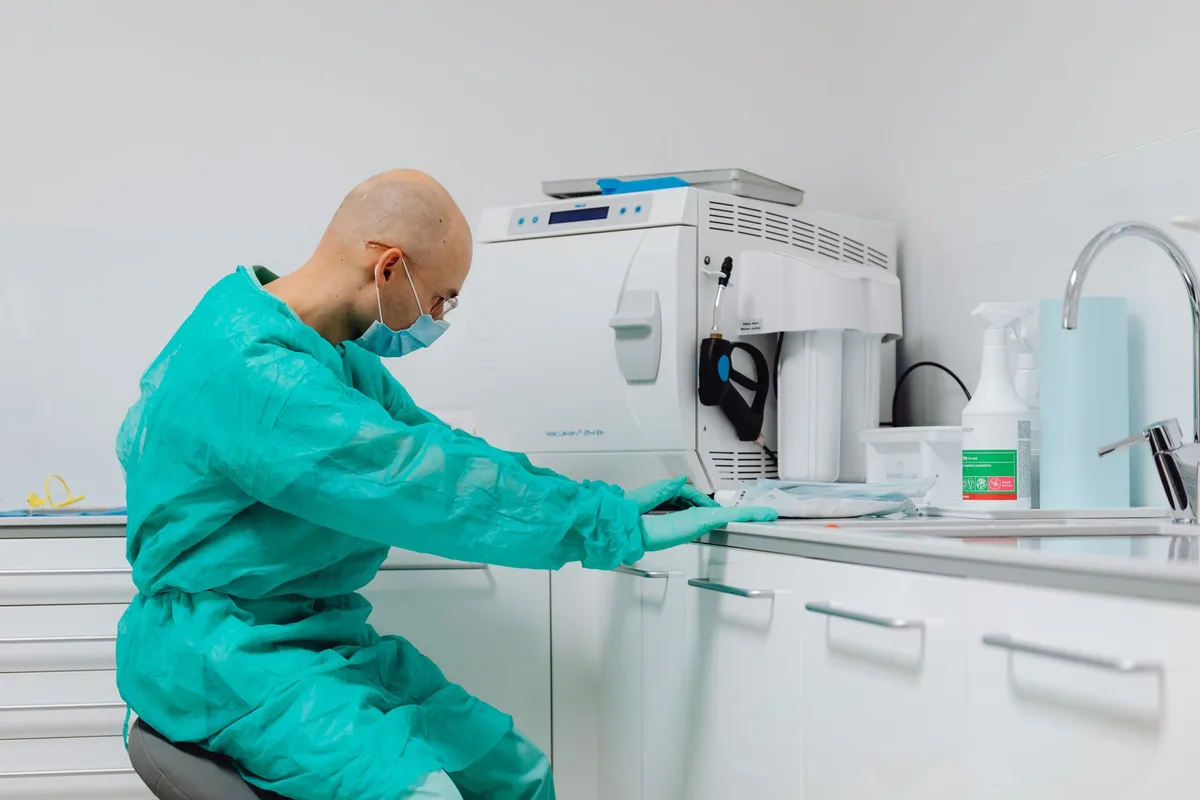
Conversely, 316L stainless steel exhibits supreme resistance to Vaporized Hydrogen Peroxide (VHP) and chlorine dioxide fumigation cycles. The chromium-molybdenum passive film provides an inert barrier that withstands oxidation from gaseous sterilants. However, if hypochlorite residues dry on metallic surfaces without adequate purified water rinsing, free chloride ions can penetrate the passive layer, initiating localized galvanic pitting.
| Chemical Disinfectant Agent | HPL Compact Laminate | AISI 304 Stainless | AISI 316L Stainless |
|---|---|---|---|
| 70% Isopropyl Alcohol (IPA) | Excellent (No Surface Attack) | Excellent (Rapid Evaporation) | Excellent (Optimal Compatibility) |
| Hydrogen Peroxide Vapor (VHP) | Moderate (Minor Yellowing Over Time) | Very Good (Occasional Haze) | Exceptional (Zero Degradation) |
| Sodium Hypochlorite (0.5% Bleach) | Good (Rinse Required) | Fair (Risk of Pitting Without Rinse) | Good (Requires Routine Water Rinse) |
| Peracetic Acid (PAA) | Good (Contact Time < 15 min) | Good (Requires Prompt Passivation) | Excellent (Highly Resistant) |
| Phenolic Disinfectant Solutions | Excellent (Native Phenolic Core) | Very Good (Surface Film Clearing) | Excellent (Standard Cleaning Protocol) |
To preserve surface passivation and avoid premature barrier degradation, maintenance teams must follow a validated sanitation procedure when rotating chemical agents across facility airlocks.
Decontamination Protocol Advisory: When implementing sporicide rotation using sodium hypochlorite or peracetic acid on stainless steel doors, ensure the SOP mandates a purified Water-for-Injection (WFI) or 70% IPA wipe-down within 15 minutes of dwell time. This prevents residual chloride salt crystallization, maintaining the protective passive chromium layer indefinitely.
Cleanroom Classification and Grade Suitability
Cleanroom standards established by ISO 14644-1 and EU GMP Annex 1 categorize manufacturing environments based on airborne particulate concentrations and microbiological cleanliness. Specifying door materials requires aligning structural capabilities with cleanroom grade stringency. Over-engineering lower-grade zones wastes capital expenditure, while under-specifying critical aseptic envelopes risks regulatory audit citations and batch rejections.
In Grade A and Grade B aseptic processing cores where open product containers are exposed, airborne particulate limits are exceptionally stringent (ISO 4.8 to ISO 5 at rest). These environments mandate AISI 316L stainless steel doors. The non-shedding characteristics, electropolished surface micro-topography, and ability to endure daily automated VHP sterilization make stainless steel the standard material of choice for sterile filling, lyophilization transfer, and biological containment.
In contrast, Grade C and Grade D zones, including secondary packaging, personnel gowning suites, tablet compression halls, and medical device component assembly (ISO 7 to ISO 8), represent ideal applications for solid HPL doors. The frequent cart transit in these areas benefits from the impact dissipation of phenolic resin, reducing maintenance downtime while providing easy wash-down surfaces that satisfy GMP hygiene guidelines.
Facility engineers follow a systematic verification workflow to validate door material selection during front-end engineering design:
- Define Regulatory Cleanliness Class: Confirm whether the room envelope operates under ISO Class 5 / Grade A/B aseptic requirements or ISO Class 7-8 / Grade C/D secondary standards.
- Map Sanitization Chemical Matrices: Audit all primary and secondary cleaning agents, noting maximum concentration levels, exposure dwell times, and gaseous VHP frequencies.
- Evaluate Material Handling Traffic: Calculate daily pass-through frequency of automated pallet trucks, heavy transfer carts, and personnel movements to assess impact risk.
- Verify Differential Pressure Cascade: Ensure selected door leaf stiffness prevents perimeter seal deflection under design pressure differentials (typically 15 to 45 Pa).
Lifecycle Cost and Procurement Pitfalls
Procurement decisions often prioritize initial purchase cost, yet evaluating capital expenditure without analyzing long-term operational maintenance leads to severe budget overruns. Stainless steel doors carry an initial acquisition cost approximately 50% to 100% higher than equivalent compact HPL doors. This cost premium stems from raw material expense, skilled TIG welding labor, specialized passivation baths, and complex sheet forming equipment.
However, over a 15-to-20-year facility operational window, stainless steel doors deliver outstanding return on investment in high-sterility zones. Their resistance to continuous chemical vapor attack and imperviousness to edge delamination eliminate door replacement downtime. Conversely, in high-traffic logistics airlocks, dented stainless steel doors frequently necessitate leaf replacement or extensive refinishing, tipping the lifecycle financial calculation in favor of impact-resistant HPL assemblies.

When preparing procurement specifications, engineering teams must guard against common specification oversights that compromise operational efficiency:
- Galvanic Corrosion at Fasteners: Pairing stainless steel door frames with standard zinc-plated carbon steel anchors creates galvanic cells that degrade structural fastenings within humid washdown environments.
- Unsealed HPL Hardware Mortises: Failing to factory-seal internal cutouts for mortise locks and drop seals allows cleaning liquids to penetrate and swell internal phenolic cores over time.
- Mismatched Thermal Expansion Tolerances: Overlooking the differential expansion between HPL panels and metallic partition framing results in latch jamming during seasonal HVAC temperature fluctuations.
- Inadequate Frame Structural Stiffeners: Omitting heavy gauge internal backplates inside hollow metal frames leads to door sag and perimeter gasket air leakage after high-cycle operation.
Procurement Specification Summary: Optimize project budgets by adopting a hybrid architectural door strategy. Specify fully welded 316L stainless steel doors for primary Grade A/B sterile cores and high-frequency VHP decontamination chambers. Deploy solid phenolic HPL doors throughout Grade C/D corridors, gowning airlocks, and material handling routes to maximize impact resilience and minimize overall capital outlay.
Frequently Asked Questions
Are HPL doors compliant with EU GMP Annex 1 regulations?
Yes, compact HPL doors comply with EU GMP Annex 1 requirements for Grade C and Grade D cleanroom zones. Their non-porous melamine surfaces do not harbor microbial contaminants, provided door perimeter edges are sealed with anodized aluminum profiles or seamless polyurethane resin encapsulation.
Can scratches on stainless steel cleanroom doors be repaired in place?
Surface scratches on mechanically polished stainless steel (such as 240-grit satin finish) can be repaired in place using specialized abrasive pads and passivating paste. However, electropolished finishes cannot be restored on-site without removing the leaf for specialized electrochemical tank treatment.
How does solid core HPL respond to continuous VHP bio-decontamination?
Solid HPL doors tolerate episodic VHP cycles, but repeated long-term exposure (exceeding 200 cycles annually) can cause slight surface gloss reduction and faint yellowish discoloration on light-colored melamine facings. High-frequency VHP chambers should prioritize 316L stainless steel, maintaining continuity with EN 12207 air permeability standards.
Why is 316L preferred over 304 stainless steel in pharmaceutical cleanrooms?
AISI 316L contains 2% to 3% molybdenum, which significantly boosts resistance to localized chloride pitting caused by sporicidal disinfectants like sodium hypochlorite. It also features a lower carbon content (< 0.03%), preventing chromium carbide precipitation during welding, maintaining continuity with GMP compliant steel cleanroom swing doors.
What is the typical operational lifespan of an HPL cleanroom door?
A high-quality compact HPL cleanroom door operating in Grade C or D areas delivers an expected service life of 12 to 18 years. Its elastic resistance to trolley impacts often gives it greater aesthetic longevity than hollow metal doors in heavy-traffic corridors, maintaining continuity with cleanroom cleaning validation protocols.