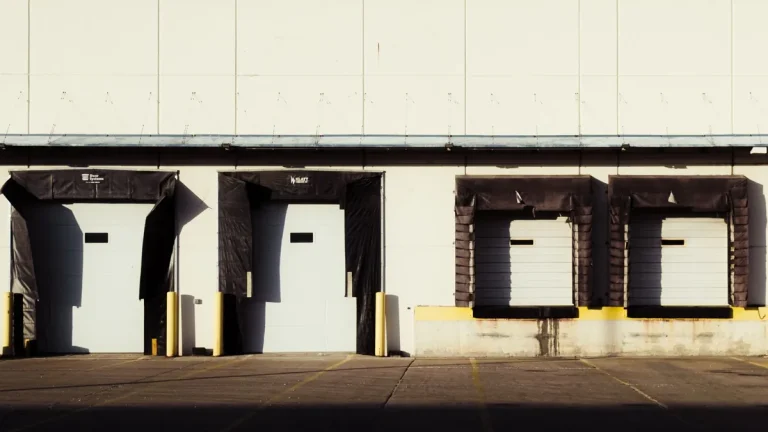
The call comes at two in the morning. A sectional door is stuck two thirds of the way up its guide track. A forklift is queued behind it, and the maintenance supervisor asks one question before any other: is it the roller or the track. Ordering the wrong side means a second downtime event to fix the first one. This page answers that question in the order the failure actually happens.
We build industrial door tracks and rollers at the factory, and our discipline is simple: read the wear sequence before touching a wrench. The answer to the supervisor’s question, previewed once, is that rollers almost always die first and drag the track out of alignment behind them.
How Tracks and Rollers Work as a System
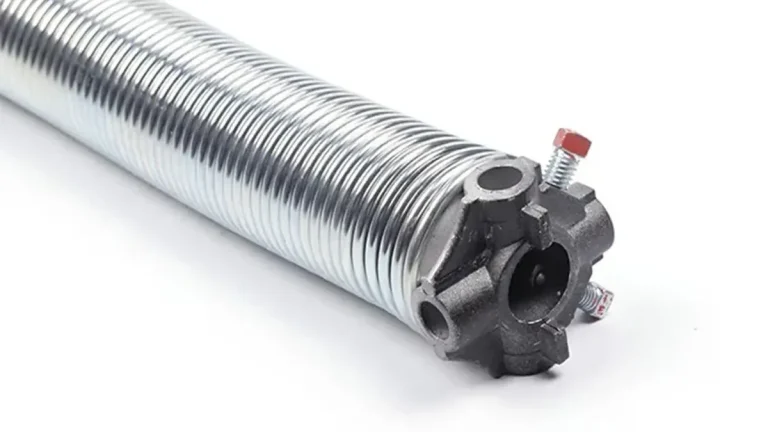
Follow the weight. Every panel of a sectional door hangs from its hinges, each hinge carries a roller stem, and each wheel rolls inside a steel track bolted to the frame. The door’s mass travels through that chain into the building, balanced mostly by torsion springs. The analogy that holds up on our floor is the train. Track and wheel are one contact pair, and reading which wore out first tells you how to read a derailment.
That contact pair is also the only rolling interface on the door. Motors, springs and hinges push or pull, but the roller is the single part that rolls, and the track is the only surface it rolls on.
Track Types: Standard, High Lift and Vertical
Track configuration is decided by the building, not the door. Standard lift track curves from vertical to horizontal just above the opening. Commercial installations typically need about 15 to 36 inches of headroom to make that curve, while residential doors manage on roughly 12 to 15 inches.
High lift track extends the vertical portion before curving, when the ceiling is high but the door must still park flat overhead. Vertical lift track removes the curve entirely: panels travel straight up, which suits high-bay warehouses and needs roughly the full door height. On centre-spring vertical lift doors, one common layout places the spring assembly at least 1000 mm above the door head.
Where headroom is tight, a double-track low-headroom fixture stacks a second rail inside the first and pairs it with dual rollers on a modified top fixture. Whatever the geometry, specify the track carefully: our industrial door tracks and rollers are rolled from galvanized steel to suit the door, with no minimum order quantity.
Roller Materials, Sizes and Bearing Grades
Rollers are ordered with two numbers, and both invite measuring mistakes. Wheel diameters of 2 and 3 inches dominate sectional door work, and stem lengths of 4, 7 and 10 inches cover the common fixtures. Measure before ordering. A 7-inch stem in a 4-inch fixture pushes the wheel off the track centre, and a short stem lets it climb out.
Material choice is a boundary decision. Steel rollers take load and abuse, and they ask for regular lubrication in return. Nylon runs quieter and needs less grease, but impact and heavy cycles punish it. Our boundary advice is blunt: high-cycle or corrosive sites stay on steel; nylon belongs on lighter doors where noise is the complaint.
Bearing grade is the hidden line on the spec. The ladder runs from plain wheels, through open bearings that hold grease poorly, up to sealed bearings. 6200-series sealed units such as the 6200ZZ are the common high-specification choice. For very heavy leaves, hardware moves to top-hung or bottom-rolling carriers, and tandem rollers share the load.
One heavy-duty supplier also advises rotating roller positions quarterly to spread wear. Our replacement door rollers page lists the standard sizes and bearing grades.
What Wears First: Rollers or the Track
Here is the verdict the two-o’clock phone call is asking for. The roller wears first, and the worn roller then grinds the track out of shape. The chain is consistent: lubrication dries out, the wheel develops a flat spot or chips, friction rises, and the drag works the mounting loose until alignment shifts. Field guides list the same derailment roots: misaligned tracks, worn rollers, loose hardware, damaged track and improper balance.
Misalignment is the multiplier. Once a track shifts, the roller rides on the track edge instead of its centre, and wear accelerates on both parts until the door derails. Replacing rollers without realigning the track therefore produces a door that fails again within months: diagnose the wrong component first and you pay for the right one twice.
Use lubrication as the diagnostic filter. Grease the rollers and track, then run the door. If the symptoms fade, you had a maintenance problem. If the door still binds or the wheels still ride crooked, the geometry has moved, and the track, not the roller, is the patient.
Wear Signs You Can Measure, Not Just Hear
Wear on industrial door tracks and rollers announces itself three ways.
Look first. Cracked, chipped or flattened wheels, rounded-over flanges, a track spread open at the mouth, and loose mounting bolts are all stop-and-order findings. A flat spot is visible as a facet that catches the light when you rotate the wheel by hand.
Listen second, because the three noises do not mean the same thing. Squeaking is dry friction asking for grease. Grinding means metal is coming off somewhere, usually the wheel or the bearing. Clicking at a fixed point in travel means a flat spot or a crack passing the track seam. Grinding and clicking justify replacement; squeaking justifies a lubrication round.

Measure third, on a scheduled round. Check the gap between wheel flange and track face, rock each stem in its fixture for play, and confirm both tracks stay parallel and plumb. A wobbling stem is a worn assembly even when the wheel looks round. Log the numbers; a growing gap is a replacement date you can plan for.
Sliding door roller replacement carries a market reference: installer quotes around 250 to 450 US dollars per roller pair, installed. Treat that as a third-party benchmark, not our pricing: we manufacture and do not install.
Replacing Rollers: Steps and Safety Limits
The hard boundary comes before the first bolt. Bottom-fixture rollers on a torsion-sprung door sit under stored spring energy, and a powered door adds drive hazards. Under EN 12453, work on power-operated doors belongs with trained personnel using proper equipment. The UK safety authority treats maintained safety of powered doors as a legal expectation, not a preference.
Within that boundary the procedure is disciplined. Isolate the operator electrically, and have the spring tension released or locked by a competent person. Replace rollers one side and one panel at a time so the door never leaves its tracks. Refit hardware to torque, run a slow full cycle by hand, then restore power.
Top-roller swaps on an unpowered, spring-released door are controllable plant work; powered torsion doors are not, and the honest answer is: not the parts under tension. Our industrial door springs guide covers the energy side of that boundary, and the torsion-specific detail sits in our torsion spring systems overview.
Keeping Tracks and Rollers in Service Longer
Lubrication comes first because it is the failure chain’s first link. Grease the roller bearings, the wheel-to-track contact band and the hinge pins on a fixed schedule. Use the noise table as feedback: squeaking returning between rounds means the interval is too long. On bolted track, re-torque the mounting hardware on the same visit.
Manage impact, because a forklift strike on a track leg is the most common source of sudden misalignment. Bollards at the strike zone cost less than one realignment call-out. Check geometry on that visit: track gauge parallel along the run and plumb at the jambs.
Sourcing Matched Tracks and Rollers
Buy the pair, not the parts. A track and roller set sourced to one tolerance, with hinges from the same drawing, wears in together and diagnoses cleanly. Mixed-catalogue hardware pairs a wheel flange with a track mouth that never met in production. For matched components, our galvanized door track page carries the specifications.
First-party facts. RaxDoor has manufactured doors and components since 1999 and ships to more than 70 countries. We hold ISO 9001:2015, CE under EN 13241 and EN 12453 compliance, and SGS verification. CAD records are archived for five years, so repeat orders skip new tooling charges; first orders run 20 to 35 days and repeats 15 to 20. Warranty-period spare parts ship by DHL or FedEx within 5 to 7 days.
The opinion this page closes on is the one it opened with. Industrial door tracks and rollers form a transmission pair, and reading which one failed first is worth more than any single replacement. That is the difference between a scheduled order and the next two-o’clock call.
Frequently Asked Questions About Tracks and Rollers
How long do industrial door rollers last?
Cycle count and environment decide service life, not calendar age. Sealed-bearing rollers outlast plain wheels in high-cycle facilities; flat spots, cracks and grinding noise are the replacement triggers.
How do I know if my door rollers are worn out?
Look for cracked, chipped or flattened wheels and wobbling stems, listen for grinding, squeaking or clicking, and measure play between stem and fixture. Any one finding justifies replacement before derailment.
Do rollers or tracks wear out first?
Rollers usually wear first, then grind the track out of alignment. If the door still binds after lubrication and new rollers, the track itself has shifted and needs realignment.
Can I replace industrial door rollers myself?
Top-roller replacement on an unpowered, spring-released door is controllable work. On torsion-sprung powered doors, spring energy and EN 12453 requirements put the job with trained personnel.
How much headroom does a vertical lift door need?
Roughly the full door height above the opening, because panels travel straight up. Standard lift commercial tracks need about 15 to 36 inches, and high lift sits between the two.