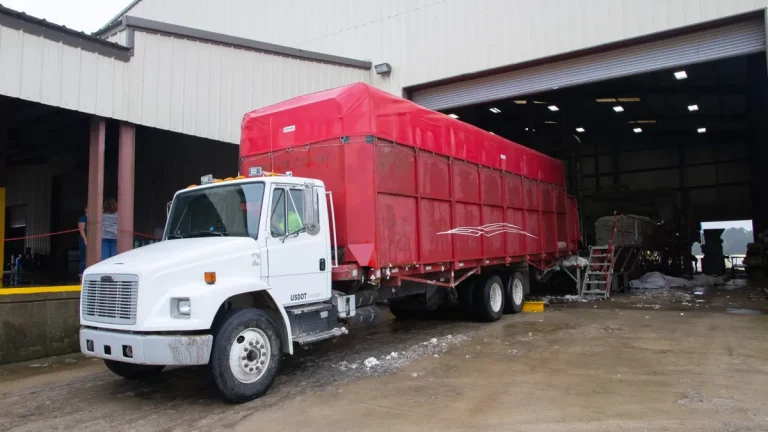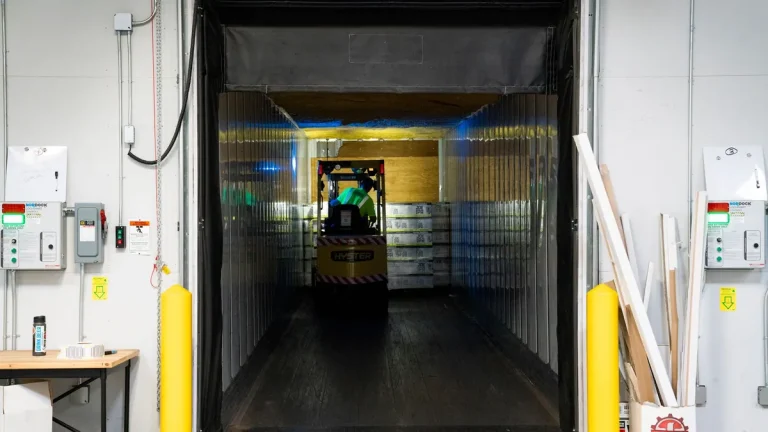
The third quote for replacement dock seals lands on the same desk where the first two landed five years ago. Same pad size, same fabric, same bay. Two bays down, the original dock shelter is still on the wall, faded but intact. That contrast is usually the moment a procurement team realizes the question was never which supplier to buy from. The question was whether that row of bays should have been buying compression seals at all.
This page settles the dock seals vs dock shelters decision the way we settle it on our own production floor: mechanism first, then fleet reality, then money. We manufacture loading dock enclosures alongside dock levelers. The comparison below is written from the side of the factory that has to make both products work on the same wall.
What a Compression Dock Seal Actually Does
A dock seal is a set of foam-filled pads mounted around the dock door opening. When a trailer reverses onto the dock bumpers, the trailer body crushes those pads, and the compressed foam closes the gaps along the top and both sides of the opening. The trailer itself becomes one wall of the seal. Nothing hangs over the vehicle; everything happens at the plane of the doorway.
Think of it as a gasket on a door frame. High-density foam cores give the compression, and abrasion-resistant fabric covers take the rubbing. Because the seal works by being squeezed, its geometry is cut for a specific trailer width and height range. The pads are modular, so a torn vertical or header pad can be replaced without rebuilding the frame.
What a Dock Shelter Frame Actually Does
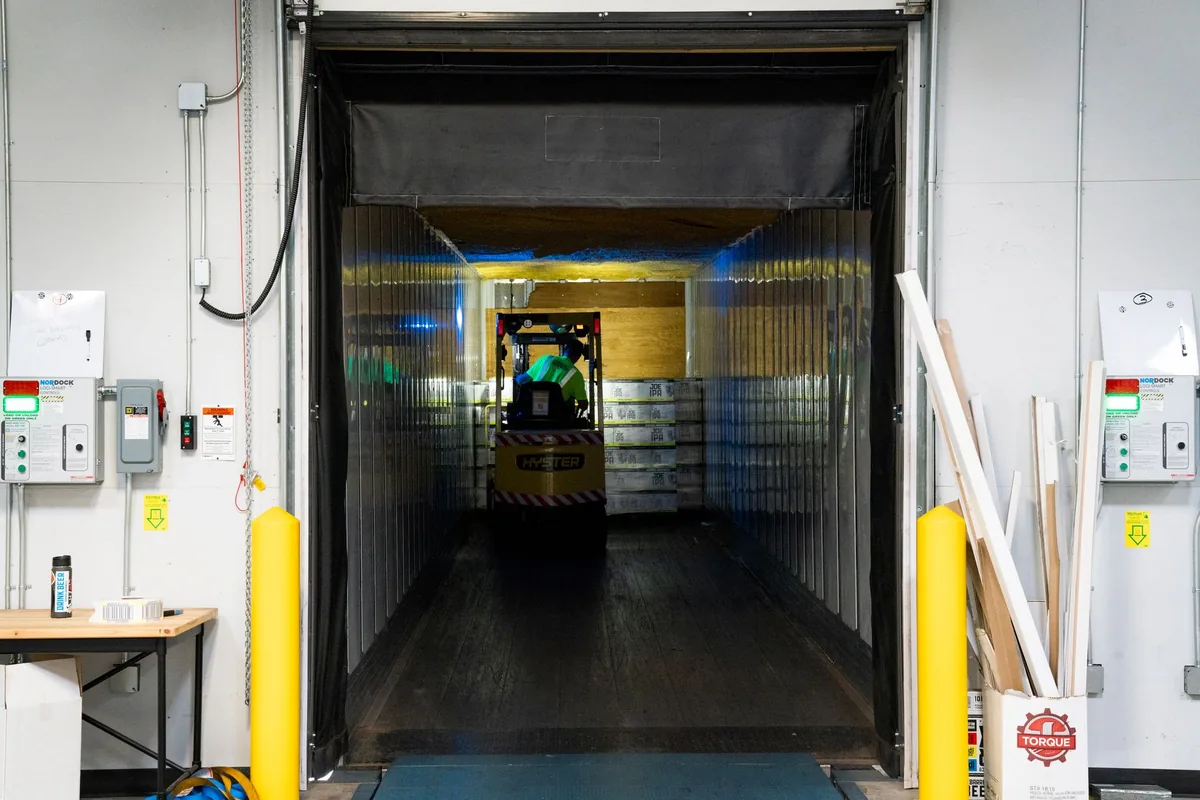
A dock shelter flips the geometry. A rigid frame projects outward from the building around the door opening, and fabric curtains hang from that frame to seal against the outside of the trailer. Flexible stays in the side and head curtains press lightly against the trailer body, sealing the perimeter rather than being crushed by the vehicle. The trailer parks inside the shelter, and its rear doors stay fully reachable for loading.
The useful mental model is a canopy over a doorway. One common rigid-frame design lists an overall projection of about 24 inches from the wall, with a sloped header so water runs off instead of pooling. Because contact pressure is light, the shelter absorbs trailer variation instead of fighting it. Rain running down the trailer roof can still find the top edge, which is why head curtain design matters more here than anywhere else.
Shelters also forgive the bays that seals punish. A trailer that stops a few inches short, or sits slightly off centre, still lands inside the curtain envelope instead of grinding a foam pad on one side only. Drivers notice the difference on the first reverse, because the opening looks and behaves bigger than a sealed one.
Sealing Performance and Energy Loss Compared
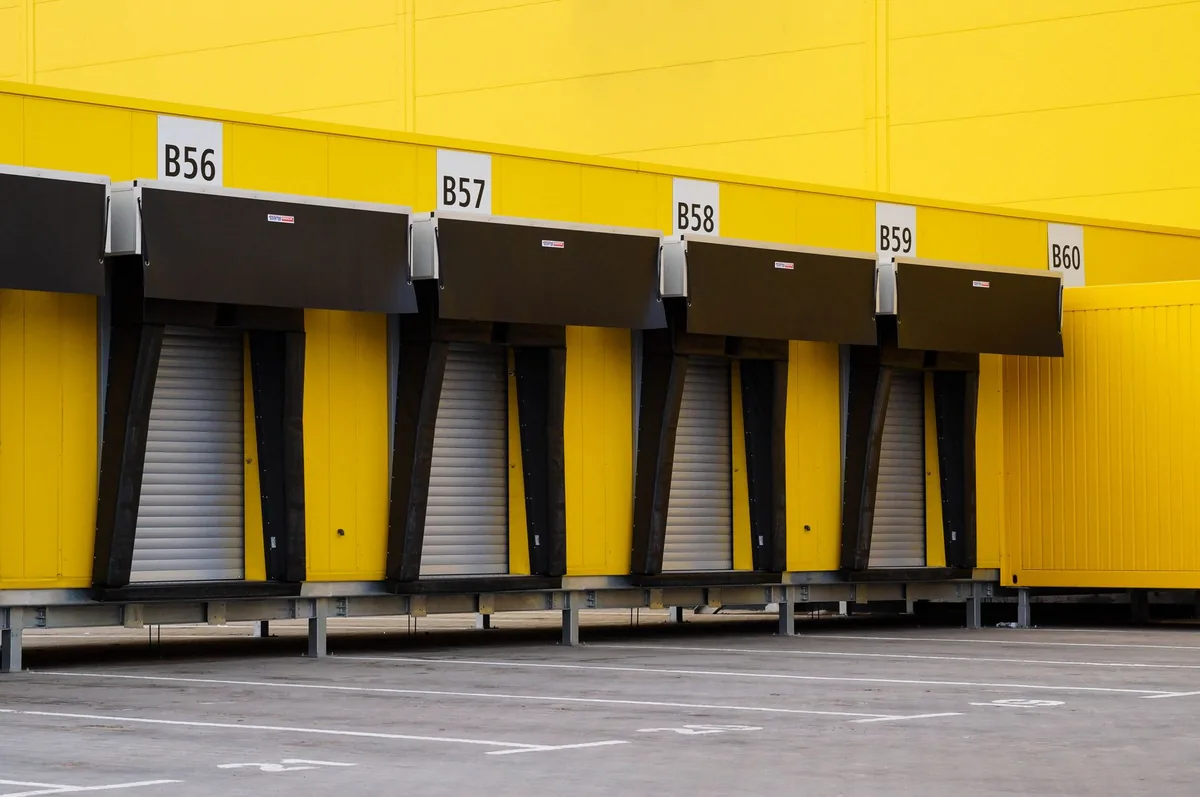
On raw tightness, the seal wins the dock seals vs dock shelters contest. Compressed foam conforms to the trailer body, closing around hinges and corrugations, which is why seals are described as close to airtight where trailers match the opening. Shelters seal the perimeter with light curtain pressure, which stops wind, dust and most rain, but is not an airtight closure. Air can move when curtains lift or shift.
That difference shows up in energy. Equipment suppliers report that unsealed dock gaps can cost hundreds of dollars per year at a single position, mostly through heated or cooled air pouring past the parked trailer. In one vendor-reported retrofit case, a refrigerated facility that replaced standard shelters with high-performance compression seals later measured roughly 30 percent lower HVAC energy use at those docks. One case is one case, but the direction is consistent: the harder the climate control, the more the compression advantage matters.
Trailer Size Range and Vehicle Compatibility
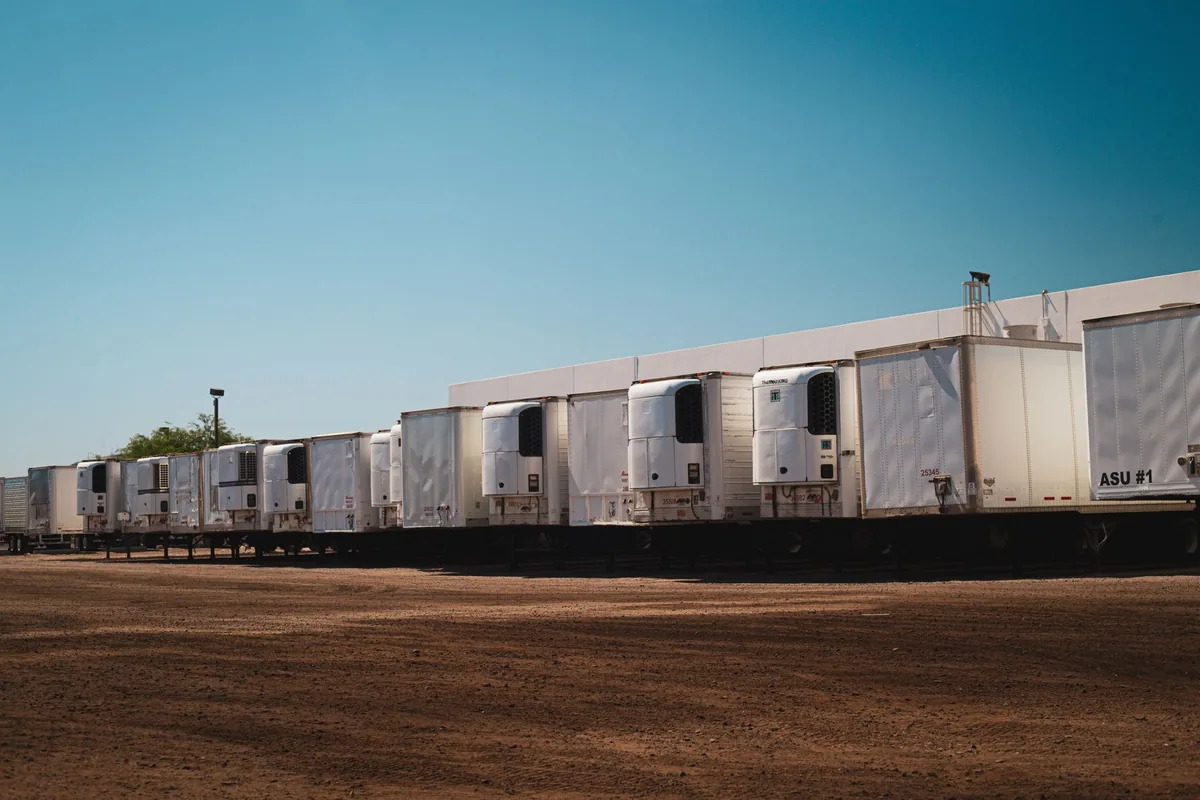
Width is where the two designs diverge hardest. Federal rules cap trailer width at 102 inches on the National Network, and no state may impose a different limit. Hawaii alone keeps its older 108-inch maximum (see 23 CFR 658.15). In practice most dry vans run 96 to 102 inches wide, so the trailer fleet at a typical dock is not uniform, just narrow.
The dock seals vs dock shelters trade-off starts right here, at width. A seal sized for that fleet gives something back. Dock equipment suppliers report that when pads are cut for 96 and 102 inch trailers, the usable opening narrows to roughly 7 ft 6 in. Every inch of narrowing is an inch closer to the trailer walls for forklifts carrying wide loads, which is exactly how pad edges get torn. A shelter keeps nearly the full opening clear, because the curtains sit outside the trailer line.
Height works the same way. Reefer trailers, box trucks and standard vans arrive at different rooflines, and a fixed seal header can only close the range it was cut for. Shelter curtains ride up and down the side of whatever height arrives. Measure the actual distribution of trailers using each bay, not just the most common one, before choosing either product.
Wear, Service Life and Dock Traffic
Every docking event compresses a seal. At twenty trailers a day, that is thousands of crush cycles a year, and foam that takes a compression set stops springing back. Off-centre backing concentrates the wear on one vertical, and the pad begins to gap on the other side long before it looks failed from the yard.
Shelters age differently. The trailer never crushes the frame, so wear concentrates in the curtain fabric and the stays that rub the trailer sides. Suppliers across the industry agree shelters last longer and tolerate abuse better, precisely because the load path is gentler. Replacement is also modular: curtain sets, stays and head curtains can each be swapped without dismantling the frame.
Inspect both on the same triggers. Foam pads that keep a visible dent, torn or fraying curtains, and corner gaps you can see daylight through all tell you one thing. The enclosure has stopped earning its keep, whatever the installation date says.
Cost Structure Over the Full Service Life
Seals generally cost less to buy and mount. Shelters cost more upfront because the frame, curtains and hardware are a bigger structure. We will not quote prices here, because enclosure pricing moves with size, fabric grade and project volume, and a number without a specification is marketing.
The structure of the cost, however, is stable. A seal spends less upfront and then pays replacement costs at a rate set by dock traffic. A shelter spends more upfront and replaces parts rarely.
High traffic pushes the crossover point toward the shelter; low, uniform traffic keeps it on the seal side for years. This is the cost leg of the dock seals vs dock shelters decision. Total cost of ownership follows traffic and fleet consistency, not the sticker.
Side-by-Side Comparison and Decision Rules
Here is the dock seals vs dock shelters field laid on one table, using the six factors that actually decide installations.
| Factor | Compression dock seal | Frame dock shelter |
|---|---|---|
| Sealing level | Near-airtight under compression | Weather-tight perimeter, not airtight |
| Trailer range | Narrow band around the size it was cut for | Wide range of widths and heights |
| Dock traffic | Best at low to moderate traffic | Suits high-traffic, hard-use docks |
| Service life | Shorter under crush cycles; pads replaceable | Longer; modular curtain and stay swaps |
| Opening clearance | Narrowed by pad projection into the opening | Full opening kept clear for forklifts |
| Building demand | Wall must absorb repeated compression | Needs clear projection space around the door |
Four rules cover most facilities. Uniform fleet plus temperature control: seal. Mixed fleet plus high traffic: shelter. Tight budget plus low traffic: seal.
The fourth rule is the one teams skip. When wall structure or projection space is constrained, the winner is whichever product the building can actually carry, verified before ordering. That last row of the table decides more projects than the first five combined.
Which One Should You Choose for Your Dock
Our position, stated plainly: buy the enclosure for the fleet you actually run, not the standard trailer on the drawing. The dock seals vs dock shelters question is a fleet question wearing a hardware costume. A dock that receives the same contractor vans every Tuesday is a different dock from one that takes whatever the dispatcher sends, even if the doors are identical.
Multi-bay facilities do not have to choose once. A common layout puts compression seals on the refrigerated and temperature-controlled bays, where tightness pays, and shelters on the general freight bays, where variety and traffic dominate. The mixed wall costs a little more to plan and almost always beats a single-product mistake repeated across every bay.
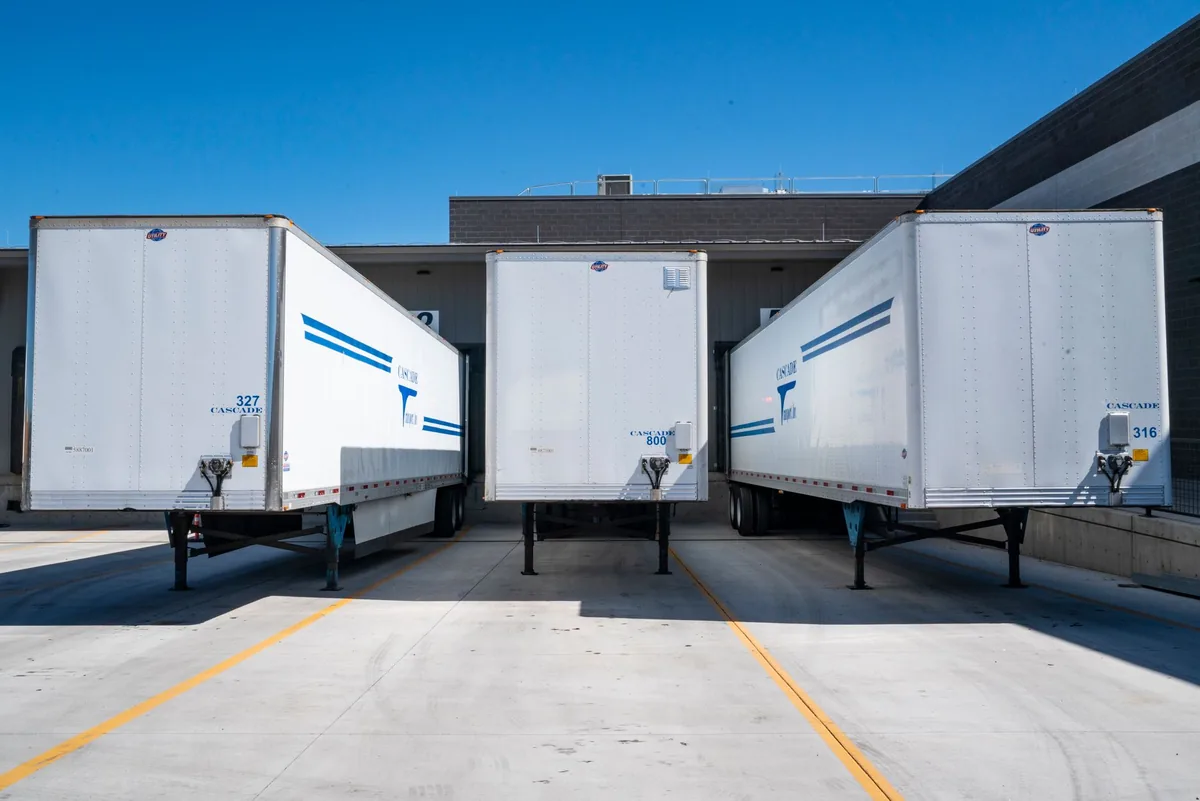
Before ordering either product, take four measurements. Record the door opening width and height, then the width and height spread of the fleet that uses the bay. Add the daily trailer count and the wall construction behind the door frame. Those four numbers pick the product. Everything else is preference.
How Enclosures Pair With Dock Levelers
An enclosure never works alone. The seal or shelter has to clear the dock leveler pit, line up with the door opening, and leave room for the leveler lip to travel under the trailer. A mismatch here shows up as a gap under the trailer that no pad or curtain can close, which quietly cancels the enclosure you just bought.
This is why we treat enclosures, levelers and doors as one order. Our factory builds the loading dock equipment range together, so the enclosure projection, the leveler width and the door frame come off one drawing with one set of tolerances.
The same logic applies when you upgrade an existing bay. Read how a hydraulic dock leveler works before sizing a seal around its pit. Weigh the hydraulic vs mechanical dock levelers choice at the same time. The enclosure has to match whichever platform stays on the wall, and facilities that upgrade to hydraulic dock levelers usually resheet their enclosures in the same shutdown.
If you are specifying a full bay or a new dock face, the loading dock systems range covers levelers, seals and shelters from one manufacturer. We have built industrial door systems since 1999 and ship to more than 70 countries, with no minimum order quantity and CE EN 13241 conformity across the range.
Frequently Asked Questions About Dock Seals and Shelters
What is the main difference between a dock seal and a dock shelter?
A dock seal is a foam pad the trailer compresses against, sealing three sides of the opening by direct contact. A dock shelter is a frame with fabric curtains that seals around the trailer perimeter without compression, accepting more trailer sizes.
Which is better for cold storage, a seal or a shelter?
Usually a seal. Compressing foam gives the tighter, near-airtight closure that refrigerated docks need, provided trailer sizes stay consistent. Mixed refrigerated fleets may still justify shelters on some bays.
How long do dock seals last?
It depends on traffic and alignment, not age. At high-traffic docks with off-centre trailers, foam takes a compression set within a few years; shelters usually last longer because the trailer never crushes them.
Do dock seals and shelters really save energy?
Yes, by cutting air leakage around the parked trailer. Equipment suppliers report unsealed openings cost hundreds of dollars a year per dock, and one reported cold-storage retrofit cut HVAC energy use by about 30 percent.