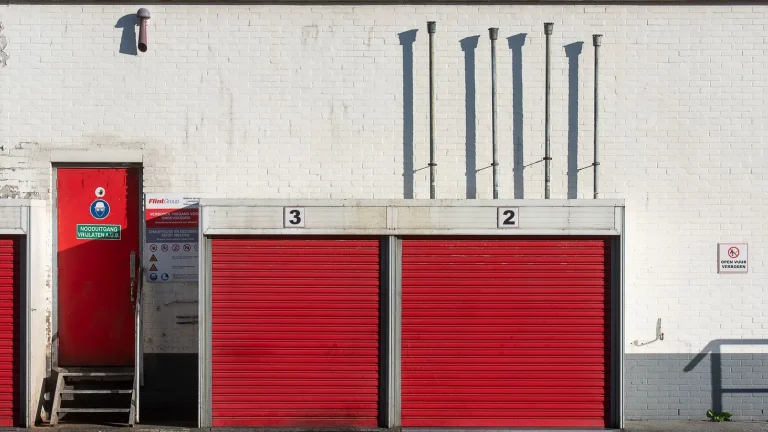







A powered door often reaches site before anyone has confirmed what will feed it. The installer then asks a question that belongs at order time: does this motor run on the building’s single-phase supply, or does it need a three-phase feed? Asked late, the answer costs a breaker swap, a new cable route, or an extra supply point nobody budgeted for. Getting the roller shutter power supply right is mostly about four inputs, and all four are known before the door is even made.
At our factory, every motor and control box ships with a test report recording opening speed, noise, and insulation resistance. Insulation resistance is the reading buyers rarely ask about, and the one that exposes damp cable runs or damaged windings before a door leaves the line. The same discipline of measuring before energizing shapes the supply requirements below.
Four Inputs That Size the Circuit
The supply follows the motor, and the motor follows the door, so four inputs settle almost every roller shutter power supply decision on industrial doors. They are the curtain weight, the opening size, the daily cycle count, and what the building can already deliver at the opening. A wide, insulated curtain on a busy dispatch bay pulls harder and runs hotter than a light security curtain that moves twice a day. Our own curtains roll in galvanized steel, aluminium, or stainless from 0.8 to 1.5 mm thick, on openings up to 12,000 mm wide. Across that range the spread between the lightest and heaviest door on one site stays large.
Duty deserves as much weight as dimensions. A door that lifts for two delivery windows a day lives on a different electrical diet from one serving a production line every few minutes. The moving parts behind those cycles are traced in our guide to how electric roller shutters work; this page stays on the wires and breakers that feed them.
Single Phase or Three Phase for Shutter Motors
Industry practice draws the line at door size and duty. Small and medium shutters on lighter-duty openings run on a single-phase 230V supply with a matched motor and control panel. Larger industrial doors, high-use loading bays, and heavier insulated or wind-rated curtains usually move to a three-phase 400V feed. One UK supplier’s FAQ puts the split plainly, and three independent guides agree on it.
Height sharpens the line. A single-phase tubular motor is the standard choice up to roughly five metres of door height, while doors between five and ten metres move to a three-phase drive. Three-phase also wins on frequency: industrial sites that cycle shutters many times a day see less heat build-up and less wear, which is why busy warehouses standardize on it. The supply itself is single-phase 230V or three-phase 415V at 50Hz in most installations.
| Supply | Typical doors | Usual setting | Why it holds |
|---|---|---|---|
| Single-phase 230V | Light to medium curtains, openings to about 5 m high | Small units, shops, quiet bays | Already in most buildings, simpler distribution |
| Three-phase 400-415V | Heavy, insulated or wind-rated curtains, tall openings | Loading bays, warehouses, high-cycle sites | Spreads the load, less heat on frequent cycling |
Neither row is an upgrade in the trim sense. A three-phase feed behind a heavy curtain is a requirement, not a preference, and a single-phase motor on a suitable light door remains the correct, economical answer.
Matching the Motor Rating to the Supply
Three lines on the motor nameplate decide the electrical work: voltage, power, and current. Published manufacturer data for 120V AC tubular motors shows small 10 to 50 Nm units drawing roughly 0.7 to 2.1 A, a 60 Nm motor about 2.5 A, and the largest 80 to 120 Nm drives 3.1 to 5.5 A. At the 230V European supply, the same power ratings draw roughly half that current. Our own tubular motors run on 230V at 50 Hz, suit 60 or 70 mm shafts, and draw about 150 W — under one amp — in normal running.
| Nameplate line | What it tells you | What it drives |
|---|---|---|
| Voltage | 230V single-phase or 400V three-phase | Which supply the building must provide |
| Power | Running watts, commonly about 150 W on tubular units | The base load in the circuit calculation |
| Current | Running and starting amps | Breaker and cable sizing |
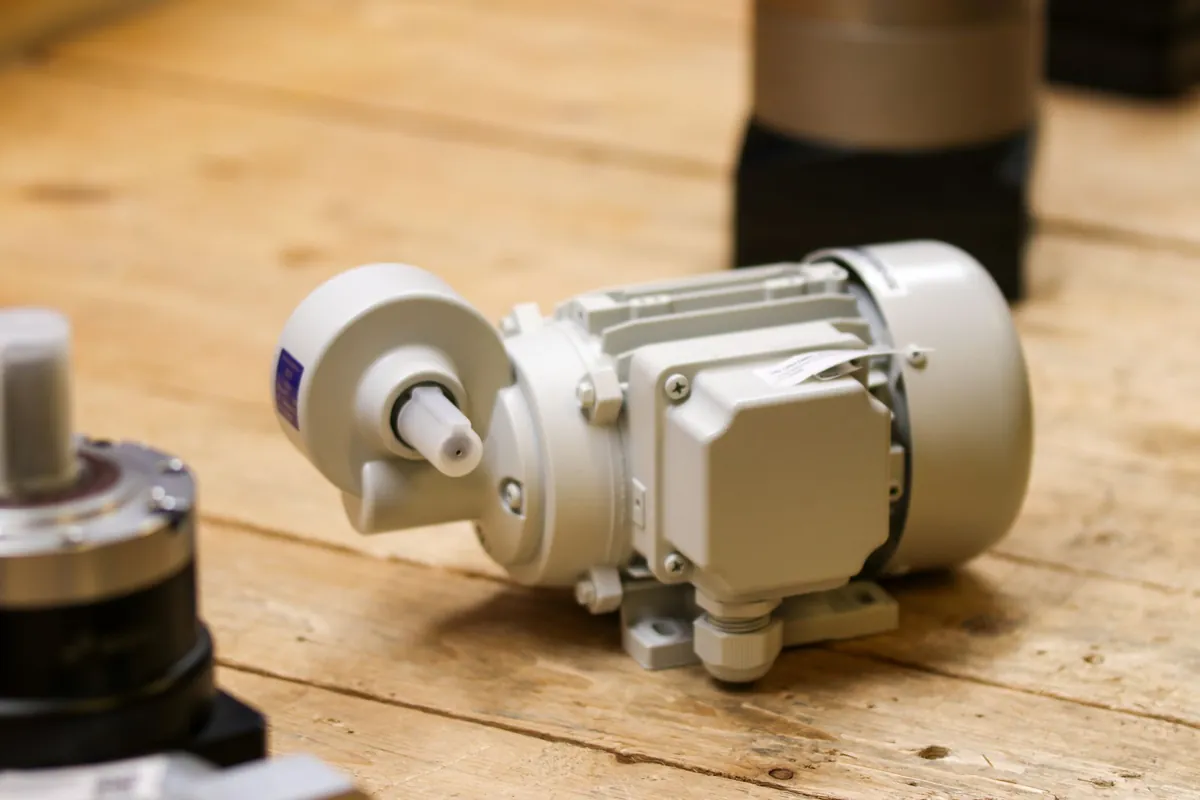
Heat is the second constraint. A bimetallic switch inside the motor opens the circuit at roughly 135 to 150 °C. Duty-rated tubular motors tolerate only a few minutes of continuous running before they need to cool. After a thermal trip the motor stays out for about 15 to 20 minutes, so a door that stops mid-cycle on a hot afternoon is often protecting itself, not failing. Bypassing that switch trades a paused door for burnt windings.
Insulation resistance is the third line and the quietest. A damp or abraded winding passes a bench test and fails a rainy winter, which is why the reading travels on the factory test report rather than in a promise. Matched electrics age slowly, and a 3-year motor warranty is only safe on a supply that treats the motor gently.
Breaker Sizing and Circuit Protection
The protection side of a roller shutter power supply starts with the motor’s rated current, not with whatever breaker is spare in the cupboard. Published specification sheets for industrial shutters give a sense of scale. A 415V three-phase feed from a 10 A breaker suits mid-range operators, the largest frames move to 16 A, and single-phase 240V doors also run from 16 A. The same sheets end at a five-pin industrial socket within 500 mm of the motor side, about 1500 mm above finished floor level.
A dedicated circuit and a local isolator near the opening complete the arrangement, so maintenance can isolate the door without walking to a distant board. Sizing the circuit for the actual motor load is an electrician’s job, and the site carries the duties set out in the UK safety regulator’s electrical guidance. A roller shutter power supply planned this way keeps the install date honest.
Still Sizing a Roller Shutter Power Supply on Guesswork
Send us your supply voltage, breaker size, and door schedule, and our engineers will return a motor and control panel matched to the electrical installation on your site.
Cable Runs and Voltage Drop Planning
Distance is the specification nobody writes down. Every metre of cable adds resistance, and enough of it pulls the voltage at the motor below what the run capacitor needs to start rotation. The failure mode shows up where feeds run long or the grid runs weak. A motor can test perfectly on a bench and still refuse to start at the end of an undersized run.
Two rules keep the run honest. First, size the cable for load and length together; our practice is to upsize the cross-section on longer runs so the voltage at the motor stays within starting needs. Second, terminate the motor cable in a proper junction box and never run it through the wall, and treat mains connections as licensed-electrician work. The motor’s own lead is short by design, about 18 ft standard, so the supply point position belongs on the order. Some units accept a 25 ft lead, fitted at the works rather than spliced on site.
What the Control Panel Draws
The curtain is not the only load. Control panels, radio receivers, safety edges, and photocells stay connected around the clock, waiting for a command or an obstruction. That standby draw is small but permanent, and it belongs inside the same protective envelope as the motor rather than on a borrowed lighting circuit.

Our control boxes are built in IP65-rated enclosures with WiFi, Bluetooth, and RS485 options, so a row of industrial doors can report to one panel or one PLC line. For grouped doors, dedicated servo control boxes keep the command side tidy and separately serviceable. By our practice, the panel, the receiver, and the safety devices ride on the same dedicated circuit as the drive. The breaker is chosen to ride through the starting surge and still protect the control side.
Backup Power Options and Manual Override
The backup decision for a roller shutter power supply belongs in the order, not in the blackout. A grid failure at the wrong hour strands trailers and stock behind a closed curtain. Low-voltage drive systems running at 24V DC from a mains-charged battery bank, or from a solar panel, keep a door moving through a total outage. Where the sun does the charging, a solar powered roller shutter trades the cable route entirely for a panel and a battery.
Every door still needs a plan for its own mechanics. A manual hand chain geared to the barrel lifts the curtain when neither grid nor battery is available, and three-phase doors commonly carry an override handle for the same reason. We build the backup into tubular motors with manual override at the drive end, because the cheapest hour to plan a blackout is the hour the door is being specified.

Site Checks Before a Door Is Energized
Three records turn a supply arrangement from talk into paperwork. Two come from the opening, and the last one protects the person commissioning the door.
Survey the Supply at the Opening
Walk the route before the door is ordered. Confirm which phases reach the opening, where the nearest board sits, and whether a dedicated circuit is realistic at that distance. Suppliers who survey alongside an electrical contractor turn cable sizes, isolation points, and control positions into a drawing instead of a negotiation.
Record the Motor Nameplate Data
Photograph the nameplate and the control panel reference, and write the voltage, power, and current against the door number. On a replacement job, those three lines tell the electrician what the circuit must hold before anyone buys hardware. A specification sent as numbers is checkable; a photograph of a label alone is not.
Isolate Before Opening the Panel
Fault-finding starts with the circuit dead. Isolate and lock off the supply before anyone opens the control box, following the lockout or tagout procedures that govern servicing where energized equipment is involved. Ten minutes of isolation is cheaper than any arc.
Worked this way, the electrical side of an industrial doors project reads like the mechanical side: numbers, drawings, and named responsibilities. The supply stops being the question asked on install day and becomes the line item that was settled first.
Frequently Asked Questions
Does every electric roller shutter need a three-phase supply?
No. A single-phase 230V roller shutter power supply runs small and medium doors on lighter-duty openings. Three-phase 400V takes over on tall, heavy, insulated, or high-cycle doors where starting load and heat outgrow one phase.
What breaker size does a roller shutter door need?
The breaker follows the motor’s rated current. Published industrial specifications run from 10 A on mid-range three-phase operators to 16 A on the largest frames, and single-phase 240V doors commonly sit at 16 A. The electrician confirms against the nameplate.
How far can the supply be from the door?
There is no universal distance. Voltage drop grows with run length, so long routes need the cable cross-section checked against the load. Terminate the motor lead in a junction box rather than running it through the wall.
Can a roller shutter run during a power cut?
Yes, if it was ordered for it. 24V DC drives fed by a mains-charged battery bank or a solar panel run through outages. Every door also keeps a manual hand chain or override handle as the last resort.
Why does my shutter motor stop and refuse to restart?
The thermal protector has likely tripped after heavy cycling. The bimetallic switch opens around 135 to 150 °C and needs roughly 15 to 20 minutes to cool. Let it recover, and never bypass the switch to force a restart.
Does the control panel need its own protection?
It needs protection, not necessarily its own circuit. Panels, receivers, and safety devices draw a small standby load around the clock. Keep them inside the same protective envelope as the drive, not on a borrowed lighting circuit.