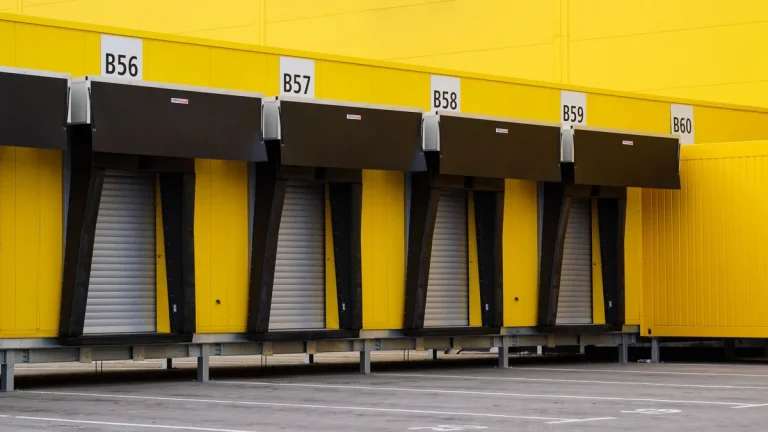
Most buyers walk the selection process backwards. They start with a catalog, pick a door that looks right, and only then discover what the opening, the traffic and the building actually demand. The queue of forklifts backed up behind the wrong door on a Monday morning is the invoice for that order of operations.
We have built industrial doors since 1999, and the orders that go well all start the same way: with the conditions, not the product. Conditions read clearly once you can name what features make an industrial door, so we keep that anatomy one click away. Selecting an industrial door solution is a sequence of six decisions, and each one narrows the field before a single model number gets discussed.
Start With the Opening and the Traffic Picture
Every door choice rests on four field facts. First, the clear opening width and height. Second, the headroom and side room available for the door to coil, slide or stack. Third, how many cycles the door will make on a normal day. Fourth, when those cycles happen, because two hundred spread across a shift and two hundred stacked into two hours are different engineering problems.
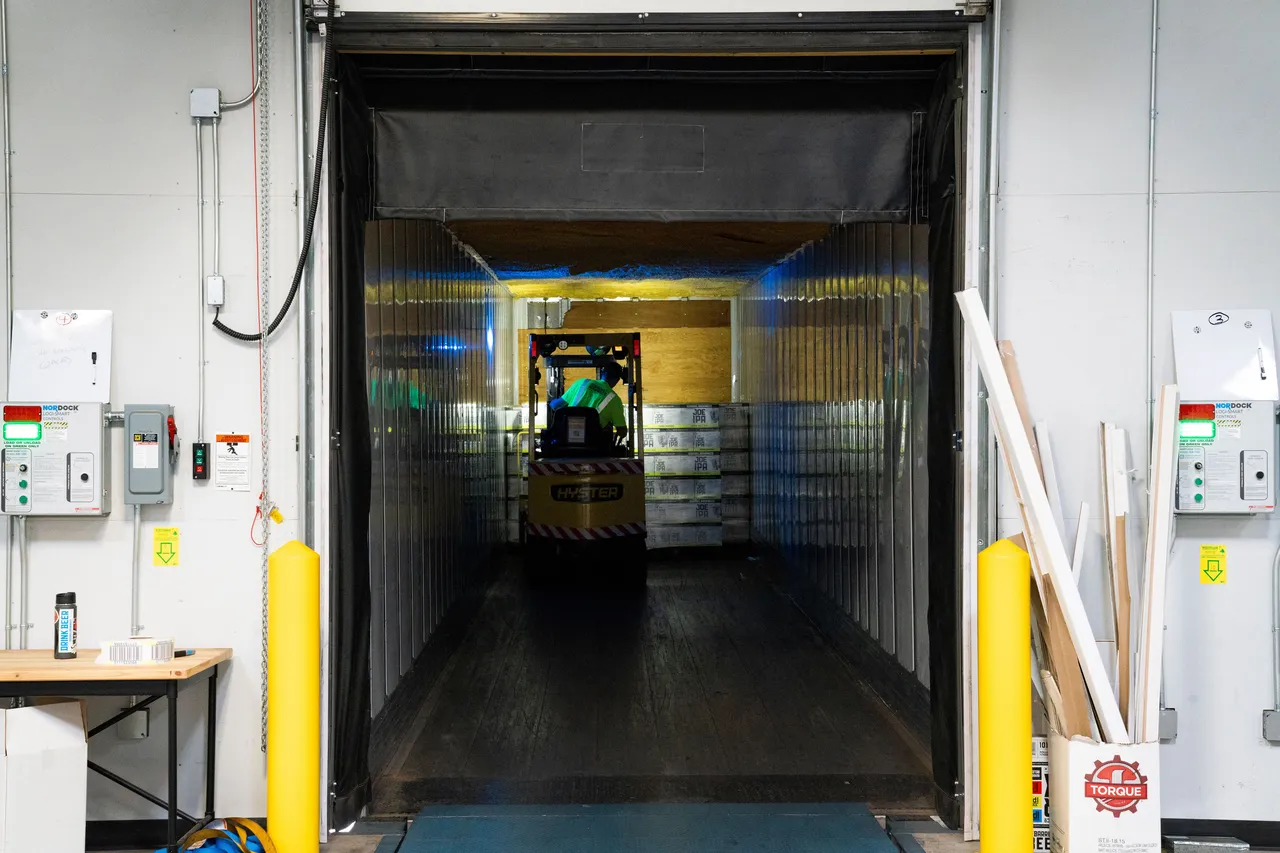
Traffic is the input buyers most often skip. A door that opens twice an hour tolerates compromises a door that opens twice every ten minutes cannot. Before selecting an industrial door solution, stand at the opening for one full shift and count. The number you write down will drive every later decision more than price does.
Match the Door Type to the Duty
Once the duty is on paper, the field of door types narrows fast. Five families cover most industrial buildings, and each wins under different conditions.
| Door type | Where it wins | Speed band | Watch-outs |
|---|---|---|---|
| Roller shutter | Security and wide spans, up to 12,000 mm | Moderate | Slow cycles cost time at busy openings |
| Sectional overhead | Insulation and sealing at docks | Moderate | Needs headroom; many moving parts |
| High-speed roll-up | Frequent internal traffic | 0.8 to 2.5 m/s | Not a security door on its own |
| Bi-folding | Wide openings with limited headroom | Moderate | Swing space outside the opening |
| Sliding | Aircraft hangars and very wide spans | Slow to moderate | Wall space beside the opening |
The commonest collision is high-speed versus sectional at a loading dock. If cycling frequency drives the energy and queuing bill, speed wins; if thermal separation drives it, insulation wins. Our trade-by-trade comparison of high-speed door versus sectional door is the next read for that decision. Wide-span sites with low headroom should also weigh industrial bi-folding doors before settling.

Is the Motor Matched to the Duty?
A door body rated for the duty still fails early if the drive behind it is undersized. State the expected cycle rate in the specification and let the supplier size the motor, gearbox and springs against it. High-frequency openings justify a servo drive; occasional openings rarely do.
Controls deserve the same scrutiny, and the broader decision factors sit in our guide to choosing a high performance door. Ingress protection at IP65 keeps dust and washdown water out of the control box. A serial link such as RS485 lets the door report into the plant network. EN 12453 groups doors by how intensively they are used. That group decides which protective devices the installation needs, which makes the duty statement a compliance input as much as an engineering one.
Safety and Compliance Come Before Price
Two European standards carry most of the weight here. EN 13241 is the product standard for industrial doors and gates, and it covers performance characteristics. A door in its scope may need a Declaration of Performance under the Construction Products Regulation. EN 12453 governs safety in use of power operated doors: hazards, protective devices and the test methods that prove them.
Compliance warning: where force limitation is the chosen safety strategy, the installed door needs objective force testing to prove it stays within safe limits. The accepted test regime follows EN 12445. Safety edges and photocells are certified protective devices, not optional accessories.
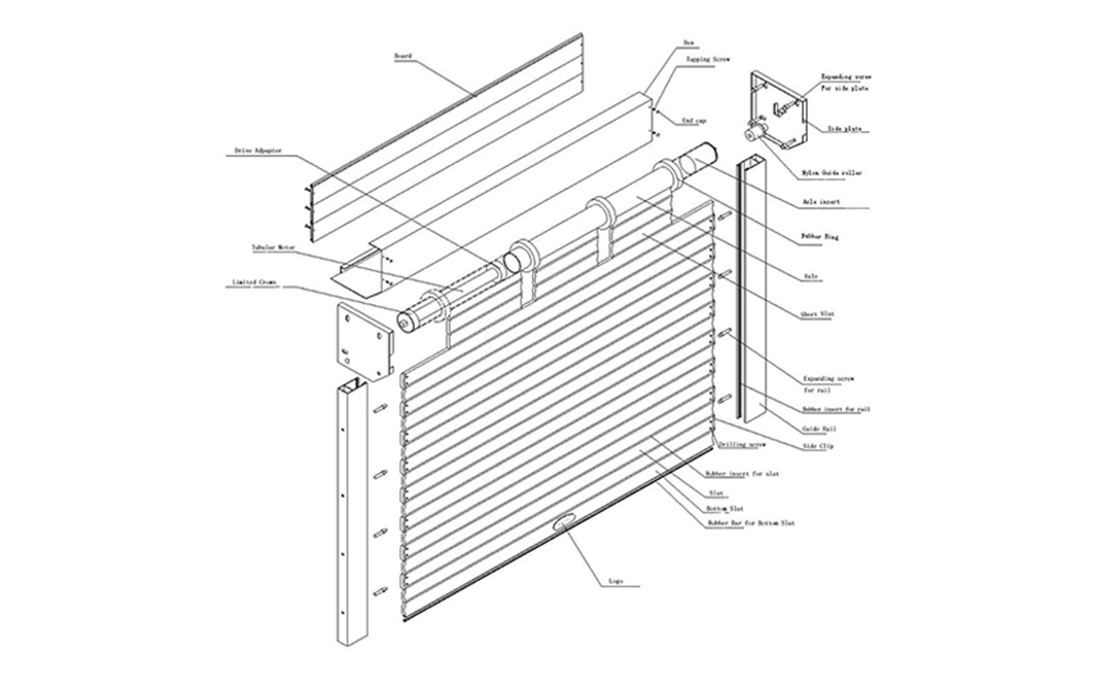
The UK regulator’s guidance on powered doors and gates adds a point worth carrying into any specification: wind loading is part of the safety picture. Gusts a drive cannot overcome leave a door half open and uncontrolled. Ask how the force limits were verified on the actual installed door, not only on a bench sample. A technical drawing of the assembly, like the one below, is where those details should be visible.
Wind, Heat, Moisture and Hygiene Loads
Environment decides how much performance the door must hold in its closed position. Wind is classified under EN 12424 in six classes, from Class 0 up to Class 5. A coastal or exposed site should name its class in the specification rather than hope. Our wind load rated sectional door exists for exactly this reason. A spiral rigid high-speed door rated Class 5 covers gusty internal transfers where pressure spikes are frequent.
Thermal separation is measured as a U-value in watts per square meter kelvin under EN 13241. A 40 to 50 mm PU-insulated sectional panel at 0.33 W/m²K holds a cold room boundary; a strip curtain does not. Match the number to what is on either side of the opening, not to what the building averages.
Water and hygiene reshape the materials shortlist. In a food plant, the evening washdown crew drags caustic foam and hot water across everything near floor level. A painted carbon steel frame loses that fight within a few winters. Stainless SS304 or SS316 panels, sealed guides and washdown-rated controls are the honest baseline there.

Price the Door Over Its Whole Life
The catalog price is the smallest line in the door’s ledger, and we will defend that claim in any showroom argument. The real bill has four lines: purchase, energy lost through the opening, maintenance over the years, and production stopped while the door waits for a technician. A conventional sectional carries more wear-prone moving parts than a high-speed fabric door, which is why maintenance expectations belong in the comparison, not after it.
Warranty terms tell you how the manufacturer prices those later lines. Ours run two years on door bodies, three on operators and five on servo motors. Warranty spare parts ship by DHL or FedEx within five to seven days. Whatever the brand, read what each tier actually covers before selecting an industrial door solution on sticker price alone.
The Eight Question Selection Checklist
The six decision areas above compress into eight questions. Answer them in writing before the first quote arrives, and selecting an industrial door solution becomes a comparison of documented needs instead of a reaction to brochures.
| Question | What the answer changes |
|---|---|
| 1. What are the clear opening width, height, headroom and side room? | Rules out types that cannot physically fit |
| 2. How many cycles will the door make per day, and when? | Drives the door type and motor class |
| 3. What must the door separate: security, heat, dust, noise? | Sets panel build, seals and U-value target |
| 4. Which EN 12453 protective devices does the traffic need? | Edges, photocells, force testing, control mode |
| 5. What wind class does the exposed face of the building need? | Names the EN 12424 class to specify |
| 6. Is the area washed down, dusty or corrosive? | Chooses stainless, coatings and IP rating |
| 7. Who maintains the door, and how fast must it be back up? | Sets warranty tier and spare parts terms |
| 8. What does one hour of downtime at this opening cost? | Justifies speed, reliability and redundancy |
What to Confirm With the Supplier Before You Sign
The checklist only bites if every answer has a named owner, so close the process by assigning them. Procurement owns questions one, two and eight, and safety owns four and five. Then put the paperwork on the table; maintenance takes six and seven. A conforming door ships with a CE declaration, an EN 13241 test report, CAD installation drawings, wiring diagrams and an English installation manual. None of those documents should be optional in the contract.
That file is also your acceptance test. Check the delivered door against the drawings, the force test record against EN 12453, and the spare parts list against the warranty tiers. An hour spent verifying paper before the signature saves weeks of arguments after commissioning.
Frequently Asked Questions
Which industrial door type do I need for a busy loading dock?
Count cycles first. A low count usually suits an insulated sectional; frequent cycling favors a high-speed door, often paired with a sectional as an outer barrier.
Is a high speed door worth it for a low traffic opening?
Usually no. Speed pays back through cycling frequency and energy containment; at sparse traffic, a well-sealed sectional is the better-value choice.
What wind class should an industrial door have?
EN 12424 defines six classes, Class 0 through Class 5. Exposed or coastal facades should specify the class explicitly; Class 5 is the top rating for severe sites.
What does EN 12453 require on a powered industrial door?
It sets safety-in-use requirements for power operated doors: hazard control, protective devices matched to the usage group, and test methods such as force measurement.
How long should an industrial door warranty last?
Expect tiered cover: two years on the door body, three on operators and five on servo motors is a defensible benchmark. Check spare parts shipping terms too.
Once a general path is clear, the premises-level version of this decision is covered in matching industrial door systems to your premises, which maps warehouse, workshop, cold store, cleanroom, hangar and dock requirements to systems.