Two doors in the same trade catalog can both carry the word industrial on their datasheets. One of them is engineered around features that hold up under forklift traffic, ten-hour shifts and coastal wind. The other is a light commercial door wearing a borrowed label, and the difference only shows up after the invoice does. Buyers who know which features to ask about rarely pay for that lesson.
One feature deserves its own ranking: the six advantages of the motor of an industrial door.
What features make an industrial door is therefore not a vocabulary question. It is a checklist of six measurable dimensions: load-bearing materials, thermal and sealing design, durability ratings, safety compliance, controls, and documentation. We build these doors at our factory in Hebei, and the parameter ranges below come straight from our own production specifications. Apply them to any brand you are evaluating.
What Separates an Industrial Door from a Light Commercial One
The honest divide is duty, not appearance. A light commercial door might cycle a few dozen times a day in a shopfront or a small storage unit. An industrial door in a distribution center can be asked to open and close hundreds of times per shift, which changes every component choice inside it.
Opening size draws the second line. Light commercial products top out at modest dimensions, while industrial roller shutters are built to span openings up to 12,000 millimeters wide. The third line is the standard itself: EN 13241 is the European product standard for industrial doors, and it covers the complete assembly rather than a single part.
A door that misses any of these three tests is not automatically a bad product. It is simply the wrong product to specify when the specification says industrial. And whenever a datasheet will not answer what features make an industrial door in numbers, treat the label as marketing.
Panel Materials and Surface Finishes That Take the Hits
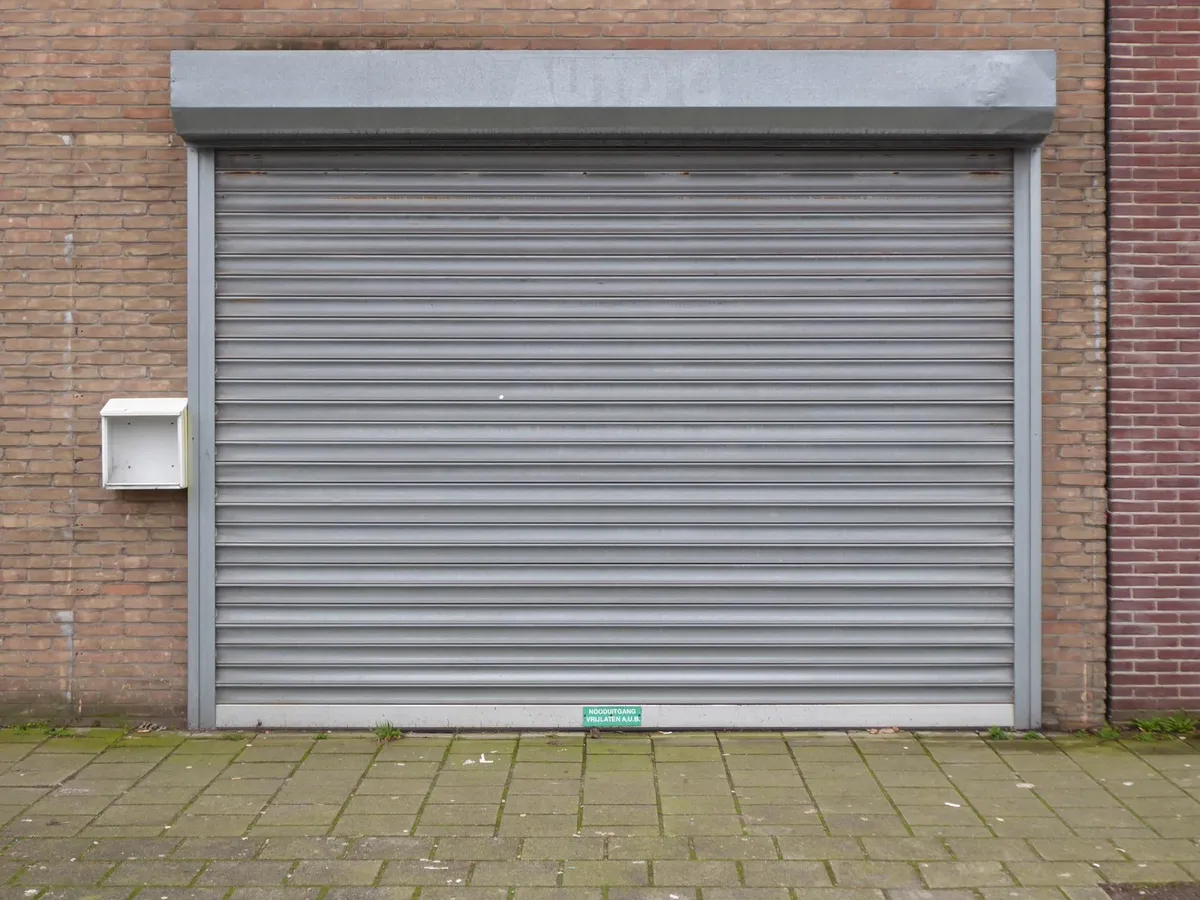
Materials carry the first measurable feature, because the panel is what absorbs impact, corrosion and wind. Industrial door panels are commonly formed from galvanized steel between 0.4 and 1.5 millimeters, chosen by door type and the abuse level of the site.
Aluminum is the second common panel material, and our own sections use 6063-T5 alloy for a balance of weight and rigidity. Where food processing or chemical washdown is present, stainless steel in SS304 or SS316 grades replaces coated steel, because hygiene cycles destroy paint layers quickly.
Surface treatment is part of the same feature, not a cosmetic afterthought. A hot-dip galvanized base layer with an electrostatic powder topcoat is the standard pairing for steel. Anodizing protects aluminum, and RAL color matching lets the door sit inside a managed facility palette. When a supplier cannot name the alloy, the coating system and the film thickness, the word industrial on the brochure is doing all the work.
Thermal and Sealing Performance Built Into the Core
The third feature lives inside the panel. Industrial sectional doors use a polyurethane foam core between the steel skins, with panel thicknesses of 40 to 50 millimeters in typical industrial specifications. Our own sectional panels reach a U-value of 0.33 W/m²K, which is the number that decides how much heated or chilled air your doorway exports every shift.
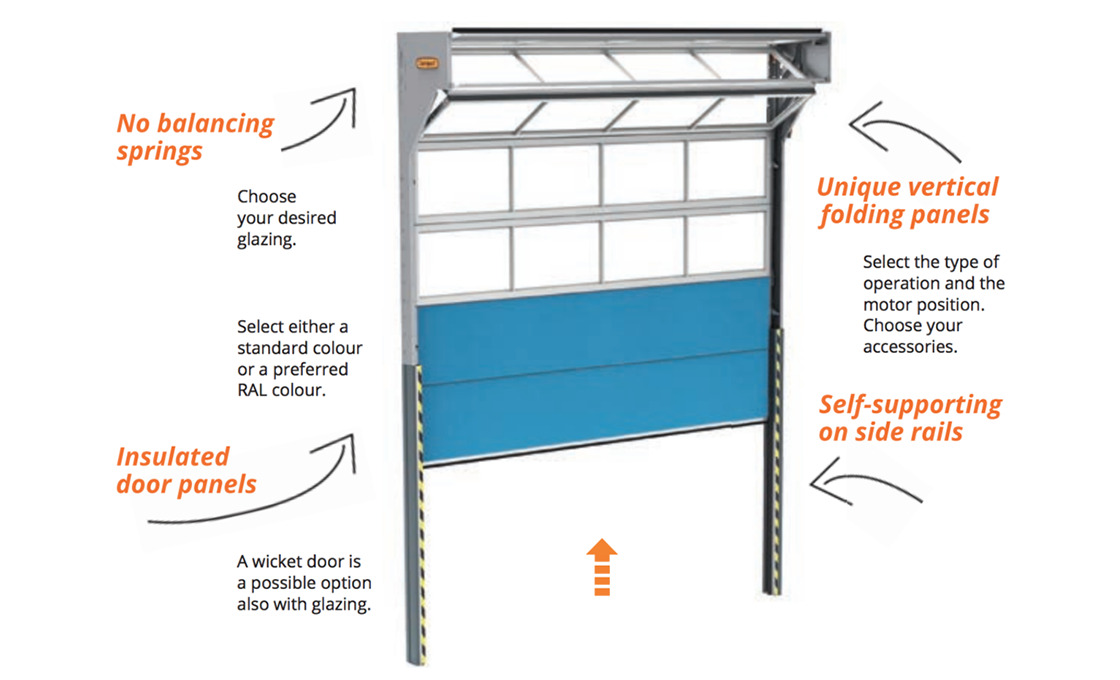
Sealing is the thermal feature’s partner. Brush and rubber seals along the jambs, head and floor keep wind-driven rain and dust outside, and specialty variants push the same idea further. Cleanroom doors add airtight construction with interlocked operation, while cold room doors add insulation continuity and anti-freeze details at the threshold.
If your building pays for climate control, an uninsulated door skin is a hole in the envelope with a motor on it.
Durability Ratings: Cycles, Springs and Wind Classes
Durability is where industrial doors earn their name, and it arrives as three numbers. The first is cycle life on the balancing hardware. Industrial sectional doors use torsion springs rated for at least 30,000 cycles, and those springs are what actually lift the panel weight every time.
The second number is a wind class. EN 12424 grades a door’s resistance to wind loading in classes from 1 to 5, with Class 5 as the highest. External doors on exposed or coastal sites should be specified against it, and our spiral rigid high speed doors are built to Class 5 wind resistance. That is the difference between a door that keeps running in a storm front and one that panels out of its guides.
The third number is written in the contract rather than the metal. Warranty terms tell you what the manufacturer is willing to underwrite: our door bodies carry a two-year warranty, door operators three years, and servo motors five years. A supplier who quotes durability without cycles, wind class or warranty terms is quoting a feeling.
Safety Features Written Into the Standards
Safety is the feature buyers cannot inspect visually, which is exactly why standards exist for it. EN 13241 defines the safety requirements for industrial doors as products, and EN 12453 adds the safety requirements for powered operation: force limitation, entrapment protection and controlled movement. Certification against these standards, backed by test reports and an SGS material audit on our own production, is what makes those requirements verifiable rather than decorative.
Powered doors also carry ongoing duties for the owner. The UK’s HSE guidance on powered doors and gates is a useful plain-language reference on safe fitting, maintenance and user duties. It applies to any facility that operates motorized doors.
Fire behavior belongs in the same conversation, with careful wording. Doors can be engineered with EI60 or EI120 fire resistance capability, but that figure must be verified project by project. EN 1634-1 testing is the proof, not a catalog line, and a supplier who skips the test path is handing you a liability.
Controls and Operation: Speed, Duty and Connectivity
The operator is a feature of the door system, not an accessory bolted on afterwards. Speed sets the pace of the whole logistics flow. High speed industrial doors in our range run from 0.8 up to 2.5 meters per second, which shortens the open-state window at your doorway.
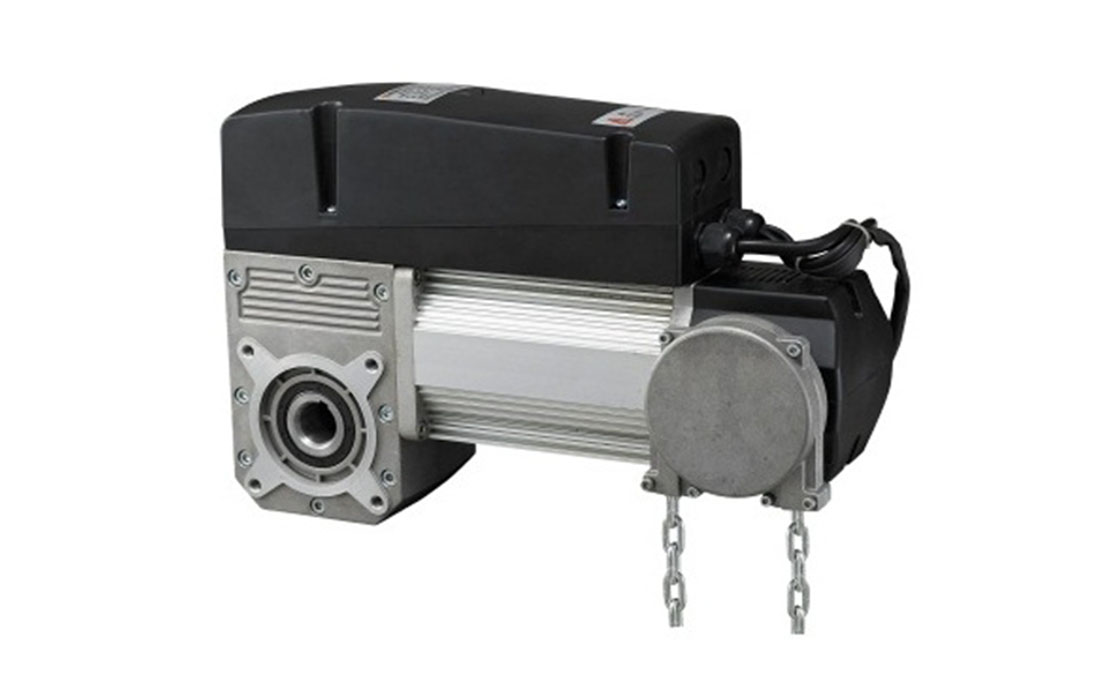
Duty rating matters as much as speed, because a control system sized for occasional use will cook under continuous cycling. Connectivity is the newest layer. Our operators support WiFi, Bluetooth and RS485 industrial connections, and carry an IP65 ingress rating. That means a dust-tight enclosure with protection against water jets in washdown environments.
Ask any supplier for the same three operator data points. Speed range, duty classification and ingress rating describe how the door will behave on your floor, not in their brochure.
Custom Sizing and Documentation as a Feature
The sixth feature is paperwork, and it separates manufacturers from resellers. Real industrial openings are rarely catalog-sized. The ability to build from a single custom unit with no minimum order quantity is therefore a genuine capability, and our factory produces large industrial doors from one piece upward.
Documentation is the auditable half of the same feature. A serious supplier delivers a factory inspection report and a first article sample with pre-assembly photos. The package should also carry an English installation manual with CAD drawings and wiring diagrams, plus the CE declaration of conformity with EN 13241 test reports. Our own engineering drawings stay on file for five years under NDA protection, which is what makes reordering a repeatable process instead of a new negotiation.
If the quotation arrives without documents, the factory behind it is a guess.
Matching Features to Your Application
Each feature maps cleanly onto a buying situation, and the contrast with light commercial products shows where the money actually goes. The table below compresses the six features into one view.
| Feature | Light commercial door | True industrial door |
|---|---|---|
| Daily duty | A few dozen cycles per day | Continuous shift cycling; high speed variants at 0.8–2.5 m/s |
| Panel material | Thin single-skin steel or aluminum | 0.4–1.5 mm galvanized steel, 6063-T5 aluminum, SS304/316 |
| Thermal core | None or nominal | 40–50 mm PU foam, U-value down to 0.33 W/m²K |
| Wind resistance | Not graded | EN 12424 classes, up to Class 5 |
| Safety standard | Basic operation limits | EN 13241 and EN 12453 compliance with test reports |
| Documentation | An invoice | Inspection report, FAI, CAD drawings, CE declaration |
Warehouses prioritize cycles and speed, food and pharmaceutical plants weight sealing and stainless materials, and EPC contractors weight custom sizing plus the documentation package. The industrial doors range we manufacture follows exactly this mapping, and the type-level detail behind each row is covered in our guide to industrial door types.
Two checks round out the picture. When the datasheets disagree, our article on industrial door quality explains how to weigh them. The questions in our specification checklist for an industrial door then turn these features into supplier questions.
In the end, what features make an industrial door is a scorecard you can run yourself. Stand at your opening and score materials, core, durability ratings, standards, controls and documentation. Any door that fails three of the six was never an industrial door at all.
Those features explain why similar looking doors quote differently. The pricing side is mapped factor by factor in what drives the price of an industrial door.
Frequently Asked Questions
What qualifies a door as industrial?
Compliance with EN 13241, high duty cycling, large openings and verifiable durability ratings. Those six feature dimensions, from panel material to documentation, are what features make an industrial door rather than a labeled light commercial one.
What U-value should an insulated industrial door reach?
Look for a stated U-value, not just a panel thickness. Industrial sectional doors with 40–50 mm polyurethane cores commonly reach 0.33 W/m²K in our production, which is a meaningful barrier for heated or chilled facilities.
How long should industrial door springs last?
Industrial sectional doors use torsion springs rated for at least 30,000 cycles. Real life span then depends on daily traffic: a door cycling fifty times a day reaches that rating in under two years of service.
Which wind class does an external industrial door need?
EN 12424 grades wind resistance from class 1 to class 5, with class 5 the highest. Sheltered inland sites can specify lower classes, while exposed and coastal facades justify Class 5 construction such as our spiral rigid doors.
Are fire ratings standard on industrial doors?
Fire resistance such as EI60 or EI120 is an engineering capability, not an automatic property. It must be verified for the specific project under EN 1634-1 testing, so treat untested fire claims in catalogs with caution.