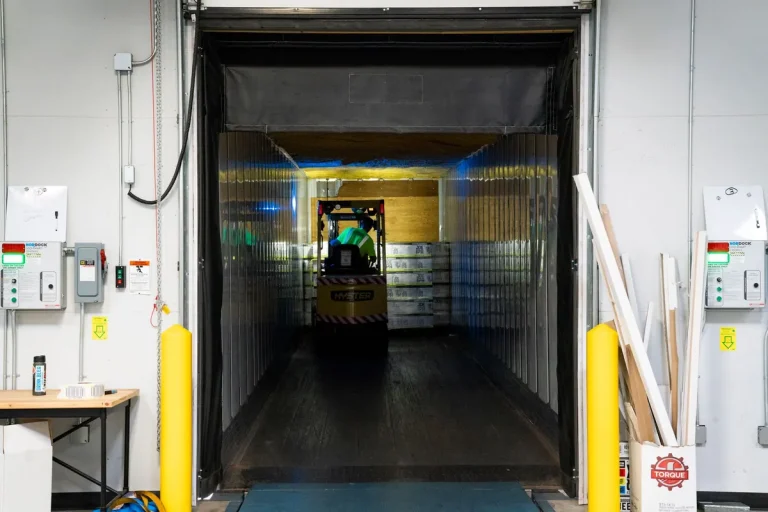
Forklifts queue at a doorway that still opens at a walking pace, and every second of that wait is paid for in labour and lost throughput. That hidden cost is the single biggest reason high-speed spiral doors have moved from a niche specification to a default choice in modern logistics and cold-chain buildings. The format did not win on styling. It won because it removed friction that older shutters could not.
A high-speed spiral door lifts rigid aluminium slats through a spiral guide track above the opening, so each slat travels independently instead of grinding against the next one. That single design decision changes the maintenance profile, the achievable speed, the wind performance and the thermal behaviour of the doorway. Understanding why the format is popular means separating the physical cause from the operating economics that make it pay.
The Non-Contact Track That Cut Door Maintenance
In a conventional rolling shutter the slats are stacked on a drum and slide over one another on every cycle. Each pass leaves a little more wear on the coating, and that abrasion is what eventually forces slat replacement. A spiral door avoids the contact entirely, because the slats run through a spiral guide track where the surfaces never touch.
Engineers who want the mechanical detail can review how a high speed door works, but the practical outcome is simpler than the theory. Less rubbing means the curtain keeps its finish, the door runs more quietly, and the drive spends less energy overcoming friction.
Raxdoors builds the spiral family from aluminium 6063-T5 slats, with galvanized steel from 0.4 mm to 1.5 mm and stainless SS304 or SS316 where washdown or coastal exposure demands it.
Cycle Speeds That Keep Forklift Traffic Moving
Opening speed is where the economics of a doorway become visible. A legacy roller shutter moves at roughly 0.2 m/s, so a four-metre opening takes about twenty seconds to clear. A rigid spiral door at 2.0 m/s clears the same opening in roughly two seconds.
Multiply that difference across a busy bay and the arithmetic stops being academic. At one hundred passes a day, the slow door adds close to thirty minutes of cumulative waiting on a normal shift day. Forklifts, drivers and the loads they carry all sit still for that time.
- Queue time is paid in labour, so every slow cycle carries a payroll cost.
- A stopped forklift blocks the aisle behind it, so one wait multiplies along the lane.
- Peak hour sets the drive size, while the daily count sets the duty rating.
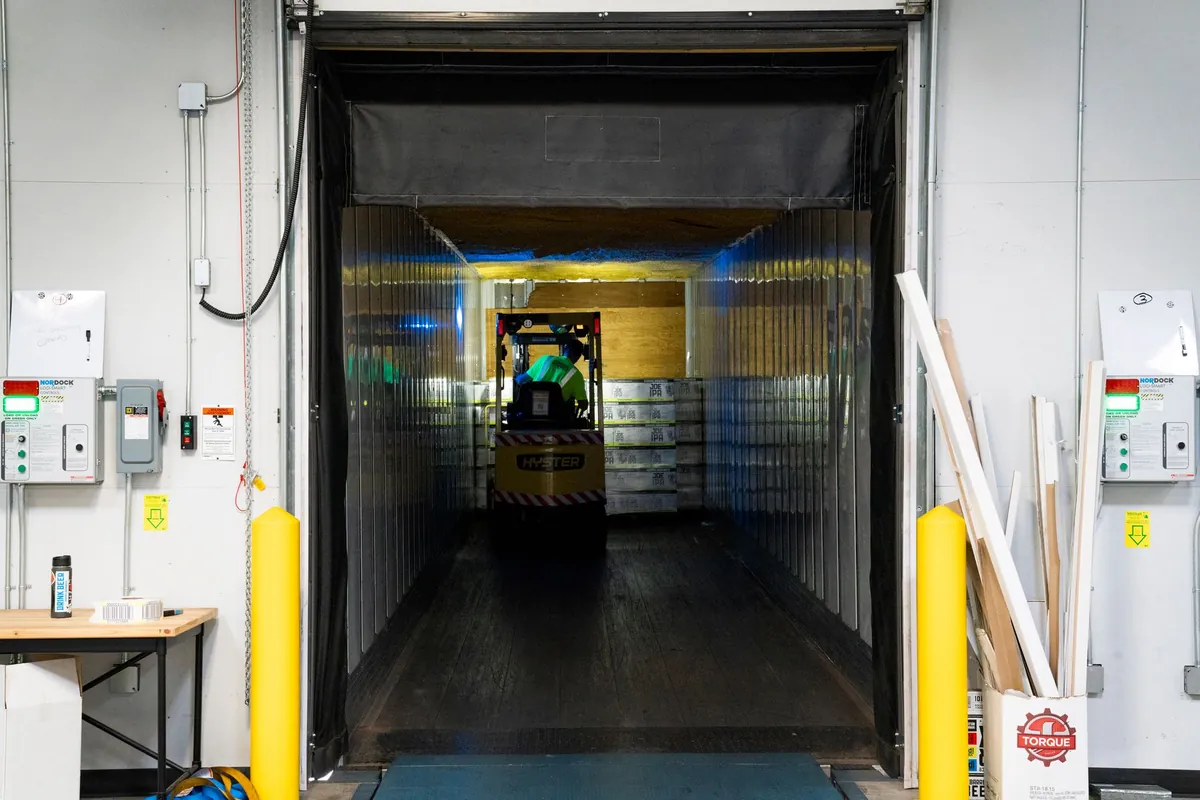
Raxdoors high-speed doors operate across a range of 0.8 to 2.5 m/s, so a specification can be matched to the traffic rather than pushed to the maximum. The correct speed is the one that keeps the aisle moving without oversizing the drive and its power supply.
Rigid Slats Deliver Wind Class 5 Outdoor Protection
Exterior doors face a load that interior doors never see. Wind pushes laterally against the curtain, and a flexible fabric door answers by bowing out of its guides. Rigid interlocking slats resist that load instead of deflecting, which is why the format is specified on exposed façades.
The Raxdoors spiral rigid door is rated to wind resistance Class 5, equivalent to grade 12 conditions. That rating comes from the slat profile and the perimeter seal working together, not from the curtain alone. A rigid slat that loses its edge seal still leaks and still rattles.
Where security matters as much as weather, a rigid high-speed door closes as a solid barrier rather than a sheet that can be cut. That blend of wind resistance and forced-entry resistance is a large part of why exterior bays have moved away from fabric.
The perimeter seal is where a rigid door keeps its promises. EPDM or silicone gaskets run along the bottom edge, both side guides and the lintel, and each one must stay in compression for the barrier to hold. A door that seals only at the bottom will still exchange air along its vertical edges.
How Insulated Slats Cut Cold Chain Energy Loss
Speed and insulation solve the same problem from two directions. A fast cycle shortens the window during which air can exchange, and insulated slats cut conduction while the door is closed. Cold-chain operators care about both because refrigeration runs continuously.
Raxdoors PU-foam panels are 40 mm to 50 mm thick and reach a U-value of 0.33 W/m²K on its insulated sectional door range. That figure describes the sectional family and should not be read as the rating of the spiral line, because the two use different panel builds. On the spiral side, the thermal gain comes mainly from cycle speed: a door that clears in two seconds instead of twenty lets far less conditioned air escape.
Once the door is shut, the spiral build still insulates. Its slats are aluminium 6063-T5 around a PU foam core, and the insulated high-speed door adds a thermal break that reduces condensation and ice build-up on the panel face.
| Parameter | Legacy Steel Shutter | Rigid Spiral Door | Fabric Roll-Up |
|---|---|---|---|
| Opening speed | About 0.2 m/s | 0.8 to 2.5 m/s | 1.5 to 2.5 m/s |
| Sealing | Panel gaps, drafts | Perimeter compression seals | Edge retention seals |
| Wind and security | Moderate | Class 5, rigid barrier | Low, cuttable |
| Best fit | Low-traffic interior | Exterior, high cycle | Light duty, low headroom |
Think of the doorway as an open window rather than a wall. The longer it stays open, the more conditioned air leaves and the more outside air the system must re-treat. That is why serious suppliers quote cycle time and insulation together rather than as separate features.
This is why high-speed spiral doors appear so often in temperature-controlled buildings. The insulation does the quiet work while the speed does the visible work, and together they lower the load on chillers and air-handling units.

Where Fabric Roll-Up Doors Still Make More Sense
It would be dishonest to present the spiral format as right for every opening. A flexible fabric door is often the better buy, which is why the fabric door versus spiral door comparison still matters. Where forklifts strike a doorway regularly, a breakaway curtain that re-inserts itself on the next cycle avoids downtime that a rigid slat cannot.
Very low headroom and the tightest budgets also favour fabric. A lightweight roll-up needs less space above the opening and costs less upfront. High-speed spiral doors earn their premium where wind, security, temperature control or cycle count genuinely matter to the operation.
The choice is rarely permanent, either. A site can run fabric doors on interior lanes and spiral doors on exterior bays, matching each opening to its real duty instead of buying one type everywhere.
Match the door to the opening rather than to the catalogue. A rigid spiral door specified where a low-headroom fabric door would do adds cost without adding throughput, and fabric on an exposed coastal façade invites repeat wind damage.
Automation and Safety Sensors Now Come Standard
Modern industrial doors are controlled systems, not just moving curtains. Infrared light curtains create a grid of beams across the opening, and a pressure-sensitive bottom edge reverses the door on contact. Radar and PLC inputs let a door open for a vehicle without the driver touching anything.
- Radar or loop detection wakes the door as a vehicle approaches.
- A light curtain guards the opening and holds the door while the path is blocked.
- A pressure-sensitive bottom edge reverses the curtain on contact.
- An absolute encoder records position, so a power loss does not need a recalibration visit.
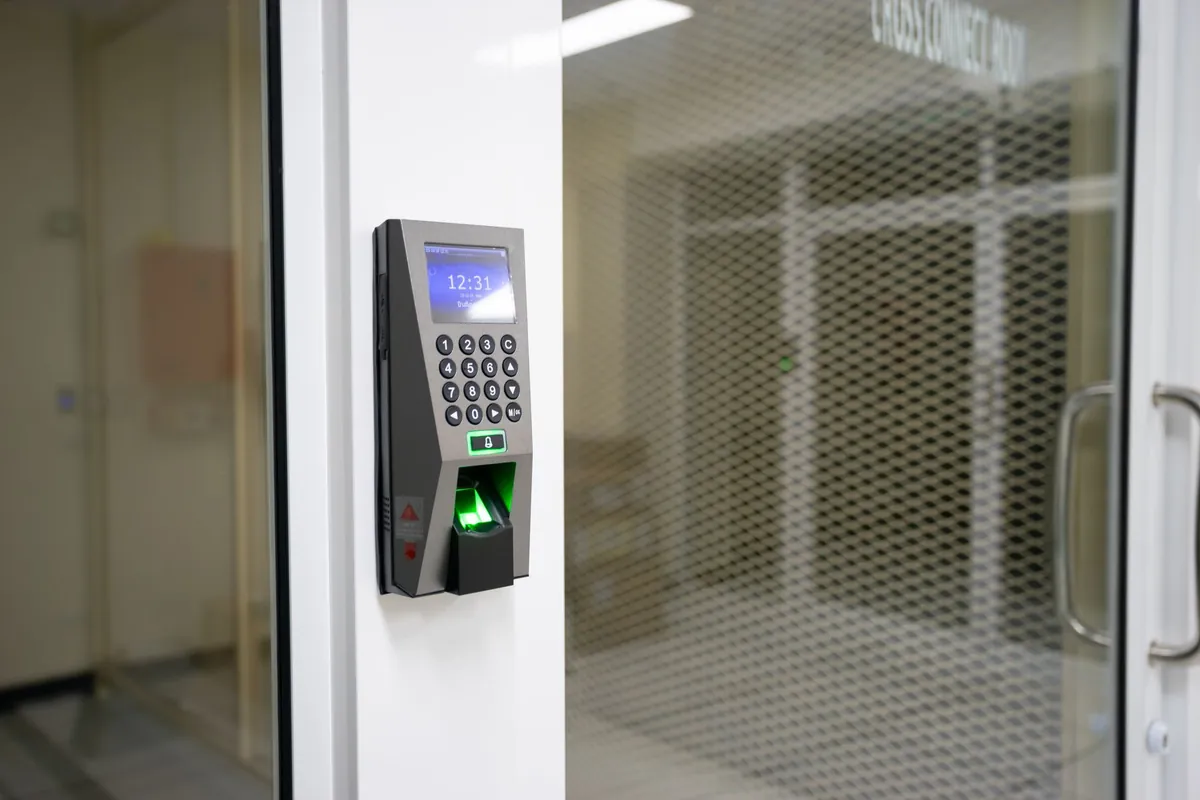
Absolute encoders are the less visible upgrade. After a power cut a door with an absolute encoder knows its exact position and resumes without a manual recalibration visit. In food and pharmaceutical zones these components must also survive washdown, which is why IP65-rated enclosures matter.
Automation is now a procurement expectation rather than a premium. Buyers comparing quotes increasingly treat light curtains and encoder-based control as baseline, and that shift has pulled the whole rigid high-speed category into the mainstream.
How to Choose a Spiral Door for Your Facility
A short checklist prevents most specification mistakes. Work through each point below before freezing the opening dimensions, because headroom and cycle count decide whether a spiral door is even the right answer.
Measure the Opening, Headroom and Track Type
Record the clear opening width and height, then the usable headroom above the lintel and the side room beside it. A spiral track needs space for its coil, so a door that fits an opening on paper may not fit the structure once the track is drawn.
Count Realistic Daily Cycles, Not Peak Hour
Estimate the passes a normal day really produces rather than the busiest hour alone. Duty rating and drive selection follow that average, and oversizing a drive adds cost without adding throughput.
Confirm Wind Exposure, Security and Temperature Separation
State whether the opening faces weather, whether forced entry is a real risk, and how much temperature separation the building must hold. Each of those three answers pushes the specification toward or away from a rigid door.
Check the Cleaning Regime and Enclosure Rating
Washdown and hygiene zones need components that tolerate direct spray and cleaning chemicals. Confirm the enclosure rating before the order, not after the first wash.
Ask for Certification Evidence and a Spare-Part Schedule
Request ISO 9001:2015 quality management, CE marking under EN 13241 with EN 12453 safety testing, and material test reports from a body such as SGS. Spare-part availability and a documented maintenance schedule matter as much as the headline speed.
Settle the checklist first, then let the specification follow the operation. That order keeps a premium door where it pays and a simpler door where it does not.
Frequently Asked Questions About Spiral Doors
Why are high-speed spiral doors so popular now?
They combine the speed of a fabric door with the security and insulation of a rigid one. Faster cycles, lower maintenance and better sealing all reduce operating cost, which is why the format has become a default in logistics and cold-chain buildings.
Are high-speed spiral doors worth the higher upfront cost?
They are worth it where traffic is heavy, the opening is exterior, or temperature control matters. In those cases the cycle-time and energy savings usually outweigh the premium. For a light-duty interior doorway, a fabric door is often the better buy.
How much maintenance do spiral doors need?
Less than a rolling shutter because the slats never rub. Routine work is limited to keeping the spiral track clear of debris, checking the seals and lubricating moving parts. Regular inspection still matters, because a blocked track is the most common cause of stops.
Can a spiral door withstand strong wind on an exposed site?
The spiral rigid door is rated to wind resistance Class 5, equivalent to grade 12 conditions. That rating depends on the slat profile and a correctly fitted perimeter seal working together, so installation quality matters as much as the panel.
Do spiral doors work in cold storage and clean environments?
Yes. Insulated PU-filled slats reduce conduction, and washdown-rated IP65 components suit food and pharmaceutical zones. The fast cycle also limits air exchange, which helps hold temperature and pressure in controlled environments.