






The first forklift of the shift stops at a cold room door that will not move. Someone goes to find a pry bar, someone else checks the refrigeration plant, and nobody touches the one thing that matters: the sealed joint where the ice is getting in. That scene repeats in cold stores everywhere, and it is almost always read backwards.
We engineer these doors in-house, and the questions below are the ones our sales engineers answer before every order. Cold room door freezing is not a hygiene problem or a refrigeration fault. It is the visible symptom of moist air reaching surfaces below freezing, and that air only enters along leak paths you can inspect by hand. The fix follows the same order as the diagnosis. This guide covers why ice forms, which four leak paths feed it, and how door heater cables work and fail. It ends with open-door air management, a weekly routine, and the point where repair stops making sense.
Why Cold Room Doors Freeze in the First Place
The physics is simple and unforgiving. Air carries moisture, warm air carries more of it, and when that air reaches a surface below its frost point the moisture deposits as ice. Cold room doors sit exactly on that boundary. Every opening exchanges warm humid air for cold dry air, and the moisture lands on whatever is coldest and closest. That usually means the gaskets, the frame, the threshold, the evaporator coils and the floor in front of the door.
That is why frost should be read as a symptom rather than as the problem itself. Frost almost always means moisture-laden air is reaching a space that is supposed to stay dry and sealed. Scraping it off treats the deposit, not the delivery route, which is why the ice returns on the same lines every time.
Ice is the symptom; hardware alignment is often the cause. The guide to cold room door hinges and gaskets traces how hinge wear unbalances seal compression and feeds the frost line.
Severity scales with two variables. Freezer doors collect ice faster than chiller doors, because more of the incoming moisture freezes outright instead of lingering as condensate. A humid loading bay or a wet washdown area next door feeds the same door more moisture with every opening.
The costs accumulate quietly. Ice forces longer refrigeration run times and more defrost cycles. It tears gaskets and hardware, jams doors shut at the worst hour of the day, and creates slip hazards at the threshold. In audited food environments it eventually becomes a compliance finding. All five trace back to the same few kilograms of moist air.
Four Leak Paths That Feed the Ice
Four paths deliver the moisture, and each leaves a signature you can read from the floor.
The first is the gasket. A worn, flattened or torn seal lets air thread through the joint continuously, and the frost pattern maps the leak. Expect a heavy line opposite the gap, often strongest at the corners and along the bottom. Run a hand along the gasket of the closed door on the warm side. Cold draughts, soft spots and visible gaps mean the seal has quit before your eyes confirm it.
The second path is a dead frame heater. When the heating cable around the frame stops working, ice traces the door perimeter and is heaviest at the bottom, where the gasket meets the threshold. A telling variant: the door frees up during busy hours and refreezes when traffic stops, because each opening breaks the bond while the leak keeps feeding.
The cable side of that story now has its own manual: the cold storage door heating cables engineering guide covers the 20-70 W/m sizing band, placement zone by zone, control strategies and how to read a dead circuit from the ice.
The third path is the threshold and its drainage. Failed threshold heaters or worn bottom sweeps build an ice ridge across the door line, and defrost melt water that cannot drain away refreezes exactly where wheels travel. That ridge is both a leak symptom and a slip hazard.
The fourth path is the doorway itself. High traffic replaces the room’s air opening by opening, and no seal stops air that never stops moving. Timing separates this path from the others. A door that closes tight right after shutting but is stuck next morning is usually suction, which the heated pressure relief port exists to vent. True ice adhesion follows the moisture paths above.
| Symptom | Likely leak path | First action |
|---|---|---|
| Frost line opposite one gasket zone | Worn or torn gasket | Hand-test the seal, replace the gasket |
| Ice tracing the full frame, worst at the bottom | Frame heater cable failure | Check cable continuity and supply voltage |
| Ice ridge across the threshold | Threshold heater or sweep failure, blocked drain | Clear the drain, inspect sweep and threshold cable |
| Door sticks only after idle nights | Suction plus moisture at the seal | Test the heated pressure relief port |
| Ice returns within hours of scraping | Continuous infiltration through traffic or seals | Fix the path before touching the ice again |
Door Heater Cables: What They Do and How They Fail
A frame heater cable is the anti-freeze hardware most cold room doors already carry, and it is the first thing to check when ice outlines the door. Its job is narrow: hold the frame surfaces that the gasket presses against a fraction above freezing so the seal cannot bond to the frame. Done properly, the cable sits in a groove or track in the frame with the seal closing over it. That continuous warmth is what stops a cold room door freezing shut along its perimeter. For a deeper dive, see electric roller shutter door anti-drop device.
A heater cable is an insurance policy with a running premium. What those watts add up to over a year, and how to keep them on demand control, is costed in our cold room door energy efficiency guide.
Sizing is a range, not a single number. One heating-cable maker’s guidance puts door-perimeter output anywhere between 20 and 70 W/m, depending on room temperature, frame design and materials, with freezer work near the top of that band. Typical assemblies use an earthed screen and insulation rated for the environment. Good thermal contact with the frame matters as much as the rating, because a cable that heats air instead of metal wastes its output.
Cables fail in repeatable ways. Pallet strikes crush the track, and power left on while a door is frozen in during a shutdown cooks a cable in place. Corrosive cleaning agents pool in the cable track, thermal contact degrades, and low supply voltage starves the circuit. The symptom list in the previous section doubles as the diagnostic. Test continuity, test voltage at the feed, then confirm the frost map changes after the repair.
When cable, gasket and sweep are all past saving, or the door itself has moved, the conversation changes from parts to specification. Our cold room doors are built for this duty, with insulated leaves and anti-icing hardware for freezer work. The overview at RAX Door’s cold room doors is the starting point.
Managing the Air While the Door Is Open
Seals and heaters defend a closed door, but an open doorway is where most cold room door freezing starts, and that window needs its own hardware. Three options divide the work. Related reading: cold room door controls covers this in detail.
Strip curtains are the cheap first layer, and they work until they do not. An intact curtain strips most of the air exchange out of an opening at low cost. Torn, grease-marked or missing strips are worse than none. They obstruct traffic, give up the air barrier entirely, and in hygiene-critical stores a degraded curtain reads as a contamination finding in audits.
An air curtain is the only barrier that keeps working while the doorway is in active use. An industry-group worked example sizes the stakes: a 2.35 by 1.8 metre doorway held at −22 °C against a +7 °C loading bay carries roughly 69 kW of infiltration load. A correctly specified curtain at 76.9 percent effectiveness cuts that to about 15.9 kW.
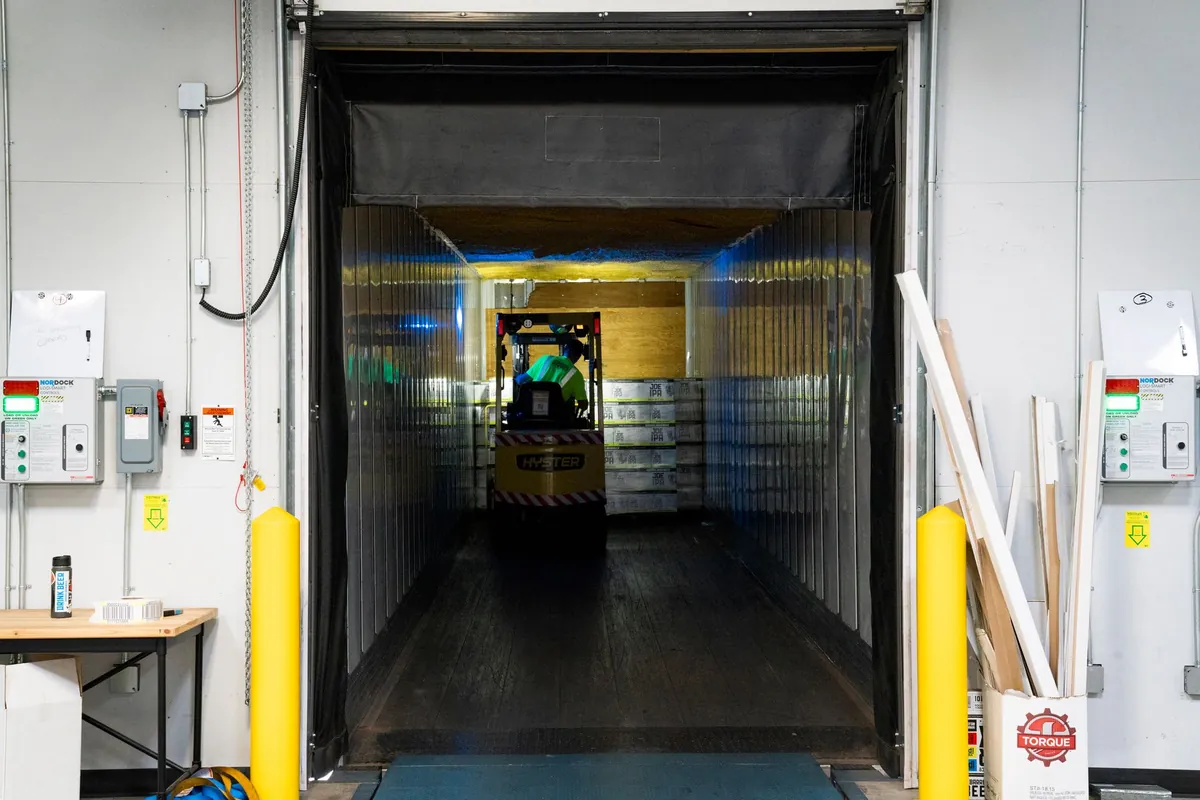
High-speed doors attack the window itself, cutting open-time from tens of seconds to a few. Our self-repairing zipper door guide covers the cold-chain version of that logic. Whichever hardware you pick, the underlying blueprint matches temperature loss everywhere else in the building. Shorten the opening, slow the exchange, and stop paying for air you already paid to cool. That wider picture is laid out in our guide to preventing cold storage temperature loss.
A Routine That Keeps the Door Ice-Free
Prevention is a short routine, and weekly is the right cadence. Three checks take ten minutes. Run a hand along the gasket feeling for draughts and gaps. Look at the threshold and drain for early ice or standing water. Walk the door reading the frost map for new lines where old ones used to be clean.
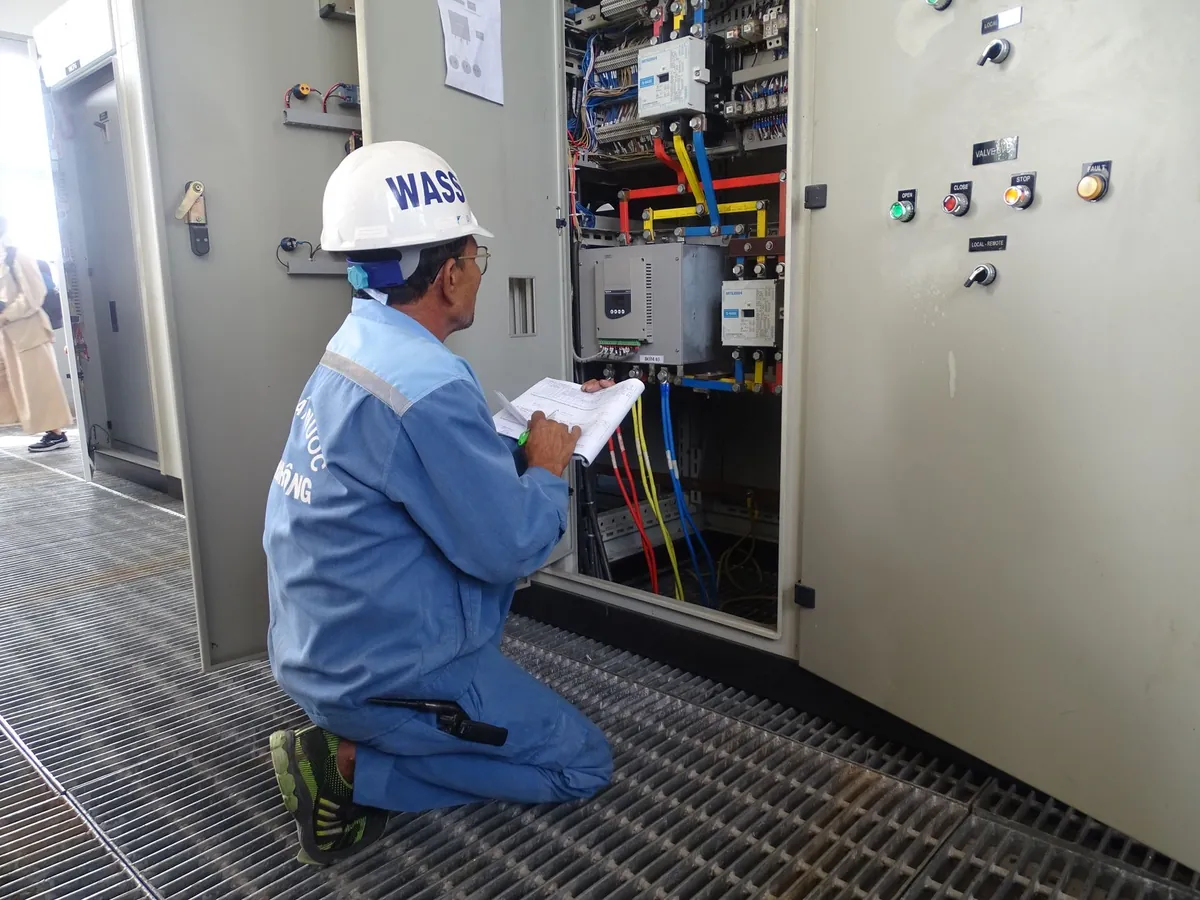
When the door does freeze shut, open it without fighting it. A warm, not boiling, towel laid along the gasket line releases the bond in minutes. Prying with a bar or chipping with a screwdriver bends the leaf, tears the gasket and scores the frame. A scored frame never seals the same again.
Skip the scraping habit altogether. Chipped ice returns within hours while the leak path is live, and every cycle chews more gasket material. Fix the path first, clean once, and fold the door checks into the fuller schedule in our cold room door lifespan guide.
Repair or Replace: Reading the Door’s Limits
Most freezing doors are repair candidates. Gaskets, sweeps, threshold and frame heater cables, hardware and drain lines are all inexpensive parts, and replacing them addresses the actual leak path rather than the symptom. Cold room door freezing that disappears after a gasket and cable change was never a door problem to begin with.
Freezing is a performance problem first, but it is a safety problem too; the cold room door safety requirements page sets the red line for a frosted release mechanism and the tests that keep it movable.
Some damage needs a technician rather than a parts order. A warped door leaf shows up as the same frost lines, and so do sagging hinges and frame damage from vehicle strikes. The difference is that no gasket will seal a leaf which no longer sits parallel to its frame.
Replacement has three hard criteria. Replace the door when the leaf or frame is warped beyond adjustment. Replace it when gaskets tear repeatedly because the leaf sits out of square. Replace it when the insulated panel joints themselves leak air and moisture into the core. The complete selection picture is in our industrial cold room doors guide.
Ice is the door’s honest report. Every frost line marks where moist air got in, and the frost map is the leak map. Read the report and answer it with seals, cables and drain lines, and the door stays clear. Ignore it and answer with a pry bar, and the ice writes the same report again tomorrow.
Frequently Asked Questions About Cold Room Door Freezing
Why does my cold room door freeze shut overnight?
Moist air infiltrates along a leak path, usually a worn gasket or a dead frame heater cable, and the moisture freezes on the coldest joint while traffic is stopped. Suction can add to the sticking, which the heated pressure relief port normally vents.
Can I force a frozen cold room door open?
No. Prying bends the leaf and tears the gasket, and a scored frame never seals the same again. Lay a warm towel along the gasket line, wait a few minutes and open the door normally once the bond releases.
How many watts is a cold room door heater cable?
One heating-cable maker’s guidance puts door-perimeter output between 20 and 70 W/m, set by room temperature, frame design and materials. Verify the cable’s continuity and supply voltage before assuming the rating itself is the problem.
Why does ice come back after I scrape it off?
Scraping removes the deposit, not the moisture source. While the leak path, whether gasket, threshold, drain or open-door traffic, keeps feeding moist air, frost rebuilds on the same lines within hours.
When should a cold room door be replaced?
When the leaf or frame is warped beyond adjustment, when gaskets tear repeatedly because the leaf sits out of square, or when panel joints leak air into the core. Hardware-level leaks are repairable; geometry and structure are not.