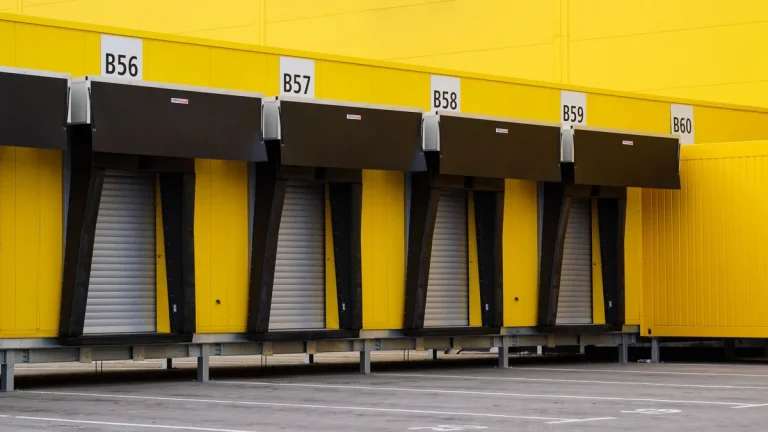
In modern industrial refrigeration and cold chain logistics, door opening air infiltration represents the single largest source of parasitic thermal load. Engineering field studies demonstrate that up to 70% of total refrigeration energy waste occurs at doorway openings. Every time a warehouse doorway is breached, warm ambient air rushes in while dense refrigerated air spills outward across the floor.
Understanding how to prevent temperature loss in cold storage facilities requires a comprehensive thermodynamic approach. Key engineering countermeasures include high-speed insulated barriers, polyamide thermal breaks, multi-chamber gasket compression, interlocked air lock vestibules, inflatable dock seals, intelligent radar activation, and physical bollard protection. In over two decades of engineering heavy-duty entrance systems and custom cold room doors, factory engineering teams have deployed specialized solutions that cut refrigeration losses by up to 80%.
1. Fluid Dynamics of Air Infiltration & Enthalpy Loss
To eliminate temperature loss, facility engineers must first examine the physics governing air exchange across cold room doorways.
Stack Effect and Convective Density Differentials
Refrigerated air at -25°C exhibits a density of approximately 1.42 kg/m³. Ambient warehouse air at +25°C has a density of only 1.18 kg/m³. This 20% density disparity creates a pronounced chimney effect. Heavy cold air cascades out along the bottom floor zone. Simultaneously, negative pressure at the top of the door frame draws warm, moist ambient air inward.
Sensible and Latent Heat Load Calculations
The total thermal energy entering a cold room through an open doorway is governed by the enthalpy differential equation: Q_infil = m * (h_ambient – h_cold). Beyond sensible temperature rise, moisture carried by ambient air releases massive latent heat as it condenses and freezes. This moisture forms heavy frost on evaporator coils, forcing refrigeration compressors into frequent, energy-draining defrost cycles.

2. High-Speed Insulated Doors: Slashing Open-Cycle Exposure
The most effective mechanical defense against convective air exchange is reducing the duration a doorway remains open during forklift transit. In studying how to prevent temperature loss in cold storage facilities, operating velocity is the primary determinant of energy conservation.
Rapid-Cycle Velocities from 1.5 to 2.5 Meters per Second
Traditional manual sliding cold doors take 8 to 15 seconds to open and close, resulting in total open exposure times of 20 to 35 seconds per transit. High-speed insulated roll-up doors operate at opening speeds of 1.5 to 2.5 m/s and closing speeds of 0.8 to 1.2 m/s. This rapid action cuts the total open doorway exposure time to under 6 seconds per cycle, slashing convective thermal infiltration by over 70%.
Insulated Flexible Curtains with Air Cushions
Modern high-speed cold doors feature multi-layer composite curtains filled with closed-cell thermal foam. When closed, internal air cushions create an effective thermal barrier (U-value: 0.8 to 1.2 W/m²K) that prevents surface condensation while resisting repeated high-frequency forklift operations.
Experiencing Severe Temperature Loss in Your Cold Facility?
Send your doorway dimensions, traffic frequency, and temperature delta to our factory engineering team for a comprehensive energy-loss audit and custom door proposal.
3. Polyamide Thermal Break Frames & Dew Point Management
Direct conductive heat transfer through metallic door frames represents another major source of continuous energy loss.
Eliminating Structural Cold Bridges with PA66 GF25
Solid metal frames act as thermal conductors, channeling ambient heat directly into the cold room while chilling outer frame surfaces below the dew point. High-efficiency cold doors integrate 24 mm to 34 mm structural polyamide (PA66 GF25) thermal breaks reinforced with 25% glass fiber. Polyamide exhibits a thermal conductivity of λ = 0.30 W/mK, reducing conductive heat transmission by 160 times compared to steel.
Preventing Perimeter Sweating and Ice Accumulation
By isolating the warm exterior frame from the sub-zero interior casing, structural thermal breaks keep exterior frame surfaces above the ambient dew point. This completely prevents frame condensation, dripping puddles, and dangerous floor icing along entrance corridors.
4. Perimeter Compression Sealing & Dual-Axis Track Kinematics
Static air leakage through worn or poorly fitted perimeter gaskets accounts for continuous 24/7 temperature bleed even when doors remain closed.
Multi-Chamber Low-Temperature EPDM Elastomers
High-performance cold room doors utilize co-extruded multi-chamber EPDM gaskets formulated with paraffinic plasticizers. These specialized elastomers maintain full elasticity down to -55°C, ensuring continuous airtight contact without cracking or becoming brittle.
45-Degree Drop-Track Compression Mechanics
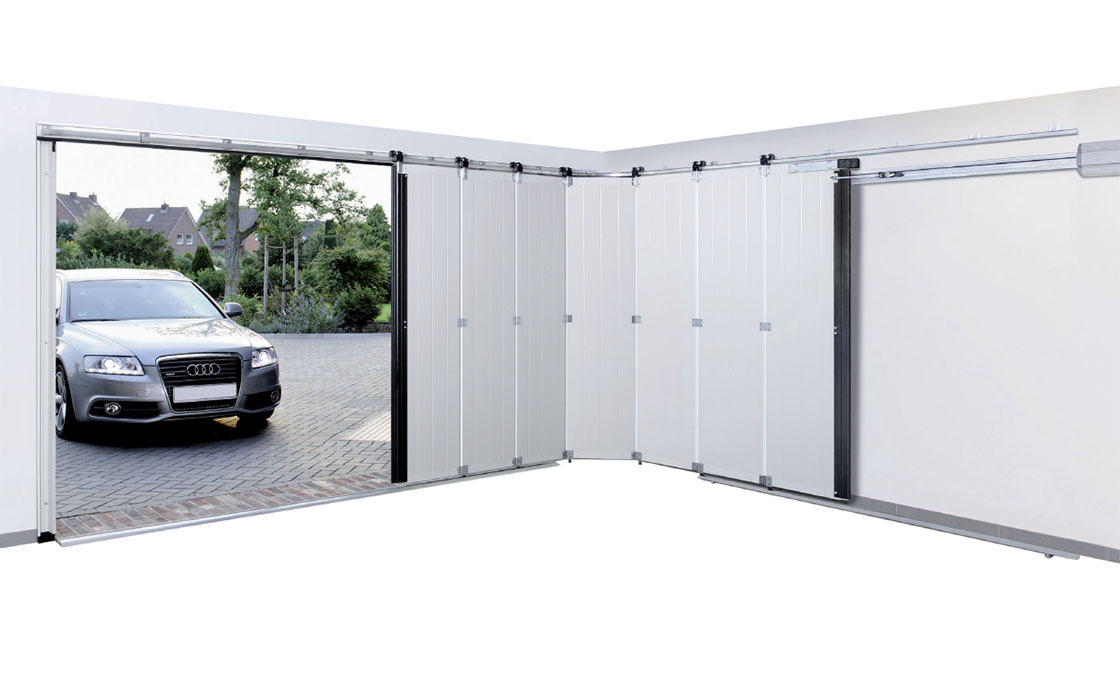
Sliding cold doors utilize CNC-machined 45-degree angled track drop ramps. During the final inches of closure, the track drops the door 10 mm vertically and pushes it 8 mm horizontally inward. This dual-axis motion compresses the multi-chamber EPDM gaskets tightly against the frame and floor, achieving Class 4 airtightness under EN 12426.
5. Interlocked Air Lock Vestibules & Buffer Zones
For high-throughput distribution hubs operating at -25°C to -45°C, a single door is often insufficient to prevent severe thermal transfer.
Dual-Door Interlocking Automation
Air lock vestibules feature two automated high-speed doors separated by an intermediate buffer chamber. Intelligent PLC controllers interlock the doors, ensuring that Door A cannot open until Door B has completely sealed. This eliminates continuous convective chimney airflow between ambient loading docks and deep-freeze storage bays.
Dehumidified Buffer Air Management
Conditioning the air inside the air lock vestibule with desiccant dehumidifiers strips moisture from incoming ambient air. This prevents frost formation on cold room floors, dramatically improving forklift traction and worker safety.
6. Inflatable Loading Dock Seals & Insulated Shelters
The loading dock represents the primary interface where refrigerated products transition between transport trailers and warehouse facilities.
Hermetic Trailer Perimeter Containment
Standard dock bumpers leave significant perimeter gaps around truck trailers, allowing massive volumes of summer heat and humidity to infiltrate the refrigerated staging dock. Inflatable dock seals utilize heavy-duty commercial blowers to expand airtight PVC air bags tightly against the top and sides of the trailer body.
Thermal Dock Leveler Insulation
Installing insulated dock leveler blankets and perimeter brush seals underneath loading levelers prevents cold air from escaping beneath warehouse foundation pits, eliminating conductive heat leakage.
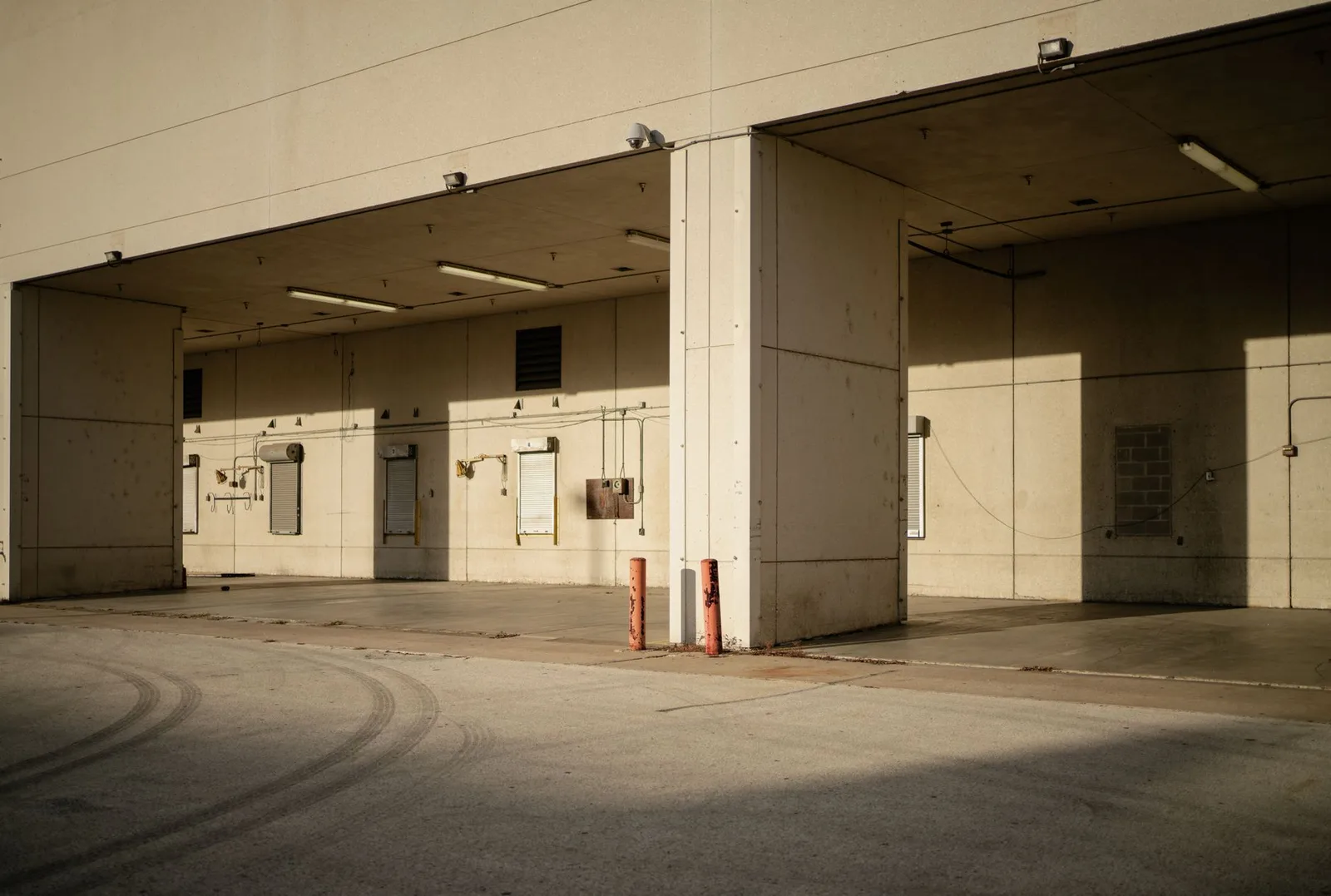
7. Intelligent Radar Activation & Impact Bollards
Operational discipline and proactive physical protection are vital to sustaining long-term thermal containment.
Cross-Traffic Rejection Radar Sensors
Traditional pull-cords or standard motion sensors frequently trigger false openings when forklifts drive past a door without intending to enter. Intelligent dual-zone microwave radar sensors distinguish between approaching traffic and parallel cross-traffic, opening doors only when a vehicle approaches on a direct entry trajectory.
Heavy-Duty Structural Impact Bollards
Forklift impacts with door frames or tracks cause minor misalignments that break perimeter gasket seals. Installing 150 mm concrete-filled steel crash bollards protects door guide channels and frame geometry, ensuring continuous airtight gasket compression year after year.
8. Master Energy Conservation & Payback Matrix
When planning how to prevent temperature loss in cold storage facilities, the engineering matrix below outlines the performance and ROI of key countermeasures:
| Engineering Countermeasure | Thermal Loss Reduction | Primary Mechanical Mechanism | Estimated Payback Period |
|---|---|---|---|
| High-Speed Insulated Doors | 65% to 75% Reduction | 1.5-2.5 m/s opening; <6s cycle exposure | 12 to 18 Months |
| PA66 Thermal Break Frames | 85% to 90% Reduction | 24-34 mm polyamide non-conductive barrier | 14 to 20 Months |
| Dual-Axis Drop-Track Sealing | 80% Air Leak Reduction | 10 mm drop / 8 mm inward EPDM compression | 8 to 14 Months |
| Interlocked Air Lock Vestibules | 85% to 92% Reduction | Dual-door PLC interlock; zero continuous draft | 18 to 24 Months |
| Inflatable Dock Seals | 70% to 80% Reduction | Airbag compression sealing on trailer body | 10 to 16 Months |
| Intelligent Radar Sensors | 30% False-Open Reduction | Cross-traffic filtering; targeted activation | 6 to 10 Months |
| Crash Bollard Protection | Prevents Seal Failure | 150 mm steel bollards prevent frame misalignment | Immediate (1st collision) |
Energy conservation standards and quality benchmarks governed by ISO and workplace safety codes from the Health and Safety Executive provide definitive guidelines for industrial refrigeration efficiency.
9. Facility Engineering Consultation for Cold Chain Efficiency
Understanding how to prevent temperature loss in cold storage facilities enables warehouse operators to implement high-ROI thermal barriers that lower electrical operating expenses and protect refrigerated inventories. Reviewing doorway cycle frequencies, operating temperature deltas, and perimeter sealing mechanics ensures optimal facility performance.
Need an energy-loss evaluation for your cold room doors?
If your cold storage facility is experiencing high electricity costs, frame condensation, or evaporator icing, the factory engineering team is available to review your facility blueprints and provide customized high-speed door recommendations and thermal payback analyses.
Frequently Asked Questions About Cold Storage Temperature Loss
What causes the most temperature loss in cold storage facilities?
Open door air infiltration causes up to 70% of total refrigeration losses due to convective air exchange and latent moisture loads.
How much energy do high-speed cold storage doors save?
High-speed doors operating at 1.5 to 2.5 m/s reduce open doorway exposure duration by over 70%, slashing convective infiltration losses.
Why do cold room door frames develop condensation and ice?
Condensation occurs when metallic frames lack thermal breaks, chilling the outer metal below the ambient dew point and freezing perimeter seals.
What is the purpose of an interlocked air lock vestibule?
Air lock vestibules use two interlocked doors to ensure one door remains sealed at all times, preventing continuous chimney air exchange.
How do inflatable dock seals prevent temperature loss?
Inflatable seals expand heavy-duty PVC air bags tightly around truck trailers, eliminating perimeter gaps where warm air infiltrates the loading dock.