
Halfway through the Tuesday shift, a thermal overload tripped and the roller shutter over bay three froze in transit. The crew waited out a cooling period, the forklift queue grew, and the log gained another mid-cycle stop nobody had budgeted for.
That trip was not random. Almost every symptom showed up earlier in the specification sheet, in a row the buyer never checked. This page lists the seven functional features of an industrial door motor that decide those rows, with the numbers and standards you can hold each one against.
Feature 1: Rated Output Torque and Torque Margin
Torque is the first rated figure on any industrial door motor, and it is also the most commonly misread one. On a well-balanced door, the torsion springs do most of the lifting. Quality sectional hardware is rated for 30,000 cycles or more, so the motor only supplies the difference between spring force and door weight.
That difference is your torque margin. Chain-drive shutter motors on the UK market start around 60 Nm of output torque on smaller drives, and ratings climb with door weight and curtain size. Think of margin like a spare wheel for a fleet: you plan never to use it, and the one day you need it, nothing else substitutes.
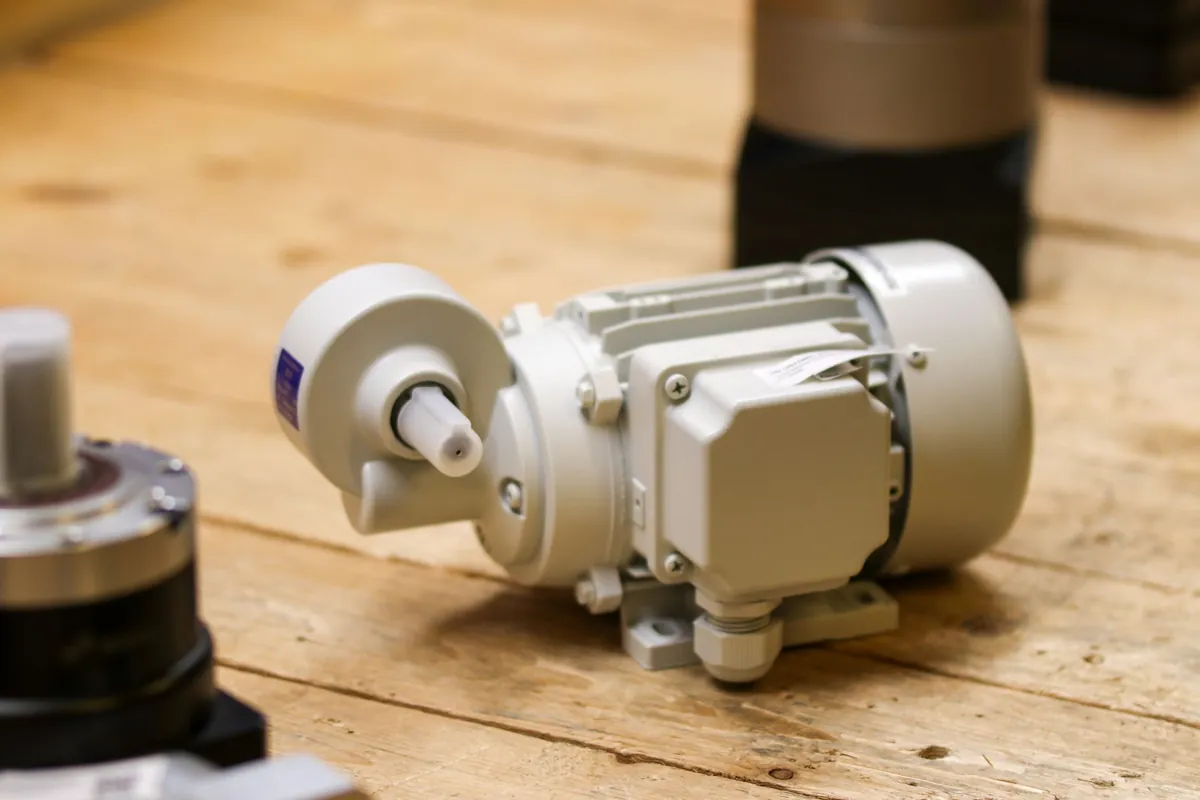
When the margin is missing, the failure is mechanical and immediate. The motor strains against end of travel or a bound curtain, current climbs, and the overload trips long before anything official fails. Sizing against the full door calculation, not the catalog headline, is what keeps that current flat.
Feature 2: Limit Switches That Set the Travel
Limit switches tell the motor where the door starts and stops. On a tube motor they sit in the motor head beside the manual override eye. They cut the drive at both ends of the curtain travel, so the door seats fully closed without grinding into the floor.
You will meet two families here: mechanical switches adjusted by hand, and encoder-based versions that count revolutions electronically. The mechanical type is cheaper, but an out-of-adjustment switch makes the motor keep straining past the end of travel, which stalls the drive and overheats the winding. Encoder limits remove most of that drift, at a price.
Ask any supplier one question: how is travel set, and what stops it drifting? Repeatable limits keep the door sealing to the same position on every cycle.
Feature 3: Duty Cycle Rating and Thermal Protection
Every motor is rated for how long it can run before heat becomes a problem. Light-duty tube motors are single-phase units with a built-in thermal cut-out, and their makers generally cap them at roughly 15 to 20 operations a day. Push past that and the cut-out does exactly what it did in the opening scene.
Heavier machinery is rated on a duty scale instead. Three-phase direct-drive units built for distribution centres and busy factories run duty cycles of roughly 60 to 100 percent, which is what continuous traffic actually demands. Match the class to your shift count, not to what is in stock.
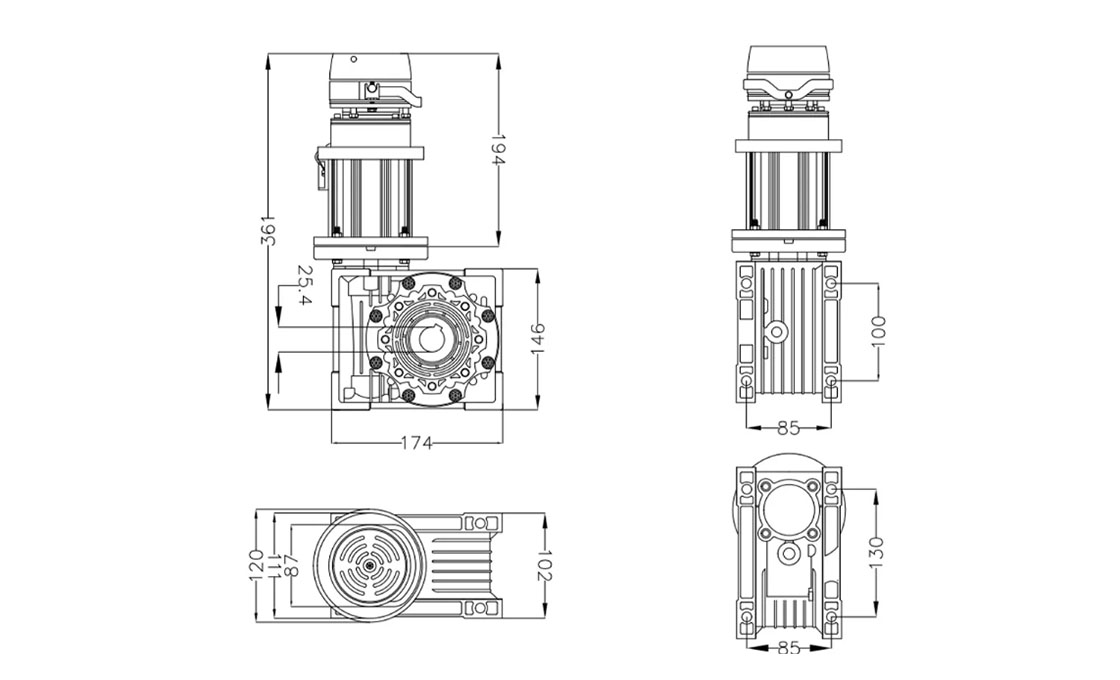
If a trip does happen, the recovery rule is patience. Let the motor cool for roughly 20 to 30 minutes before resetting, because repeated hot resets cook the winding. Speed is a separate rating: high speed doors move at 0.8 to 2.5 m/s.
Feature 4: Safety Devices Built to EN 12453
A powered industrial door is a moving hazard, and EN 12453 is the standard that governs its safe use. Compliance is a system, not a badge. Safety edges in the bottom seal stop and reverse the motor on contact. Photocells across the opening block operation when the beam breaks, and hold-to-run control keeps the operator at the button.
Anti-fallback protection belongs in the same conversation. Doors that are not counterbalanced must carry a safety brake, so the curtain cannot unroll if the drive fails. On modern motors that brake is built in and activates automatically. After it fires, an engineer has to reset it, which is by design.
The legal duty sits with the installer and the door owner, as the UK regulator sets out for powered gates and doors. Our own operators are built and certified against EN 13241 and EN 12453.
Feature 5: Manual Release for Power Cuts
When the supply drops, the release is the only feature that keeps the door working. Small tube motors take a winding crank through the override eye in the motor head. Larger chain-drive and direct-drive motors keep a low-level hand chain, so staff can walk the door up or down by hand without ladders.
Picture the night shift scenario. The grid fails and a loaded trailer waits on the wrong side of the shutter, and the keyed release decides whether the dock stays open. Train the crew before that night.

One discipline matters more than any hardware choice. Release the drive only when the door is stopped and the springs are doing their share, because a released curtain with a broken spring is a falling object. Good manuals print that warning; good supervisors repeat it.
Feature 6: Soft Start and Variable Speed Control
A motor that slams to full torque on every start spends its life punishing the door. Variable frequency control ramps acceleration and deceleration instead, so the curtain glides into its limits rather than hitting them, and the drive current stays proportional to the load.
The wear this saves is spread across the whole assembly. Springs, rollers, hinges and tracks all take the shock that soft start removes. On a door doing dozens of cycles a shift, that shock decides whether you reach the spring rating or replace hardware early. Speed itself becomes a setting rather than a compromise.
If a quote lists only on-off control, price the hidden line item: the earlier spring replacement and the hardware you keep tightening.
Feature 7: Sealed Housing, Connectivity and Warranty
The last features decide how long the first six survive. A sealed enclosure rated IP65 keeps dust and wash-down water out of the winding and the board. That is why it is the baseline for our own industrial door motor range rather than an upgrade.
Connectivity turns that sealed box into a reporting device. Our operator line ships in 16 models carrying WiFi, Bluetooth and RS485. Cycles, faults and settings reach the controller or the building system, so diagnosis starts from a log instead of a ladder.
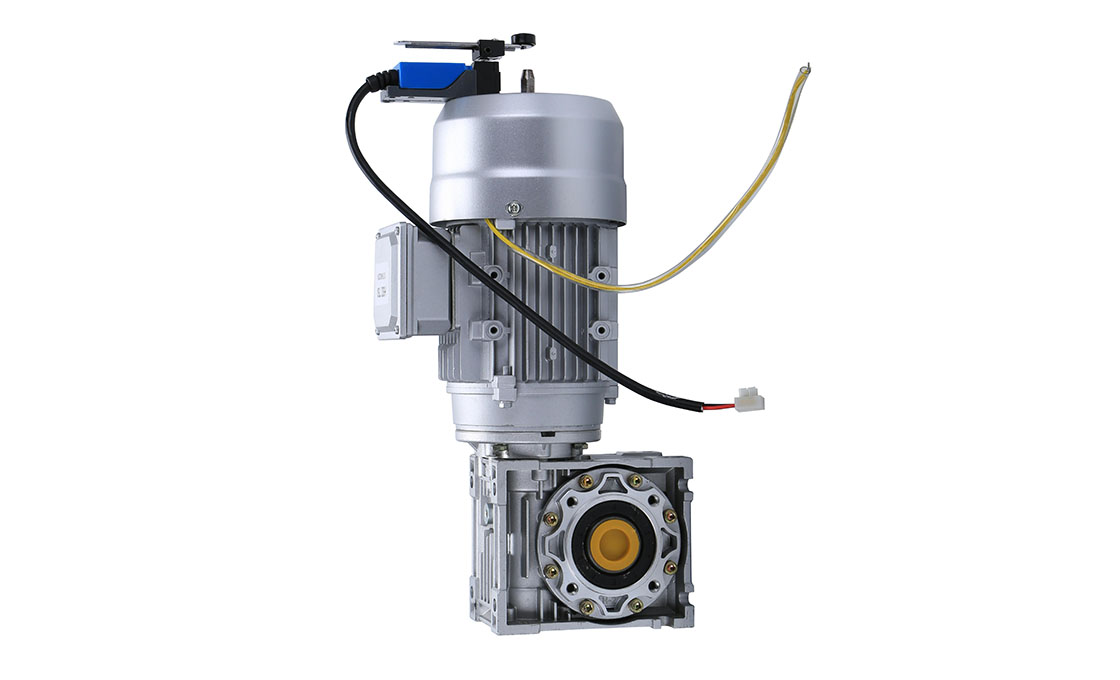
Warranty is the maker’s own scorecard. We publish a tiered one: 2 years on door bodies, 3 years on operators and motors, and 5 years on servo motors. In-warranty spares ship by courier in five to seven days. Where a quote hides its warranty term, treat the silence as data.
You can compare enclosure ratings and control options across our full range of door operators before shortlisting anything.
How These Features Work as One System
None of these seven features earns its keep alone. Torque sizing assumes the springs are right; limit accuracy assumes soft start; thermal protection assumes an honest duty count; the release assumes a trained crew. The industrial door motor you should buy is the one whose spec sheet answers all seven without a follow-up email.
If you are new to the hardware itself, our explainer on what sits inside the motor housing is the natural companion read. For a narrower brief, see how to choose a motor for a compact industrial door. And if you want the business case rather than the mechanics, we ranked the advantages of a motorised industrial door recently.
Used that way, the feature list becomes a checklist you score any quote against. Torque margin shown, limit type named, duty class stated, EN 12453 devices itemised, release hardware identified, soft control confirmed, ingress rating and warranty printed. Seven ticks before you talk price.
Frequently Asked Questions
What features should an industrial door motor have?
At minimum: a stated torque margin, adjustable or encoder limit switches, and a duty cycle rating with thermal protection. Add EN 12453 safety devices, a manual release, soft start control, and a sealed enclosure with a written warranty.
How much torque does an industrial door motor need?
Size it from the full door calculation, not from a catalog headline. Balanced doors with sound springs need only the residual difference, and small chain-drive shutter motors start around 60 Nm, rising with door weight.
Why do limit switches matter on a door motor?
They define the travel. A drifting mechanical switch lets the motor strain past end of travel, which stalls the drive and overheats the winding; encoder-based limits hold position without manual readjustment.
Can I open the door by hand during a power cut?
Yes, if the motor has a manual release: a winding crank on tube motors or a low-level hand chain on larger drives. Operate it only when the door is stopped and the springs are intact.
How long is an industrial door motor warranty?
Terms vary by maker. We run a tiered policy: 2 years on door bodies, 3 years on operators and motors, and 5 years on servo motors. In-warranty spares are dispatched by courier within five to seven days.