Two quotes land on the same desk for the same 4 by 5 metre opening. One reads forty percent higher than the other, and the buyer quietly assigns the difference to margin. The gap sits in seven lines that neither quote spells out.
Industrial door prices are built from identifiable factors, and each one maps to a line on the quotation. This page takes the seven that matter and shows which way each one pushes the number. It closes with a sorting rule: what to fix before you specify, and what you can still trade on afterwards.
Factor 1: Door Type and Opening Action
Door type sets the baseline. A sliding door, a bi-folding door, a vertical lifting door and a roller shutter carry different track systems and hardware. The same opening size can therefore produce three honest quotes from one factory. Comparing a sectional quote against a shutter quote is not comparison at all.
Opening speed belongs to the same line. A high speed door rated between 0.8 and 2.5 m/s sits in a different price class from a slow cycle door. Decide the movement first, then start talking numbers, and keep every quote you compare inside one type.
Factor 2: Panel Material and Plate Thickness
Material is the line most quotes hide behind a single word. Galvanised steel curtains commonly run from 0.4 to 1.5 mm thick, and aluminium work uses 6063-T5 extrusion. Washdown or chemical areas push toward SS304 or SS316 stainless. Each step up the ladder buys corrosion resistance and impact tolerance, and each step lands on the price.
Insulation lives on the same line. A 40 to 50 mm polyurethane core with a U-value of 0.33 W/m²K costs more than a single skin. The cheap curtain has its own invoice: a forklift strike against a light panel costs around EUR 1,000 to put right. Thin curtains also get replaced years earlier than specified ones.
Ask every supplier to state plate thickness, alloy and core material in writing. A quote that says only steel is asking you to price a guess. Two guesses rarely match, which explains more quote gaps than any real difference in margin.
Factor 3: Size, Customisation and Wind Rating
Size drives price faster than any other line. Market data puts common 5 to 6 metre industrial shutters around $7,000 to $11,000. Doors of 7 to 8 metres run $12,000 to $20,000 and wind bars add $2,000 to $3,000 on exposed openings. Wider spans need heavier curtains and stronger guides, so the price curve steepens rather than climbs evenly.
Customisation works the same way. Standard dimensions are cheaper because the tooling already exists. Every deviation, from vision panels to special RAL colours, moves the quote upward. Factories that accept single custom orders absorb the tooling cost into the first order instead of refusing the job.
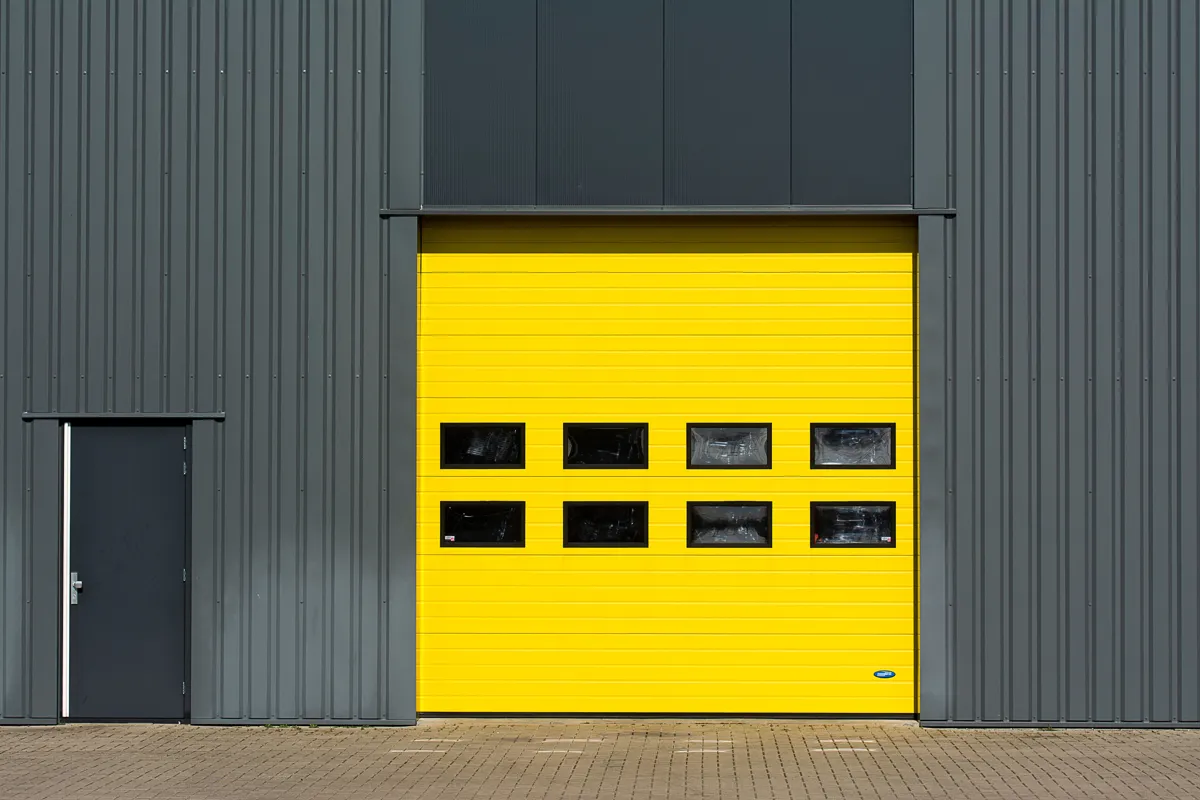
Where the opening allows it, take the standard size and spend the saving where the traffic actually hits. Where it does not, expect a request for opening drawings, because a serious quote starts from dimensions and site conditions.
Factor 4: Motor, Controls and Duty Cycle
The drive package is a price line of its own. Heavier doors need more powerful motors, and supply matters too, since three phase units suit large shutters where single phase motors run out of torque. Control options, from push buttons to access control or building system integration, add hardware and engineering hours.
Duty cycle is the part buyers understate. A motor sized for a two shift operation costs more than one built for a handful of cycles a day. Undersizing it is the most expensive saving available, because a burnt drive replaces the whole line item within a couple of years. Sealing matters in the same way, which is why our own operator range ships across 16 models at IP65 with WiFi, Bluetooth and RS485 reporting.
Warranty is priced in as well. Terms vary by maker. Ours run 2 years on door bodies, 3 years on operators and motors, and 5 years on servo motors, with in-warranty spares dispatched by courier in five to seven days. A quote with no warranty line is not cheaper. It is invoicing the risk back to you later.
Factor 5: Certification and Compliance Testing
Certification rarely appears as its own line, yet it sits inside the number. Testing a door to CE EN 13241 for industrial door safety costs laboratory time and documentation. Testing an operator to EN 12453 and verifying materials through SGS reports costs more of the same. That cost lands in the unit price of certified doors.
Fire ratings need the sharpest pencil. EI60 and EI120 describe what a fire door is capable of. The certificate, though, is issued against EN 1634-1 per project, so a quote that implies a blanket fire certificate invites an inspection failure. Before you compare industrial door prices, ask each supplier for certificate numbers and a declaration of conformity. Ask whether the fire figure is a held certificate or a capability to be tested, because the compliant quote often looks more expensive on day one.
Factor 6: Installation, Freight and Trade Terms
Two quotes can differ simply because they contain different scopes. Motor and door installation typically runs $500 to $1,500, and complex large door jobs exceed $3,000. Labour is billed at $50 to $150 per hour, with testing adding $100 to $300. Distance from the supplier’s service centres adds freight and call-out charges on top.
Trade terms decide which legs of that bill sit inside a given number. We are a pure manufacturer with no site installation crews, so our quotations are ex-works equipment prices. Buyers choose FOB, EXW, CIF or DDP depending on who carries freight and insurance. Every shipment leaves with the factory inspection report, an English installation manual, CAD drawings and the CE declaration of conformity, so the local crew prices only the fitting.
Before you compare, split every quote into equipment, freight and site work. A landed DDP number and an ex-works number will never agree until you line up their scopes.
Factor 7: Quantity and Repeat Tooling
Quantity moves the per door number for a mechanical reason. Tooling and engineering for a custom door are spent once, so spreading them across ten doors lowers each one. Multi door projects also earn freight efficiency. Fit enough doors into one project and the per door figure drops without anyone discounting.
Repeat orders carry the lever further. When drawings stay on file, the second order skips the mould charge entirely and shortens production. On our side CAD files are kept for 5 years and repeat orders carry no mould fee. Lead times compress from 20 to 35 days on a first order down to 15 to 20 on a repeat. Standard full containers ship in as fast as 12 days.
Payment terms follow the relationship too, from 30 percent deposit with balance against the bill of lading to letter of credit on large projects. When you ask for a multi door price, ask for the mould fee position and the repeat lead time in the same sentence.
How to Use These Factors When Comparing Quotes
The seven factors do not share one timing. Door type, opening size and the compliance standard you answer to are fixed the moment you specify. They set the price band you should expect before any quote exists. You can browse the industrial doors range to see how those three choices branch into door families.
Everything after that still moves on the same drawing. Motor and control configuration, order quantity and trade terms are the lines to trade on. State the true duty cycle, consolidate the quantity, and normalise the terms before you judge the totals. Read that way, the forty percent gap from the opening of this page turns into a checklist you can act on.
The deeper questions of lifetime value are covered in the industrial door cost guide. The per kilo comparison method sits in the quality versus price per kilo breakdown, and the type decision itself in the industrial door types guide.
Frequently Asked Questions
What has the biggest effect on industrial door prices?
Door type and opening size set the baseline, because they decide the panel system, hardware and drive class. Material thickness, certification and controls then move the number within that band. Quantity and trade terms shape the final figure.
How much does a standard industrial door cost?
Public market data puts European industrial doors in the €3,000 to €8,000 range by configuration. Industrial shutters of 5 to 6 metres list around $7,000 to $11,000 and 7 to 8 metre doors $12,000 to $20,000. Treat these as market bands, not quotations.
Do certificates like CE add to industrial door prices?
Yes. Testing to EN 13241 and EN 12453 plus documented materials inspection costs laboratories and paperwork, and certified doors carry that cost. The return is verifiable compliance at inspection, so ask what a lower uncertified quote has left out.
Why do two quotes for the same door differ so much?
Usually because the lines are not identical: different plate thickness, motor class, control package, warranty length, trade terms or installation scope. Split each quote into equipment, freight and site work, and most of the gap becomes explainable.
Does ordering more doors reduce the unit price?
Yes. Tooling and engineering are one-off costs, so multiple doors spread them, and freight packs better. Repeat orders help again where drawings are archived, because the mould fee drops out and production shortens on familiar specifications.