High-throughput cleanroom facilities depend on predictable operational rhythms. When production lines stop, plant managers often inspect automated packaging machines or chemical mixing tanks. However, the primary bottleneck frequently sits right at the physical boundary of the controlled environment.
Beyond the daily routine, understanding how clean room doors shape cleanroom performance explains why these door habits carry so much weight.
Table of Contents
- How Door Opening Cycles Impact Cleanroom Workflow
- Maintaining Pressure Cascades During Peak Material Transit
- Automate Door Openers to Reduce Gown Touchpoints
- Coordinate Interlock Sequences Without Halting Operations
- Cleanroom Doors Workflow Optimization Engineering Matrix
- Consult Our Facility Specialists on Workflow Optimization
Optimizing your cleanroom doors workflow eliminates shift-change bottlenecks and stabilizes sensitive air filtration systems. Every transit between classification grades challenges differential pressure cascades and risks particulate cross-contamination. Facility directors must balance strict cGMP compliance against operator takt time. In this technical guide, we examine door cycle mechanics, air volume displacement physics, dynamic interlock logic, and touchless sensor integration across modern manufacturing suites.
How Door Opening Cycles Impact Cleanroom Workflow
Door transit duration governs continuous production velocity across controlled environments. In regulated pharmaceutical packaging and semiconductor fabrication, door cycle times dictate overall facility output.
Operator Gowning Queues During Shift Changes
Shift changeovers present the greatest operational stress point for personnel airlocks. Facilities with 50 operators per shift often encounter severe entry delays during 15-minute transition windows.
Cleanroom gowning follows a strict multistage progression. Operators move from street clothing areas into ISO 8 primary gowning, proceed through ISO 7 airlocks, and enter final ISO 5 sterile processing suites.
Standard manual swing doors require 12 to 18 seconds per cycle. Comparing manual vs automatic cleanroom doors reveals substantial cycle-time reductions from hands-free automation during peak changeovers.
Evaluating cleanroom doors workflow during peak changeover shows how static door delays create cascading lines. Consider an airlock requiring 30 seconds per cycle. In a 15-minute window, that portal can only process 30 individual transits. The remaining 20 operators must stand waiting in transition corridors.
A 30-second delay per operator wastes up to 45 minutes of productive run time per shift. Queuing personnel generate excess metabolic heat and shed skin flakes inside airlocks. When technicians rush through gowning stages to overcome entry delays, protocol deviations increase substantially.
Why Slow Swing Doors Choke Material Transfer Lanes
Material transfer airlocks experience severe transit resistance when fitted with manual swing leaves. Sizing compliant cleanroom double swing vs single doors ensures opening widths accommodate pallet jacks without leaf collisions.
Manual swing operations create severe bottlenecks in high-frequency material corridors. In contrast, deploying motorized cleanroom high speed doors reduces doorway exposure duration to under 4 seconds.
Manual operation requires operators to release carts, grasp door handles, pull leaves open, push carts across thresholds, and verify positive latching. This sequence reduces transfer speed by over 60 percent.
Manual swing leaves also generate negative pressure wakes as they swing outward. This aerodynamic vortex draws floor dust and suspended particles directly into the transfer chamber.
Repeated cart collisions against manual swing door leaves degrade perimeter gaskets. Compromised seals leak conditioned air, requiring frequent maintenance intervention to restore pressure boundaries.
Maintaining Pressure Cascades During Peak Material Transit
Differential pressure cascades prevent airborne contaminants from entering critical process spaces. Maintaining airtight envelope thresholds under ASTM E283 ensures air cascades recover within seconds after each door opening.
The Physics of Transient Air Volume Exchange
Opening a standard 900 mm by 2100 mm single swing cleanroom door displaces between 1.5 and 2.1 m3 of conditioned air. The swinging door panel acts as a physical piston during motion.
As the door swings through its 90-degree arc, it sweeps a physical volume equal to its surface area multiplied by the travel path. This physical displacement pulls ambient air into the cleaner zone regardless of static room overpressure.
Managing air exchange across your cleanroom doors workflow safeguards certified room containment boundaries. The sudden air movement causes a transient 6 to 10 Pa pressure drop across the airlock envelope.
When doors stay open for extended intervals, boundary turbulence draws airborne particles into higher-grade suites. Thermal differences between adjoining rooms also trigger bi-directional convective airflow across open door openings.
Vertical high-speed roll-up curtains displace less than 0.2 m3 of air per cycle. Their rapid vertical motion preserves horizontal laminar boundaries and minimizes air turbulence.
HVAC VAV Damper Latency and Cascading Alarms
Facility automation systems use Variable Air Volume (VAV) supply and exhaust dampers to regulate room pressure. However, mechanical VAV actuators exhibit an inherent response latency of 10 to 25 seconds.
Actuator drive motors require time to reposition heavy mechanical damper blades. When doors open repeatedly during material transfers, room pressure drops faster than VAV dampers can react.
This control delay triggers differential pressure alarms and can halt automated filling machinery. A sudden pressure collapse in one suite also robs supply air from neighboring rooms on the same air handler branch.
According to ISO 14644-3 Section B.12, cleanroom recovery time represents the duration required for particulate concentrations to decrease by a factor of 100 after a challenge event. Fast-acting automated doors minimize open duration, allowing rooms to recover baseline cleanliness within seconds.
Minimizing door open dwell periods prevents VAV hunting and overshooting. Stable damper modulation reduces fan power demand and eliminates false environmental excursions.
Automate Door Openers to Reduce Gown Touchpoints
Human operators represent the primary source of particulate and microbiological contamination in cleanrooms. Minimizing physical contact with structural surfaces is central to effective contamination control.
Eliminating Secondary Glove Contamination at Handles
Manual door handles, push plates, and exit bars accumulate biological residues and microscopic debris. Microbiological contact plate testing consistently identifies manual latches as primary vectors for cross-contamination.
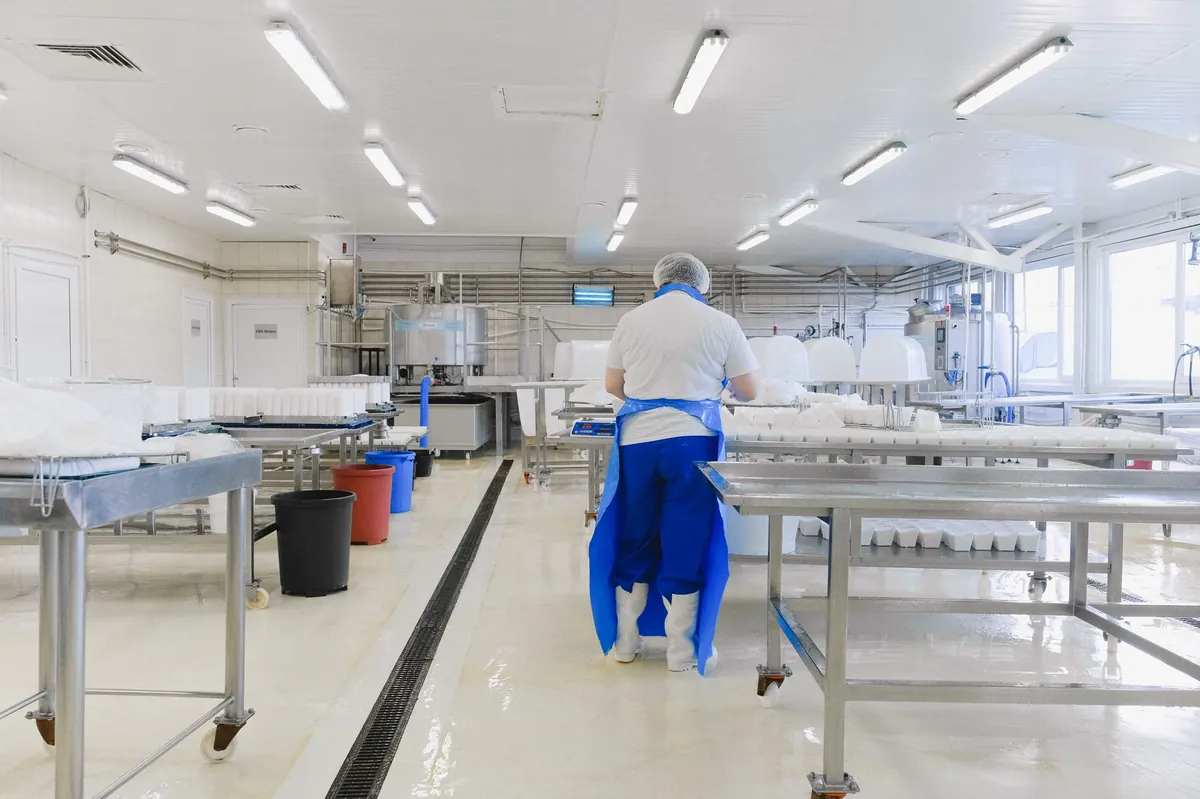
Integrating touchless access into the cleanroom doors workflow cuts cross-contamination risks at critical facility boundaries. Automated entry preserves glove sterility across all processing rooms.
Cleanroom Standard Operating Procedures require operators to spray gloves with sterile 70% isopropanol after contacting manual hardware. This sanitization step adds 15 to 20 seconds of operator overhead per transit.
Technicians must spray both gloves, rub hands together, and wait for alcohol evaporation before handling sterile tools. In facilities with 200 daily transits per door, manual handle disinfection consumes over an hour of production labor daily.
Eliminating physical touchpoints reclaims lost working hours and strengthens cleanroom compliance. Touchless automation allows operators to maintain steady movement through processing zones without repeated disinfection interruptions.
Touchless Optical Wave Sensors vs Push Plates
Touchless optical wave sensors detect operator presence at an adjustable distance of 100 mm to 300 mm. Operators initiate smooth door cycles with a simple hand gesture without touching any surface.
Optical sensors use infrared time-of-flight technology to prevent accidental activations from passing traffic. Personnel must deliberately place a hand within the detection field to trigger the door controller.
For personnel transporting material carts, flush capacitive kick sensors provide reliable hands-free activation. Positioned 150 mm above the floor, operators activate doors with a foot movement while maintaining continuous physical control over carts.
Traditional mechanical push plates deteriorate under repeated cleaning with harsh disinfectants like peracetic acid and quaternary ammonium. Internal switch springs corrode, harbor microbes in screw recesses, and eventually stick.
In contrast, optical wave sensors sealed behind flush 304 stainless steel faceplates resist chemical corrosion. Their smooth surfaces eliminate dirt traps and withstand high-pressure washdown procedures.
Coordinate Interlock Sequences Without Halting Operations
Airlock interlocks prevent simultaneous door opening, preserving pressure cascades between rooms. However, poorly programmed interlock logic creates severe operational delays.
Dynamic Purge Timers vs Static Delay Settings
Traditional airlock controllers use fixed countdown timers. After one door closes, the system locks both doors for an arbitrary 30 to 45 seconds while the room purges air.
Optimize Your Cleanroom Door Workflow
Consult our engineers to eliminate airlock bottlenecks, streamline interlock delays, and integrate automated barriers.
Fixed timers assume worst-case particulate contamination during every opening. This static delay forces operators to wait inside the chamber even when air exchange rates have already restored cleanliness.
Tuning interlock logic within your cleanroom doors workflow prevents unnecessary waiting during high-volume production shifts. Advanced facilities implement dynamic interlocks managed by Programmable Logic Controllers (PLCs) and differential pressure transmitters.
These sensors track room pressure continuously at millisecond intervals. As soon as room differential pressure returns to validated setpoints, the PLC unlocks the opposing door immediately.
Dynamic triggering reduces airlock transit dwell times by 40 to 60 percent while maintaining validated containment. Integrating discrete particle sensors allows the controller to release doors based on real-time particle counts rather than arbitrary timers.
Emergency Egress Logic and NFPA 101 Compliance
Life safety requirements always override cleanroom contamination protocols during emergencies. Facility designers must implement fail-safe egress architectures that release doors instantly under alarm conditions.
Under NFPA 101 Life Safety Code and EN 1125 standards, electromagnetic locks must release instantly during fire alarms or primary power failure. The power-loss release must occur in less than 50 milliseconds.
Facility controllers link directly to central fire alarm relays. When smoke detectors or sprinkler switches activate, power to all interlock magnetic coils cuts out instantaneously.
Pneumatic exhaust valves and mechanical break-away door panels supply secondary egress routes. Operating forces to release break-away latches must remain below 67 Newtons to allow unhindered escape.
Break-away door panels must reset quickly without mechanical tools. This feature enables rapid resumption of production once safety teams clear the facility.
Cleanroom Doors Workflow Optimization Engineering Matrix
Door Type vs Throughput Efficiency Benchmarks
Choosing the correct door system requires balancing cycle duration, differential pressure retention, and maintenance demands. Reviewing this cleanroom doors workflow engineering matrix highlights key performance trade-offs across common configurations.
High-volume manufacturing plants achieve maximum throughput by pairing automated high-speed doors in logistics corridors with flush swing doors in low-traffic personnel suites.

Installing certified cleanroom doors built with flush profiles and automated operators ensures continuous containment and smooth material flow.
| Door Configuration | Opening Speed | Cycle Dwell Time | Air Volume Displaced | Operator Takt Impact | Interlock Queue Risk | Cleanroom Pressure Recovery Time | Touchpoint Risk | Forklift/AGV Readiness | Maintenance Interval |
|---|---|---|---|---|---|---|---|---|---|
| Manual Single Flush Swing Door | 0.3 to 0.5 m/s manual pull | 12 to 18 seconds | 1.5 to 2.1 m3 | High (manual latching required) | High during shift changeovers | 15 to 30 seconds | High (handle contact) | Not Recommended | 50,000 cycles |
| Manual Double Flush Swing Door | 0.3 to 0.5 m/s manual pull | 16 to 24 seconds | 3.0 to 4.2 m3 | Very High (dual leaf coordination) | Severe bottleneck potential | 25 to 45 seconds | High (dual handles) | Manual carts only | 35,000 cycles |
| Automated Hermetic Sliding Door | 0.6 to 1.0 m/s motorized | 7 to 10 seconds | 0.4 to 0.7 m3 | Moderate (smooth transit) | Moderate in busy corridors | 8 to 15 seconds | Zero (touchless sensors) | Low speed AGVs | 150,000 cycles |
| High-Speed Cleanroom Roll-Up Door | 1.5 to 2.5 m/s motorized | 3 to 5 seconds | < 0.2 m3 | Minimal (continuous flow) | Low due to rapid cycles | 3 to 6 seconds | Zero (optical radar/kick) | Full AGV integration | 300,000 cycles |
| Synchronized Dual Roll-Up Airlock System | 2.0 m/s dual motorized | 4 to 6 seconds total | < 0.3 m3 cumulative | Zero (uninterrupted takt) | Negligible with dynamic PLC | 2 to 4 seconds | Zero (full automation) | Full high-speed AGV | 500,000 cycles |
Cycle Time Reduction Strategies for High-Volume Lines
Automating door activation represents the most effective method for cutting transit delays. Ceiling-mounted microwave motion radar sensors detect oncoming transport carts and open doors automatically.
Modern radar units feature directional filtering to ignore cross-traffic moving parallel to the doorway. Doors activate solely when vehicles approach directly, preventing unnecessary pressure loss.
Advanced facilities interface automated guided vehicles (AGVs) directly with door controllers via dry contacts or Ethernet protocols. Predictive opening allows vehicles to proceed through airlocks without stopping.
Adjusting door hold-open timers to match exact cart passage speeds prevents unnecessary open duration. Fine-tuning dwell times keeps airlocks closed the moment vehicles clear safety light curtains.
Plant engineers also install dual-height photo eyes across door openings. Low sensors detect flat cart wheels, while high sensors protect tall equipment racks from contact during transit.
Frequently Asked Questions on Cleanroom Door Workflow
How do automated doors improve cleanroom personnel throughput during shift changes?
Automated doors cut cycle times from 15 seconds to under 4 seconds. High-speed operation prevents personnel queues in gowning airlocks. Faster cycles allow large operator shifts to enter controlled suites smoothly without violating gowning SOPs or rushing sanitization protocols.
What causes pressure cascade alarms to trip during material transfer?
Manual swing doors displace up to 2.1 m3 of air per open cycle, causing sharp pressure drops. If doors remain open while moving carts, HVAC dampers cannot react within their 10 to 25 second latency window, triggering differential pressure alarms.
Can touchless wave sensors eliminate glove re-sanitization requirements?
Touchless optical wave sensors eliminate physical contact with door handles. While regulatory cGMP SOPs still mandate scheduled glove sanitization, removing handle contact removes the 15 to 20 second re-sanitization requirement between airlock chambers, saving substantial operator transit time.
How does dynamic interlock timing differ from static delay timers?
Static timers enforce fixed wait times regardless of air cleanliness. Dynamic interlocks monitor differential pressure transducers in real time. Once pressure stabilizes at target setpoints, the controller unlocks opposing doors immediately, cutting airlock transit delays by up to 60 percent.
What safety standards govern cleanroom door emergency egress?
Cleanroom interlocks must comply with NFPA 101 Life Safety Code and EN 1125 standards. Electromagnetic locks must release within 50 milliseconds upon fire alarm activation or power failure, guaranteeing unrestricted egress for facility personnel during emergencies.
Consult Our Facility Specialists on Workflow Optimization
Airlock architecture, door cycle speeds, and interlock programming determine daily manufacturing efficiency across controlled environments. Upgrading legacy manual doors removes transit delays, stabilizes pressure boundaries, and protects cleanroom compliance.
Modernize your cleanroom doors workflow with validated engineering controls. Contact our technical engineering team to evaluate your facility layout, model door cycle durations, and select high-performance cleanroom doors configured for your exact production demands.