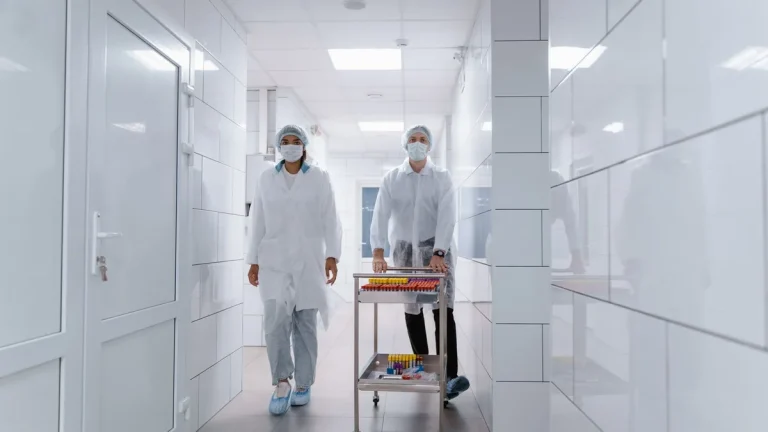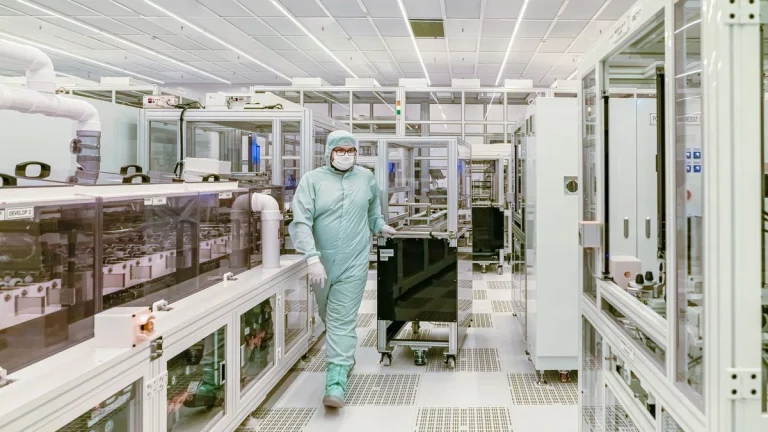
In highly regulated industries spanning sterile pharmaceutical manufacturing, semiconductor lithography, biotechnology research, and medical device packaging, cleanroom environments rely on physical barrier containment to maintain precise airborne particulate limits. Engineered cleanroom doors represent the single most dynamic, mechanically active component of any controlled cleanroom envelope, constantly cycling during personnel transit and material transfers while preventing particulate cross-contamination and maintaining room pressure cascades.
Standards aside, audits also ask what the installed door can prove about itself, which is the subject of what auditors expect from clean room doors.
Table of Contents
- ISO 14644 Classification Mapping for Cleanroom Door Selection
- Cleanroom Door Configurations: Swing, Sliding, and Hermetic
- Material Selection: Solid HPL vs Electropolished 316L Stainless
- Core Materials: Structural Aluminum Honeycomb vs PIR Foam
- Airtight Sealing Mechanics and EN 12426 Class 4 Standards
- Certification Protocols and Particle Emission Testing
- Cleanroom Doors ISO Standards Engineering Specification Matrix
- Request Engineering Consultation for ISO Cleanroom Door Projects
Based on our engineering team’s extensive field experience designing, manufacturing, and commissioning ISO 14644 and cGMP Annex 1-compliant cleanroom hardware, selecting the proper door type and material matrix requires a thorough understanding of international cleanliness standards, airborne particle shedding kinetics, and chemical sterilization compatibility. This comprehensive engineering guide explains cleanroom door classifications, material specifications, and validation testing protocols.
Standards tell you what the room must achieve; our buying guide to ISO 14644 cleanroom door requirements translates them into purchase decisions, deliverable documents and acceptance checks.
ISO 14644 Classification Mapping for Cleanroom Door Selection
The International Organization for Standardization (ISO) establishes rigorous international standards for airborne particulate cleanliness and biocontamination control under ISO 14644-1. Cleanroom door assemblies must be specified to maintain these environmental thresholds without generating particulate shed during mechanical operation.
“Under ISO 14644-1 specifications, cleanroom components installed in ISO Class 5 zones must not shed or entrain airborne particles exceeding 3,520 particles per cubic meter for particles ≥0.5 µm, requiring certified non-shedding hardware tested under ISO 14644-14 standards.”
ISO Class 1 to Class 5 (Grade A/B) Ultra-Clean Particle Thresholds
Aseptic pharmaceutical compounding cores, biological API synthesis suites, and advanced semiconductor microelectronics fabrication facilities require uncompromising airborne particulate containment:
- ISO Class 1 to Class 4 Suites: Demands seamless electropolished Grade 316L stainless steel (Ra <0.4 µm) or seamless phenolic resin door leaves with zero exposed fasteners, certified to ISO 14644-14 Class 1 component emission ratings.
- ISO Class 5 (EU GMP Grade A/B): Requires flush coplanar framing, double-glazed flush vision panels with 3A molecular sieves, and continuous perimeter silicone seals achieving EN 12426 Class 4 airtightness.
- Dynamic Particulate Shielding: Integrated ceiling HEPA laminar airflow sweeps door apertures at velocities of 0.45 m/s (±20%) whenever doors are cycled.
ISO Class 6 to Class 8 (Grade C/D) Operational Environments
Secondary cleanroom suites, gowning airlocks, and medical device assembly lines operate under balanced cleanliness parameters:
- ISO Class 6 & Class 7 (Grade C): Solid core 4mm High-Pressure Laminate (HPL) or powder-coated aluminum door leaves provide high mechanical impact durability against cart traffic while offering smooth wipe-down surfaces.
- ISO Class 8 (Grade D / CNC): Standard cleanroom doors maintain 10 Pa to 15 Pa pressure differentials, utilizing concealed automatic bottom drop seals to prevent corridor air infiltration.
- High Air Change Integration: Complements 20 to 30 room air changes per hour (ACH) to ensure rapid particle clearance during routine access cycles.
Cleanroom Door Configurations: Swing, Sliding, and Hermetic
Cleanroom facility layouts mandate specific door opening kinematics depending on floor space availability, traffic volume, and containment pressure differentials.
Manual and Automated Cleanroom Swing Doors
Single and double flush swing doors represent the established standard engineering specification for pharmaceutical gowning airlocks, biological laboratories, and medical device assembly cleanrooms:
- Positive Pressure Self-Closing: Doors swing in the direction of higher pressure, utilizing room air pressure to assist gasket compression against the frame.
- Concealed Heavy-Duty Closers: Frame-integrated overhead hydraulic door closers eliminate dust-collecting exterior articulated arms.
- Contactless Sensor Activation: Optical wave sensors (50mm to 300mm range) enable hands-free opening to prevent gloved hand contamination.
Hermetic Drop-and-Slide Sliding Doors (EN 12426 Class 4)
For wide material transfer corridors, operating theatres, and BSL-3 biocontainment suites:
Hermetic Sliding Kinematics: Specialized hermetic sliding doors travel along a 45-degree angled overhead track. During the final 50mm of travel, the door leaf drops 10mm downward and shifts 8mm inward against the frame, compressing continuous non-marking silicone gaskets around all four edges to achieve certified EN 12426 Class 4 airtightness (<0.5 m³/h·m² at 50 Pa).
High-Speed Roll-Up Cleanroom Fabric Doors
Cleanroom high-speed roll-up doors incorporate intelligent variable-frequency drive controllers that accelerate smoothly up to 2.5 m/s and decelerate softly into side track seals, minimizing air turbulence and preventing mechanical shock across the entire partition wall.
In high-traffic logistics airlocks and automated material handling zones:
- Rapid Cycle Velocities (Up to 2.5 m/s): Minimizes open-door duration, reducing pressure loss between classified suites by over 80%.
- Self-Repairing Zipper Guides: Flexible PVC curtains automatically re-insert into side guides after accidental cart impacts, maintaining airtight containment.
- Smooth Antimicrobial Fabric: Multi-layer PVC curtains resist common chemical sterilants and prevent static dust attraction.
Double-Glazed Flush Vision Panels and 3A Molecular Sieve Physics
Cleanroom vision panels must provide optical monitoring without compromising thermal insulation or hygienic flushness:
- Dual-Sided Coplanar Mounting: 6mm toughened safety glass panels mount completely flush with both faces of the 50mm door leaf, eliminating ledges and dust-trapping silicone joints.
- 3A Molecular Sieve Desiccant: Extruded aluminum spacer frames contain pore-engineered zeolite desiccant (<3 Ångström pore size) that adsorbs trace moisture, permanently preventing internal fogging during room washdowns.
- Argon Gas Cavity Insulation: Sealed inert gas cavities reduce radiant heat transfer, preventing thermal sweating between conditioned cleanrooms and ambient corridors.
Material Selection: Solid HPL vs Electropolished 316L Stainless
Cleanroom door face metallurgy and polymer chemistry dictate chemical longevity, impact resistance, and antimicrobial efficacy.
Solid Core 4mm High-Pressure Laminate (HPL)
Compact HPL resin boards provide exceptional structural durability for modern cleanrooms:
- High Mechanical Impact Strength (>2000 N): Resists denting, scratching, and chipping from heavy transport carts, hospital beds, and stainless steel trays.
- Embedded Silver-Ion Antimicrobial Matrix: Provides ISO 22196 log-4 reduction (>99.99%) against MRSA, E. coli, and fungal pathogens.
- Full Chemical Inertness: Endures concentrated sporicides, sodium hypochlorite, and Vaporized Hydrogen Peroxide (VHP) under ASTM D543.
Grade 304 vs Grade 316L Electropolished Stainless Steel
In sterile biopharmaceutical formulation and active chemical synthesis suites:
Stainless Steel Metallurgy: Grade 316L contains 2% to 3% molybdenum, providing superior resistance against chloride pitting and aggressive sporicidal disinfectants compared to Grade 304. Electropolished finishes (Ra <0.4 µm) eliminate micro-crevices, preventing microbial biofilm attachment and ensuring effortless swab testing.
Wrap-Around 6063-T6 Aluminum Subframe Engineering
Connecting cleanroom doors to modular sandwich partition walls requires specialized frame profiles:
- Two-Piece Clamping Extrusions: 6063-T6 architectural aluminum alloy subframes clamp tightly across 50mm, 75mm, or 100mm modular cleanroom wall panels.
- Concealed Structural Fasteners: All mounting bolts remain completely hidden beneath snap-in silicone gasketing, presenting a seamless flush aesthetic.
- Integrated Laser Alignment Rebates: Precision-milled alignment tracks ensure frames remain perfectly plumb within 0.5mm tolerances, preventing door sag and seal binding.
Core Materials: Structural Aluminum Honeycomb vs PIR Foam
The interior core of a 50mm cleanroom door leaf determines its thermal insulation, acoustic performance, structural flatness, and fire containment rating.
Aerospace Aluminum Honeycomb Mechanical Rigidity (ASTM C365)
Aluminum honeycomb represents the premier core material for high-traffic cleanrooms:
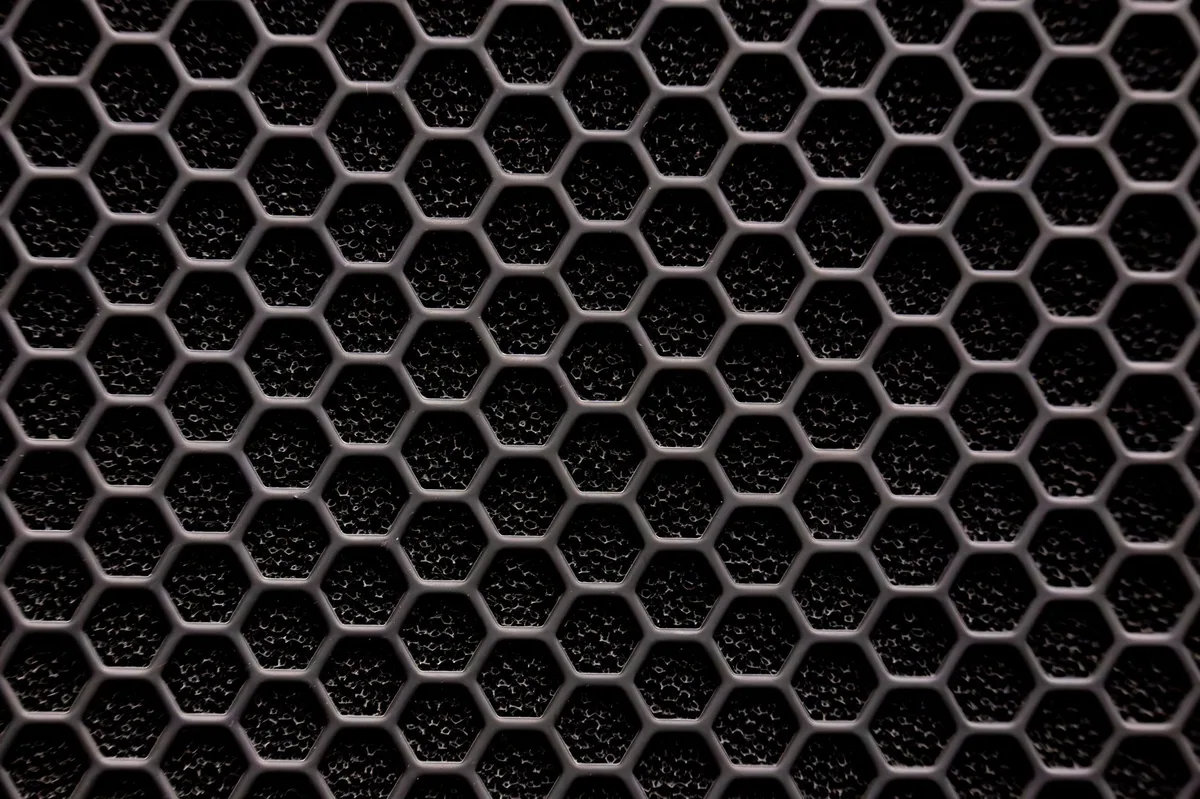
- Flatwise Compressive Strength (>3.0 MPa): Hexagonal aluminum cell structures provide exceptional strength-to-weight ratios under ASTM C365, preventing warping or twisting over decades of use.
- 100% Non-Combustible (Class A Fire Rating): Contains zero organic binders, emitting zero smoke or toxic fumes during elevated temperature events.
- Inorganic and Moisture-Proof: Completely immune to moisture absorption, mold proliferation, and internal microbial degradation.
High-Density Polyisocyanurate (PIR) and Rockwool Fire Cores
For temperature-controlled cleanrooms and certified fire partition boundaries:
- High Thermal Insulation (Lambda 0.022 W/m·K): High-density closed-cell PIR foam prevents thermal bridging and condensation in cold storage cleanrooms.
- 60 to 120-Minute Fire Resistance (EN 1634-1 / UL 10C): High-density mineral rockwool cores combined with perimeter intumescent graphite seals maintain structural barrier integrity during facility fires.
- Acoustic Noise Dampening: Dampens high-frequency fan filter unit vibration and HVAC hum (Rw 36 dB to Rw 40 dB).
Airtight Sealing Mechanics and EN 12426 Class 4 Standards
Controlling airflow leakage across door perimeters is essential for maintaining certified pressure cascades (10 Pa to 50 Pa) under ISO 14644-4.
Continuous Platinum-Cured Silicone Perimeter Gasketing
Perimeter seals must provide airtight compression without particle shedding:
- Platinum-Cured Silicone Chemistry: Outperforms standard EPDM rubber with zero plasticizer outgassing, high elastic memory, and superior resistance to chemical embrittlement.
- Multi-Lip Compression Profile: Dual and triple-lip profiles adapt smoothly to slight subframe variances, ensuring airtight contact along top and side frame rebates.
- Non-Marking Formulation: Prevents black scuff marks on subframe surfaces during continuous high-cycle operations.
Concealed Mechanical Bottom Drop-Down Seals (<0.5 m³/h·m²)
Cleanrooms require threshold-free flooring to allow smooth transit of material carts:
Mechanical Drop-Seal Action: When the door leaf closes, an internal brass actuator pin contacts the frame rebate, driving a concealed high-elasticity silicone gasket downward 10mm to 15mm against the finished epoxy floor. This mechanism creates an airtight barrier achieving EN 12426 Class 4 air permeability (<0.5 m³/h·m² at 50 Pa) without requiring raised floor thresholds.
Certification Protocols and Particle Emission Testing
Validating cleanroom door assemblies for ISO 14644 and cGMP certification requires comprehensive factory acceptance testing (FAT) and site commissioning:
- ISO 14644-14 Component Particle Shedding Audit: Place the fully assembled door inside a certified ISO Class 1 laminar flow test chamber. Operate the door leaf through 10,000 continuous cycles while optical particle counters monitor particle generation around hinges, latches, and drop seals.
- EN 12426 Pressure Decay Airtightness Verification: Mount the door assembly in a calibrated pressure chamber. Pressurize the chamber to 50 Pa and measure total volumetric air leakage, confirming leakage rates remain below 0.5 m³/h·m².
- Smoke Streamline Visualization Testing: Introduce neutrally buoyant theatrical glycol smoke along door perimeters to visually confirm laminar airflow patterns across door apertures during cycling.
- Electromagnetic Interlock Cycle Testing: Perform automated 100,000-cycle stress testing on 24V DC PLCs, optical wave sensors, and fail-safe power-cut relays, verifying lockout response times remain strictly below 50 milliseconds.
Acoustic Sound Transmission Class and FFU Vibration Damping (STC 40)
Operating hundreds of ceiling fan filter units generates significant continuous acoustic vibration in ISO suites:
- ASTM E90 Laboratory Acoustic Rating (STC 38 to STC 42): Multi-layer composite core construction dampens high-frequency laminar blower noise.
- Elastomeric Hinge Bushing Vibration Isolation: Heavy-duty 304/316L stainless steel hinges incorporate internal Teflon bushings to prevent metal-on-metal squeaks and particle shedding.
- Quiet Operating Thresholds: Lowers interior suite noise below 60 dBA, complying with OSHA and GMP ergonomic guidelines.
Electrostatic Discharge (ESD) Protection and Grounding Connectivity
In semiconductor cleanrooms (ISO Class 3 to Class 5) and solvent handling areas, static dissipation is a critical safety requirement:
- 10^6 to 10^9 Ohm Static Dissipative Surface Conductivity: Specially formulated dissipative HPL and grounded stainless steel leaves channel static charges safely away from sensitive silicon wafers.
- Concealed Grounding Braids: High-conductivity copper grounding jumpers connect the door leaf to the subframe, ensuring zero potential difference across moving hinges.
- ANSI/ESD S20.20 Standard Compliance: Certified static dissipation prevents particulate magnetic attraction and catastrophic electronic component damage.
Cleanroom Doors ISO Standards Engineering Specification Matrix
The following engineering matrix details technical specifications, ISO cleanliness mapping, and performance standards across different cleanroom door models.
| Engineering Parameter | ISO Class 1–5 Swing Door | ISO Class 6–8 HPL Door | Hermetic Sliding Door | Cleanroom Rapid Roll-Up Door |
|---|---|---|---|---|
| Target ISO Classification | ISO Class 1 – ISO Class 5 | ISO Class 6 – ISO Class 8 | ISO Class 3 – ISO Class 6 | ISO Class 6 – ISO Class 8 |
| GMP Grade Compliance | EU GMP Grade A / B | EU GMP Grade C / D | EU GMP Grade A / B / C | EU GMP Grade C / D / CNC |
| Door Face Metallurgy | Electropolished 316L SS | 4mm Antibacterial HPL | Grade 316L SS / HPL Face | Antimicrobial Multi-Layer PVC |
| Surface Roughness (Ra) | Ra <0.4 µm (Mirror Polish) | Smooth Non-Porous Finish | Ra <0.4 µm / Smooth HPL | Non-Porous Smooth Fabric |
| Internal Core Structure | Aerospace Alum Honeycomb | Aluminum Honeycomb / PIR | Aluminum Honeycomb / Lead | Structural Composite / None |
| Airtightness (EN 12426) | Class 4 (<0.5 m³/h·m²) | Class 4 (<0.5 m³/h·m²) | Class 4+ (Hermetic Seal) | Class 2 / Class 3 Airtight |
| Chemical Washdown Rating | ASTM D543 (>1,500 ppm VHP) | ASTM D543 (VHP / Sporicide) | ASTM D543 (Full Sterilization) | Mild Sporicides / Alcohols |
| Mechanical Cycle Rating | >1,000,000 Cycles | >1,000,000 Cycles | >1,000,000 Cycles | >1,500,000 Cycles |
Frequently Asked Questions About Cleanroom ISO Standards
What are the primary ISO standards governing cleanroom doors?
Cleanroom doors are governed by ISO 14644-1 for room particulate classification, ISO 14644-4 for cleanroom design and construction, ISO 14644-14 for component particulate emission ratings, and EN 12426 for airtightness.
What is the difference between ISO Class 5 and ISO Class 7 cleanroom doors?
ISO Class 5 doors require electropolished 316L stainless steel (Ra <0.4 µm) or seamless HPL with EN 12426 Class 4 airtightness and ISO 14644-14 Class 1 non-shedding hardware, whereas ISO Class 7 doors utilize standard HPL or powder-coated aluminum.
Why is aluminum honeycomb preferred over polyurethane foam in cleanroom doors?
Aluminum honeycomb provides superior mechanical shear strength (>3.0 MPa under ASTM C365), is completely non-combustible (Class A), and eliminates organic degradation or moisture absorption during intensive facility sterilization.
How do cleanroom drop-down bottom seals achieve EN 12426 Class 4 airtightness?
Upon door closing, a concealed mechanical actuator pin drives a continuous platinum-cured silicone gasket downward 10mm to 15mm against the flat epoxy floor, sealing the bottom gap without requiring raised threshold steps.
Can cleanroom doors resist Vaporized Hydrogen Peroxide (VHP) decontamination?
Yes, cleanroom doors constructed with 4mm solid core HPL or Grade 316L stainless steel and platinum-cured silicone gaskets endure over 1,500 ppm VHP concentration cycles without surface discoloration, cracking, or embrittlement.
Request Engineering Consultation for ISO Cleanroom Door Projects
Specifying high-performance cleanroom doors engineered with certified EN 12426 Class 4 airtightness, ISO 14644-14 non-shedding hardware, ASTM C365 aluminum honeycomb cores, and chemical-resistant HPL or 316L stainless surfaces ensures complete environmental containment and long-term regulatory compliance.
Our engineering division designs and manufactures custom modular cleanroom doors, hermetic sliding entrance assemblies, and automated airlock control panels tailored to ISO 14644 standards. Explore our complete clean room door product portfolio or contact our cleanroom validation engineering team today to receive custom ISO compliance documentation, BIM CAD models, and detailed project proposals.