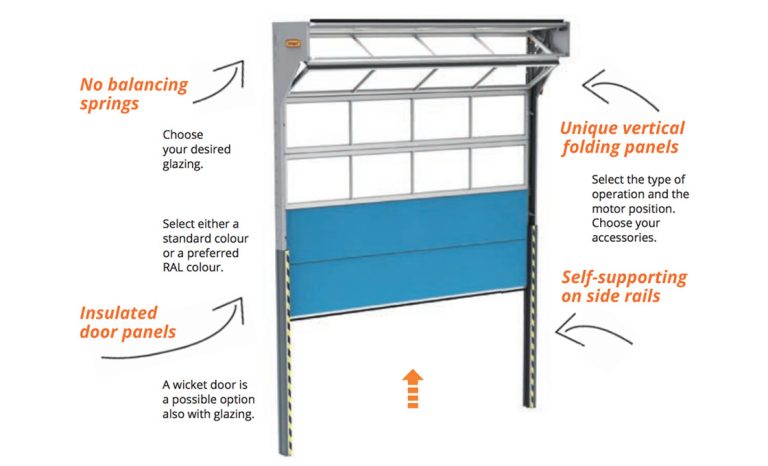
Before the invention of the automated garage door opener, parking an automobile was a physical chore. In the early twentieth century, carriage houses and early residential garages featured heavy double wooden doors that swung outwards on iron hinges. Drivers had to stop their vehicles in the driveway, step out into the rain or snow, unlatch the heavy doors, secure them against wind gusts, drive inside, and walk back to pull the doors shut.
The development of the electric garage door opener over the past century is a fascinating journey of American mechanical engineering, military radio adaptation, digital cryptography, and federal safety mandates. Today, overhead openers are intelligent IoT access hubs featuring brushless DC motors, rolling-code encryption, and smartphone telemetry. This article explores the chronological history and major engineering breakthroughs of automatic garage door openers.
Historical Engineering Milestones:
- 1921 & 1926 (C.G. Johnson): Invention of the upward-acting sectional overhead door (1921) followed by the world’s first electric overhead opener (1926).
- 1950s (Post-War Radio Control): Introduction of remote wireless transmitters adapting military superheterodyne radio technology.
- 1970s–1980s (DIP Switch Era): 8-to-12 pin tri-state binary coding susceptible to code-grabbers and neighbor interference.
- 1993 (UL 325 Safety Act): U.S. Federal mandate requiring external entrapment protection (infrared photo eyes) on all residential openers.
- 2010s–Present (Smart IoT & DC Motors): Wi-Fi connected systems with 24V brushless DC motors, integrated camera surveillance, and California SB 969 battery backup compliance.
The 1920s Genesis: C.G. Johnson and the First Electric Overhead Opener
The modern garage door industry traces its origins to an inventive engineer named C.G. Johnson. In 1921, Johnson solved the problem of outward-swinging carriage doors being blocked by snowdrifts by inventing the upward-lifting sectional garage door—a door made of hinged horizontal panels that folded along curved overhead tracks.

In 1926, recognizing that large timber overhead doors were still heavy for elderly drivers, Johnson developed the world’s first electric overhead garage door opener. His original design established the mechanical layout still used today: an electric motor mounted to the garage ceiling driving a trolley shuttle along an overhead track, linked to the top door panel with a steel drawbar.
Early 1920s and 1930s openers were operated via hardwired exterior key switches or driveway post-mounted pushbuttons. A driver had to pull up alongside a post at the driveway entrance and reach out the car window to turn a physical brass key or press a button to open the door.
The 1950s Suburban Boom: Early Radio Controls and Driveway Key Posts
Following World War II, the rapid expansion of American and European suburbs turned the attached two-car garage into a standard architectural feature of single-family homes. Homeowners increasingly demanded the convenience of opening the garage door without leaving the driver’s seat.
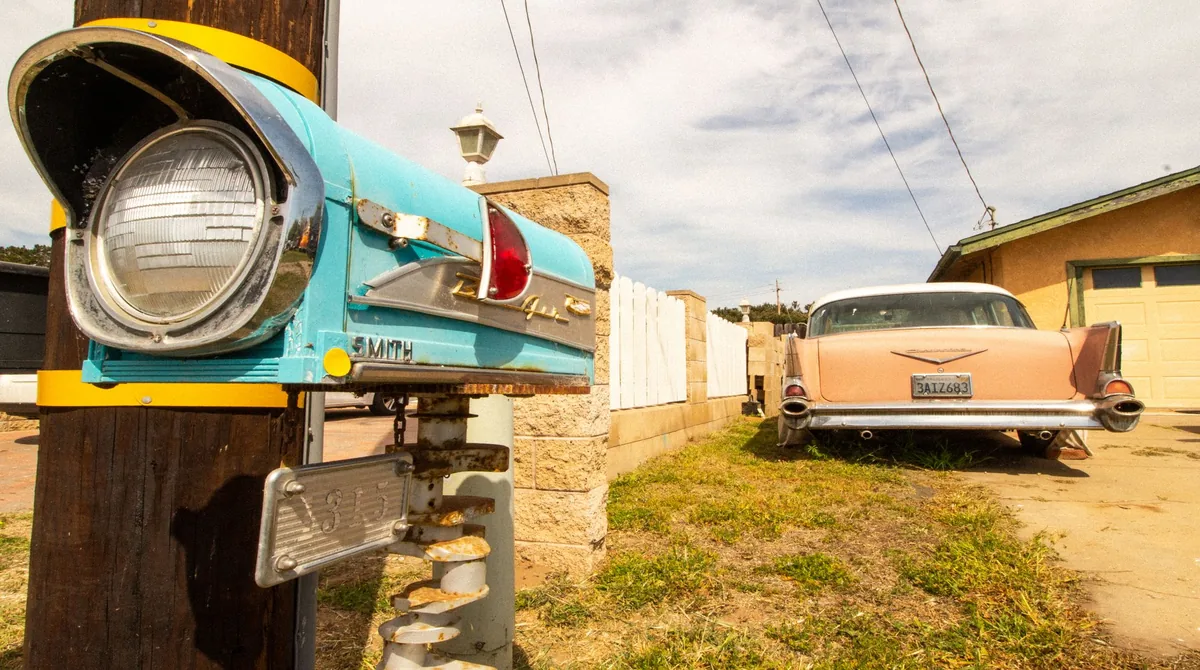
In the early 1950s, manufacturers began adapting wartime radio communication technology to garage door control. These early wireless remotes were simple single-frequency radio transmitters operating on low-frequency AM bands. Pressing the remote sent a continuous radio tone that triggered a relay in the receiver unit.
However, these early systems had a major drawback: they had no unique security codes. If two neighbors on the same street installed radio-controlled openers from the same manufacturer, pressing one remote would open both garages simultaneously. Nearby aircraft radios or emergency broadcasts would also periodically trigger garage doors to open unexpectedly.
The 1970s Security Crisis: DIP Switches and Frequency Battles
To solve accidental cross-talk between neighboring garages, manufacturers in the 1970s introduced DIP (Dual In-line Package) switch coding. Inside both the remote transmitter and the overhead receiver, technicians configured matching sets of 8, 9, or 12 miniature binary slide switches.

A 12-switch binary configuration yielded 4,096 possible code combinations ($2^{12}$). While this prevented a neighbor’s remote from opening your door by accident, it created a severe vulnerability in the late 1980s: fixed code grabbing. Intruders equipped with electronic radio scanners or code grabbers could record the fixed frequency transmission when a homeowner opened their door, then replay the recorded signal hours later to burglarize the home.
The 1990s Cryptographic Revolution: Rolling Code Technology
In the mid-1990s, major garage door opener manufacturers (including Chamberlain with Security+ and Genie with Intellicode) eliminated the fixed-code security vulnerability by inventing Rolling Code (Hopping Code) Technology.
| Technology Generation | Operating Frequency | Code Complexity / Encryption | Security Vulnerability Rating |
|---|---|---|---|
| 1st Gen: Single Frequency (1950s–1960s) | 27 – 40 MHz AM | No code (Pure carrier wave tone) | Severe (Any transmitter triggers all doors) |
| 2nd Gen: DIP Switch (1970s–1980s) | 300 – 390 MHz | 8 to 12-pin binary (256 to 4,096 codes) | High (Vulnerable to code grabbers & scanners) |
| 3rd Gen: Rolling Code (1990s–2000s) | 315 / 390 MHz Dual-Band | 40-bit to 128-bit Keeloq hopping algorithm (>100 billion combinations) | Very Low (Single-use dynamic codes) |
| 4th Gen: Tri-Band & Smart IoT (2010s–Present) | 310 / 315 / 390 MHz + 2.4GHz Wi-Fi | 256-bit AES military-grade TLS encryption via cloud servers | Extremely Secure (End-to-end encrypted) |
Rolling code systems operate using proprietary cryptographic hash algorithms synchronized between the handheld remote and the overhead receiver. Every time the remote button is pressed:
- The transmitter generates a brand-new, unique 40-bit or 128-bit digital access code chosen from over 100 billion possible mathematical permutations.
- The receiver accepts the transmission, verifies the internal cryptographic rolling counter, executes the door open command, and immediately invalidates that specific code forever.
- Even if an unauthorized person intercepts the radio transmission with a digital scanner, that captured signal is completely useless because the receiver will never accept the same code twice.
The 1993 Federal Safety Mandate: The UL 325 Photo Eye Standard
The most significant legal and engineering milestone in garage door opener history occurred on January 1, 1993, when the U.S. Consumer Product Safety Commission (CPSC) enacted federal law mandating compliance with Underwriters Laboratories Standard 325 (UL 325).
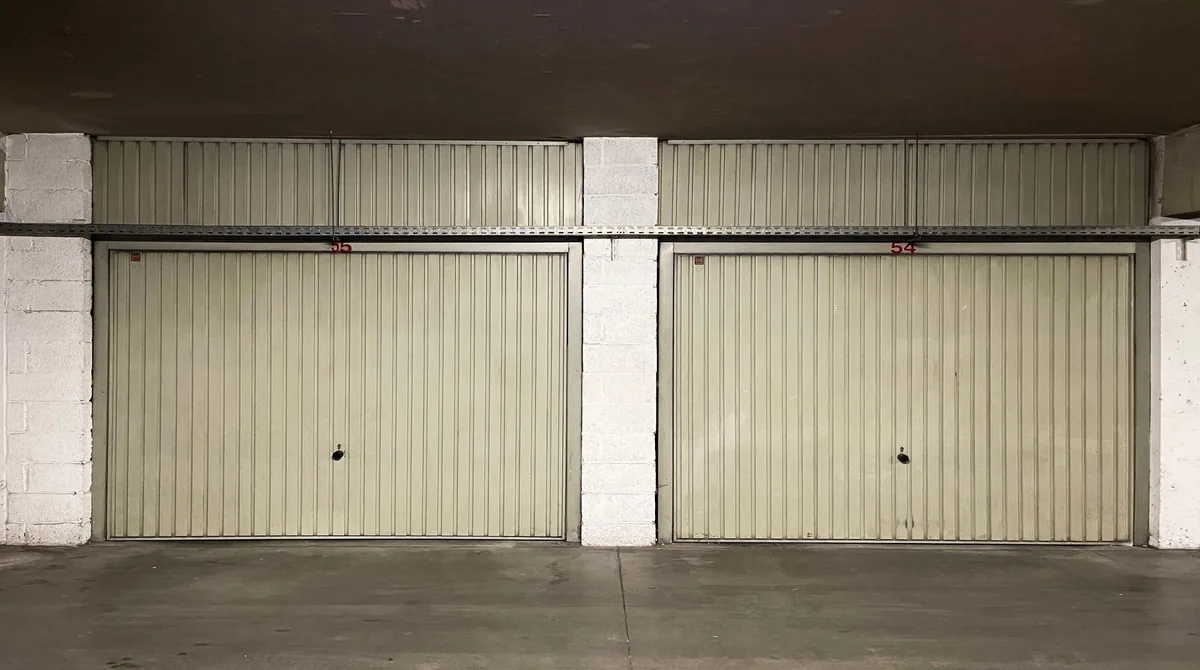
Prior to 1993, garage door openers relied solely on internal mechanical clutch resistance to reverse when striking an obstacle. If the force sensitivity was set too high or mechanical springs were misadjusted, heavy doors could trap children, pets, or vehicles. Under the 1993 mandate:
- All residential openers must include monitored non-contact safety reversing sensors (infrared photo eyes) mounted no higher than 6 inches above the floor.
- If the infrared beam is disconnected, broken, or misaligned, the opener logic board must refuse to close the door automatically.
- Secondary contact reversal (striking a 1.5-inch object on the floor) must reverse travel within 2 seconds.
Motor Drive Evolution: From AC Induction to Brushless DC Systems
For over 70 years, overhead openers were powered by single-phase AC induction motors. While reliable, AC motors produced substantial vibration and ran at a single fixed rotational speed.
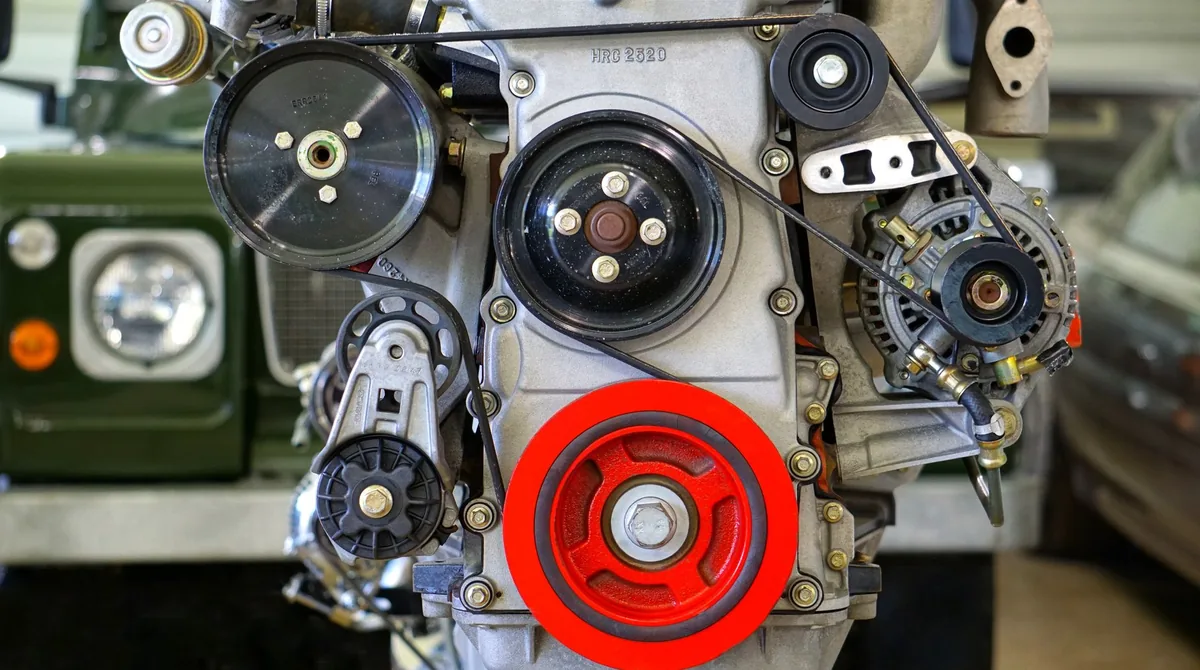
Starting in the late 2000s, manufacturers introduced 24V Brushless DC (BLDC) motors. DC motors transformed the user experience by delivering:
- Whisper-Quiet Operation: Reducing operating sound levels from 70+ dBA down to under 50 dBA when paired with steel-reinforced polyurethane drive belts.
- Electronic Soft-Start / Soft-Stop: Gradual acceleration and deceleration that eliminates the shuddering impact on tracks, springs, and door hinges.
- Compact Powerhead Form Factor: Allowing direct wall-mount jackshaft operators to fit in tight spaces alongside high-lift sectional tracks.
California SB 969 and the Battery Backup Era
In October 2017, catastrophic wildfires in Northern California knocked out municipal power grids, leaving many residents unable to open their heavy garage doors manually and trapping vehicles inside during emergency evacuations. In response, California passed Senate Bill 969 (SB 969), taking effect on July 1, 2019.

SB 969 made it illegal in California to sell or install any residential garage door opener that lacks an integrated battery backup system. The backup battery automatically supplies 24V power to the DC motor during utility blackouts, providing 20 to 50 complete open/close cycles on a single charge.
The Modern Era: Smart Wi-Fi Connectivity and In-Garage Delivery
Today’s garage door opener has evolved from a standalone mechanical motor into an intelligent residential access terminal.

Contemporary smart openers (such as systems running Chamberlain myQ or Aladdin Connect) integrate directly with home Wi-Fi networks to offer:
- Real-Time Smartphone Telemetry: Push notifications alerting homeowners whenever the door opens, closes, or remains open past a preset schedule.
- Integrated HD Video Surveillance: 1080p wide-angle security cameras with night vision and two-way audio built directly into the powerhead chassis.
- Secure In-Garage Package Delivery: Partnerships with logistics providers (such as Amazon Key) allowing couriers to securely place packages inside the garage, eliminating porch piracy.
| Era / Decade | Primary Motor & Drive Tech | Access & Control Method | Key Safety & Security Milestone |
|---|---|---|---|
| 1920s – 1940s | Heavy AC Motor, exposed chain drive | Driveway key post / hardwired wall switch | First mechanical overhead automation |
| 1950s – 1960s | AC Induction, enclosed chain rail | Single-frequency wireless radio tone | Transition to wireless remote control |
| 1970s – 1980s | AC Motor, chain & screw drive | DIP switch multi-pin binary coding | Adjustable mechanical clutch auto-reversal |
| 1990s – 2000s | AC & early DC Motors, rubber belt drive | Rolling code cryptographic hopping frequencies | Mandatory UL 325 infrared photo eyes (1993) |
| 2010s – 2020s+ | 24V Brushless DC, Wall Jackshaft & Belt | Smartphone Wi-Fi apps, Bluetooth, Voice Control | California SB 969 battery backup, integrated HD video cameras |
Frequently Asked Questions About Garage Door Opener History
Who invented the electric garage door opener and when?
C.G. Johnson invented the first overhead sectional garage door in 1921 and developed the first electric overhead garage door opener in 1926 in Hartford City, Indiana, founding the Overhead Door Corporation.
When did safety sensors (photo eyes) become mandatory on garage door openers?
Safety photo eyes became mandatory in the United States on January 1, 1993, under federal revisions to UL 325. All residential openers manufactured after this date must include monitored non-contact infrared sensors.
Why did manufacturers stop using DIP switches in garage door remotes?
DIP switches were phased out in the 1990s because their fixed radio codes could be easily captured and replayed by burglar code-grabber devices. They were replaced by rolling code technology with billions of changing combinations.
What is the California SB 969 garage door law?
California Senate Bill 969, effective July 1, 2019, requires all newly sold and installed residential garage door openers in California to have an integrated battery backup to ensure operation during wildfire power outages.
How have garage door opener motors changed over time?
Openers have transitioned from noisy, single-speed AC induction motors to 24V brushless DC motors. DC motors provide soft-start and soft-stop acceleration, ultra-quiet operation (<50 dBA), and direct battery backup capability.