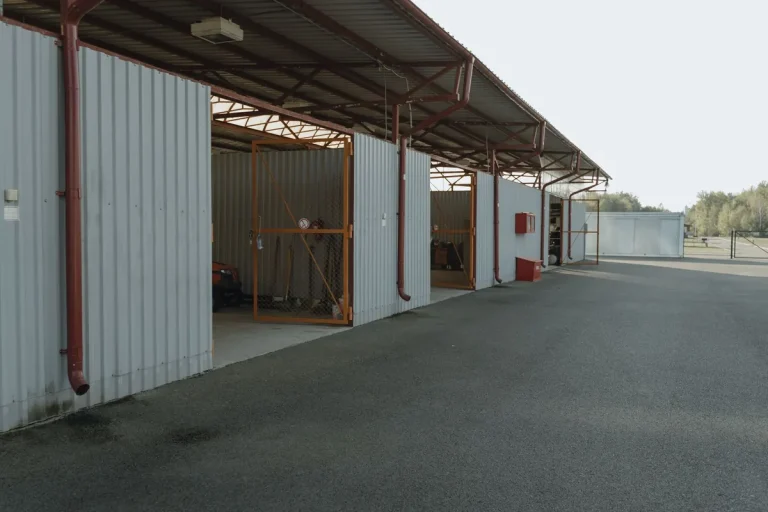
Picture a forklift clipping the closing edge of a rapid roll door at 6 a.m. The curtain jumps the guide, the door jams halfway, and that bay stops until someone resets it. High-speed rapid roll doors only earn their keep when the specification matches the traffic and the weather at that opening.
Rapid roll doors are not one product. A self-repairing fabric curtain, a reinforced fabric curtain and a rigid spiral build solve different problems at different speeds. The numbers in this comparison decide which one belongs at your opening, and what a single impact really costs.
How Rapid Roll Doors Differ From Standard Shutters
A standard roller shutter opens at roughly 0.2 m/s. A rapid roll door opens at about 2.0 m/s, and our own high-speed range runs from 0.8 m/s to 2.5 m/s. That gap is not a comfort feature. It is the whole reason the product exists.
A door held open for ten seconds instead of one lets far more air swap between two zones. In a chilled room or a cold store, that air is product you already paid to cool. The loss happens while the curtain is still travelling, not after it stops.
Buyers who weigh a high speed door and a roller shutter side by side usually focus on the wrong number. They compare motors instead of open seconds, then wonder why the climate bill does not move.
| Measure | Standard roller shutter | High-speed rapid roll door |
|---|---|---|
| Opening speed | About 0.2 m/s | 0.8 m/s to 2.5 m/s |
| Time open for one forklift pass | Ten seconds or more | Often under two seconds |
| Air exchange per cycle | Large, sustained draught | Short, limited air column |
| Behaviour after impact | Panels and guides deform | Fabric curtain self-repairs |
| Best fit | Low-frequency openings | High-frequency, climate-sensitive bays |
Fabric, Rigid and Spiral Door Types Compared
Three high-speed rapid roll door designs cover almost every industrial doorway. They differ in how the curtain is built, and that choice sets the wind class, the impact behaviour and the service bill. The rest of the specification follows from it.
Self-Repairing Fabric Curtains
A self-repairing curtain is held in the guide by its edge rather than fixed to it. Hit the curtain with a forklift and it releases, then re-seats itself on the next cycle. A zip closure adds a continuous seam, so draught exclusion improves at the same time.
Reinforced Fabric for Exposed Bays
Reinforced curtains carry horizontal bars in welded pockets. That lifts a 3 m x 3 m opening to wind Class 4. The curtain itself is a lever too, running 0.7 mm at 680 g/m2 as standard. A 1.2 mm, 1,400 g/m2 option and an M2 exterior build at 900 g/m2 add stiffness. The trade-off is real: opening speed falls to about 1 m/s and the maximum size grows to 20 m by 10 m.
Rigid and Spiral Builds
Rigid aluminium slats hold their shape, so the door seals hard against wind and dust. Spiral builds coil the curtain without letting the surfaces touch, which is how a rigid rapid door reaches wind Class 5. Neither forgives a forklift the way a fabric curtain does.
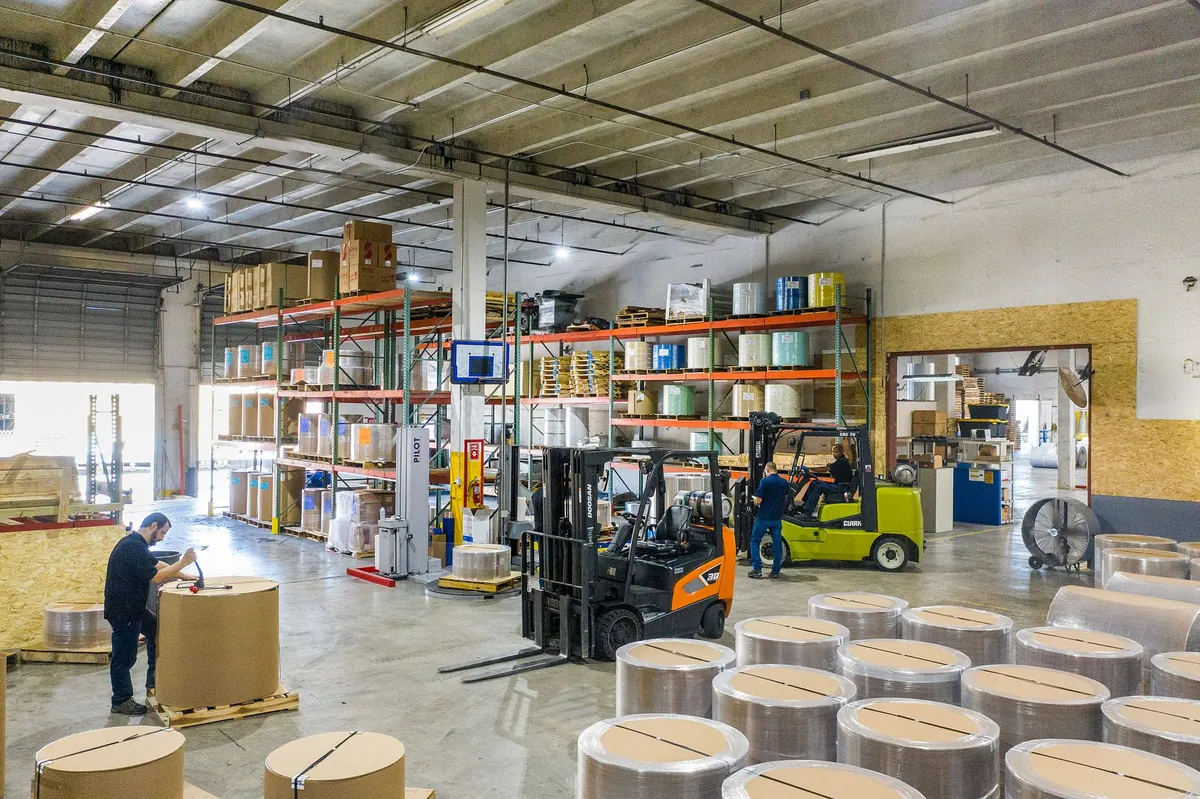
For a busy internal bay, the self-repairing fabric curtain is the obvious first choice. For an exposed exterior opening we would trade speed for a reinforced or spiral build every time. The full comparison of fabric and spiral high speed doors is worth reading before you commit to either.
Two related decisions sit either side of that call. Buyers comparing stacking rapid doors against roll-up designs are really choosing between headroom and curtain travel.
Read the Speed, Wind and Seal Ratings
Wind load is the rating buyers skip, and it is the one that fails first. EN 12424 grades a door by the pressure it resists, measured in newtons per square metre (N/m2). High-speed rapid roll doors are certified per class, not on a single blanket figure.
| EN 12424 class | Pressure resisted |
|---|---|
| Class 1 | 300 N/m2 |
| Class 2 | 450 N/m2 |
| Class 3 | 700 N/m2 |
| Class 4 | 1,000 N/m2 |
| Class 5 | Above 1,000 N/m2 |
Published EN 12424 application notes map the classes to situations, not pressures alone. Class 1 covers high wind pressure at a larger passage, Class 3 large rooms under intensive use, and Class 5 an exterior facade.
One trap catches experienced buyers. The same door build drops a class as the opening grows. A design rated Class 3 at 3 m x 3 m may only hold Class 2 at 5 m x 5 m. A quoted wind class without an opening size is not a specification.
Sealing is the second half of the rating. A brush seal in the track plus a rubber closing edge blocks most draught, and a zip closure removes the sliding gap altogether. That is why a zipper curtain often outperforms a heavier curtain with a poorer seal.
Note: For temperature-controlled rooms, sealing is quoted as a U-value rather than a draught figure. Chilled duty sits near 1.2 W/m2C, and frozen duty between 0.9 and 0.75 W/m2C, working down to -30 C.

Why Closing Speed Has a Legal Limit
Closing speed is not a free choice. EN 13241-1 requires a closing door either to prevent contact or to limit the vertical dynamic load below a strict curve. Miss that and closing speed is capped at 0.5 m/s, however fast the door opens.
The device set that restores a higher closing speed is well established. A light curtain across the opening, a soft flexible bottom edge, a photocell and an anti-crush sensor all have to work together. Remove one and the safe closing speed falls back.
Danger: Never accept a hard bottom edge to save cost on a high-traffic bay. A hard edge turns a light bump into bent frames and a damaged rolling mechanism. The closing edge is what most often decides whether a door can close above 0.5 m/s.
Maintenance sits in the same legal frame, not in an optional service plan. In the UK the PUWER work equipment regulations place that duty on the employer.
What Rapid Roll Doors Cost to Own
The purchase price is the smallest number in the calculation. The recurring cost is impact damage, and it is large enough to change which door you buy. That is where high-speed rapid roll doors separate from one another.
| Cost event | What triggers it | Why it changes the decision |
|---|---|---|
| Curtain repair | Forklift impact, torn fabric | Door comes off site for welding |
| Downtime | Any curtain removal | Bay stops while the repair runs |
| Bottom edge replacement | Repeated close-range impacts | Usually the largest single line |
| Brake and drive work | Wear over years of cycles | Access equipment adds to labour |
Repair costs published by a US door supplier give the order of magnitude. A damaged curtain normally has to come off the door and go back to a factory for welding. That means one to two days out of service, roughly $1,000 in repair work, and access equipment on top. A bent bottom edge is worse, at up to $2,000 to replace.
Brake work ranges from roughly $210 for a relay replacement to $600 plus access equipment where the brake itself needs changing. None of these numbers is unusual. They are simply invisible until the first impact.
Warning: A supplier who quotes only the door price is not quoting the cost of ownership. Ask what an impact repair costs, how many days the bay is down, and who pays for the access equipment.
This is where the self-repairing design pays for itself. A curtain that re-seats on the next cycle removes the largest recurring line in the table above. Impact damage from forklifts and other vehicles dramatically increases the total cost of ownership. On a busy bay, the self-repairing zipper door specification matters more than opening speed.
Service cadence protects the same number. High-traffic bays are inspected every six months, and lighter duty equipment at least every twelve months. UK guidance for maintenance of work equipment sets out what a defensible schedule looks like.
Supply terms belong in the same calculation. Our door bodies carry a two-year warranty, openers and motors three years, and servo motors five years. Warranty spares leave the factory by express courier within five to seven days, and a first order runs 20 to 35 days.
Matching the Door Type to Your Facility
The right door is a function of the room, not the brochure. High-speed rapid roll doors are specified for the room they serve, and each of the five common settings pushes the design in a different direction. The deciding factor is rarely the one the sales sheet leads with.
In a chilled or frozen room, insulation and sealing decide everything. A sealed track and the right curtain mass keep the cold where it belongs. Where forklift traffic crosses a blind corner, a full vision rapid door lets drivers see the crossing before they commit to it.
In a food plant the curtain has to be washable and the activation automatic, so nobody touches the door between zones. In a clean room the same logic tightens into sealed guides and interlocked access.
For a warehouse bay, cycle frequency and impact tolerance outweigh everything else. For an exposed exterior opening, wind class overrules all of it. The reinforced or spiral build wins there even though it opens more slowly.

For a mixed facility, high-speed rapid roll doors rarely reduce to one build. We would start with the self-repairing fabric curtain, then upgrade to spiral rigid where wind, hygiene or washdown demands it.
Check Performance, Safety and Commercial Terms
Take these three checks into the next supplier call. Each one has cost a buyer money at some point, and each one is quick to verify.
Check the Performance Numbers
Confirm the real opening size and the real wind exposure. Then ask whether the quoted wind class is certified at that size, not at a smaller test size.
Check the Safety Route
Ask what happens at the closing edge. A soft bottom edge and a light curtain are the difference between a door that can close quickly and one capped at 0.5 m/s.
Check the Commercial Terms
Get the service interval, the spare-parts lead time and the warranty in writing. Ask who repairs a curtain after an impact, and how many days the bay stays down.
Frequently Asked Questions About Rapid Roll Doors
How fast do high-speed rapid roll doors open?
A rapid roll door opens at about 2.0 m/s, and the RAX high speed range runs from 0.8 to 2.5 m/s. A standard roller shutter opens at about 0.2 m/s. Closing speed is often capped at 0.5 m/s by the crush-protection rules in EN 13241-1.
Which wind class does an exterior opening need?
EN 12424 maps classes to situations, not just pressures. Published application notes put Class 3 (700 N/m2) on large rooms under intensive use and Class 5 on an exterior facade. Quote the class with the opening size.
How often should a rapid roll door be serviced?
High-traffic bays are typically inspected every six months, and lighter duty equipment at least every twelve months. Put the interval in the maintenance contract so it survives an audit.
Can a rapid roll door be repaired after a forklift impact?
A self-repairing curtain re-seats itself on the next cycle. A torn curtain is usually removed and welded at the factory. That means one to two days out of service and a repair bill of about $1,000, based on indicative supplier data.
Do rapid roll doors work in cold storage?
Yes, with an insulated build. Chilled rooms run near a U-value of 1.2 W/m2C, and frozen rooms between 0.9 and 0.75 W/m2C down to -30 C.