








An electric garage door keeps working after its protections die. The auto-reverse stops sensing, the photo eyes drift out of line, and the door still opens and closes on command at the same speed with the same hum. Nothing announces the missing safety layer until the door comes down on a bicycle, a bumper, or a person. That is why electric garage door safety is less about owning features and more about verifying them.
At our factory, every operator and control box bound for garage and industrial doors alike ships with a test report recording opening speed and noise. Noise is the number buyers rarely ask about. It is also the earliest warning that a counterbalance or a roller has changed, because a door that suddenly sounds different is asking for its balance to be checked. Verification, not assumption, is what keeps a powered door safe over years of daily cycling.
Why Auto Reverse Fails in Silence
The contact reversal system is the backstop that catches whatever the sensors miss. The opener measures resistance while the curtain travels down, and when the door meets something it did not expect, it reverses. American regulators have treated this as essential equipment for decades. The CPSC has required reversing systems on every opener manufactured or imported for sale since January 1, 1991, a rule documented in its safety alert on non-reversing openers. Doors without one killed.
The system fails quietly because force settings drift. A door that sticks in cold weather or falls out of balance tempts someone to turn the force dial up so the stroke finishes. Each turn buries the reversal threshold deeper. One service company’s field guide to door safety records the result: a door with clean, aligned photo eyes can still press down hard on an object. Raising force to push through a sticking door does not fix the door; it disables the protection.
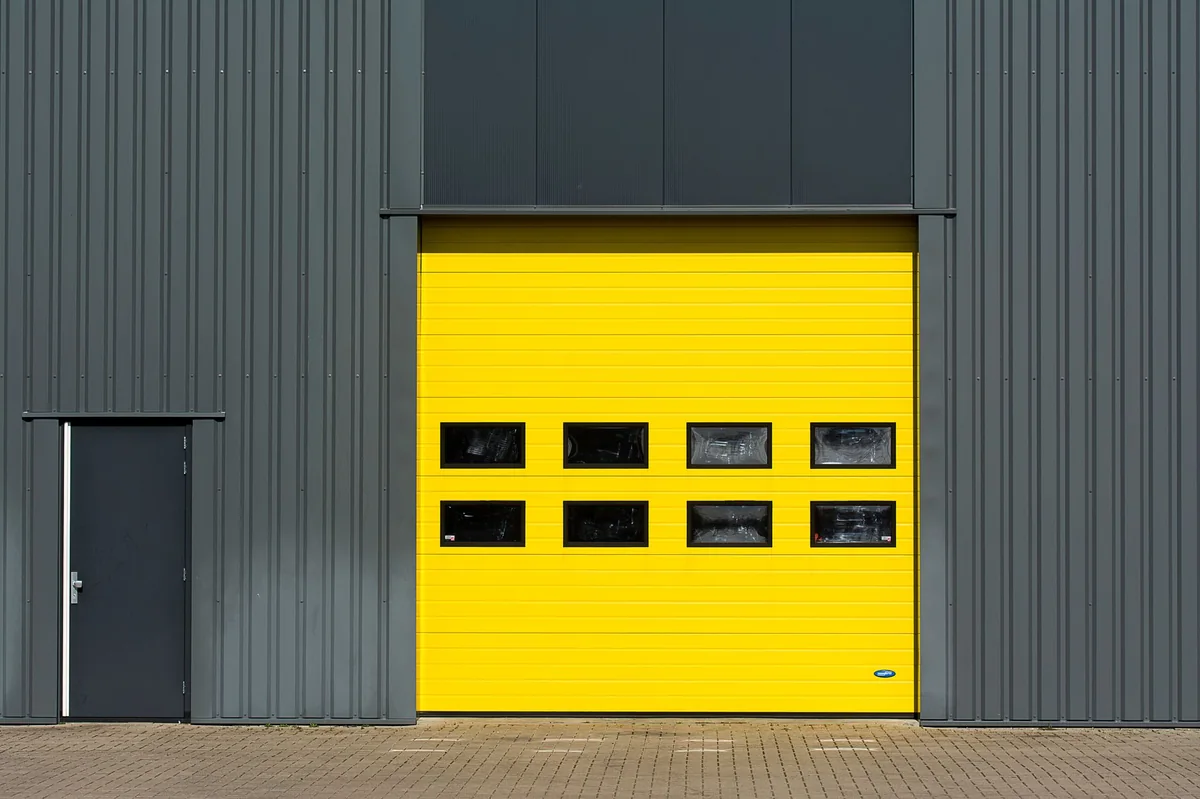
The fix is a test, and the regulator prescribes it. The door must reverse on contact with a 1.5 inch object, a 2×4 laid flat, and the opener must be retested after any force or travel adjustment. The same discipline scales up. Commercial and industrial doors share the reversal requirement, and a door that cycles for a dozen forklifts a shift deserves the test even more than a home garage. The mechanism behind the sensing is explained in our guide to how a garage door opener works.
Keep Photo Eyes Low Clean and Aligned
Photo-eye sensors are the second layer of electric garage door safety, and they work before contact ever happens. One unit sends an infrared beam across the opening and the other receives it, so anything that breaks the beam while the door closes triggers a stop and a reversal. Placement decides whether that protection means anything. The CPSC instructs that an electric eye sit 4 to 6 inches above the floor, because a beam mounted higher lets a crawling child or a pet pass underneath undetected.
Federal rules drawing on the UL 325 entrapment protection standard have required this second, external device on residential operators since 1993. UL’s own impact review credits the dual requirement with cutting entrapment incidents by more than half. The hardware is simple, but it lives at floor level in a dirty room, so it fails in ordinary ways. Brackets get nudged by bumpers and bins, dust and cobwebs coat the lenses, and low afternoon sun blinds a receiving eye. Rodents and staples chew the thin low-voltage wire.
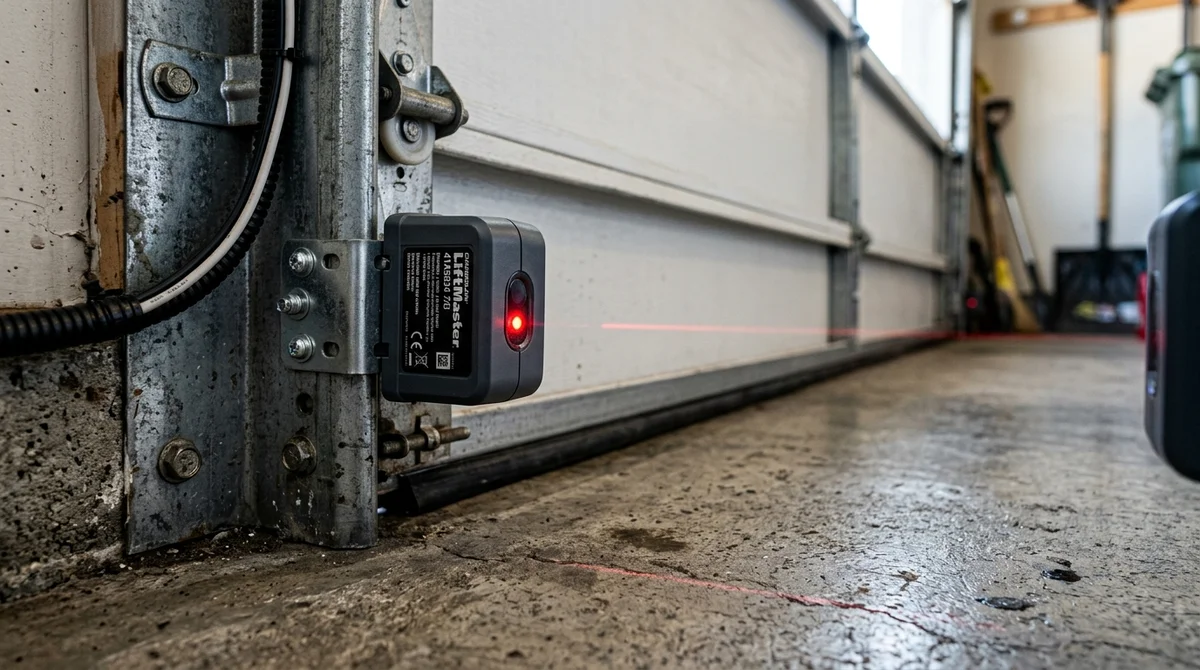
The symptom is distinctive: a door that starts down and immediately returns, or one that closes only while you hold the wall button through the whole stroke. That second behavior means the opener no longer trusts its eyes, so treat it as a protection failure rather than an annoyance. What you must never do is bypass the sensors. Service companies keep finding eyes taped together or zip-tied above the track, a setup where the door closes fine and no longer knows when a child is underneath it. Clean the lenses, square the brackets, and retest.
The Manual Release and the Broken Spring Risk
The emergency release is the red-handled cord that disconnects the door from the opener so it can be moved by hand during a power outage. It is the one piece of electric garage door safety hardware most people only meet during an outage. Standards treat the release as safety equipment in its own right. UL 325 requires the handle to be red, easy to reach, and no more than six feet above the floor while clearing parked vehicles. Confirm on every walkthrough that the cord hangs free, the handle is reachable, and the mechanism engages and disengages smoothly.
The release carries a warning that most users never read. The CPSC’s operator rule instructs that the release be used only with the door closed wherever possible. Weak or broken springs can let an unbalanced door fall rapidly once the opener lets go. Pulling the cord with the door open turns a counterbalanced door into a free-hanging panel held by nothing but friction. If the door must be moved while open, stand clear of its path and never under it.
Is Your Opener Security Up to Date
Security is the other half of electric garage door safety, and the opener’s radio link is where it lives. Remotes built since the mid-1990s use rolling code technology: every press sends a new code, so a signal captured and replayed later opens nothing. The test is physical. Open the remote’s case and look for a row of tiny DIP switches. If they are there, the system is fixed code, the signal can be cloned, and the opener belongs on a replacement list.
Placement rules finish the job. The wall button belongs at least five feet above the floor, out of the reach of children and in clear view of the door. Remotes should be stored where children and strangers cannot reach them, and many wall controls include a lock mode that disables every remote and keypad until you switch it off. A keypad code deserves the same treatment as a door key: no birthdays, no house numbers, and a change after contractors finish on site. Our rolling code remote controls ship with the receivers they are coded to, which removes the guesswork on replacement batches.
When an opener predates the rolling code era or fails its reversal test, patching it rarely pays. Our guide to when an opener upgrade makes more sense walks that decision. The short version: modern operators pair certified entrapment protection with rolling code radios, and the combination costs less than one avoidable accident.
Is Your Door Fleet Still on Fixed Code Openers
Ask our engineers for a UL 325 compliant opener specification with rolling-code controls, factory-tested for noise and reversal before it ships.
Springs Cables and Balance Carry the Door
The door hardware holds more stored energy than the opener does, and it hurts more people. Springs counterbalance the full panel weight, so a torsion spring under tension is the one component on the assembly that untrained hands must never adjust, loosen, or inspect up close. The door industry association’s safety guidance is blunt about the hierarchy. Springs are the most important and most dangerous part of a door, and cables that look frayed belong to a trained technician. Where a door carries two springs, both get replaced even when only one has broken.
Two quieter features on the door side prevent the common injuries. Extension springs should always have a containment cable threaded through them, so a snapped spring cannot whip across the garage. Section joints should be pinch resistant, with lift handles or gripping points clear of the joints. That is what the industry standard for residential doors specifies for manual operation. Bottom brackets connected to the lift cables stay under extreme tension, so treat their screws as tamper resistant hardware and leave them alone.
Balance is the condition that ties the hardware to the opener. A properly operating door stays where it is stopped in any partially open position, and a severely unbalanced door can crash to the floor without warning. Balance also explains most force-dial abuse: an opener pushing against a failing spring gets its force turned up until the reversal protection disappears. The counterbalance physics work the same on industrial doors, where heavier curtains simply raise the stakes.
Run the Monthly Five Minute Test
Every measure above decays without a schedule. The CPSC asks owners to inspect the door and the opener every 30 days, and the industry adds that the reversal system must be retested after any adjustment or repair. Those five minutes are the cheapest electric garage door safety measure on this list. Work with the area clear and no one under the door.
For fleet operators, our practice is to put these three checks on the facility inspection sheet and record the result. A logged pass is evidence, and an unlogged one is a memory.
The Two by Four Contact Test
Lay a 2×4 flat on the floor in the center of the opening, close the door with the wall button, and watch. The door should touch the board and reverse promptly. A roll of paper towels is not an equivalent test object, because it compresses and can hide a reversal that only works above the critical height. The door industry association’s technical note on test objects insists on the board for exactly that reason.
The Photo Eye Beam Test
Start the door closing and pass a broom handle or a cardboard box through the beam near the floor. The door should stop and reverse without touching anything. Check that both indicator lights are steady first, and wipe the lenses with a dry cloth if they blink. Treat any failure as a protection fault that blocks powered closing until it is fixed.
The Balance and Visual Check
With the door closed, pull the release and lift the door to about half height, then let go carefully. A balanced door stays roughly where you leave it, while one that sinks or shoots up needs a technician before the opener runs again. Finish with a visual pass over springs, cables, and rollers, looking for gaps, fraying, and worn edges without touching anything.
| Monthly check | A pass looks like | If it fails |
|---|---|---|
| 2×4 contact reversal | Door touches the board and reverses promptly | Stop powered closing, book an opener service |
| Photo-eye beam | Door stops and reverses when the beam breaks | Clean and realign, then retest before use |
| Balance hold | Door released at half height stays in place | Technician visit, no force adjustments |
| Visual hardware pass | Springs, cables and rollers show no damage | Lock the door out until inspected |

Facility teams that run the same routine on industrial doors usually keep a log per door, and the log is what turns safety from an event into a system. When a result fails, the CPSC’s advice is to disengage the opener until the unit is adjusted, repaired, or replaced. The door still works by hand in the meantime, which is exactly what the emergency release is for.
Installation and Maintenance Belong to Trained Hands
Two of the seven measures happen on schedules you set, and the rest belong to the people who install and service the door. The industry recommendation is that trained door systems technicians install garage doors and operators. Spring tension, track alignment, and force calibration decide whether the safety devices ever work as designed. An annual technician visit then catches wear that monthly checks only glimpse, and it keeps the door within the settings its certification assumes.
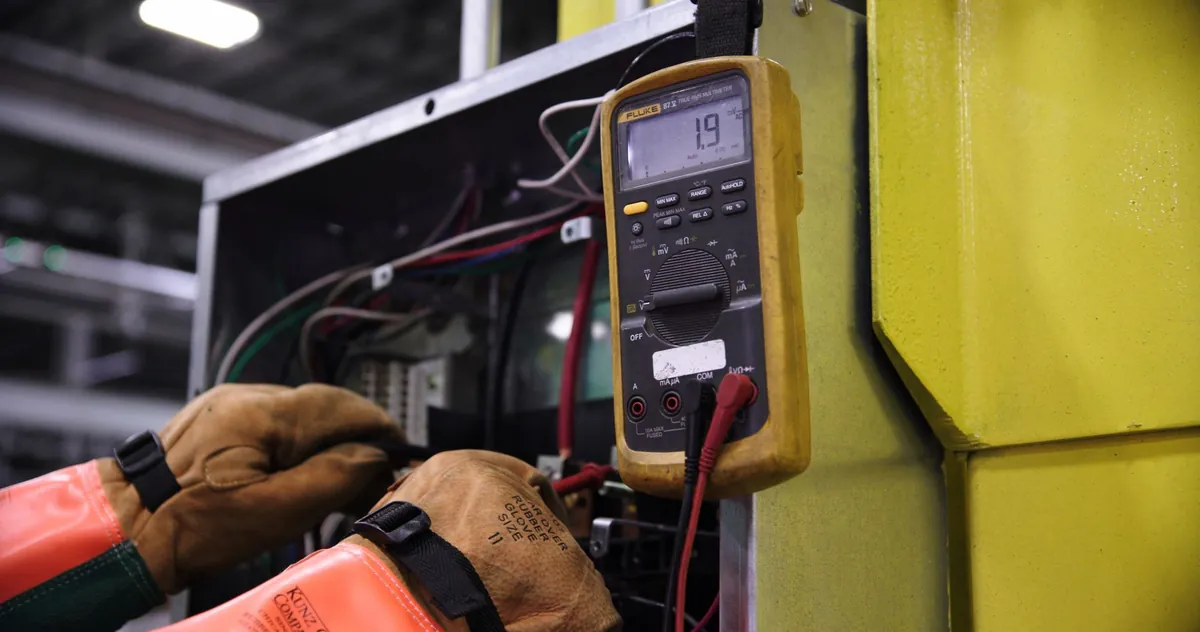
Our practice adds one more check to the annual visit: compare the door’s current sound against its factory test report. Every operator we ship leaves with its opening speed and noise recorded, and in service a door that suddenly sounds different gets its balance and hardware inspected before its electronics. Commercial garage doors share the same logic as industrial doors, where a maintenance plan rather than a repair call is the norm. The same habit travels home with a single garage. If a new door or opener is being specified instead of serviced, our garage door installation checklist covers the delivery-day items that decide how safely the door starts its life.
Treated this way, electric garage door safety stops being a feature list and becomes a routine. The protections were engineered in, federal rules made most of them mandatory, and the seven measures above exist to confirm they are still alive. A door that reverses, sees, balances, and gets verified every month will keep earning the trust the day it was installed.
Frequently Asked Questions
How often should I test my garage door’s auto-reverse?
Once a month, and again after any adjustment or repair to the door or opener. The CPSC pairs the monthly test with the 2×4 object, and the industry requires a retest whenever force or travel settings change. Busy industrial doors and home garages run the same schedule.
Why does my garage door reverse before it touches the floor?
A broken beam, in most cases. Misaligned brackets, dirty lenses, low sun, or damaged wiring all make the opener think something is underneath. Clean the lenses, square the sensors, and retest before assuming a fault.
Can I turn up the force setting so the door closes?
No. The industry standard is explicit that force must never compensate for an unbalanced or sticking door. Raising force buries the reversal threshold, so find the balance or hardware problem instead.
Is it safe to use a door with a broken spring?
No. The springs carry the panel’s weight, and with one broken the opener lifts a load it was never sized for. A released door can drop hard, so leave it closed and call a technician.
How high should photo-eye sensors be mounted?
Between 4 and 6 inches above the floor, per the CPSC. Higher beams let a crawling child or a pet pass underneath without breaking the beam, which removes the protection entirely.
Should children be allowed to use the remote?
No. Remotes and wall buttons are not toys, so store remotes out of reach and mount the wall control at least five feet up. Many controls add a lock mode that disables every transmitter until switched off.


