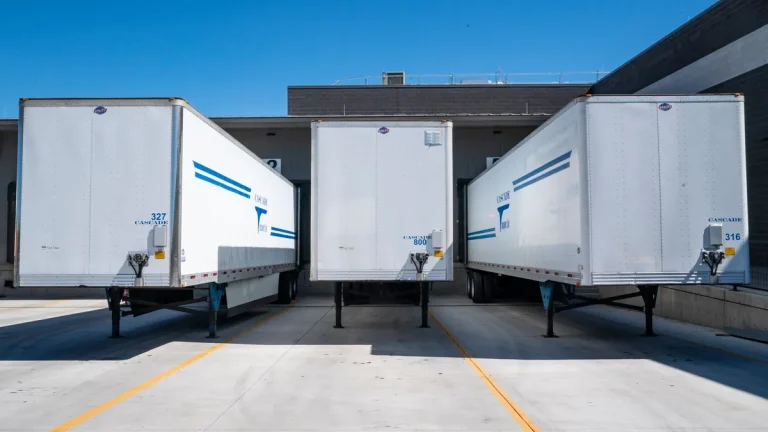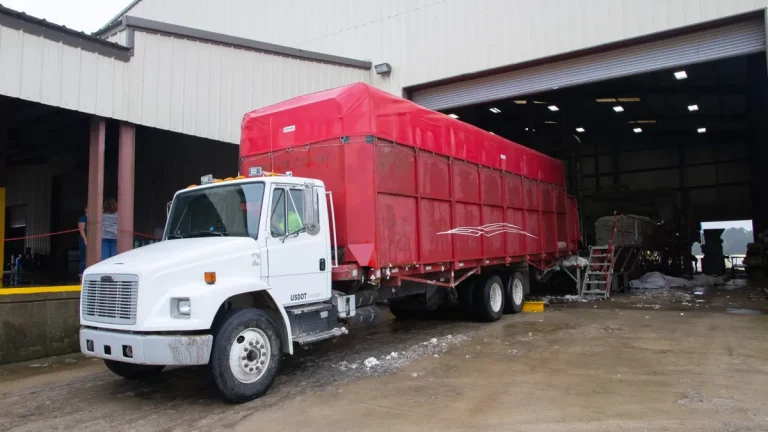
Most maintenance leads have swept it without a second thought: a drift of black rubber crumbs along the approach, tidied away as tire wear. On many docks those crumbs are not tires at all. They are the working face of the dock bumpers, leaving the building one layer at a time. A word on upkeep: our dock leveler maintenance checklist gathers the full service routine.
A bumper is a wear part with a measurable end of life. The three questions below decide whether you replace it on your schedule or the trailer’s. What does it absorb, how big should it be, and when is it done?
What a Dock Bumper Actually Absorbs
A dock bumper is the sacrificial block mounted on both sides of the leveler pit, and it exists to take the hit instead of the building. When a trailer reverses in, the bumper stops the steel and absorbs most of the impact energy. That keeps the wall, the door frame and the dock doors out of the contact path. Without that block, even a careful driver’s contact transfers straight into concrete and frame steel.
The forces involved are easy to underestimate. One supplier’s estimate puts a 40,000 lb tractor-trailer arriving at about 4 mph at roughly 150,000 lb of contact force, and up to 300,000 lb when speed creeps up. New bumpers absorb more than 80 percent of that impact, while a badly worn one absorbs less than 15 percent, according to the same loading-systems maker. The difference does not disappear; it moves into the foundation, the leveler and the trailer.
Laminated, Molded and Steel-Faced Bumpers
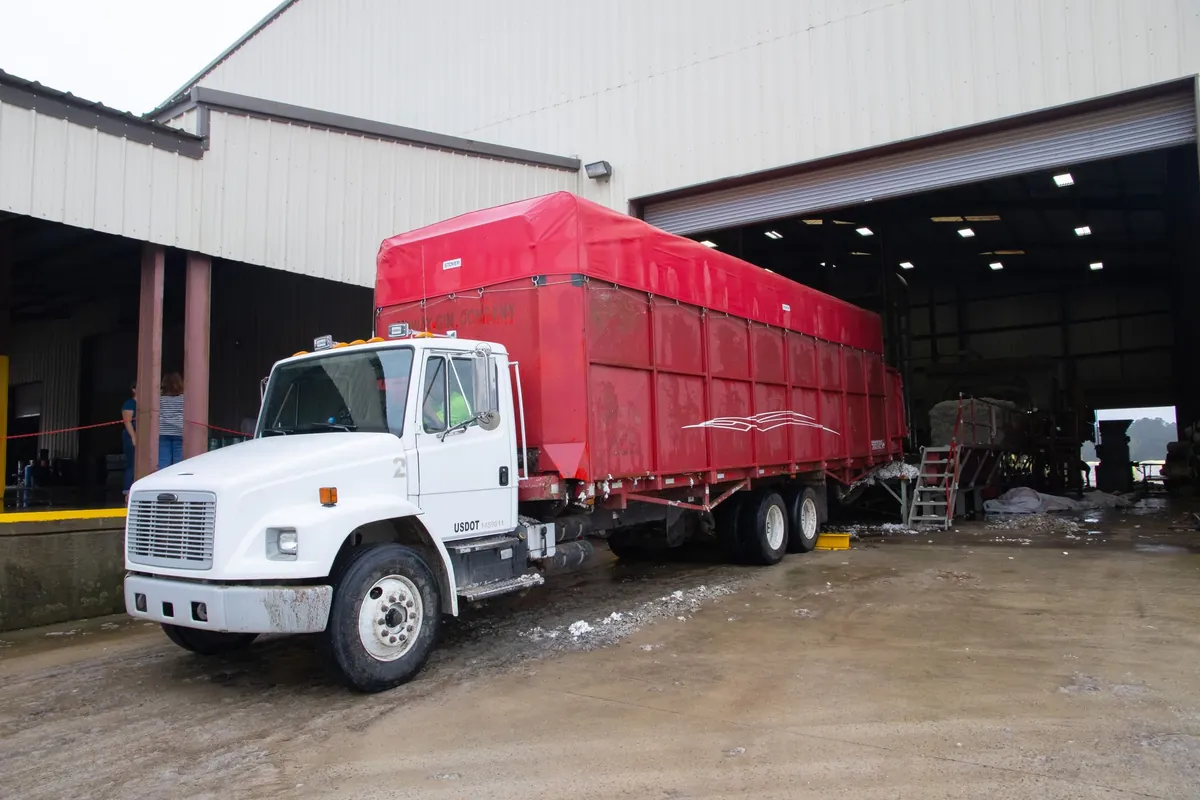
Three constructions cover nearly every loading dock. Laminated bumpers stack pads cut from recycled bias-ply truck tires between steel angles, held by tie rods. They are the industry standard for medium and heavy trailer traffic, and they absorb up to 80 percent of backing impact. Standard projections are stocked, with pad lengths reaching 36 inches and beyond on request.
A buying caution hides in that recycled-tire label. Budget pads built from radial tires carry steel wire inside, and worn wires surface like whiskers that gouge trailer skins. One dock-equipment supplier documents the failure in detail. Bias-ply pads keep a clean, wire-free face, which is what a rubbing curtain side actually needs.
Molded bumpers are cast as one solid rubber block, so they cannot warp, rust, harden or absorb water, and they need no maintenance. That resilience suits light traffic: van bays, occasional deliveries, interior walls exposed to forklifts, and edge-of-dock levelers. Under repeated semi-truck impact they tend to chunk and shred, so most suppliers steer high-volume docks away from them.
Steel-faced bumpers keep the laminated core but add a smooth face plate, trading some impact absorption for abrasion life. They are the answer where the trailer slides vertically against the dock: air-ride suspensions rise and fall as forklifts load, and yard jockeys push trailers home repeatedly each shift. Extruded EPDM rub rails exist too, but they are interior wall protection only, never a trailer impact surface.

Sizing Projection, Height and Spacing
Get the geometry wrong and even the right material fails quietly. Projection, thickness and depth all name the same dimension: how far the bumper face stands off the wall. The industry standard is 4.5 inches, and many standard pads run 4 to 6 inches. Either figure keeps a minimum 4-inch gap between wall and trailer on a level approach.
Sloped approaches change the arithmetic. When the driveway falls toward the building, the top of the trailer tilts in as it backs. The supplier engineering rule is to add one inch of projection for every percent of slope beyond 2 percent. A 5 percent decline therefore calls for roughly 9 inches of projection before the bumper.
Projection also has a ceiling. A pit leveler lip needs at least 8 inches of penetration inside the trailer to carry the load. Projections beyond about 8 inches put that lip reach at risk, so the leveler specification is checked before thicker bumpers are ordered. The interaction is the one described in our guide to how a hydraulic dock leveler works.
Height and spacing follow the fleet. Tire pads come in 6, 10 and 12 inch heights, stacked to build 20, 24 or 36 inch vertical bumpers. The 10 inch horizontal pad is the most common choice where trailer beds arrive at consistent heights. Docks that mix step vans, box trucks and semis use tall vertical bumpers so every body style strikes centered rubber. On a standard 8-foot bay, two vertical bumpers set about 96 inches on centers bracket the door and suit today’s 102-inch-wide trailers.
We build docks as a system: levelers, seals, shelters and the dock bumper that takes the first hit. The bumper geometry is fixed alongside the leveler pit and the seal face, not after them.

Wear Limits and Replacement Checks
The replace-or-wait decision has a number. A new bumper carries roughly 1.5 inches of exposed rubber face. The industry consensus is to replace it at 50 percent wear, about 0.75 inch remaining in front of the steel frame. Past that line the pad can no longer keep the trailer off the building, whatever the surface still looks like from a distance.
The stakes are not cosmetic. Vehicles moving in and around warehouses are a leading cause of serious injury, as the UK warehousing safety authority notes. A trailer that overruns a worn bumper is exactly that event.
Four checks take minutes per bay. First, the rubber: deep gouges, uneven compression or a face worn close to the frame. Second, the frame: bent or rusted angles, and any sign of metal-to-metal contact. Third, the anchors: loose bolts or cracked welds at the curb angle. Fourth, the concrete: cracks or spalling behind the bumper, which means impact is already reaching the wall.
Wear never comes from one big hit. It accumulates from friction as trailers creep and crawl against the face, and from the vertical scrubbing of the loading cycle. Weather joins in: freeze-thaw cracking, UV and chemical attack all stiffen rubber. When one bumper of a pair fails its check, replace both: pads installed together wear at the same rate, and a mismatched pair strikes the trailer unevenly.
Anchoring and Installing Dock Bumpers
Installation is short-list hardware and two rules. Bumpers bolt to solid concrete with 3/4-inch wedge anchors and at least 3 inches of embedment. The anchors run about 4-1/4 inches for laminated pads and 6-1/4 for molded. New construction can instead cast 3/4-inch J-bolts in place.
Set the top two anchors first, hang the unit, check it level, then drive and torque the rest. A competent crew budgets 30 to 40 minutes per bumper in sound concrete.
The first rule is orientation: never mount a bumper with its steel angles on top, because impact works the pads loose and the unit tears itself apart. The second is substrate: an unfilled hollow block wall must never carry a dock bumper, because it lacks the structure to survive truck impacts. And when a thicker bumper moves the strike face outward, the enclosure has to follow: compression seals are designed around set compression, shelters around set penetration. Our dock seals versus dock shelters guide covers extending the enclosure to match.
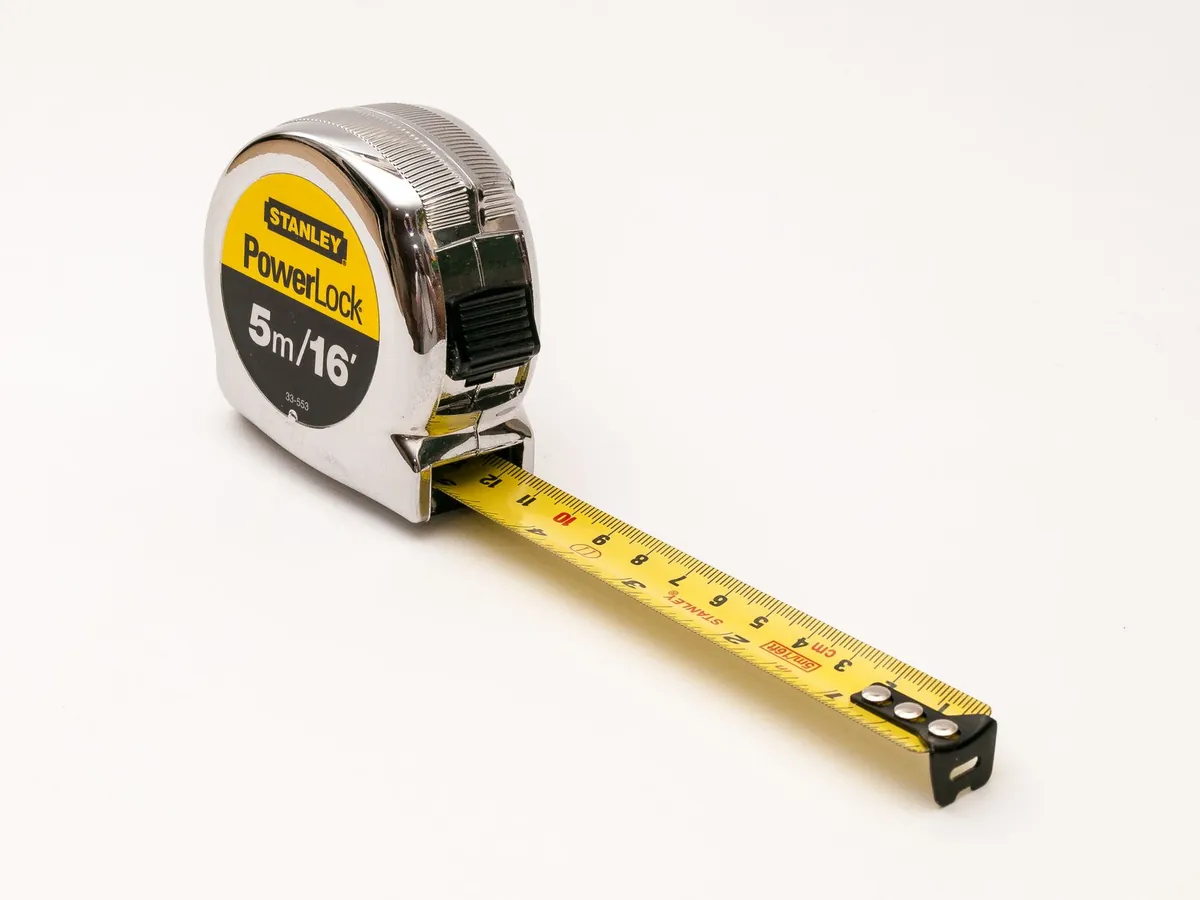
The judgment call, in the end, is written on the face of the pad. Between 1.5 inches of new rubber and the 0.75-inch retirement line lies the bumper’s whole service story. A tape measure reads it more honestly than any glance from the approach. Bumpers that pass the check keep absorbing; the ones that fail get replaced before the trailer writes its own opinion in the concrete.
Frequently Asked Questions About Dock Bumpers
How worn should a dock bumper be before replacement?
Replace it at 50 percent wear. A new face has roughly 1.5 inches of exposed rubber, so about 0.75 inch in front of the steel frame is the retirement line. Deep gouges or exposed frame mean the same thing.
Should both dock bumpers be replaced at the same time?
Yes. Pads installed together wear at the same rate, so a failed twin signals a partner near the limit. Replacing the pair keeps the trailer striking level rubber on both sides of the door.
What projection does a sloped approach need?
Start from the 4.5-inch standard projection and add one inch for every percent of slope beyond 2 percent. A 5 percent declining driveway therefore needs about 9 inches, keeping a 4-inch minimum wall-to-trailer gap.
Can dock bumpers be mounted on a block wall?
Not on hollow block. An unfilled CMU wall lacks the structure to survive repeated truck impacts and must not carry dock bumpers. Mount on solid poured concrete, or reinforce and fill the wall first with engineering input.