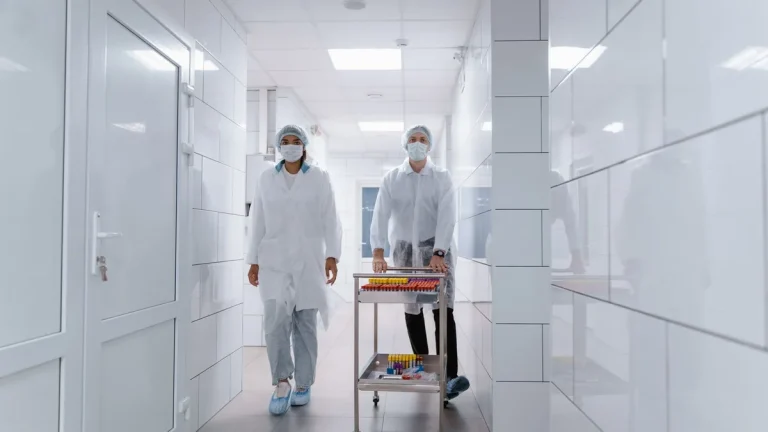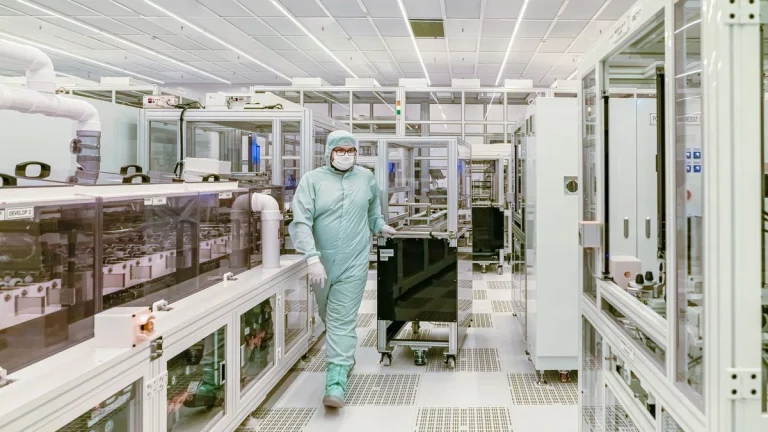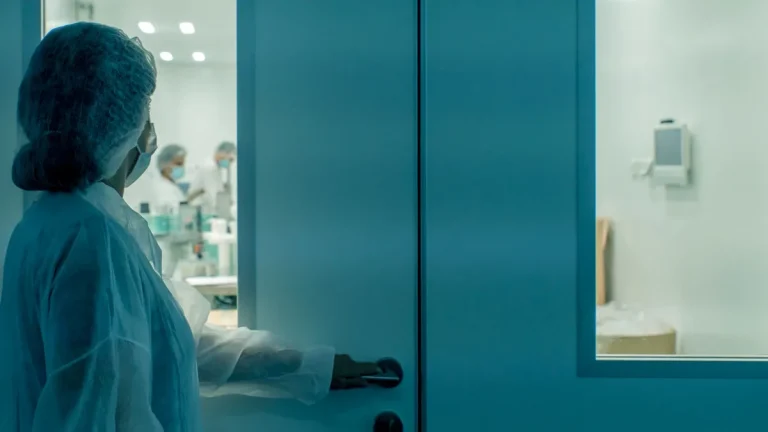
Contamination control in aseptic processing environments depends on the physical integrity of the room envelope. Within pharmaceutical manufacturing suites, biotechnology laboratories, and semiconductor plants, doorways represent the critical interface between adjacent cleanliness classes. Every transit of personnel, mobile equipment, or material totes introduces aerodynamic turbulence, mechanical wear, and chemical exposure risks. To maintain continuous compliance with regulatory frameworks such as FDA cGMP 21 CFR Part 211 and revised EU GMP Annex 1, facility planners must specify doorway systems delivering zero particulate emissions, mechanical rigidity, and chemical resistance.
Cleanroom stainless steel doors serve as the industry standard for high-containment and aseptic envelopes. Unlike standard hollow metal doors or painted closures, purpose-engineered stainless cleanroom systems feature zero-ledge leaf profiles, continuous robotic laser welding, and fully concealed hardware. Integrating purpose-built clean room doors into modern modular wall partitions establishes an airtight barrier that stabilizes room pressure cascades. In conjunction with high-velocity high-speed doors in material airlocks and specialized cleanroom doors throughout secondary suites, stainless steel assemblies protect sterile manufacturing lines against batch contamination.
Material Metallurgy of AISI 304 and 316L Doors
Hygienic reliability in cleanrooms depends on the metallurgy of the alloy selected for the door leaf. Specifiers evaluate two dominant austenitic alloys: AISI 304 and AISI 316L.
AISI 304 stainless steel is an austenitic chromium-nickel alloy containing 18% chromium and 8% nickel. It provides robust mechanical strength and resistance to atmospheric oxidation and mild cleaning detergents. For semiconductor assembly suites, optical fabrication facilities, and general cleanroom corridors operating under ISO Class 6 through Class 8 conditions, 304-grade steel offers an economical architectural solution resisting water vapor, isopropyl alcohol (IPA) wipes, and neutral pH phenolic disinfectants.
However, when operating in aseptic pharmaceutical processing cores or compounding suites, doorways encounter aggressive chemical stress. In these zones, standard operating procedures dictate frequent application of concentrated oxidizing biocides, including sodium hypochlorite (bleach), peracetic acid, and automated Vaporized Hydrogen Peroxide (VHP) cycles. Under repeated exposure to halogen ions, standard 304 stainless steel can suffer localized pitting corrosion along gasket grooves.
For cleanroom suites utilizing sodium hypochlorite concentrations above 0.5% or automated VHP decontamination protocols above 800 ppm, specify AISI 316L stainless steel rather than AISI 304. The inclusion of 2.0% to 3.0% molybdenum elevates the alloy Pitting Resistance Equivalent Number (PREN) from 18 to over 23, providing critical protection against chloride-induced micro-pitting.
To resist these aggressive decontamination regimes, facility engineers specify low-carbon AISI 316L stainless steel. The low carbon content (under 0.03%) prevents carbide precipitation during robotic laser welding, ensuring heat-affected zones retain full corrosion resistance. Cleanroom stainless doors undergo precision finishing to achieve compliant micro-smooth profiles:
- No. 4 Mechanical Sanitary Polish: Multi-stage abrasive belts deliver a uniform brushed appearance with an Ra value between 0.4 µm and 0.6 µm, minimizing glare while allowing rapid swab testing.
- Electropolished Finish (EP): An electrochemical process selectively dissolves surface micro-peaks, producing an ultra-smooth surface with an Ra value below 0.3 µm to 0.4 µm conforming to ISPE Baseline Guide Volume 4 standards.
Structural Architecture of Flush Cleanroom Stainless Doors
The architecture of a cleanroom door determines whether it maintains planar stability over decades. In airlocks, door leaves cycle hundreds of times per shift under continuous pressure differentials.
A true cleanroom stainless door utilizes a double-skinned, seamless unibody leaf design. Fabricated from precision CNC-bent sheet metal with thicknesses ranging from 1.2 mm to 1.5 mm, the front and rear faces are joined along the perimeter using automated laser welding. The outer perimeter is ground and buffed to produce a continuous profile without visible seams, pop rivets, screw heads, or overlapping sheet edges, preventing particulate settlement.
The interior cavity between the stainless steel skins cannot remain hollow. Hollow doors act as acoustic amplifiers and lack torsional rigidity under differential pressure loads. Cleanroom door manufacturers utilize two primary structural core infill systems:
- Structural Aluminum Honeycomb Core: Hexagonal aluminum cells bonded to steel skins with thermosetting epoxy adhesive. Aluminum honeycomb provides compressive strength exceeding 0.35 MPa. Aluminum is non-hygroscopic, preventing moisture absorption, and achieves an A1 non-combustible fire classification under EN 13501-1 standards.
- High-Density Hydrophobic Mineral Wool Core: Specified when facility insurance regulations mandate certified fire barriers (60, 90, or 120-minute UL 10C or EN 1634-1). Mineral wool panels with densities between 110 kg/m³ and 140 kg/m³ are chemically treated with water-repellent silane coatings, preventing humidity retention.
Subframe engineering matches cleanroom partition technology. In modular cleanroom panel systems with 50 mm or 100 mm wall thicknesses, stainless steel clip-on frames clamp directly around partition openings with internal tensioning bolts, creating a flush transition on both sides without requiring wet silicones. Cleanroom doors incorporate factory-installed double-glazed vision units fabricated from 5 mm or 6 mm tempered safety glass flush with outer stainless steel surfaces. The interior cavity is filled with inert argon gas and perimeter molecular sieve desiccant spacers, permanently preventing condensation.
Perimeter Sealing and cGMP Annex 1 Compliance
Cleanroom doors prevent airborne particles from breaching controlled pressure boundaries. Under revised EU GMP Annex 1, cleanroom suites must maintain differential pressure cascades of 10 to 15 Pa between adjacent classes.
If door seals allow excessive air infiltration, the HVAC system expends excessive fan energy to maintain room pressure cascades. In worst-case scenarios, a leaky door perimeter causes room pressure collapse whenever an adjoining airlock operates, drawing untreated air into sterile zones and triggering environmental deviations.
Cleanroom stainless steel doors achieve high-efficiency containment by meeting EN 12426 Class 4 air tightness specifications, restricting total air permeability to less than 0.5 m³/h·m at 50 Pa static pressure differential. This requires a coordinated perimeter sealing system:
- Continuous Dual-Lip Frame Gaskets: High-resilience, food-grade vulcanized silicone or peroxide-cured EPDM profiles inserted into recessed subframe channels, creating an airtight compression barrier that resists compression set over hundreds of thousands of cycles.
- Automatic Drop-Down Bottom Sweeps: When open, the bottom seal retracts into an internal leaf channel. As the door closes, an adjustable trigger pin mechanically forces a multi-fin silicone seal downward against finished epoxy or coved vinyl floors.
- Drop-Seal Corner Overlaps: Precision corner transition blocks ensure the downward-moving floor sweep intersects vertical jamb gaskets without leaving micro-gaps at lower threshold corners.
Never permit cleaning contractors to mop aggressive sodium hypochlorite wash water directly over mechanical bottom sweep plungers without subsequent rinse cycles. Accumulated crystallizing salt residues can bind internal stainless leaf springs, preventing the automatic drop seal from fully deploying and compromising room pressure containment.
Concealed hardware represents an essential element of cGMP compliance. Standard industrial doors feature surface-mounted butt hinges and external closers that create horizontal dust ledges. High-performance stainless cleanroom doors integrate concealed stainless steel pivot hinges, overhead concealed closers hidden inside the door leaf, and flush-recessed pull handles. These flush configurations eliminate particulate accumulation while presenting a sleek architectural aesthetic.
Chemical Resistance Against Aggressive Cleanroom Sporicides
Standard architectural doors fail rapidly in biopharmaceutical environments because polyurethane paints, vinyl wraps, and low-grade aluminum finishes deteriorate under modern sanitization protocols. Facility validation teams subject doorway assemblies to continuous contact with diverse chemical biocide families:
- Peracetic Acid (PAA) and Hydrogen Peroxide: Powerful oxidizing agents applied as foaming sprays or manual wipes that oxidize organic matter rapidly but cause chalking on painted surfaces.
- Sodium Hypochlorite Solutions: Effective sporicidal solutions releasing corrosive chloride ions capable of inducing stress-corrosion cracking in non-passivated carbon steels and inferior aluminum grades.
- Quaternary Ammonium Compounds: Cationic surfactants leaving persistent surfactant films requiring mechanical wiping and hot purified water rinsing.
- Vaporized Hydrogen Peroxide (VHP): Automated bio-decontamination cycles saturating enclosed suites with micro-condensation vapor at concentrations ranging from 800 ppm to 1,200 ppm for multiple hours.
“The chemical durability of cleanroom door envelopes cannot be treated as an afterthought. Specifying fully passivated AISI 316L stainless steel ensures that doors withstand thousands of aggressive sporicide sanitization cycles without pitting, structural embrittlement, or regulatory audit citations.”
Cleanroom stainless steel doors manufactured from electropolished AISI 316L remain entirely immune to these harsh biocidal chemistries. Under continuous automated VHP cycles, the smooth metallic matrix exhibits zero chemical adsorption and zero outgassing, allowing rapid aeration cycles that reduce room downtime between production batches. Additionally, the non-porous surface facilitates 100% recovery during microbiological swab qualification testing, satisfying environmental validation criteria established in ISO 14644-4 Cleanroom Design.
Performance Comparison Across Alternative Cleanroom Door Materials
When engineering cleanroom partitions, project teams compare stainless steel doors against alternative architectural solutions, such as High-Pressure Laminate (HPL) doors, powder-coated galvanized steel doors, and aluminum-framed glazed closures. While alternative materials offer specific advantages in light-duty environments, stainless steel remains unmatched in demanding aseptic facilities.
| Performance Metric | AISI 316L Stainless Steel | High-Pressure Laminate (HPL) | Powder-Coated Steel |
|---|---|---|---|
| Chemical Resistance | Exceptional (Resists bleach, VHP, sporicides) | High (Resists alcohols, sensitive to high VHP) | Moderate (Blisters under repeated contact) |
| Impact Resistance | Extreme (1.5mm unibody resists cart collisions) | Very High (Resilient solid core) | Moderate (Coating chips easily upon collision) |
| Fire Rating Classification | Class A1 Non-Combustible (Up to 120 min) | Class B-s1,d0 (Typical 30 min rating) | Class A1 (Up to 90-120 min rating) |
| Surface Roughness (Ra) | Ra < 0.4 µm (Electropolished mirror finish) | Ra ~ 0.8 – 1.2 µm (Micro-textured resin) | Ra ~ 1.0 – 1.8 µm (Orange-peel powder coat) |
| Biological Cleanability | Superior (Zero shedding, 100% swab recovery) | High (Hygienic resin, smooth wipe-down) | Fair (Scratches trap bacterial biofilms) |
| Lifecycle Expectancy | 20+ Years (Zero repainting, lifetime integrity) | 12 – 15 Years (Edge seal wear over time) | 5 – 8 Years (Frequent repainting required) |
Powder-coated galvanized steel doors represent a lower upfront capital cost option but impose continuous maintenance overheads. In high-traffic material airlocks, equipment carts inevitably scrape door edges. Once powder coatings chip, underlying carbon steel oxidizes rapidly when washed down, creating rust streaks that violate cGMP guidelines.
High-Pressure Laminate (HPL) doors provide an outstanding alternative for secondary corridors, gowning rooms, and surgical suites due to high impact resilience. However, in core aseptic suites subject to automated VHP gassing, the resin matrix of HPL can absorb trace hydrogen peroxide molecules, prolonging aeration times. For core Grade A and Grade B biopharmaceutical suites, electropolished stainless steel remains the unequivocal engineering material of choice.
Maintenance Protocols and Total Lifecycle Ownership Analysis
While initial procurement costs of cleanroom stainless steel doors exceed basic industrial doors, Total Cost of Ownership (TCO) across a 20-year facility lifecycle is substantially lower due to zero repainting requirements, minimal downtime, and modular hardware interchangeability.
Maintaining stainless steel cleanroom doors in prime hygienic condition requires adherence to standardized maintenance protocols:
- Periodic Chemical Passivation: Following installation, door surfaces undergo chemical passivation conforming to ASTM A967 standards, dissolving free iron particles and accelerating protective chromium-oxide formation.
- Silicone Gasket Sanitization: Inspect perimeter silicone seals every six months for elasticity. Wipe gaskets with 70% sterile isopropyl alcohol (IPA), and lubricate drop-down sweep mechanisms with food-grade fluoropolymer lubricant.
- Concealed Hardware Inspection: Verify closing force calibrations annually to ensure positive latching against room differential pressure without lubricant leakage into the room atmosphere.
- Vision Panel Seal Verification: Inspect double-glazed flush vision units under oblique light, ensuring internal desiccated spacers remain dry and perimeter bonds exhibit zero moisture ingress.
From an operational expenditure perspective, stainless steel assemblies eliminate recurring costs of touch-up repainting, perimeter recaulking, and premature door replacement. Amortized over 20 years of commercial manufacturing, stainless steel delivers superior return on investment and uncompromised compliance.
Frequently Asked Questions About Stainless Doors
What is the key difference between 304 and 316L cleanroom doors?
AISI 304 contains 18% chromium and 8% nickel for standard atmospheric resistance. AISI 316L contains 2.0% to 3.0% molybdenum and lower carbon content, providing superior resistance to pitting corrosion from aggressive chlorine disinfectants, bleach, and repeated automated VHP cycles.
What surface roughness is recommended for pharmaceutical cleanroom doors?
Pharmaceutical cleanrooms operating under cGMP Annex 1 standards specify an electropolished surface finish with an Ra value below 0.4 µm or a No. 4 sanitary mechanical polish with an Ra below 0.6 µm to eliminate microbial harborage niches.
How do flush stainless doors maintain differential room pressure cascades?
Cleanroom stainless steel doors incorporate continuous dual-lip silicone perimeter gaskets and an automatic drop-down bottom seal that deploys mechanically upon closure, achieving EN 12426 Class 4 airtightness (<0.5 m³/h·m at 50 Pa) to prevent air loss and maintain 10 to 15 Pa pressure differentials.
Can cleanroom stainless steel doors achieve certified fire ratings?
Yes. When fabricated with high-density hydrophobic mineral wool cores (110 to 140 kg/m³) and intumescent perimeter seals, stainless steel cleanroom doors achieve certified fire ratings of 60, 90, or 120 minutes under UL 10C, BS 476, and EN 1634-1 international fire safety standards.
Why are flush double-glazed vision panels essential in cleanroom doors?
Flush vision panels eliminate protruding frames and dust-collecting ledges on both sides of the door leaf. Fabricated from tempered safety glass with argon gas infill and perimeter desiccant spacers, they provide optical clarity for process monitoring without risking surface condensation, microbial harborage, or seal degradation.