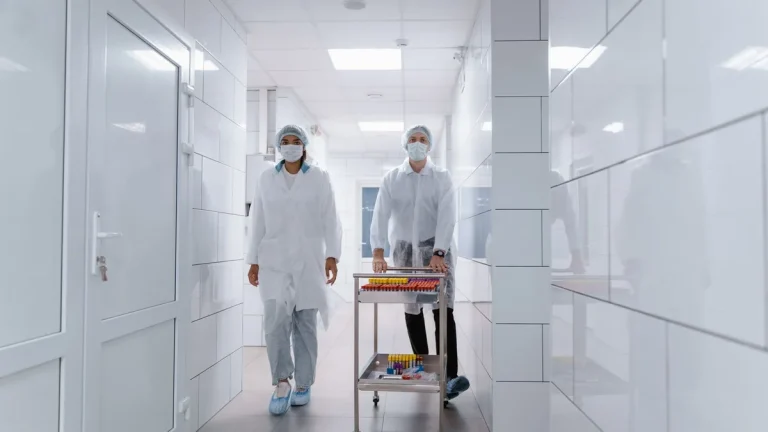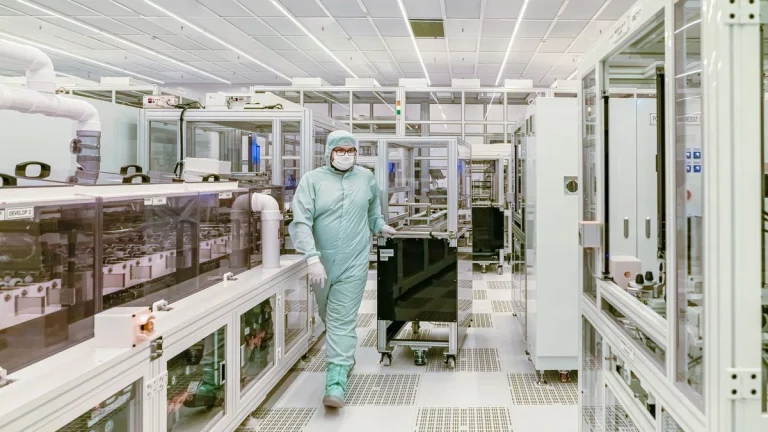
Engineering a modern biopharmaceutical manufacturing facility requires moving beyond fragmented component procurement to embrace integrated architectural envelope design. Whether manufacturing recombinant monoclonal antibodies, viral vectors for cell and gene therapies, or sterile injectable vaccines, the cleanroom boundary must function as a synchronized biocontainment machine. In these critical environments, building components cannot be evaluated in isolation: wall panels, doorway closures, air-handling pressure cascades, and chemical decontamination systems interact continuously.
All too often, project engineering teams procure partition panels from one vendor, doors from an industrial catalog, and HVAC controls from an independent integrator. This siloed approach creates disastrous integration friction during facility commissioning. Mismatched door subframes create protruding dust ledges that fail cGMP visual audits, leaky door seals collapse room differential pressure cascades during shifts, and volatile disinfectant chemistries blister incompatible polymer surfaces, delaying commercial manufacturing approvals for months.
Implementing purpose-engineered clean room doors within a unified modular partition system establishes an airtight containment boundary that streamlines qualification under revised EU GMP Annex 1 and FDA 21 CFR 211 guidelines. Below, we detail the core architectural principles, interlocking mechanics, aerodynamic balancing, and material compatibility requirements that define state-of-the-art biopharmaceutical cleanroom solutions.
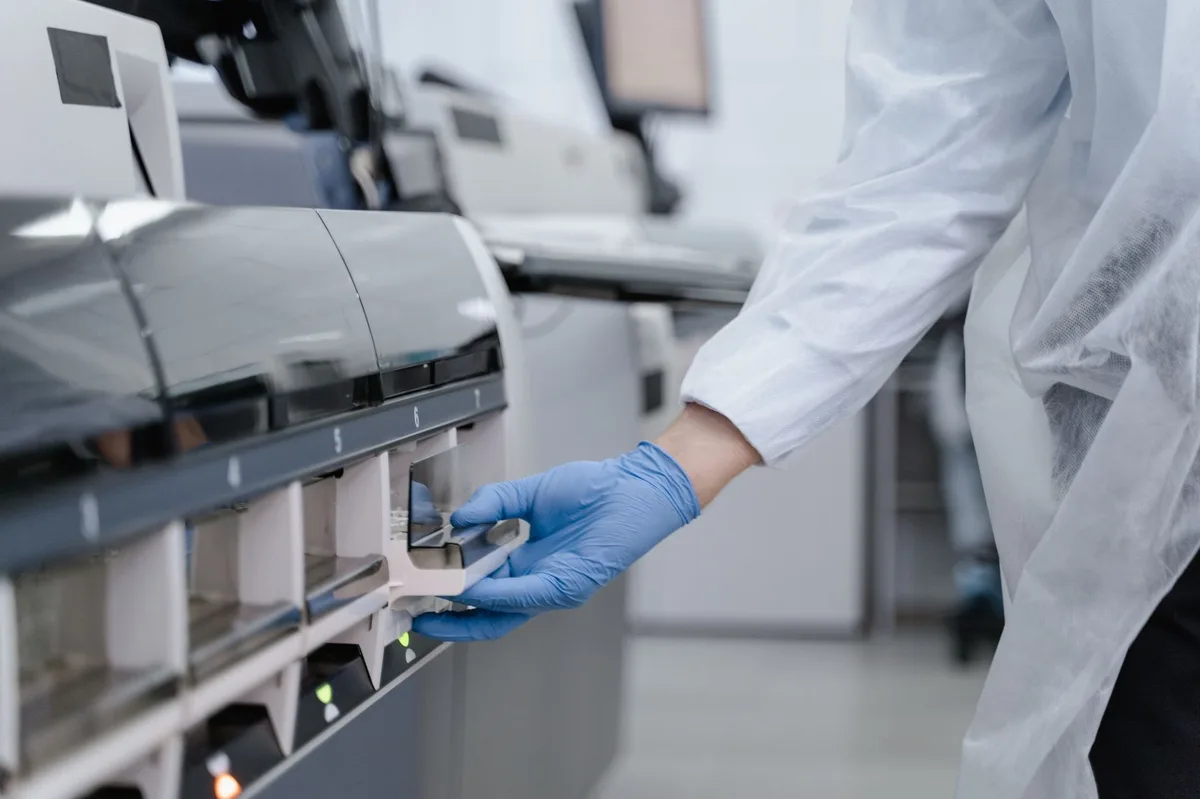
Architectural Integration in Biopharmaceutical Cleanroom Facilities
Biopharmaceutical facilities must maintain strict spatial separation between processing steps to prevent airborne microbial cross-contamination and viral cross-transfer.
Harmonizing Envelope Containment with cGMP Annex 1
The revised EU GMP Annex 1 standard emphasizes Contamination Control Strategy (CCS) as the foundational principle of pharmaceutical plant design:
- Grade A to Grade D Zoning: Cleanroom boundaries must enforce progressive cleanliness gradients, stepping from Grade D preparation areas to Grade C formulation halls, Grade B background zones, and Grade A critical aseptic filling lines.
- Continuous Physical Enclosure: Architectural boundaries must remain completely non-shedding and impervious to microbial penetration under static and dynamic operations.
- Unidirectional Flow Discipline: Facility layouts must physically separate personnel entry airlocks (PAL) from material transfer airlocks (MAL), preventing operators from crossing paths with unsterilized equipment totes.
Aseptic Processing Suite Zoning and Personnel Flows
Mitigating human-borne contamination requires precise physical zoning across gowning and transfer transitions:
- Multi-Stage Gowning Airlocks: Personnel transit from unclassified locker areas through progressive airlocks (changing from street footwear to dedicated plant shoes, primary scrubs, and full sterile bunny suits).
- Material Decontamination Airlocks: Incoming equipment, single-use bags, and stoppers must pass through active pass-through boxes or automated VHP transfer chambers before entering Grade B formulation cores.
- Visual Supervisory Windows: Partition systems integrate double-glazed flush tempered glass vision panels with integrated blinds, allowing process supervision without requiring inspectors to gown and enter sterile rooms.
Airtight Cleanroom Doors and Automated Interlocking Protocols
Doorways represent the most dynamic breach points in any cleanroom barrier. Selecting appropriate mechanical kinematics determines pressure stability.
Hermetic Drop-and-Slide vs High-Speed Zipper Closures
Biopharmaceutical facilities deploy two primary door architectures depending on traffic velocity and cleanliness classification:
- Hermetic Drop-and-Slide Doors: In Grade B sterile cores and gowning airlocks, automatic sliding doors utilize an overhead roller track with a 45-degree ramp geometry. Upon closing, the track drops the door leaf 10mm downward and shifts it 8mm inward, compressing non-shedding silicone gaskets against the floor and frame to achieve certified EN 12426 Class 4 airtightness (<0.5 m³/h·m at 50 Pa).
- High-Speed Zipper Roll Doors: In high-traffic pallet and automated guided vehicle (AGV) transit corridors between Grade C and D suites, high-speed roll doors operate at opening velocities up to 2.0 m/s. Continuous low-friction UHMW-PE zipper tracks deliver an airtight seal while self-repairing automatically if accidentally struck by mobile carts.
Programmable Logic Controller Airlock Purge Delay Sequencing
Airlock door operation must be governed by intelligent automation to preserve pressure integrity:
- Fail-Safe Hardware Interlocking: Dedicated PLC controllers interface with magnetic position switches to physically prevent simultaneous opening of entry and exit doors under all non-emergency scenarios.
- Dynamic HEPA Purge Timers: When an external door closes, the controller initiates a calibrated 30 to 60-second HEPA laminar air flush cycle. The internal door lock remains energized until particulate counters confirm air cleanliness recovery.
- Touchless Optical Actuation: Microwave motion sensors, optical foot switches, or touchless infrared proximity plates allow operators to actuate door cycles without hand contact, preventing surface cross-contamination.
“In Grade A/B aseptic formulation cores, door interlocking is not an accessory—it is a critical validation parameter that directly defends differential pressure cascades against turbulent contamination breaches.”
Modular Wall Panel Systems and Seamless Transitions
A cleanroom wall partition must form an unbroken, non-porous plane that interfaces flush with doors, ceilings, and epoxy flooring.
Solid-Core HPL vs Electropolished 316L Stainless Panels
Material selection for biopharmaceutical wall skins must satisfy intense mechanical impact and chemical sanitization demands:
- Solid-Core High-Pressure Laminate (HPL): Fabricated from thermosetting phenolic resins (density 1,350 kg/m³), 4mm solid-core HPL skins provide exceptional impact resistance in material corridors, resisting dents and scratches from heavy stainless steel pallet jacks.
- Electropolished 316L Stainless Steel: In liquid formulation and API isolation suites exposed to concentrated chlorine compounds, AISI 316L stainless steel (0.8mm sheet thickness) with an electropolished surface roughness of Ra < 0.4 µm provides total chemical immunity and non-combustibility.
- Aluminum Honeycomb Infill: Non-combustible expanded aluminum honeycomb cores provide structural rigidity (compressive strength > 1.8 MPa) without particulate shedding or moisture retention.
Eliminating 90-Degree Ledges with Flush Extruded Subframes
Hygienic architectural detailing prevents particulate entrapment along architectural seams:
- Two-Piece Clamping Subframes: Cleanroom door frames utilize precision-engineered aluminum extrusions that wrap around 50mm or 100mm wall panels, aligning door frames flush with the partition face without exposed screws.
- Radius Coving Profiles: All internal intersections between walls, ceilings, and floors incorporate 50mm-radius aluminum or PVC coving profiles, enabling mop heads to sanitize corners without leaving uncleaned dead zones.
- Pharmaceutical Silicone Sealant: Panel joints are sealed with USP Class VI certified, non-fungicidal silicone tooled to a smooth 45-degree bevel that withstands repeated sanitization.
HVAC Pressure Cascades and Dynamic Air Balancing
The heating, ventilation, and air conditioning (HVAC) system establishes aerodynamic containment, driving clean air outward from high-purity cores toward lower-grade corridors.
Maintaining 15 Pa to 50 Pa Room Pressure Gradients
Differential pressure hierarchies defend sensitive drug product handling zones:
- Positive Pressure Cascades: Sterile injectable filling suites maintain positive pressure (typically +45 Pa in Grade B relative to +30 Pa in Grade C and +15 Pa in Grade D corridors), ensuring that air rushes outward whenever an airlock opens.
- Negative Containment for Potent Compounds: Facilities producing highly potent active pharmaceutical ingredients (HPAPIs) or live viral vectors utilize negative pressure bubble or sink airlocks to prevent toxic active substances from escaping into general corridors.
- Door Gasket Containment Capacity: Because pressure cascades impose constant static force against door blades, perimeter seals must resist deflection without leaking conditioned air.
Air Change Rates and HEPA Filter Recovery Verification
Dynamic recovery testing confirms airlock environmental containment:
- Volumetric Air Change Rates: Grade B cleanroom suites operate with 30 to 50 air changes per hour (ACH), while Grade A zones feature unidirectional laminar flow at velocities of 0.36 to 0.54 m/s.
- Cleanroom Recovery Time Testing: Under ISO 14644-3, the cleanroom must recover from a 100-fold contamination spike back to target cleanliness classifications within 15 to 20 minutes following door cycling.
Airlock Advisory: If your cleanroom HVAC fans are continuously hunting or failing differential pressure alarms, inspect door perimeter gasketing. Leaky brush seals can dump up to 100 m³/h of pressurized air, defeating dynamic cascade balancing.
Vaporized Hydrogen Peroxide Bio-Decontamination System Endurance
Automated gaseous decontamination represents the gold standard for terminal sterilization in modern biopharmaceutical facilities.
Automated VHP Gassing Cycles at 1000 ppm Concentrations
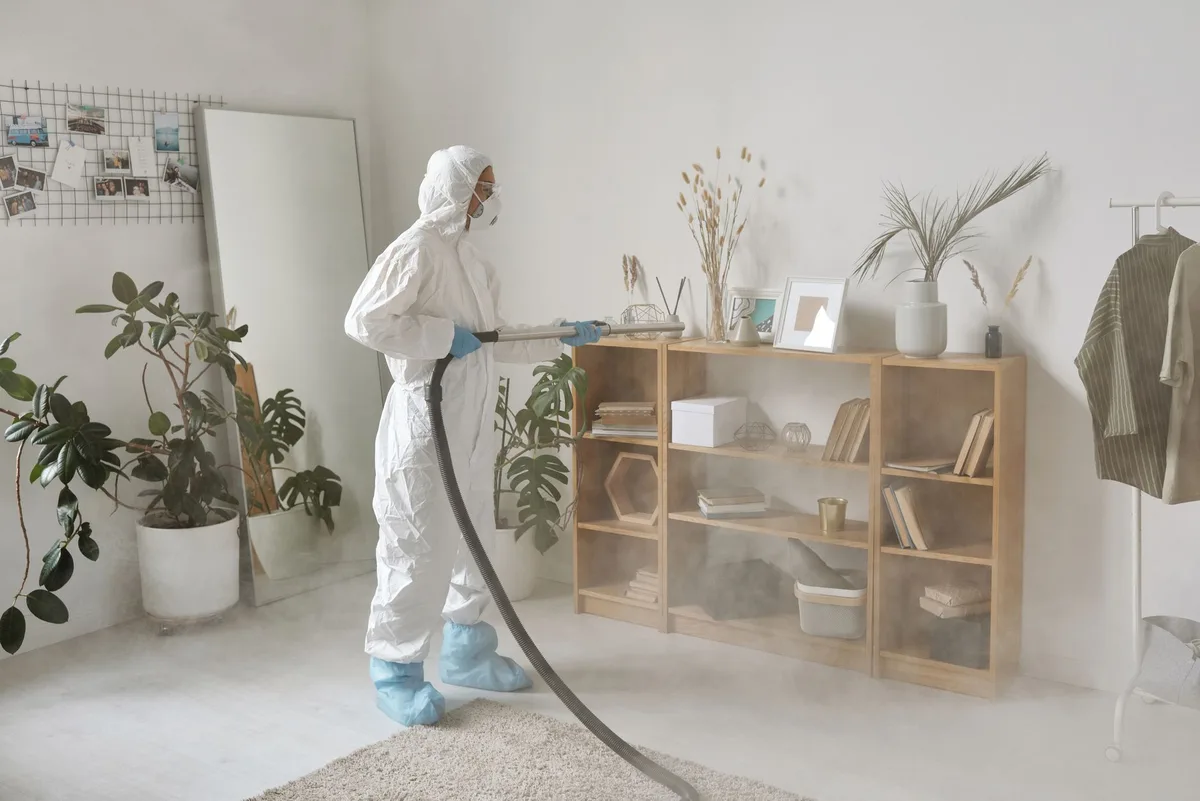
VHP decontamination cycles involve four distinct automated phases executed within sealed cleanroom suites:
- Dehumidification Phase: HVAC chillers reduce airlock relative humidity to below 30% to maximize vapor uptake without premature condensation.
- Conditioning and Gassing Phase: Aqueous 35% hydrogen peroxide is vaporized and injected into the closed suite, establishing vapor concentrations between 800 and 1,200 ppm.
- Bio-Decontamination Dwell Phase: Gaseous concentrations are held for 30 to 90 minutes, achieving a certified 6-log reduction of resistant Geobacillus stearothermophilus endospores.
- Aeration Phase: High-volume HVAC purging exhausts hydrogen peroxide vapor through catalytic scrubbers until ambient concentrations drop safely below 1.0 ppm OSHA exposure limits.
Material Degradation Resistance Across Gaskets and Panels
VHP is a potent oxidizer that quickly destroys substandard commercial materials:
- Silicone and EPDM Gasket Immunity: Cleanroom door perimeter seals must be formulated from peroxide-cured pharmaceutical-grade silicone or specialized EPDM elastomers that withstand thousands of VHP cycles without micro-fissuring.
- Thermoplastic Polyurethane (TPU) Roll Curtains: High-speed door blades utilize plasticizer-free monolithic TPU that resists surface swelling and hazing, whereas standard commercial PVC curtains yellow and embrittle within months.
Validation Tip: Always require door manufacturers to provide certified VHP cycle endurance test reports (minimum 1,500 validated cycles) prior to architectural submittal sign-off.
Biopharmaceutical Cleanroom Systems Engineering Comparison Matrix
The following engineering matrix outlines the technical parameters and system integration specifications across core biopharmaceutical cleanroom envelope components:
| System Component | Biopharmaceutical Standard Spec | Standard Industrial Spec | Regulatory & Validation Risk |
|---|---|---|---|
| Door Sealing Architecture | EN 12426 Class 4 (<0.5 m³/h·m at 50 Pa) | Unrated or Class 1 (>24 m³/h·m) | HVAC pressure loss; BMS alarm failure |
| Door Blade Chemistry | Monolithic TPU or electropolished 316L | Commercial PVC with ester plasticizers | Curtain embrittlement and micro-cracking |
| Wall Panel Skin | 4mm solid HPL or 316L stainless (Ra < 0.4 µm) | Painted sheet metal or commercial drywall | Paint flaking; chemical corrosion under VHP |
| Wall Core Infill | Aluminum honeycomb or hydrophobic rockwool | Polystyrene foam or polyurethane foam | Combustibility risk; moisture retention |
| Airlock Interlocking | PLC-controlled interlock with purge timer | Standalone push-button or unmonitored radar | Cross-contamination; gowning breaches |
| VHP Cycle Durability | Certified >2,000 automated cycles | Unrated; rapid chemical degradation | Surface blistering; frequent maintenance holds |
| HVAC Recovery Time | <15 minutes to target cleanliness grade | >45 minutes due to air infiltration | Regulatory 483 audit citations for recovery |
Frequently Asked Questions on Biopharmaceutical Cleanrooms
What differential pressure cascade is required between biopharmaceutical cleanroom grades?
Under revised EU GMP Annex 1, adjacent cleanroom grades should maintain a minimum differential pressure step of 10 to 15 Pa, with critical Grade B cores typically pressurized 30 to 45 Pa above outer corridors.
How do automated door interlocks protect sterile processing suites?
Automated interlocks physically prevent concurrent opening of airlock doors, ensuring that external air is flushed through HEPA filtration during a calibrated purge cycle before cleanroom entry is permitted.
Why are electropolished stainless steel panels specified in liquid formulation suites?
Electropolished AISI 316L stainless steel provides a non-porous surface roughness of Ra < 0.4 µm that resists aggressive chlorine sanitizers, prevents biofilm formation, and withstands continuous VHP exposure.
What is the difference between bubble and sink airlocks in biopharma facilities?
A bubble airlock operates at higher pressure than both adjoining suites to push air outward, while a sink airlock operates at lower pressure to contain toxic biohazards or potent drug powders within a suite.
How do high-speed zipper doors withstand repeated VHP decontamination?
High-speed zipper doors utilize plasticizer-free monolithic TPU curtains and electropolished stainless steel hoods that resist chemical oxidation from concentrated vaporized hydrogen peroxide without embrittlement.
Request Engineering Consultation for Biopharmaceutical Facilities
Achieving successful qualification in biopharmaceutical cleanroom projects requires cohesive architectural engineering from concept through commissioning. Incompatible component interfaces compromise HVAC balancing, elevate bio-burden risks, and introduce costly validation setbacks during regulatory inspections.
Our dedicated cleanroom engineering division manufactures certified hermetic sliding doors, high-speed zipper closures, flush modular subframes, and coved architectural systems designed to integrate flawlessly into biopharmaceutical facilities worldwide. Contact our engineering consultants today to review your airlock layouts, review VHP compatibility data, and request comprehensive technical specification packages.