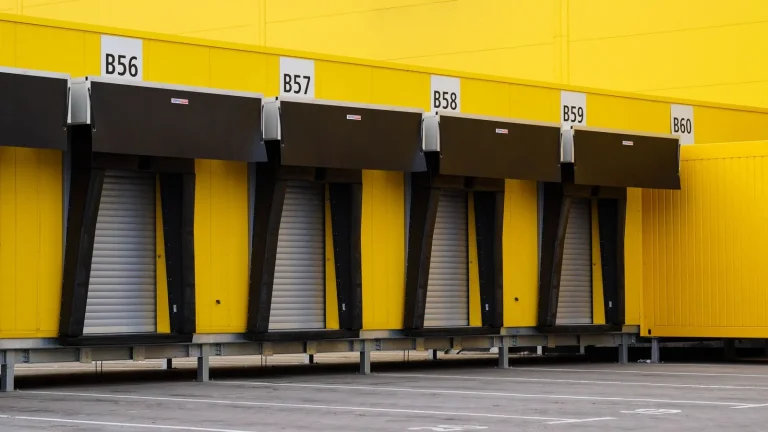
The door is down and the dock is blocked. At 6:40 in the morning, a forklift waits while the operator presses the button again and the motor answers with a low hum and nothing else. Nine times out of ten, that hum is a failed starter capacitor, not a dead gearbox.
Whichever type you run, the six advantages of the motor of an industrial door explains what the drive pays back.
We build these drives in a factory that has been making industrial doors since 1999, and the same pattern repeats in buyer enquiries every week. The motor is picked from a price list, the door is picked from a catalogue, and nobody checks whether the two agree. Comparing the main chain shutter door motor types before you order prevents most of that. This guide walks through drive families, phase supply, manual fallback, torque math, duty ratings, and the failure modes that end arguments on the workshop floor.
Why the Motor Choice Decides More Than Automation
An industrial shutter does not care how smart the control panel is. It cares whether the thing strapped to its barrel can move half a tonne of steel curtain twenty times a shift without cooking its own windings. Choose the wrong motor family and the door still works on day one, which is exactly what makes the mistake expensive.
The failure shows up months later as thermal trips, a door that stops halfway, or a capacitor that swells every summer. By then the invoice for the right motor is a memory and the door has become a maintenance line item. The fix is cheap only at specification stage, which is where this article stays.
Chain Shutter Door Motor Types at a Glance
The chain shutter door motor types on the market fall into four working families, and most electric shutters use one of them. Name the family on the door you already run and you can predict most of its behaviour. The summaries below are written as identities rather than sales lines.
- Tubular motor. Lives inside the barrel, sealed and quiet, with electronic travel limits. Best on small, light curtains that cycle a handful of times a day.
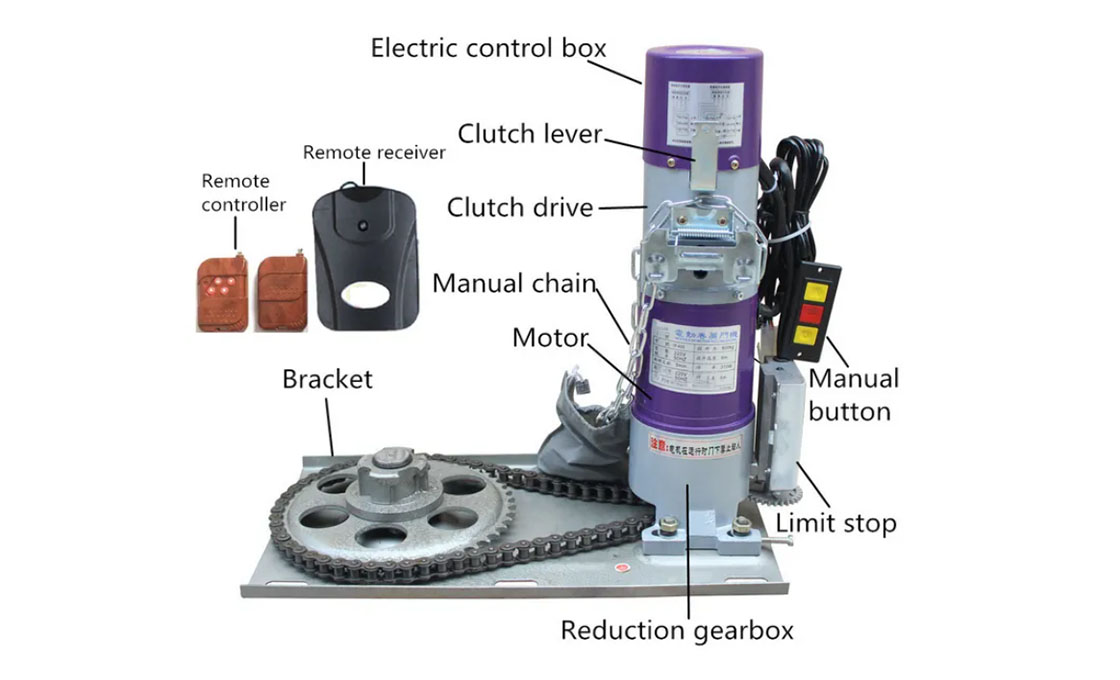
- Chain drive side motor. Mounts beside the opening and turns the barrel through a chain and sprocket. The traditional industrial choice for heavy steel curtains.
- Direct drive motor. Geared straight onto the shaft end with few moving parts. Quieter than chain, needs more side room, and is the default for high-usage doors such as car parks.
- Servo drive with control box. A servomotor plus encoder and smart control, typically IP65 with RS485, WiFi, or Bluetooth links. Priced higher, but it holds speed and position under frequent starts.
The rest of this article is a chain-drive-centered read of that list, because chain motors carry most of the world’s heavy industrial curtains. Sites that also run sectional, sliding, or swing doors have a different map. Our overview of the principles and types of automatic door openers covers which drive belongs to which family.
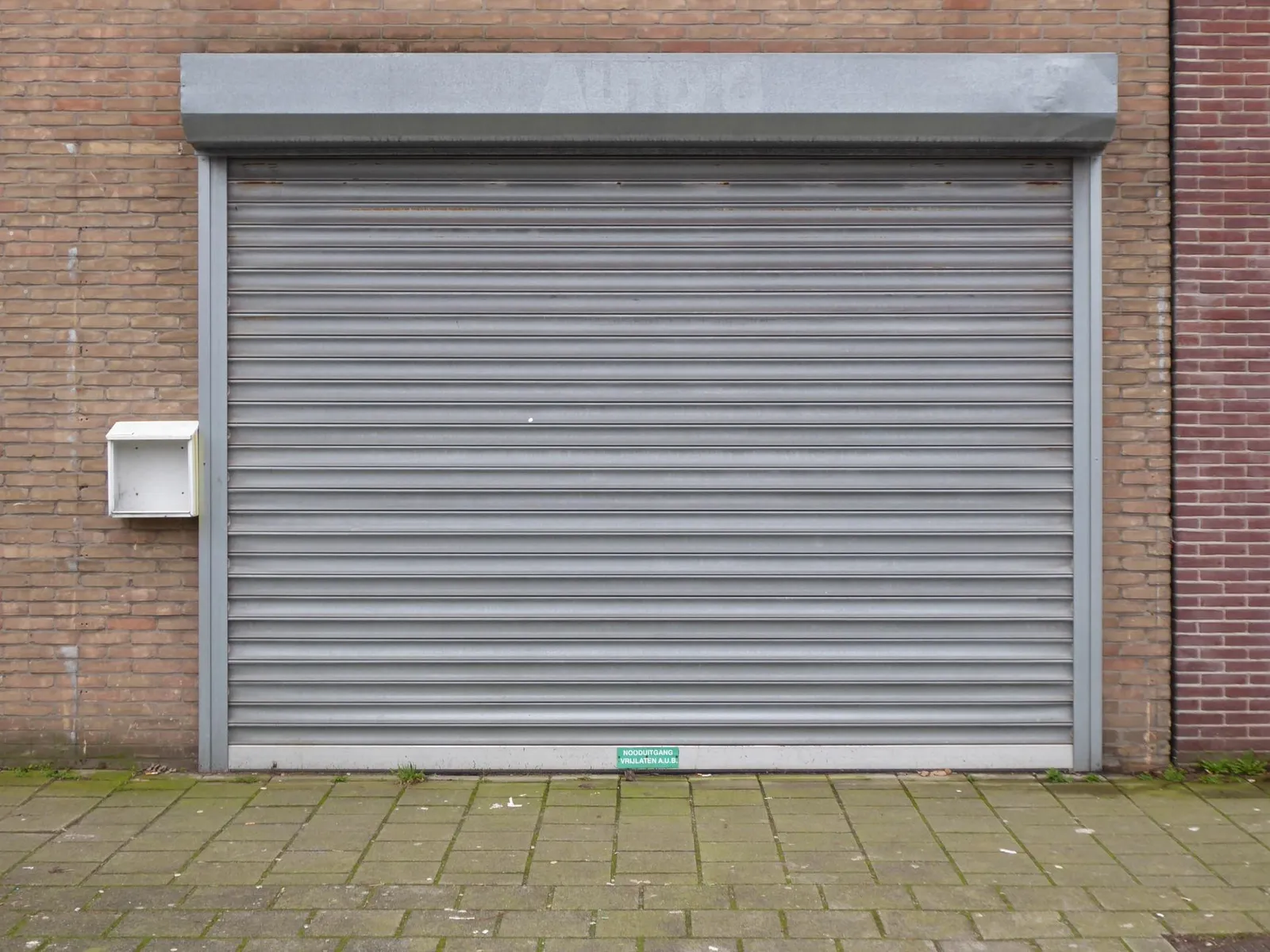
Chain Drive Versus Tubular and Direct Drive Motors
A chain drive motor works the way a bicycle does. The motor is your legs, the gearbox is the gear ratio, and the chain quietly moves torque from one place to another without asking for much in return. That simplicity is why the family tolerates dust, heat, and decades of loading-bay abuse better than anything else mounted at the endplate.
The numbers back the reputation. Industrial chain drives span output torques from around 60 Nm to roughly 5,000 Nm. Side-mounted units routinely handle steel curtains above 1,000 kg. Tubular motors top out far lower, which is why the same curtain that feels effortless on a side drive can stall a tube motor halfway up.
| Parameter | Chain drive side motor | Tubular motor | Direct drive motor |
|---|---|---|---|
| Typical curtain weight | 300 to 1,000 kg and above | Up to roughly 300 kg | Heavy to very heavy curtains |
| Output torque range | About 60 to 5,000 Nm | Roughly up to 120 Nm | High, sized per shaft |
| Cycles per day | Tens of cycles, shift after shift | Around 15 to 20 maximum | Continuous or high usage |
| Noise | Moderate, chain hum | Lowest of the three | Low, quiet gearing |
| Space needed | Side room beside the opening | Inside the barrel only | Most side room |
| Best fit | Warehouses and factory bays | Shopfronts and light doors | Car parks and busy docks |
None of this makes tubular motors a bad product. A sealed tube motor on a small security shutter is the neatest and quietest solution available, and our roller shutter tubular motor range exists exactly for those doors. Trouble starts when a light-duty tube motor is quoted against a heavy industrial curtain because it was cheaper on the day.
Single Phase or Three Phase Power Supply
Phase supply decides which motors you can order, so check it before you shortlist anything. Single-phase 240V supply suits tubular motors and smaller chain drives, and it is easier to wire into older buildings. Three-phase 400V supply is the industrial standard because it delivers power more smoothly and wastes less energy as heat.
The heat detail matters more than it looks. A single-phase motor draws a heavier current at startup, and that inrush becomes warmth in the windings on every single cycle. On a door that moves forty times a day, the difference between 240V and 400V is not paperwork, it is winding temperature.

A reasonable rule of thumb follows. Single phase suits doors under roughly 400 kg cycling fewer than about twenty times a day, and three phase suits anything heavier or busier. Your local supply regulations and an electrician’s survey outrank any rule of thumb, including this one.
Manual Chain Hoist Versus Electric Chain Drive
Every electric chain motor carries a manual fallback, and buyers who ignore it meet it during the first power cut. A clutch lever disengages the drive, and from there two options exist. A manual chain hoist lets an operator crank the curtain up by hand through the same sprocket. Smaller drives use a simple hand crank that does the same job in miniature.
Picture the night shift at a cold-storage bay when the mains drop out at 2 a.m. With a hand chain, one worker keeps trucks moving at maybe one lift per minute, and the shift survives. Without any override, the door is a wall until an electrician arrives, and the load in the trailer does not wait.
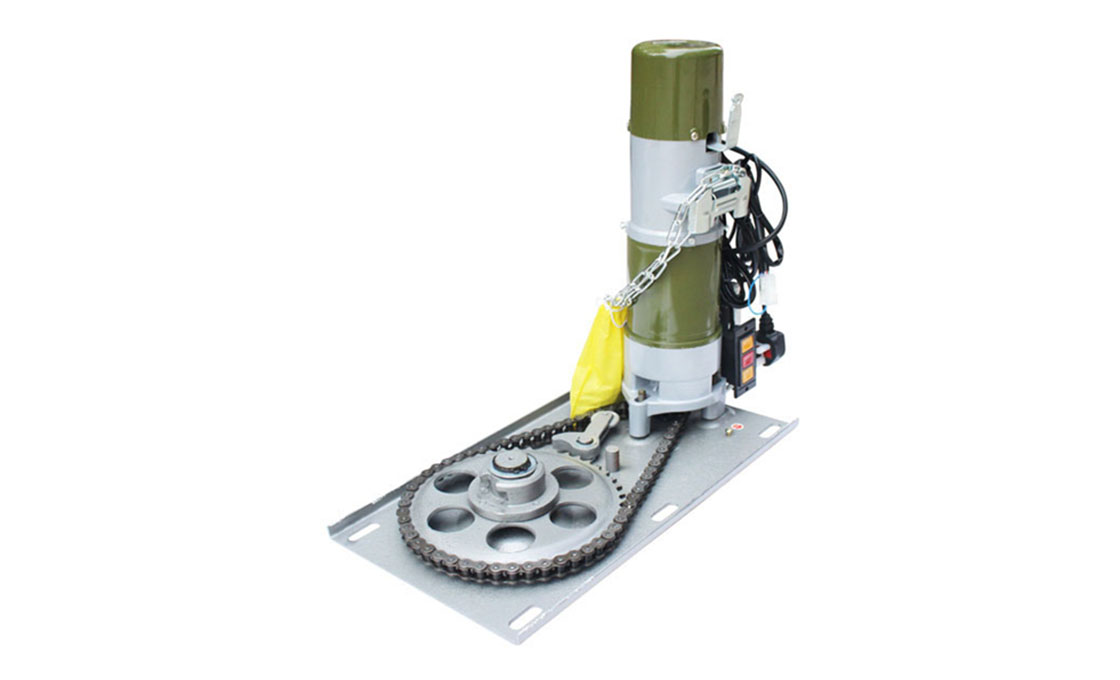
The manual chain deserves the same respect as the motor itself. Specify a low-level hand chain on any door too tall or too heavy to lift comfortably by override crank, and check the clutch engages smoothly during commissioning. Our tubular motor with manual override covers the same requirement on smaller roller shutters. For a complete powered unit with drive and hand-chain fallback in one package, consider a matched roller shutter opener. A matched set avoids mixing components from different suppliers.
Sizing Torque and Lifting Force Correctly
Torque is the number that actually lifts the door, and it is printed on the nameplate where nobody reads it. The physics is honest: torque needed at the barrel equals curtain weight times gravity times barrel radius. A 500 kg curtain on a barrel of 0.155 m radius demands about 760 Nm at the barrel before any margin. The arithmetic is plain: 500 × 9.81 × 0.155 lands just about there.
In practice you never order exactly the calculated figure. Add at least 20 percent for friction in the guides, curtain stiffness, and a winter’s worth of grit, then round up to the next available drive. On this example that points to a 1,000 Nm class side motor, which sits comfortably inside the 60 to 5,000 Nm span the chain-drive family covers.
Here is a blunt opinion from the factory floor, earned the long way. When comparing chain shutter door motor types, buy torque and duty rating from the nameplate, never horsepower or kilowatts alone. Two motors with identical wattage can differ by a factor of three in geared output torque, because gearing, not the motor, sets what the door feels. The same logic applies to curtain choice, and our breakdown of aluminium roller shutter doors shows how slat material changes the weight you are feeding into this equation.
Duty Cycle Ratings From S1 to S5
Duty cycle is the most ignored spec on the nameplate and the first thing to fail in real service. IEC 60034-1 classifies electric motor duty with letter codes from S1 upward. The codes tell you how long a motor can work before its windings outrun their cooling. The ones that matter to door buyers are the first five.
| Class | Name | What it means for a door motor |
|---|---|---|
| S1 | Continuous duty | Constant load long enough to reach thermal equilibrium, run without a rest limit |
| S2 | Short-time duty | A fixed run in minutes, then a full cooldown, suited to rarely used doors |
| S3 | Intermittent periodic duty | Repeat cycles of load and rest, rated with a cyclic duration factor of 15, 25, 40, or 60 percent |
| S4 | Periodic duty with starting | Like S3 but starting heat counts, which punishes doors that start under full load often |
| S5 | Periodic duty with electric braking | Starting and braking heat both count, the honest rating for rapid-cycle doors |
Most industrial shutter motors are sold as S3 with a stated factor. A motor rated S3 40 percent may run four of every ten minutes in its cycle. The default cycle is ten minutes unless the datasheet says otherwise. A distribution bay cycling dozens of times per shift lives happily in that regime because each movement lasts seconds, not minutes. A conveyor-style door that creeps continuously needs an S1 conversation instead, and that is a different motor.
Match the class to your true cycle count, including the peaks you only see on Mondays. An undersized duty class fails thermally rather than dramatically. It trips on hot afternoons, ages the insulation on every overload, and one day it simply does not start.
Limit Switches and Common Failure Modes
Limit switches tell the motor where the door starts and stops, and the two dominant types behave differently over the years. Electromechanical cam limits use gears and micro-switches, they are cheap and field-adjustable, and they drift slowly as cams wear. Electronic limits hold their end positions with far better repeatability and survive vibration without re-teaching, which is why they dominate on modern drives.
Field failures cluster into a short list, and the diagnosis order matters. When a motor hums but will not rotate on a single-phase supply, suspect the starter capacitor first, since it is the cheapest part in the box. When the motor runs but the door does not move, look at the chain, sprocket, or clutch instead of blaming the motor. When a door reverses or stops halfway, the limits or a safety edge is usually the culprit rather than the drive.
Two failure modes deserve standing respect. Overheating from duty-cycle mismatch destroys more industrial door motors than any other cause, and it is a specification error wearing a maintenance costume. A curtain without fall protection is a safety failure waiting for a gearbox fault to trigger it. An electric roller shutter anti-drop device therefore belongs in the same order as the motor, not as an optional extra. Regulators treat powered doors the same way, and the UK HSE guidance on powered door safety sets out the duties clearly for employers and installers.
Which Motor Fits Your Door and Duty
Everything above compresses into five questions. Answer them in order and the chain shutter door motor types sort themselves out faster than any supplier conversation.
| Question | If the answer is small | If the answer is large |
|---|---|---|
| Curtain weight | Under 300 kg, tubular territory | Above 300 kg, chain or direct drive |
| Cycles per day | Under 20, light duty is honest | Tens to hundreds, industrial drive |
| Phase supply on site | Single phase 240V | Three phase 400V available |
| Side room at the opening | Almost none, look in-barrel | Room beside the opening, side drive fits |
| Power cut tolerance | Override crank is enough | Hand chain at low level, specify it |
A shopfront security shutter answers small five times and gets a tube motor. A 6-metre warehouse curtain at 600 kg cycling forty times a shift answers large every time. It gets a three-phase chain drive rated S3 40 percent with a hand chain. A 12-metre span on a distribution centre is still one door for a manufacturer that builds to order. The motor conversation starts at direct drive and duty, not at price.
Check the warranty before you sign anything, because it is a rough proxy for how much torque margin the supplier built in. We stand behind door bodies for 2 years, operators and motors for 3 years, and servomotors for 5 years. We expect a buyer’s five answers above before quoting. A supplier who skips those questions is selling you a box, not a drive.
Whichever drive type you shortlist, check it against the seven functional features of an industrial door motor first.
Frequently Asked Questions
Can a tubular motor be converted to a chain drive later?
Usually yes on the same door, because side drives mount at the endplate and the barrel often stays. Budget for the motor, plate, chain, and electrics, and confirm side room before ordering.
How long should a chain shutter door motor last?
A correctly sized industrial drive commonly serves 10 or more years. Duty-cycle mismatch, water ingress, and dry chains shorten that far more than brand choice does.
Why does my shutter motor hum but not move?
On single-phase motors, a failed starter capacitor is the first suspect. Disengage the clutch and test the manual chain: if it moves freely, the fault is electrical rather than mechanical.
Is three phase always better for industrial shutters?
For heavy or busy doors, yes, because three-phase motors run cooler under frequent starts. Light doors cycling a few times a day run fine and cheaper on single phase.
What torque margin should I add when sizing a motor?
Add at least 20 percent over the calculated barrel torque for friction and cold stiffness, then round up to the next drive class. Heavy or icy sites justify more margin.