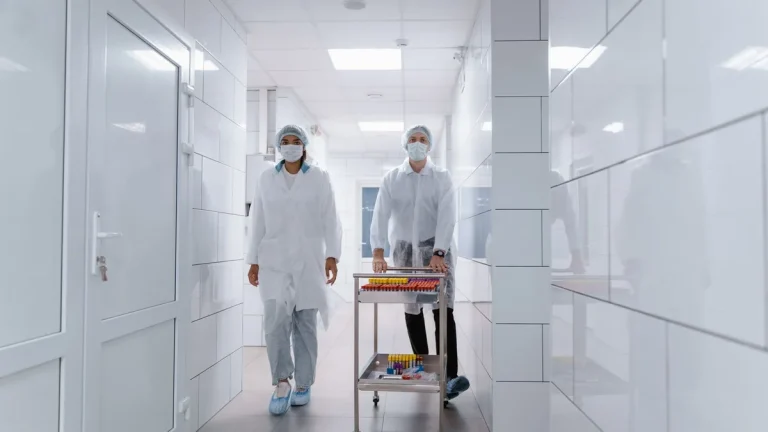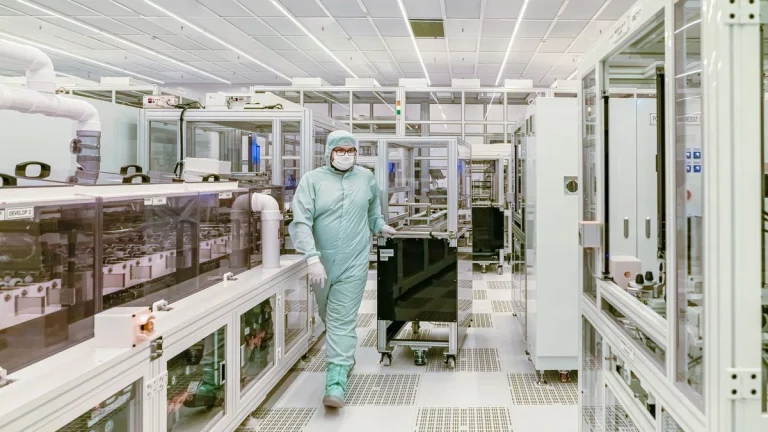
Controlled manufacturing environments in biotechnology, semiconductor fabrication, and pharmaceutical processing demand rigorous physical segregation between classified production suites. Facilities rely on carefully calibrated HVAC differential pressure cascades to prevent the migration of airborne particulates and viable microorganisms. However, maintaining airtight door perimeters presents an engineering conflict between contamination containment and material handling ergonomics.
Traditional cleanroom door installations frequently utilized raised floor thresholds to establish an airtight perimeter seal. In modern manufacturing suites, raised threshold curbs present severe operational obstacles. They impede the transit of delicate mobile equipment carts, create safety trip hazards for gowning personnel, and cause vibration shocks to analytical weighing instruments during wheel impact. Omitting the bottom threshold leaves a clearance gap of 10 to 15 millimeters beneath the door leaf, opening a direct leakage pathway that compromises room pressurization.
Cleanroom door automatic drop seals resolve this operational conflict by integrating retractable mechanical drop-down barrier assemblies within the bottom door rail. These precision mechanisms remain elevated while the door swings through its operational arc, avoiding floor friction and particle generation. Upon door closure, mechanical actuators drive flexible elastomeric blades downward against the finished floor, establishing an airtight acoustic and aerodynamic barrier.
Operating Principles of Automatic Drop Seals
Automatic drop down seals function through mechanical linkage kinematics driven entirely by the kinetic energy of door closure. Positioned within a concealed mortise channel along the bottom door edge, the mechanism consists of an extruded aluminum housing, internal articulated scissor linkages, return springs, and a flexible bottom gasket blade.

An adjustable actuator plunger protrudes from the hinge-side edge of the door leaf. When the door leaf reaches its final closing arc—typically five degrees before complete latching—the brass or polymer plunger contacts the door frame rebate. As the door latches, frame resistance depresses the plunger into the aluminum housing.
This linear compression drives the internal scissor linkage forward and downward, converting horizontal thrust into vertical downward travel. The seal blade drops squarely onto the floor, compressing the flexible gasket uniformly along the entire door width. During door opening, heavy-duty stainless steel return springs instantaneously retract the internal carrier channel upward, raising the gasket clear of the finished floor before the door leaf swings away.
Facility planners integrating drop down seals into modern cleanroom door systems must coordinate door undercut dimensions with floor slope tolerances. Quality drop seal mechanisms feature independent end-to-end self-leveling articulation. If an epoxy floor slopes slightly across the doorway opening, the scissor mechanism accommodates floor level variations up to 5 mm without binding or leaving open perimeter gaps.
By eliminating floor friction during leaf rotation, automatic drop seals prevent the generation of black rubber abrasion dust. This feature is essential for semiconductor fabrication and pharmaceutical suites certified under ISO 14644-1 Class 5 standards, where mechanical particulate shedding immediately triggers environmental monitoring excursions.
The aerodynamic behavior of the door assembly during high-speed closure requires balanced air displacement channels. When personnel push the door closed against positive suite pressure, air trapped beneath the descending leaf escapes horizontally. Engineered drop seal housings incorporate pressure-relief air channels that prevent localized whistling and eliminate turbulent backdrafts that could dislodge settled surface dust.
Causes of Cleanroom Seal Failure
Despite robust mechanical designs, automatic drop seals operate under demanding conditions characterized by high cycle frequencies, aggressive chemical sterilants, and positive cleanroom air pressures. Facility managers frequently observe seal degradation that undermines room pressure cascades.

A primary cause of drop seal failure is improper actuator stroke calibration. If the actuator plunger is adjusted too far outward, excessive mechanical force drives the seal blade violently into the floor. This over-compression buckles the elastomer blade, bends the internal scissor pivot pins, and increases door closer resistance, preventing the door from latching securely.
| Observed Failure Mode | Mechanical Root Cause | Cleanroom Operational Impact | Corrective Engineering Remedy |
|---|---|---|---|
| Gasket Blade Dragging | Weakened return spring or premature plunger strike | Generates floor wear marks and particulate shedding | Adjust plunger depth and replace fatigued return springs |
| Corner Air Leakage | Hinge leaf sag or uneven floor gradient (>5 mm) | Collapses positive differential pressure cascade | Re-align door hinges and calibrate self-leveling pivot screw |
| Actuator Plunger Jamming | Chemical disinfectant residue or bent strike plate | Seal fails to deploy upon door closure, leaving open gap | Clean mechanism and replace deformed brass strike bolt |
| Elastomer Permanent Set | Material compression fatigue from over-stroke force | Persistent airflow gap under positive room pressure | Replace gasket cartridge and reduce downward plunger stroke |
| Door Latch Resistance | Excessive seal compression counteracting door closer | Door remains unlatched, breaching containment airlock | Calibrate plunger stroke and adjust door closer spring sweep |
Hinge sag represents another significant contributor to seal degradation. Over hundreds of thousands of cycles, standard architectural hinges experience micro-wear along bearing surfaces. A vertical sag of merely 1.5 mm tilts the door leaf, causing the lock-side edge of the drop seal to strike the floor prematurely while the hinge side fails to seal completely.
Chemical attack also degrades bottom seal integrity. Frequent floor wash-downs using sporicidal agents containing peracetic acid, sodium hypochlorite, and quaternary ammonium compounds chemically attack unprotected elastomeric blades. Incompatible materials harden, crack, or undergo plasticizer leaching, destroying flexible sealing compliance within months of facility commissioning.
Facility environmental fluctuations also contribute to mechanical misalignments. Cleanroom partition wall panels and epoxy floor slabs expand and contract differentially during seasonal temperature transitions. A thermal swing of five degrees Celsius can cause floor slab deflection of up to 1.2 mm across a doorway opening, turning an airtight baseline seal into an active leakage channel unless self-leveling linkages compensate for dynamic slab movement.
Silicone Versus EPDM Gasket Materials
The elastomeric sealing blade serves as the primary contact barrier stopping air infiltration. Specifying the correct polymer formulation determines the operational lifespan, chemical resilience, and particulate emission profile of the entire drop seal assembly.
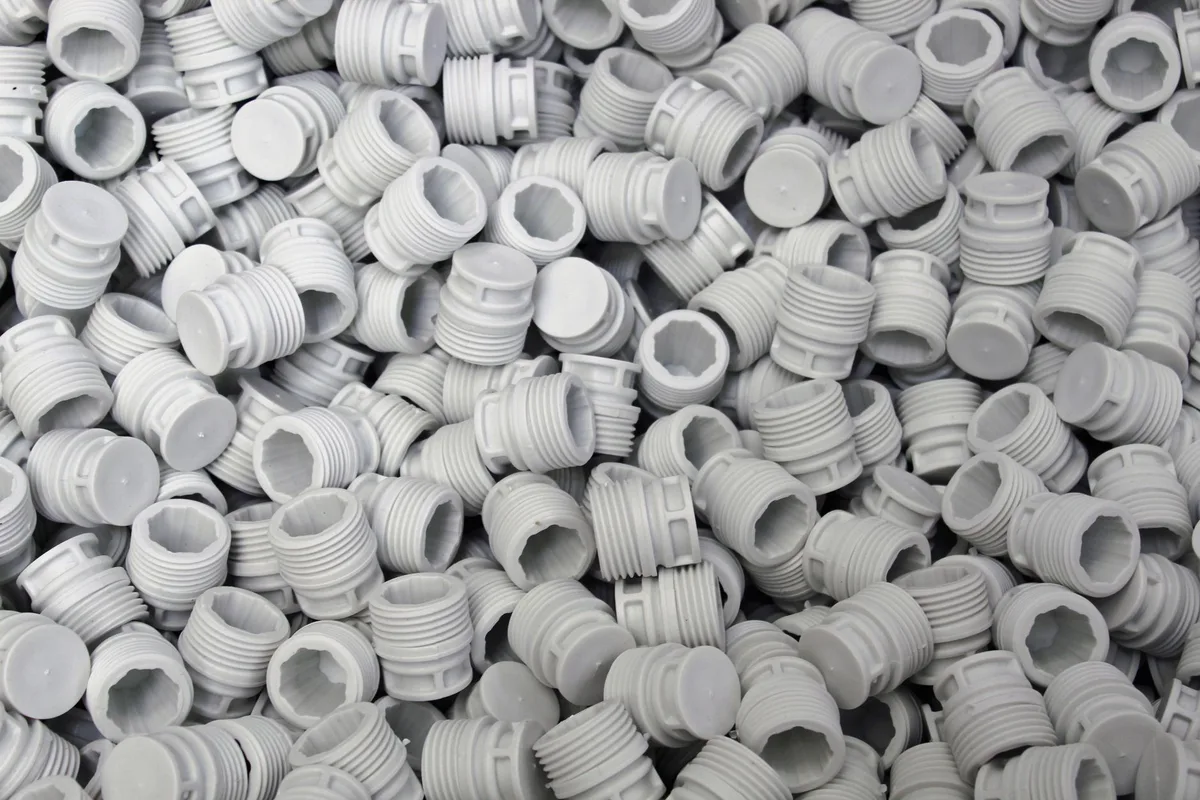
The two dominant elastomer materials specified for cleanroom drop seals are ethylene propylene diene monomer (EPDM) and high-consistency silicone rubber. While EPDM provides cost-effective mechanical toughness in industrial environments, pharmaceutical and biotechnology cleanrooms increasingly mandate medical-grade platinum-cured silicone.
| Performance Parameter | Medical-Grade Silicone Gasket | Peroxide-Cured EPDM Gasket | Cleanroom Engineering Selection |
|---|---|---|---|
| VHP Sterilization Resistance | Negligible mass change (<0.3% swell) | Surface oxidation and embrittlement | Silicone mandatory for Grade A/B aseptic cleanrooms |
| Durometer Hardness | 50 to 55 Shore A (high compliance) | 65 to 75 Shore A (moderate compliance) | Softer silicone seals effectively under lower closure force |
| Operating Temperature | -50°C to +200°C continuous | -40°C to +120°C continuous | Silicone withstands thermal sterilization wash cycles |
| Compression Set Resistance | <12% after 1,000 hrs at 70°C | ~24% after 1,000 hrs at 70°C | Silicone maintains elastic rebound over extended closed cycles |
| Particulate Shedding Risk | Zero chalking, non-shedding polymer | Risk of carbon black particulate release | Silicone eliminates airborne contamination risks |
| Sporicidal Agent Resistance | Resistant to peracetic acid and IPA | Moderate swelling with hydrocarbon solvents | Silicone delivers longer service life under daily disinfection |
Silicone gaskets feature superior elasticity and low compression set. When compressed against smooth self-leveling epoxy or welded sheet vinyl flooring, silicone flows microscopically into surface textures, creating a hermetic seal under minimal closing pressure.
Engineering drop seal blades requires selecting specialized cross-sectional geometries that enhance contamination control:
- Multi-Fin Bellows Geometry: Multi-chambered silicone extrusions provide sequential air barriers, damping differential pressure across consecutive sealing lips.
- Antimicrobial Polymer Compounding: Compounding silver-ion antimicrobial agents directly into the silicone matrix inhibits bacterial biofilm formation along floor lines.
- Plasma Surface Treatment: Low-friction surface treatments reduce elastomer tackiness, preventing the seal from sticking to high-gloss cleanroom floor resins.
EPDM remains a practical selection for tertiary corridors, unclassified mechanical support spaces, and warehouse airlocks where exposure to concentrated sterilants remains minimal and mechanical abrasion resistance is the primary priority.
Manufacturing tolerances in silicone extrusion dictate strict dimensional control. High-precision cleanroom gaskets require extrusion dies calibrated to plus or minus 0.1 mm tolerance, ensuring uniform wall thickness across hollow bellows profiles. Inconsistent wall thickness results in uneven downward compression resistance, causing the center of the door to seal while the outer edges remain uncompressed.
Diagnosing Air Leaks and Pressure Loss
Cleanroom integrity testing requires routine quantification of perimeter air leakage. A tiny unsealed gap beneath an access door can disrupt cascading air pressures, allowing unfiltered air to bypass terminal HEPA filtration systems.
Differential Pressure Cascade Warning: A 3 mm gap beneath a standard 900 mm wide cleanroom door creates an open leakage aperture of 2,700 mm². Under a standard 25 Pa pressure differential, this gap leaks over 180 m³/h of conditioned air, imposing excessive thermodynamic loads on cleanroom air handling systems and risking classification downgrades.
HVAC validation engineers apply standard operating procedures to verify drop seal effectiveness during formal cleanroom commissioning under ISO 14644-3 guidance:
- Theatrical Fog Smoke Profiling: Directing neutrally buoyant theatrical fog along the closed door bottom rebate under operating pressure differentials visually demonstrates laminar seal containment or turbulent leakage jetting.
- Feeler Gauge Thickness Mapping: Inserting calibrated 0.25 mm and 0.5 mm feeler gauges beneath the compressed seal blade verifies continuous contact across the entire doorway clear opening.
- Digital Micromanometer Audit: Monitoring differential pressure stability before and after door cycling confirms that automatic drop seal engagement restores cleanroom pressure equilibrium within five seconds.
When diagnostic testing identifies localized air leakage, technicians must determine whether the failure originates from mechanical drop mechanism wear, incorrect plunger travel, or floor surface imperfections. Measuring clearance gaps along the door swing arc ensures that structural floor settling has not created localized hollows exceeding the seal mechanism stroke capacity.
Air velocity measurements along the bottom threshold should demonstrate less than 0.15 m/s localized leakage under design pressure cascades. Exceeding this baseline indicates that seal compression requires mechanical readjustment or gasket replacement.
Modern pharmaceutical cleanrooms connect localized pressure monitoring directly to facility Building Management Systems (BMS). Differential pressure sensors mounted across door headers continuously log pressure recovery times following each door cycle. If air pressure stabilization takes longer than eight seconds following door closure, automated alerts notify maintenance engineers to inspect bottom seal deployment before cleanroom classification parameters drift out of specification.
Mortise Installation and Stroke Calibration
Achieving reliable containment requires precision installation. Drop seals can be mounted via surface-mount brackets, semi-mortised channels, or fully concealed mortise routing. Cleanroom architectural standards mandate fully concealed mortise installation, embedding the mechanism within the internal bottom rail of the door leaf.
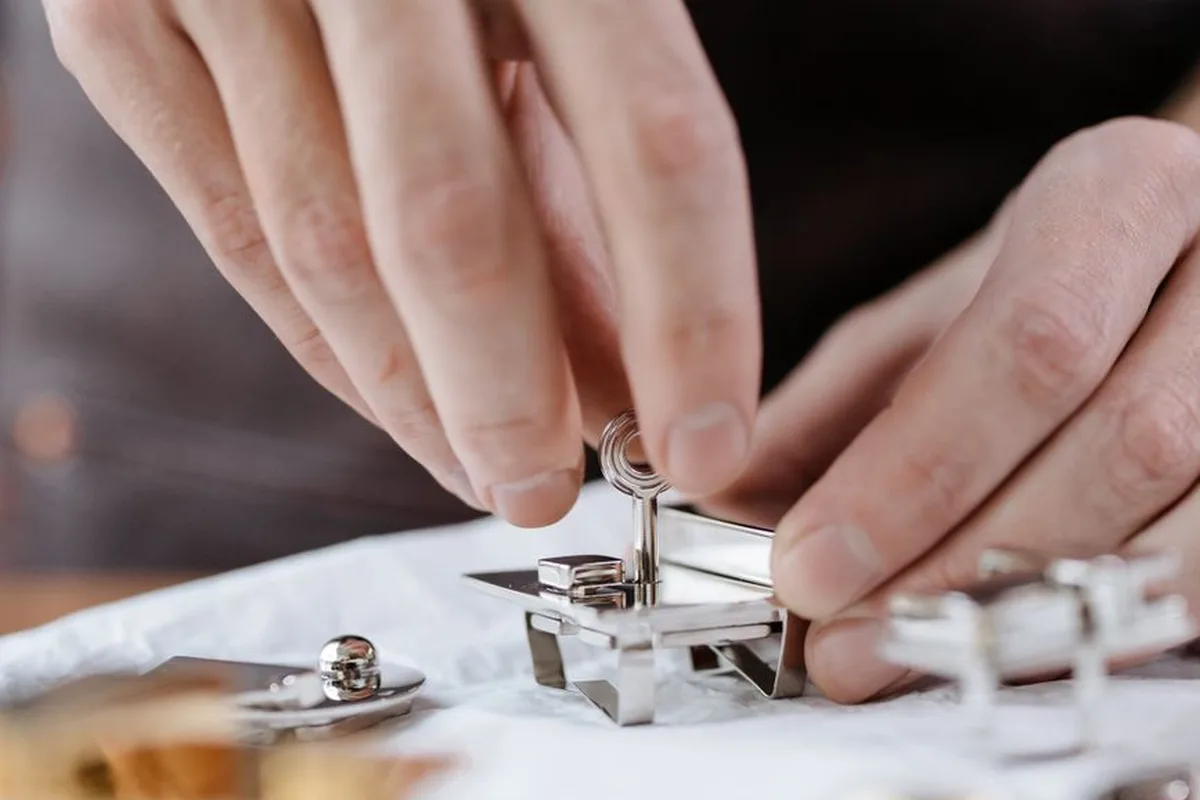
Fully concealed installation preserves flat, sanitary door faces without external ledges, horizontal screw heads, or exposed brackets that accumulate dust. The door bottom presents a flush profile that facilitates rapid mop-downs and aerosol decontamination.
Plunger Calibration Precaution: Never overtighten the threaded brass actuator plunger. Extending the plunger excessively forces the internal scissor linkage against its internal structural stops, causing hinge rebate damage and accelerating mechanical shear failure during rapid door slam events.
Cleanroom installation technicians should follow this calibrated six-step installation procedure:
- Verify Floor Elevation Arc: Measure the finished floor level across the full 90-degree door swing sweep using a laser leveling tool to ensure floor flatness within 2 mm tolerance.
- CNC Mortise Channel Routing: Mill a clean 15 mm wide by 30 mm deep mortise groove centered along the bottom rail of the door leaf, ensuring clean, parallel sidewalls.
- Install Aluminum Housing: Insert the extruded aluminum drop seal profile into the bottom mortise slot, securing it firmly with countersunk 316 stainless steel screws.
- Adjust Threaded Actuator Plunger: Rotate the brass actuator bolt clockwise to reduce downward travel or counter-clockwise to extend vertical seal drop stroke.
- Inspect Gasket Compression Gap: Close the door into the latch pocket; verify with a feeler gauge that the silicone elastomer blade compresses 2.5 mm to 3.5 mm against the floor.
- Verify Door Closer Latching: Check that the hydraulic door closer latches the door leaf securely under negative or positive airlock differential pressure without manual assistance.
Following this standardized calibration routine ensures that the seal deploys smoothly during the final fraction of door swing, eliminating floor scuffing while maintaining continuous airtight contact.
Proper mortise depth milling is essential to prevent internal mechanical binding. If the mortise slot is routed shallower than the specified 30 mm depth, the aluminum housing presses directly against the internal core structure of the door leaf. This structural binding restricts vertical scissor movement, preventing the return springs from lifting the gasket completely during door opening cycles.
Preventative Maintenance and Cleaning Protocols
Regular maintenance ensures that automatic drop down seals maintain continuous environmental containment over multi-year operational cycles. High-throughput pharmaceutical cleanroom doors cycle more than 150,000 times annually, demanding proactive component inspection.
Facility maintenance programs should establish quarterly preventative maintenance routines covering mechanical and chemical inspection points:
- NSF H1 Lubricant Application: Lubricate internal linkage pivot pins and actuator plunger shafts with NSF H1 food-grade synthetic grease to prevent friction binding.
- Silicone Blade Elasticity Verification: Inspect the exposed elastomer profile for chemical hardening, edge tearing, or permanent compression set caused by daily sporicide exposure.
- Frame Strike Plate Tightening: Verify that the stainless steel strike plate mounted on the door frame rebate remains securely fastened and free of surface metal burrs.
- Floor Sweep Clearance Audit: Confirm that the retracted seal provides a minimum 6 mm clearance above the floor during swing travel to avoid friction contact.
Quality cleanroom drop seal assemblies feature slide-out cartridge replacement architectures. When an elastomer blade reaches the end of its validated service life, technicians remove two retaining end-plates and slide the entire internal mechanism out of the door bottom channel. This allows seal replacement in under ten minutes without demounting the heavy stainless steel door leaf.
Cleaning protocols must align with cleanroom sanitization SOPs. During daily floor wipe-downs, personnel should wipe the exposed silicone blade using lint-free microfiber mops wetted with 70% sterile isopropyl alcohol. Avoiding abrasive pads preserves the smooth micro-finish of the silicone elastomer, ensuring long-term containment integrity.
Predictive maintenance tracking based on automated cycle counters prevents unexpected seal failures during active manufacturing campaigns. Cleanroom facility engineers establish mandatory threshold limits, scheduling seal cartridge overhauls at 250,000 operational cycles. Replacing internal scissor springs and silicone extrusions during planned shutdown windows eliminates unplanned cleanroom downtime and maintains cGMP compliance.
Frequently Asked Questions
How do cleanroom automatic drop seals work?
Cleanroom automatic drop seals utilize an articulated internal scissor linkage activated by a brass or polymer plunger located on the hinge edge. When the door closes, the plunger strikes the frame, driving the internal carrier channel downward in a flat, parallel motion to compress an elastomeric gasket against the floor. Opening the door releases the plunger, allowing internal springs to retract the seal instantly.
Can automatic drop seals hold cleanroom differential pressure?
Yes, precision automatic drop seals engineered with multi-fin silicone blades maintain differential air pressures ranging from 15 Pa to 50 Pa. When properly calibrated to achieve 3 mm gasket compression, they restrict airflow leakage to less than 0.15 m/s, meeting ISO 14644-3 cleanroom containment validation standards.
Why is silicone preferred over EPDM for cleanroom drop seals?
Medical-grade platinum-cured silicone provides superior chemical resistance against vaporized hydrogen peroxide (VHP) and aggressive sporicides. Silicone features lower compression set, broader operational temperature resilience, and zero particulate shedding, making it cGMP compliant for Grade A and Grade B pharmaceutical cleanrooms.
How do you adjust the drop stroke on an automatic door bottom seal?
Drop stroke calibration is performed via a threaded actuator plunger on the hinge edge. Rotating the brass plunger counter-clockwise extends the pin outward, increasing the vertical drop distance. Rotating clockwise reduces downward travel, preventing excessive gasket compression and floor drag.
Do automatic drop seals work on uneven cleanroom floors?
Yes, quality cleanroom drop seals incorporate end-to-end self-leveling articulation. The internal scissor linkage tilts dynamically to accommodate floor slope deviations up to 5 mm across a standard 900 mm door opening, maintaining continuous contact without binding.