
Determining the correct size for a garage door opener is one of the most critical engineering decisions in residential and commercial entrance planning. Many property owners mistakenly assume that opener “size” refers strictly to the external physical dimensions of the motor casing. In reality, mechanical sizing encompasses three distinct engineering parameters: motor power rating (HP or DC HPe), horizontal drive rail length, and ceiling headroom clearance.
When asking what size garage door opener do i need, buyers must analyze door panel weight, total square footage, door height, and ceiling spatial constraints. Installing an undersized 1/2 HP motor on a 350-pound insulated double-car door causes thermal overload and premature gear failure. Similarly, installing a standard 7-foot rail on an 8-foot-tall door prevents the top panel from fully clearing the opening. In over two decades of manufacturing custom sectional garage doors and automated drive systems, factory engineering teams have established this comprehensive sizing guide.
1. Three Sizing Dimensions: Power, Length & Clearance
Accurate opener sizing requires evaluating three interrelated physical dimensions rather than a single metric.
Dimension 1: Motor Horsepower Rating (HP / HPe)
Horsepower defines the continuous torque output available to overcome static inertia and operate smoothly under wind load. Ratings range from 1/2 HP for lightweight single doors, to 3/4 HP for standard double-car doors, up to 1-1/4 HP for heavy solid wood or full-view glass panels.
Dimension 2: Horizontal Rail Length
Horizontal rail length must match the vertical height of the door opening (7ft, 8ft, 10ft, or 12ft) to ensure the trolley pulls the door completely clear of the entrance threshold.
Dimension 3: Headroom & Backroom Clearance
Spatial geometry requires measuring the vertical gap between the top track and ceiling. Overhead trolley systems require 2.0 to 3.5 inches of headroom. Furthermore, total backroom depth must equal door height plus 48 inches for motor mounting.

2. Single-Car Door Sizing: 8×7 ft Panels
Single-car garage doors represent the baseline residential sizing category.
Standard Single-Car Specifications
Standard single-bay doors measure 8×7 feet or 9×7 feet. Uninsulated single-layer steel or lightweight aluminum doors in this size category typically weigh between 120 and 180 lbs (55 to 80 kg).
Recommended 1/2 HP Motor Selection
A 1/2 HP AC motor or equivalent DC brushless motor provides optimal torque for single-car doors. Provided the counterbalance torsion springs are properly calibrated, a 1/2 HP unit will operate reliably for 15,000 to 20,000 cycles without mechanical strain.
Need Exact Drive Sizing for Your Garage Door Dimensions?
Send your doorway opening dimensions, panel construction, and ceiling height to our technical engineering team for custom drive sizing and factory direct proposals.
3. Double-Car Door Sizing: 16×7 ft Panels
Double-car garage doors are the most common configuration in modern residential architecture.
Standard Double-Car Mass & Wind Resistance
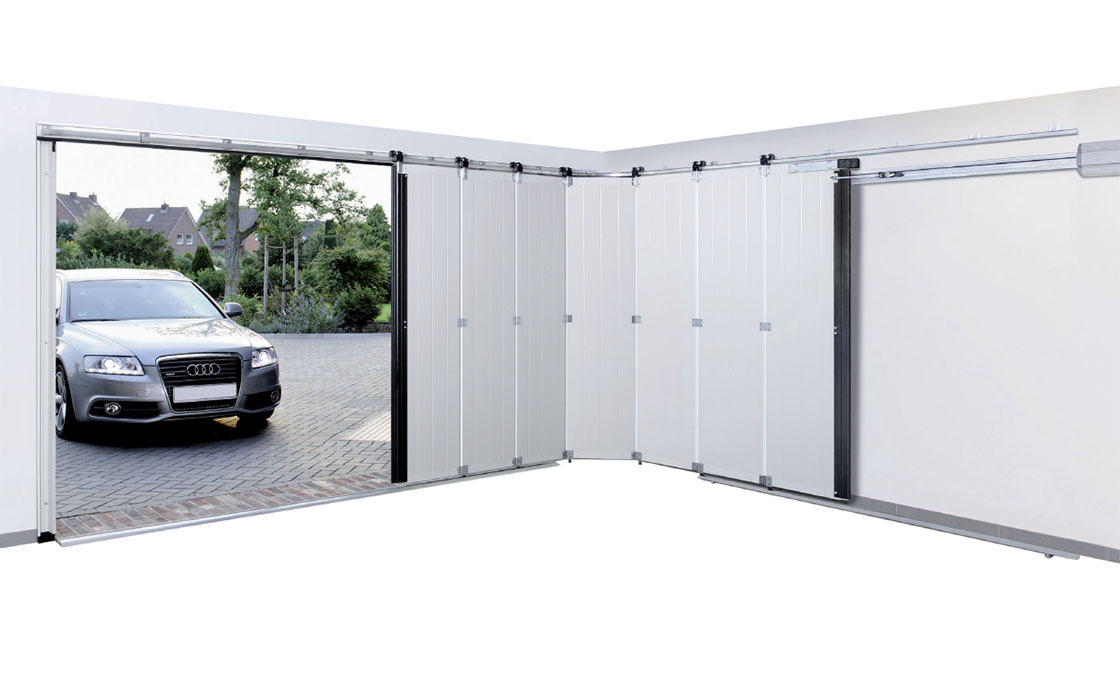
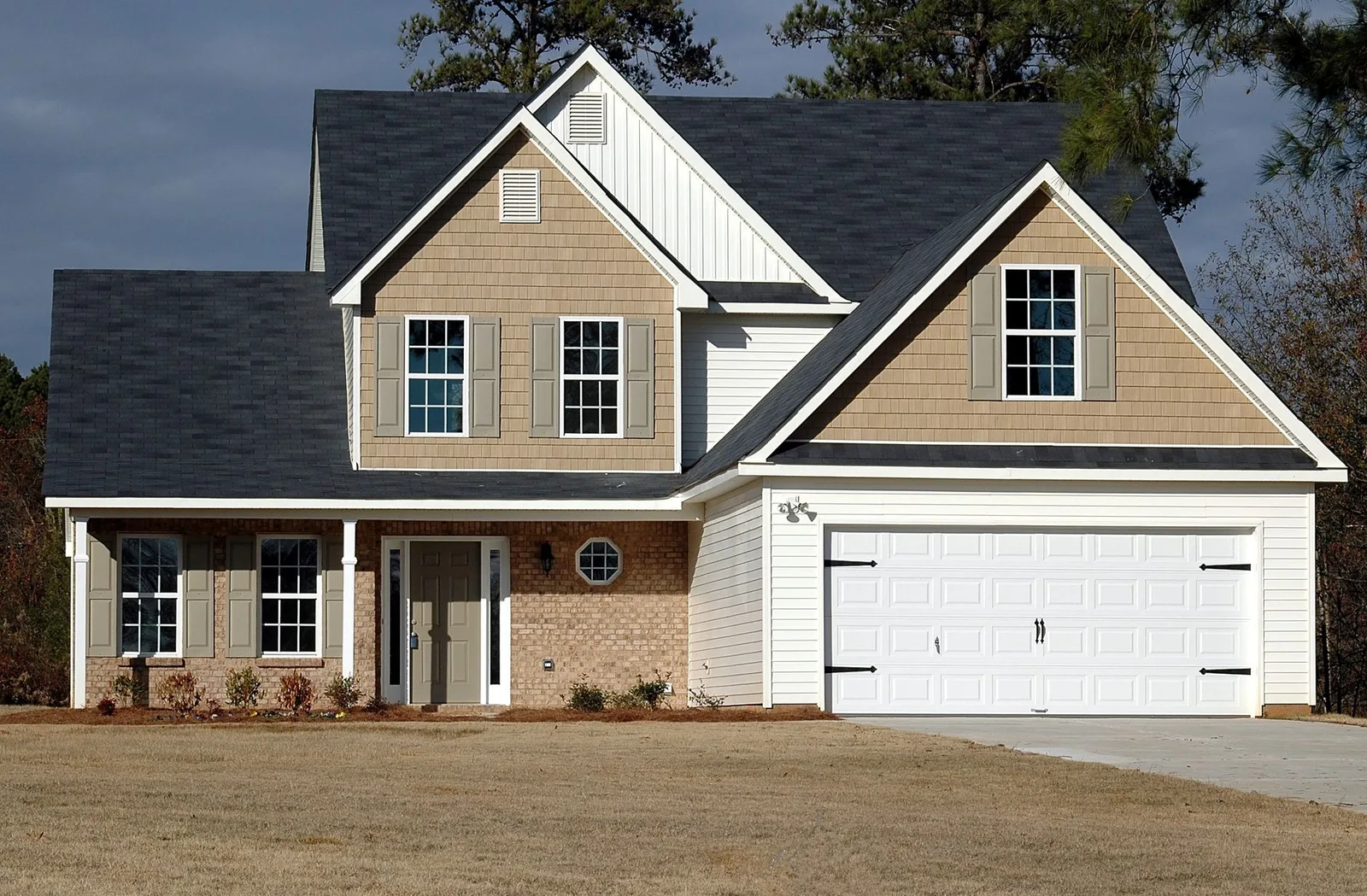
Standard two-car doors measure 16×7 feet or 16×8 feet. Insulated 3-layer steel doors with 40mm polyurethane foam cores weigh between 200 and 350 lbs (90 to 160 kg). Due to the wide 16-foot span, these doors present substantial surface area to dynamic wind loads.
The 3/4 HP Industry Gold Standard
A 3/4 HP (or DC 3/4 HPe) motor represents the undisputed industry benchmark for double-car doors. Paired with a quiet steel-reinforced belt drive, a 3/4 HP motor delivers effortless lifting power, whisper-quiet operation (<50 dB), and robust resistance against wind-induced track friction.
4. Heavy Custom Doors: 18×8 ft Panels
Architectural estate homes often incorporate oversized openings and heavy premium materials.
Solid Wood & Full-View Glass Weights
Oversized panels measure 18×8 feet or 20×8 feet. Solid cedar or oak carriage doors weigh 400 to 650 lbs. Similarly, full-view aluminum doors with 6mm double-pane tempered glass weigh 350 to 550 lbs, creating immense initial static inertia.
1 HP to 1-1/4 HP DC Motor Requirements
These massive door systems require high-torque 1 HP to 1-1/4 HP DC brushless motors. Advanced PWM electronics provide soft-start and soft-stop ramp curves that prevent mechanical shock, protecting glass panel seals and structural wood joints from vibrational cracking.
5. Rail Length Sizing & Extension Kits
Horizontal rail length must correspond precisely to vertical opening height when determining what size garage door opener do i need.
Standard 7-Foot Rail Limitations
Nearly all standard retail opener packages include a 7-foot horizontal rail. If your garage door is 8, 10, or 12 feet tall, a 7-foot rail leaves the bottom panel protruding into the opening. This obstruction creates severe vehicle collision hazards.
Ordering Structural Rail Extension Kits
For taller openings, always specify the corresponding structural rail extension kit (8ft, 10ft, or 12ft). These kits include extended steel rails, lengthened timing belts or roller chains, and heavy-duty center support brackets to ensure full vertical clearance.
6. Headroom & Sideroom Geometry: Overhead vs. Wall-Mount
Ceiling height and side clearance determine the optimal physical mounting configuration.
Standard Overhead Trolley Headroom
Standard trolley openers require a minimum of 2.0 to 3.5 inches of vertical clearance between the highest point of door travel and the ceiling. If ceiling joists or HVAC ductwork obstruct the overhead rail path, an alternative mounting style is required.
Wall-Mount Jackshaft Openers for Zero Headroom
Direct-drive wall-mount jackshaft openers mount directly to the wall beside the torsion spring shaft. They require 8.5 inches of side clearance (sideroom) but zero overhead ceiling space. This frees the entire ceiling for high-clearance SUV parking, overhead mezzanine storage, or automotive service lifts.
7. Master Opener Sizing & Dimensional Selection Matrix
The comprehensive sizing matrix below outlines the exact motor horsepower, rail length, and mounting style for every standard door configuration:
| Door Dimensions | Panel Construction | Estimated Weight | Recommended Motor | Required Rail Length |
|---|---|---|---|---|
| 8×7 ft / 9×7 ft | Single-layer steel / Uninsulated | 120 – 160 lbs (55 – 72 kg) | 1/2 HP (AC or DC) | Standard 7-foot rail |
| 8×7 ft / 9×7 ft | 3-layer insulated (40mm PU) | 150 – 200 lbs (68 – 90 kg) | 1/2 HP or 3/4 HP DC | Standard 7-foot rail |
| 16×7 ft | Standard 3-layer insulated steel | 200 – 300 lbs (90 – 136 kg) | 3/4 HP DC (Belt Drive) | Standard 7-foot rail |
| 16×8 ft | Heavy 3-layer insulated steel | 250 – 350 lbs (113 – 159 kg) | 3/4 HP DC (Belt Drive) | 8-foot extension kit |
| 16×7 ft / 16×8 ft | Full-view glass / Aluminum frame | 350 – 550 lbs (159 – 250 kg) | 1 HP to 1-1/4 HP DC | 7-ft or 8-ft matching rail |
| 18×8 ft / 20×8 ft | Solid wood carriage-house | 400 – 650 lbs (181 – 295 kg) | 1-1/4 HP DC (PWM Soft-Start) | 8-ft reinforced rail kit |
| Cathedral / High-Lift | Any panel (Low/High Headroom) | 150 – 600 lbs | Wall-Mount Jackshaft | Zero overhead rail required |
Quality benchmarks established by ISO and workplace safety codes from the Health and Safety Executive ensure structural compliance across automated entrance installations.
8. Engineering Opener Sizing Consultation for Sectional Doors
Correctly sizing a garage door opener across motor horsepower, rail length, and headroom geometry guarantees whisper-quiet travel, responsive safety auto-reversal, and decades of reliable service. Sizing your drive system to match door panel mass and ceiling architecture ensures peak operational efficiency.
Need expert assistance sizing a garage door opener for your project?
If you are specifying entrance systems for architectural custom homes, commercial buildings, or oversized residential garages, our technical engineering team is available to review your door dimensions and provide tailored drive recommendations and factory direct proposals.
Frequently Asked Questions About Opener Sizing
What size garage door opener do I need for a double-car garage door?
A standard 16×7 foot double-car insulated door requires a 3/4 HP (or equivalent DC brushless) belt-drive opener for smooth, quiet operation.
Is a 1/2 HP garage door opener big enough for a double door?
While a 1/2 HP motor can lift a perfectly balanced double door, it operates at maximum load and will suffer premature wear; 3/4 HP is recommended.
What size opener rail do I need for an 8-foot tall garage door?
An 8-foot tall door requires an 8-foot structural rail extension kit to allow the top panel to fully clear the doorway opening.
What size opener is required for a heavy solid wood carriage door?
Heavy solid wood carriage-house doors weighing 400 to 650 lbs require a 1 HP to 1-1/4 HP DC motor with PWM soft-start electronics.
When should I choose a wall-mount jackshaft opener instead of an overhead unit?
Choose a wall-mount jackshaft when you have low ceiling headroom, high cathedral ceilings, or need to clear overhead space for car lifts.