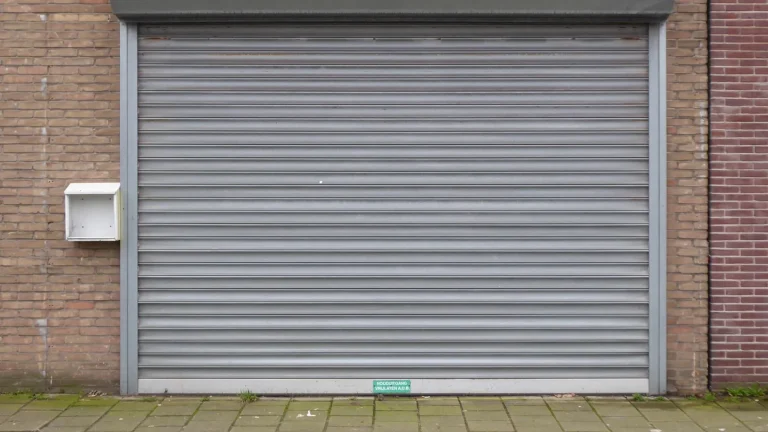







High Speed Door vs. Roller Shutter Door: Which Is Better for Industrial Use?
Industrial facilities lose 15-30% of climate control energy through door openings, and slow traditional roller shutters force workers to prop doors open or wait through 15-30 second cycles—creating safety hazards, productivity bottlenecks, and massive thermal inefficiency that high-speed doors eliminate in under 2 seconds per cycle. For facility managers, warehouse operators, and procurement officers deciding between these two industrial door solutions, the choice fundamentally impacts operational costs, safety compliance, and energy efficiency for years to come.
We manufacture these doors and their hardware on our own production lines, and the distinction matters more than most quotations admit. High-speed doors and roller shutters represent distinctly different engineering philosophies: one prioritizes rapid operation and environmental control, while the other emphasizes rugged durability and security. This comprehensive technical comparison examines operational parameters, construction architecture, thermal performance, safety mechanisms, total cost of ownership, and application-specific suitability to help you make data-driven decisions for your industrial facility.
1. Operational Speed & Efficiency Divergence
The defining characteristic that separates high-speed doors from roller shutters is cycle velocity. High-speed doors operate at 0.8-1.2 m/s, achieving full opening in 1.5-2 seconds compared to roller shutters’ 0.2-0.3 m/s speed requiring 15-30 seconds for complete cycles. This 10-15x speed differential transforms facility operations when doors cycle frequently—20-50 times per hour in logistics hubs, manufacturing plants, and cold storage facilities.
Consider a busy loading dock with 30 forklift passages per hour. With a roller shutter, each passage creates a 30-second window of environmental exchange, thermal loss, and safety exposure—totaling 15 minutes of compromised conditions per hour. High-speed doors reduce this exposure to just 90 seconds, decreasing air infiltration by 85-95% and maintaining climate control integrity throughout continuous operations.
The velocity advantage extends beyond opening speed. High-speed doors feature soft-start and soft-stop motor controls that eliminate mechanical shock, reduce wear on drive systems, and extend component life compared to the abrupt start-stop patterns of traditional roller shutters. This sophisticated motor control, combined with lightweight curtain materials, enables high-speed doors to sustain 1,000,000+ operational cycles—4-5x the 150,000-250,000 cycle rating of standard roller shutters.
For facilities calculating productivity gains, high-speed doors typically eliminate 10-20 minutes of cumulative wait time per active door per day in medium-traffic applications. In high-traffic logistics centers with multiple doors, this translates to hundreds of operational hours recovered annually, directly impacting throughput capacity and labor efficiency.
2. Construction Architecture & Material Composition
The fundamental engineering differences between these door types start with their structural architecture. High-speed doors utilize flexible curtain systems—typically 1.5-2mm PVC fabric or transparent polycarbonate materials—suspended from tubular steel side columns that house the drive motor, control systems, and safety mechanisms. The curtain rolls around a rotating drum at the header, guided by self-repairing zipper channels or rigid spiral guides that maintain tension and alignment during rapid cycling.
This lightweight construction enables the rapid operation that defines the category but also provides unique advantages: curtains can be transparent for visibility, replaceable without tools, and resistant to impact damage. When struck by vehicles or equipment, high-speed doors with self-repairing guides automatically reset and return to operation without manual intervention—eliminating downtime and maintenance costs associated with traditional door impacts.
Roller shutters employ fundamentally different construction: interlocking horizontal slats (typically 0.7-1mm galvanized steel or aluminum extrusions) that form a rigid, security-focused barrier when closed. These slats wind around a spring-loaded or motorized drum, creating a formidable physical barrier that resists forced entry and provides superior protection against vandalism and theft. The weight and rigidity of steel slats, however, inherently limit operation speed and require more powerful drive systems.
Material selection reflects each door type’s operational priorities. High-speed door curtains prioritize flexibility, visibility, and repairability—with options including transparent vision panels, mesh ventilation sections, and specialized fabrics for cold storage, cleanroom, or food-grade applications. Roller shutters emphasize strength and security, with options for perforated slats (limited visibility with airflow), insulated double-skin construction, and heavy-gauge steel for high-security applications.
The drive systems reflect these architectural differences. High-speed doors typically use high-torque AC motors with frequency converters for precise speed control, while roller shutters employ industrial duty motors with mechanical brakes designed for infrequent, heavy-load operation. The control systems differ accordingly: high-speed doors feature programmable logic controllers with cycle counting, self-diagnostics, and integration capabilities with building automation systems, whereas roller shutters typically offer basic open-close-stop functionality.
3. Thermal Insulation & Environmental Sealing Performance
Environmental control capabilities represent another critical differentiation between these door types, particularly for climate-controlled facilities. Insulated high-speed doors achieve U-values of 1.5-2.0 through dual-skin PVC curtains with thermal breaks, while high-performance models incorporating insulated aluminum sections can reach U-values as low as 0.8-1.2—rivaling permanent wall construction in thermal efficiency.
Roller shutters offer wider thermal performance ranges depending on construction. Standard single-skin steel slats provide minimal insulation (U-value 3.5-5.0), while insulated double-skin aluminum extruded slats with polyurethane foam cores achieve U-values of 1.8-2.5. The rigid construction of roller shutters, however, creates more air leakage around guide channels and bottom edges compared to the tension-sealed curtain systems of high-speed doors.
For environmental sealing applications, high-speed doors excel at maintaining pressure differentials—critical for cleanrooms, pharmaceutical facilities, and climate-controlled warehouses. The continuous perimeter sealing system, combined with rapid operation, enables high-speed doors to maintain pressure control within 50-100 Pa tolerances even during frequent cycling. This performance proves essential for facilities requiring ISO 5-8 cleanroom classifications or precise temperature/humidity control.
Rapid cycling itself provides environmental advantages beyond static insulation values. By minimizing open-door time, high-speed doors reduce the total volume of air exchange between conditioned and unconditioned spaces. In practical terms, a high-speed door cycling 30 times per hour may exchange less total air volume than a roller shutter cycling just 5 times per hour, despite each individual opening being smaller. This dynamic efficiency makes high-speed doors superior for energy conservation in active facilities. For a deeper dive, see high speed door vs roller shutter.
For cold storage and freezer applications, specialized high-speed doors with heated frames and low-temperature flexible curtains prevent frost buildup and maintain environmental integrity at temperatures as low as -30°C. Standard roller shutters, when used in cold storage applications, typically require additional heated air curtains or vestibule systems to achieve comparable performance.
4. Safety Mechanisms & Impact Resistance Systems
Safety engineering reveals perhaps the most significant practical difference between these door types. High-speed doors integrate comprehensive active safety systems: optical safety edges that detect obstructions and immediately reverse door movement, infrared photocells across the opening, pressure-sensitive bottom edges, and emergency stop functionality. These systems operate continuously during rapid cycling, protecting personnel and equipment from contact with moving curtains.
The impact response mechanisms fundamentally differ. When struck by vehicles or equipment, high-speed doors with self-repairing zipper or spiral guide systems automatically disengage from the tracks, absorb impact energy, and then automatically reset and return to normal operation—often within seconds and without requiring tools or manual intervention. This self-repairing capability eliminates operational downtime and maintenance costs that would otherwise result from impact damage.
Roller shutters, by contrast, typically use simple safety photocells and pressure edges that stop or reverse the door upon obstruction detection. However, the rigid slat construction means that significant impacts often cause permanent damage: bent slats, derailed guides, or damaged drive systems that require manual repair or component replacement. In high-traffic industrial environments with forklifts, pallet jacks, and other material handling equipment, this vulnerability can result in frequent maintenance requirements and extended door outages.
Modern roller shutters increasingly incorporate impact-resistant features such as flexible bottom edges, reinforced guide channels, and breakaway couplings that reduce damage severity. However, these systems cannot match the automatic reset capability of high-speed door self-repairing guides. For facilities prioritizing continuous operation and minimal maintenance, high-speed doors provide superior safety and operational reliability.
Fire safety considerations also differ. While fire-rated versions of both door types exist, roller shutters can achieve higher fire resistance ratings (up to 4 hours) compared to high-speed doors (typically 1-2 hours maximum). For applications requiring fire separation between building zones, fire-rated roller shutters may offer advantages despite their operational limitations.
5. Application-Specific Use Cases & Environmental Suitability
The optimal door choice depends fundamentally on application-specific requirements rather than universal performance claims. Each door type excels in particular industrial environments and operational contexts:
High-Speed Door Optimal Applications:
Logistics & Distribution Centers: High-traffic loading docks with 20-50+ cycles per hour benefit most from high-speed door capabilities. The rapid operation minimizes wait times for forklifts and delivery vehicles, maintains climate control during continuous operation, and reduces energy costs associated with air infiltration. Facilities with multiple active loading bays typically achieve ROI within 12-24 months through energy savings and productivity gains.
Food Processing & Beverage Facilities: These hygiene-critical environments require doors that minimize contamination risks while maintaining temperature control. High-speed doors with washdown-rated stainless steel components, food-grade PVC curtains, and smooth, crevice-free construction prevent bacterial growth and enable thorough cleaning. The rapid cycling minimizes airborne contamination during door operation—critical for facilities meeting HACCP and FDA requirements.
Pharmaceutical & Cleanroom Facilities: Applications requiring ISO 5-8 cleanroom classifications need doors that maintain pressure differentials, minimize particulate generation, and enable rapid passage. High-speed doors with HEPA-filtered air curtain options, electrostatic dissipative fabrics, and smooth-sealing construction meet these specialized requirements while supporting the high cycle rates typical of pharmaceutical manufacturing environments.
Cold Storage & Freezer Facilities: Temperature-controlled storage applications benefit from high-speed doors’ ability to minimize thermal load during frequent access. Specialized cold storage models with heated frames, low-temperature flexible curtains, and perimeter heating prevent frost buildup while maintaining temperatures as low as -30°C. The energy savings compared to traditional doors typically justify the premium investment within 18-36 months in high-traffic freezer applications.
Manufacturing & Production Facilities: Production environments with frequent material movement between process areas benefit from high-speed doors that separate environmental zones without creating bottlenecks. The ability to maintain temperature, humidity, or dust control between production zones while supporting high cycle rates makes high-speed doors ideal for automotive, electronics, and precision manufacturing facilities.
Roller Shutter Optimal Applications:
Security-Critical Access Points: Applications requiring robust physical protection against forced entry benefit from roller shutter construction. The interlocking steel slats create formidable barriers that resist prying tools, cutting attempts, and vehicle ramming—making roller shutters ideal for retail storefronts, warehouse exterior openings, and security zones within industrial facilities.
Exposure Applications & Weather Protection: Exterior openings subject to wind loads, rain, and extreme weather conditions suit roller shutter capabilities. Wind-rated models can withstand hurricane-force winds while providing weather protection, making them suitable for aircraft hangars, shipping terminals, and exterior loading docks exposed to elements.
Fire Separation Requirements: Building code applications requiring fire-rated assemblies benefit from fire-rated roller shutters that achieve 2-4 hour fire resistance ratings. These doors compartmentalize buildings, prevent fire spread, and maintain structural integrity during fire events—critical for industrial facilities, parking garages, and commercial buildings with fire code requirements.
Low-Cycle Security Applications: Openings with infrequent access requirements (1-5 cycles per day) where security outweighs speed benefit from roller shutter economics. Retail storage areas, utility rooms, equipment enclosures, and perimeter security gates typically experience such low cycle rates that the operational speed advantage of high-speed doors provides minimal benefit while roller shutter security features prove valuable.
Vandalism-Prone Areas: Applications subject to intentional damage or tampering benefit from roller shutter durability. The steel construction resists cutting, drilling, and prying attempts that would compromise lighter door systems—making roller shutters suitable for unattended utility areas, remote storage facilities, and high-crime urban environments.
6. Total Cost of Ownership & Energy Efficiency Analysis
The financial decision between high-speed doors and roller shutters extends beyond initial purchase price to encompass total cost of ownership across 5-10 year operational lifespans. While roller shutters typically cost $2,500-6,000 installed depending on size and configuration, high-speed doors command premiums of $5,000-15,000 for equivalent openings—representing 2-3x higher initial investment.
Energy efficiency calculations, however, often dramatically alter the economics. In medium-traffic applications (15-25 cycles per hour), high-speed doors typically reduce energy costs by 15-30% compared to traditional doors through reduced air infiltration. For a 10,000 sq ft climate-controlled warehouse maintaining 65°F year-round in a temperate climate, this savings amounts to $3,000-8,000 annually—potentially offsetting the entire premium investment within 12-36 months.
Productivity gains provide additional economic justification. In facilities where 10-20 minutes per door per day are lost waiting for roller shutter operation, high-speed doors recover hundreds of operational hours annually. For facilities with active forklift operations valued at $150-250 per hour, this productivity gain can represent $25,000-50,000 in annual economic value per door—far exceeding the initial cost differential.
Maintenance requirements also impact total cost of ownership. High-speed doors with 1,000,000+ cycle ratings typically require annual inspection and minor component replacement over 5-7 year periods, while roller shutters with 150,000-250,000 cycle ratings may require more frequent maintenance in high-cycle applications. The self-repairing impact capability of high-speed doors eliminates collision repair costs that would otherwise accumulate in active industrial environments.
For accurate TCO comparison, facilities should calculate specific operational parameters: cycle frequency, energy costs, labor value, climate control requirements, and maintenance history. In many active industrial applications, the apparent cost advantage of roller shutters disappears when accounting for energy waste, productivity losses, and maintenance requirements over 5-10 year horizons.
7. Maintenance Requirements & Lifecycle Durability
Maintenance profiles differ substantially between these door types, reflecting their distinct engineering approaches. High-speed doors prioritize minimal maintenance through lightweight components, sophisticated drive systems, and self-monitoring controls. Typical annual maintenance includes curtain inspection, guide channel cleaning, safety system testing, and lubrication of moving components. Most high-speed doors achieve 5-7 years of reliable operation before requiring major component replacement.
The self-repairing capabilities of many high-speed door models significantly reduce maintenance requirements. When impacted by vehicles or equipment, automatic reset functionality eliminates the need for manual repairs—preventing the downtime and labor costs associated with traditional door impacts. Curtains can typically be replaced in under 2 hours without specialized tools, enabling rapid restoration of operation.
Roller shutters require different maintenance approaches focused on the heavy-duty components that enable their strength and security. Regular maintenance includes spring tension adjustment, guide channel lubrication, limit switch calibration, and inspection of interlocking slats for wear or damage. In high-cycle applications, roller shutters may require component replacement every 2-4 years—particularly springs, cables, and wear items subject to repetitive stress.
Impact damage represents the most significant maintenance difference. While high-speed doors automatically reset from typical impacts, roller shutters often suffer permanent damage requiring slat replacement, guide repair, or drive system servicing—creating maintenance costs and operational downtime that accumulates over time in active industrial environments.
Both door types benefit from preventive maintenance programs, but the maintenance frequency and component replacement costs differ significantly. Facilities should evaluate maintenance capabilities, downtime tolerance, and operational priorities when selecting between door types.
8. Comprehensive Specification Comparison Table
| Specification Parameter | High-Speed Doors | Roller Shutter Doors | Performance Leader |
|---|---|---|---|
| Opening Speed | 0.8-1.2 m/s (1.5-2 seconds) | 0.2-0.3 m/s (15-30 seconds) | High-Speed Doors |
| Cycle Rating | 1,000,000+ cycles | 150,000-250,000 cycles | High-Speed Doors |
| Curtain/Slat Material | 1.5-2mm PVC/fabric | 0.7-1mm steel/aluminum | Application-Specific |
| U-Value (Insulated Models) | 1.5-2.0 (standard), 0.8-1.2 (premium) | 1.8-2.5 (double-skin), 3.5-5.0 (single-skin) | High-Speed Doors |
| Air Infiltration Reduction | 85-95% vs traditional doors | 40-60% vs open door | High-Speed Doors |
| Impact Recovery | Automatic reset (self-repairing) | Manual repair typically required | High-Speed Doors |
| Pressure Differential Capability | 50-100 Pa maintained | 25-50 Pa typical | High-Speed Doors |
| Fire Rating Capability | 1-2 hours maximum | 2-4 hours available | Roller Shutters |
| Security Rating | Medium (depends on model) | High (steel construction) | Roller Shutters |
| Wind Load Capability | Up to 80 psf (special models) | Up to 140 psf (hurricane-rated) | Roller Shutters |
| Operating Noise Level | 55-65 dB | 75-85 dB | High-Speed Doors |
| Initial Cost Range | $5,000-15,000 installed | $2,500-6,000 installed | Roller Shutters |
| Energy Savings (vs traditional) | 15-30% reduction typical | 5-15% reduction typical | High-Speed Doors |
| Maintenance Interval | Annually (5-7 year lifecycle) | 1-2 years (high-cycle applications) | High-Speed Doors |
| Transparency Options | Full vision panels available | Limited perforated options | High-Speed Doors |
| Cleanroom Compatibility | ISO 5-8 models available | Limited cleanroom applications | High-Speed Doors |
| Temperature Range | -30°C to +50°C (specialized) | -20°C to +60°C (typical) | Application-Specific |
9. Selection Framework: When to Choose Each Door Type
The decision framework for selecting between high-speed doors and roller shutters should begin with operational analysis rather than budget considerations. Use this decision matrix to identify your priority factors:
When speed itself is not the deciding axis, the choice narrows to two slower workhorses; the warehouse verdict on sectional vs rolling shutter doors prices that trade-off opening by opening.
The curtain side is only half the triangle, of course; our high speed door vs sectional door comparison prices the same speed decision against the insulated panel alternative.
Choose High-Speed Doors When:
- Cycle frequency exceeds 15-20 cycles per hour – The speed advantage justifies the investment through productivity gains and energy savings.
- Climate control is critical – Temperature-sensitive storage, pharmaceutical manufacturing, or food processing benefit from rapid cycling that minimizes thermal load.
- Environmental separation required – Cleanrooms, controlled atmosphere storage, and hygiene-critical environments need doors that maintain pressure differentials and minimize contamination.
- Operational downtime is unacceptable – Self-repairing impact capability eliminates collision-related downtime in active industrial environments.
- Energy costs are significant – Facilities with high climate control costs achieve ROI within 12-36 months through reduced energy consumption.
- Visibility through doors is beneficial – Transparent curtains enhance safety and operational awareness in material handling environments.
Choose Roller Shutters When:
- Security is the primary concern – Theft protection, vandalism resistance, and forced entry deterrence prioritize the strength of steel construction.
- Cycle frequency is low (under 10 cycles daily) – Infrequent access applications don’t justify high-speed door investment for minimal productivity gains.
- Fire-rated assemblies are required – Building code applications needing fire resistance ratings benefit from roller shutter capabilities.
- Exterior exposure is significant – Weather protection, wind load resistance, and exterior applications suit roller shutter durability.
- Budget constraints are severe – When security must be achieved within limited capital, roller shutters provide cost-effective protection.
- Vandalism risk is high – Unattended locations and high-crime environments benefit from steel construction resistance to intentional damage.
Frequently Asked Questions: High Speed vs Roller Shutter
Are high-speed doors worth the extra cost compared to roller shutters?
For facilities with medium-to-high cycle frequencies (15+ cycles per hour) and climate control requirements, high-speed doors typically justify their premium cost through energy savings (15-30% reduction) and productivity gains within 12-36 months. The ROI accelerates in high-traffic applications and environments with expensive climate control systems.
Can high-speed doors provide the same security as roller shutters?
Standard high-speed doors prioritize rapid operation over security, making them vulnerable to forced entry compared to steel roller shutters. However, security-rated high-speed door models with reinforced curtains, rigid bottom bars, and integrated locking systems provide intermediate protection—though still below the forced-entry resistance of heavy-gauge roller shutters.
How long do high-speed doors last compared to roller shutters?
High-speed doors typically achieve 1,000,000+ operational cycles compared to 150,000-250,000 cycles for standard roller shutters. In calendar terms, high-speed doors typically provide 5-7 years of service before major component replacement, while roller shutters in high-cycle applications may require component replacement every 2-4 years.
Which door type is better for cold storage applications?
High-speed doors specifically designed for cold storage applications provide superior performance through heated frames, low-temperature flexible curtains, and rapid cycling that minimizes frost buildup and thermal load. While insulated roller shutters can work in cold storage, they typically require additional air curtains or vestibule systems to achieve comparable performance.
Can roller shutters achieve the same environmental control as high-speed doors?
Roller shutters cannot match the environmental control capabilities of high-speed doors in active applications due to slower operation speeds and less effective perimeter sealing. While insulated roller shutters provide comparable static insulation values, the dynamic environmental control during frequent cycling favors high-speed door performance.
What maintenance is required for high-speed doors vs roller shutters?
High-speed doors typically require annual maintenance including curtain inspection, guide channel cleaning, and safety system testing over 5-7 year operational lifespans. Roller shutters require more frequent maintenance (every 1-2 years in high-cycle applications) including spring adjustment, lubrication, and component replacement due to the mechanical stress of heavy construction.
Do high-speed doors work in exterior applications exposed to weather?
Standard high-speed doors are designed for interior applications, but exterior-rated models with weather-resistant components, reinforced curtains, and drainage systems are available for protected exterior locations. However, for fully exposed exterior applications with significant wind loads and weather exposure, roller shutters typically provide superior performance.
Which door type provides better workplace safety?
High-speed doors typically provide superior safety integration through comprehensive optical safety edges, infrared photocells, pressure-sensitive bottom edges, and automatic obstacle detection. The self-repairing impact capability also eliminates collision-related hazards. Roller shutters offer basic safety features but cannot match the sophisticated protection systems of high-speed doors.