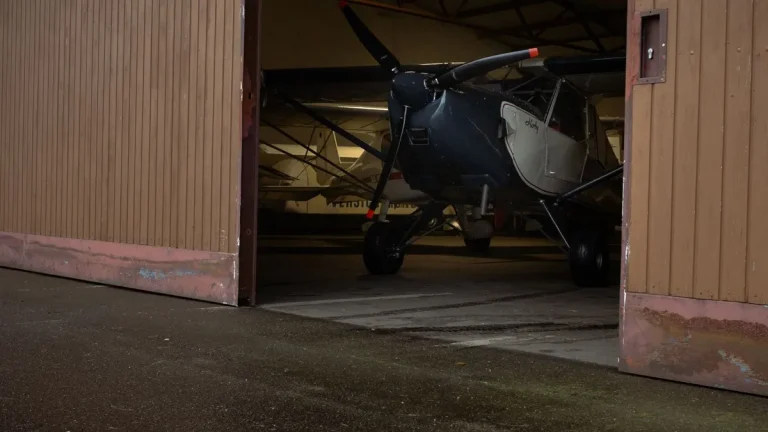
A hydraulic hangar door passes judgment on a commissioning sheet long before an aircraft rolls through it. That sheet lists the devices standing between a twelve-ton leaf and the people working under it. The hydraulic hangar door safety features below are that list, explained layer by layer. Use it to read a quote and see what is present, and what is missing.
Each section covers one layer of the chain, from sensing edge to acceptance tests. A closing checklist turns the chain into purchase-order lines.
The Leading Edge Where Most Strikes Begin
Most contact happens at the bottom leading edge, because that is the part that sweeps the apron. A sensing edge mounted on that edge halts the leaf and triggers a reversing return the moment it touches an obstruction. Hangar-door contractors commonly specify electric edges with 4-wire fail-safe wiring rather than pneumatic hoses. One reason is monitoring. The control system can see a broken edge circuit and refuse to run the door until it is repaired or bypassed with a key.
The same specification practice caps over-travel at roughly 3.5 inches after activation, so the leaf stops before it builds real force. The lower five feet of the edge is usually made removable as a separate section. The reason is blunt. That zone is where a tug bumper finds the door first. Replacing one section beats replacing twenty feet of vinyl-jacketed sensor.
Picture a tug parked nose-in against a closed leaf while the operator watches a mirror. A monitored edge turns that moment into a stop-and-reverse instead of a repair order. Ask every bidder to state the edge type and its wiring in writing.
Photo Eyes and Light Curtains Across the Opening
An edge only reacts after contact, so the next layer reacts before it. Photo eyes throw an infrared beam a few inches above the floor across the opening. A person, a nose gear or a stepladder breaking the beam stops or reverses the leaf before anything is touched. On wide doors, extra scan lines or a light curtain cover the height that a ground-level beam cannot watch.
The two layers back each other up, and the parallel is an elevator door. The light curtain sees you coming, and the edge is the second chance if the beam is blocked. Regulators expect both kinds of protection. The UK Health and Safety Executive notes that powered-door standards call for guarding, safety edges and presence detection. Warnings alone are not enough to control crushing and shearing hazards.
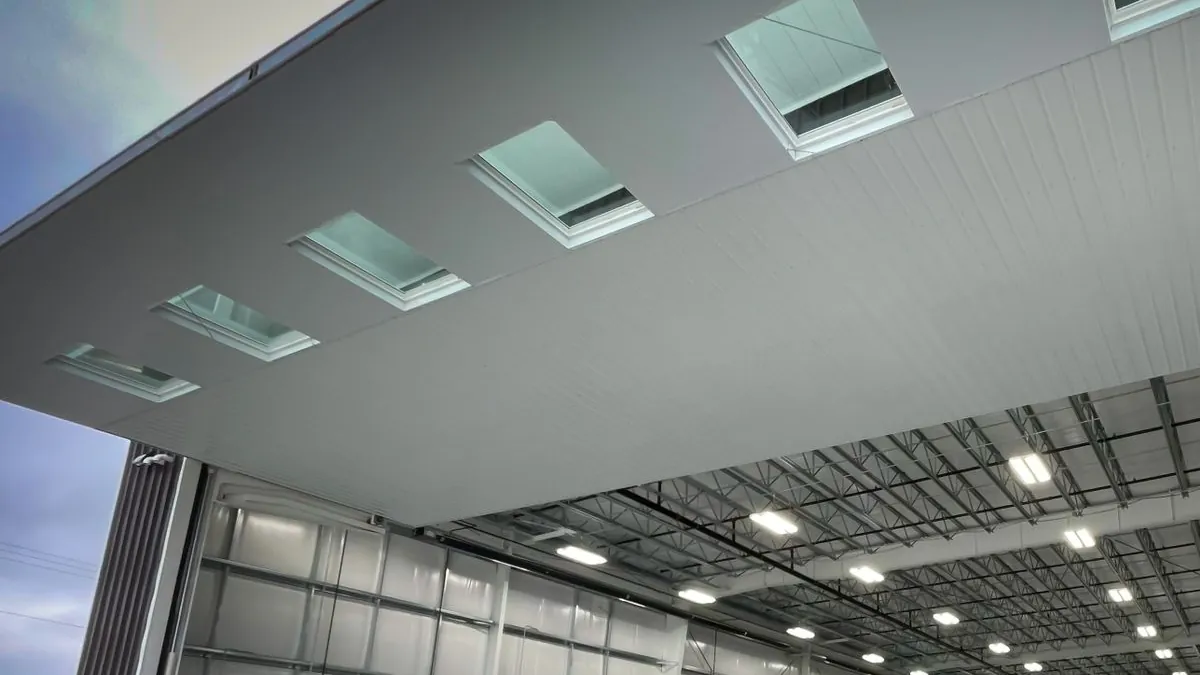
Test the beams during commissioning with a target, not a hand wave, and re-test them after any control-panel work. A photo eye that has been knocked out of alignment protects nobody while the door still cycles.
Force Limits Behind EN 12453
Sensors prevent contact; force limits cap what happens if contact happens anyway. In Europe, EN 12453 governs the safety of power-operated doors in use, and the long-published force ceilings are 400 N for crushing and 1,400 N for impact. They are the numbers behind any honest claim of hydraulic hangar door safety features. The UK regulator’s bulletin on the current standards presses makers to keep forces as low as practical. It also wants those forces verified by measurement after installation, not just at the factory bench.
The same bulletin carries history worth knowing, too.
After two fatal After two fatal powered-gate incidents in 2010, HSE filed a formal objection. The resulting standards lost their presumption of conformity, so CE paperwork alone does not close the file.
The regulator’s safety bulletin sets out the full position. A responsible supplier brings a force meter to the commissioning visit and hands over the readings. If a bidder cannot say which limits the door meets and how they were measured, that gap belongs in your risk assessment before the first cycle.
What Stops a Falling Hydraulic Hangar Door
The failure mode unique to a hydraulic leaf is a hose or fitting letting go under full load. With the pump side open, an unprotected leaf would drift down under its own weight. The countermeasure lives in the hydraulic circuit: load-holding, or counterbalance, valves sit at the cylinders and lock the oil in place when pressure on the pump side disappears. One US manufacturer advertises velocity fuses that lock the leaf if a hose fails, which is the same idea sold under a brand name.

The European standards express the same duty for vertically guided doors: the system must detect suspension failure and prevent unintended movement beyond 300 mm. A hydraulic leaf pivots instead of hanging, but the design question transfers unchanged. Ask which valves are fitted, where they sit, and whether the leaf can be lowered in a controlled way under manual command. Hydraulic service manuals add the routine half of the bargain: check cylinders, hoses and fittings for leaks and keep the fluid level honest.
Manual Release and Backup Power When Grid Fails
Now add a blackout with the leaf half open and a sortie scheduled for dawn. Power failures are the scenario where hydraulic hangar door safety features earn their keep twice, first by failing safe, then by keeping the door movable. Modern systems carry two answers. Manual release lets trained staff lower or raise the leaf by hand pump or mechanical crank without cracking a hydraulic fitting. Backup power, a battery pump or an accumulator circuit, runs the door normally for a limited number of cycles.
The fail-safe edge wiring works with this. When edge power is lost, the door goes inoperative rather than running blind, which is the correct direction of failure. Vendors package these options differently. What matters on the commissioning sheet is simple. Release must not depend on tools nobody can find, and the procedure must be written for your staff.
Wind Interlocks and Visible Warnings
A hydraulic leaf is a wall when closed and a canopy when open, and it is engineered for one of those states at a time. US code guidance assumes hangar doors stand open at a 60 mph design wind event. The open position therefore needs its own structural check. An interlock or procedure should also stop operation once winds pass the rated value. The same logic applies to manual leaves, which is why the wind package on sliding aircraft hangar doors deserves the same scrutiny as the powered one.
Motion warnings close the human gap. A red indicator light or siren that fires with the edge signal tells everyone on the apron that the door stopped for a reason. Door leaves also carry glazing panels low down, so a driver can see the far side before commanding movement. In our factory view, warning paint is not a safety device; it buys visibility, while valves and edges buy stops. Budget for both, in that order.
Acceptance Tests Before the Door Takes Aircraft
Devices on a drawing are promises; acceptance tests turn them into records. A commissioning visit should trip every photo eye with a target and strike each sensing edge. It should cut edge power to confirm the fail-safe stop. Opening and closing forces get measured against the applicable limits, and the manual release is proven under load.
RAX Door Technology ships large industrial doors with a factory inspection record covering speed, noise, insulation resistance and appearance. Certification runs under ISO 9001:2015, with CE documentation to EN 13241 and EN 12453.
Request that factory file with the delivery. Note that OSHA publishes no standard written for hangar doors; enforcement runs through the General Duty Clause, which obliges employers to control recognized hazards. That shifts the burden onto your documentation. The article on why teams choose a hydraulic hangar door covers selection, and the guidance on hangar door automation covers controls; acceptance paperwork is where both meet safety.
A Procurement Checklist for Door Safety
Paste these hydraulic hangar door safety features into the purchase order, line by line. A device the specification does not name is a device nobody prices.
- 4-wire fail-safe sensing edge on every drive panel, over-travel stated, lower sections replaceable.
- Photo eyes across the opening, aligned and trip-tested at commissioning.
- Opening and closing forces measured on site against EN 12453 limits, readings handed over.
- Load-holding valves at each cylinder; controlled manual lowering under any failure.
- Manual release or backup power proven without opening hydraulic circuits.
- Two-state wind calculation, open and closed, plus a wind-limit interlock or procedure.
- Motion warning light or siren tied to the edge circuit; glazing and edge finish in the leaf.
- Factory test report, CE file to EN 13241 and EN 12453, and a staff training walkthrough.
A bidder who prices every line has engineered the door twice, once in steel and once in paper. A bidder who waves at the list has told you which incidents you are buying.
Frequently Asked Questions
What does EN 12453 require for a powered hangar door?
It caps crushing and impact forces, commonly cited as 400 N and 1,400 N, expects safety edges or presence detection, and urges force measurement after installation.
What happens if a hydraulic hangar door loses power?
A fail-safe edge makes the door inoperative rather than unsafe. Manual release or a battery backup then moves the leaf, so both belong in the specification.
Can the leaf fall if a hydraulic hose fails?
Not when load-holding valves sit at the cylinders. They lock the oil and hold the leaf; ask for the valve layout in writing before you order.
Does OSHA have a standard for hangar doors?
No specific one. Enforcement uses the General Duty Clause, so documented devices, testing and training are how an employer demonstrates control.
How often should safety devices be tested?
Fully at commissioning, function-checked after any control work, then on the inspection cadence written into your service agreement with a competent technician.