Selecting an incorrect door specification for a temperature-controlled facility can compromise cold chain integrity and escalate operational expenses. Project engineers and warehouse facility directors frequently encounter frozen door frames, severe air infiltration, structural forklift damage, and skyrocketing electricity bills when door selection overlooks thermal physics and traffic dynamics.
Mastering how to choose the right cold storage door requires evaluating seven engineering variables. Key factors include temperature deltas, traffic volume, spatial clearances, anti-frost heating, hygiene compliance, impact protection, and total lifecycle costs. In over two decades of engineering heavy-duty entrance systems and custom cold room doors, field engineering teams have evaluated thousands of cold storage layouts. Applying this engineering selection framework ensures you configure a high-performance cold storage door that maintains precise thermal boundaries, prevents ice accumulation, and reduces long-term refrigeration power consumption.
1. Calculating Operating Temperature Delta & Panel Thickness
The fundamental starting point in cold storage door selection is calculating the operating temperature delta (ΔT) between the refrigerated space and the adjacent room.
Medium-Temperature Chiller Specifications (0°C to +10°C)
Chiller rooms utilized for fresh produce, beverage staging, and meat aging operate with a moderate temperature delta. These environments require polyisocyanurate (PIR) or polyurethane (PU) insulated panels with thicknesses between 75 mm and 100 mm. These panels provide heat transfer coefficients (U-values) between 0.28 and 0.35 W/m²K, which effectively blocks conductive heat gain without adding unnecessary panel weight.
When determining how to choose the right cold storage door for medium-temperature zones, engineers must also consider humidity levels. In facilities where relative humidity exceeds 75%, specifying low-wattage perimeter heating strips prevents unsightly surface condensation without significantly impacting refrigeration loads.
Low-Temperature Freezer and Blast Specifications (-18°C to -45°C)
Sub-zero frozen storage warehouses (-18°C to -25°C) demand 120 mm to 150 mm high-density PIR cores achieving U-values down to 0.18 W/m²K. For ultra-cold blast freezers (-35°C to -45°C), panel thickness must increase to 150 mm to 200 mm. These ultra-thick panels often incorporate vacuum insulation panels (VIP) to prevent thermal bridging under extreme temperature deltas.
2. Traffic Flow Dynamics & Cycle Frequency Matching
Evaluating daily door opening cycles is critical to selecting the proper kinematic mechanism and drive system.
Low-Frequency Personnel Access (Under 30 Cycles per Day)
For restaurant walk-in coolers, pharmaceutical laboratory prep areas, and small retail cold rooms where personnel enter manually, hinged swing doors with self-lubricating cam-lift hinges provide an airtight and economical solution. Cam-lift hinges raise the door 12 mm during opening, eliminating bottom gasket friction across the floor.
Medium-Frequency Pallet Traffic (30 to 200 Cycles per Day)
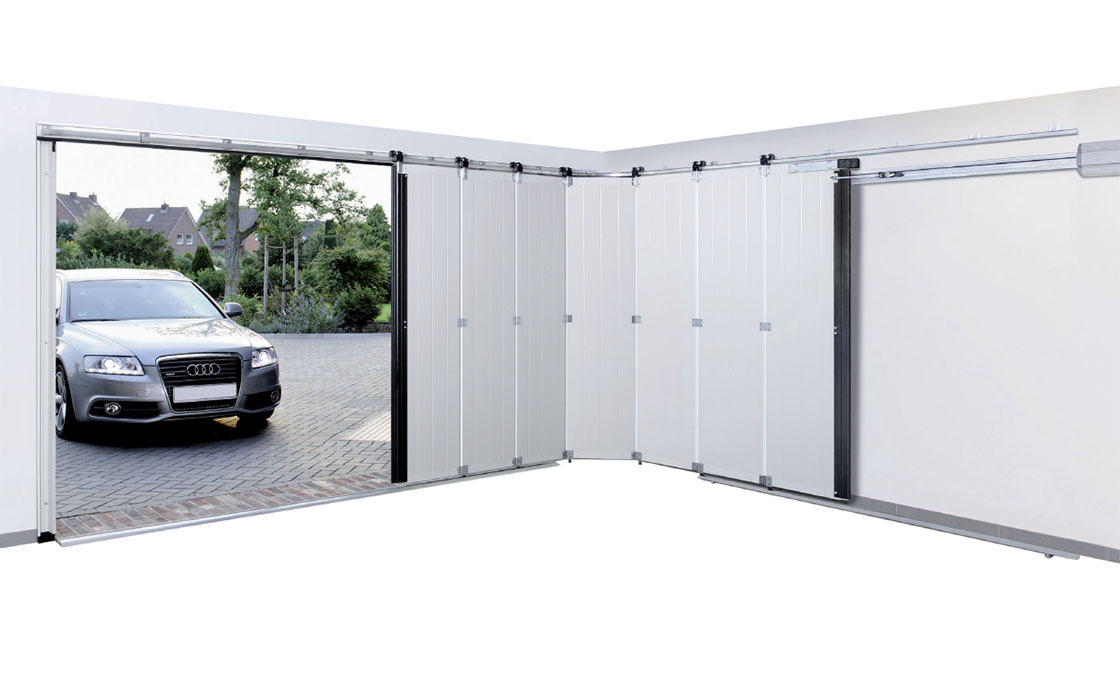
In logistics facilities with moderate pallet jack and forklift traffic, heavy-duty sliding doors represent the industry standard. Utilizing manual pull levers or automated electric operators, sliding doors travel parallel to the wall, preserving floor space and utilizing drop-and-inward kinematics to compress EPDM gaskets tightly upon closing.
High-Frequency Forklift Corridors (Over 200 Cycles per Day)
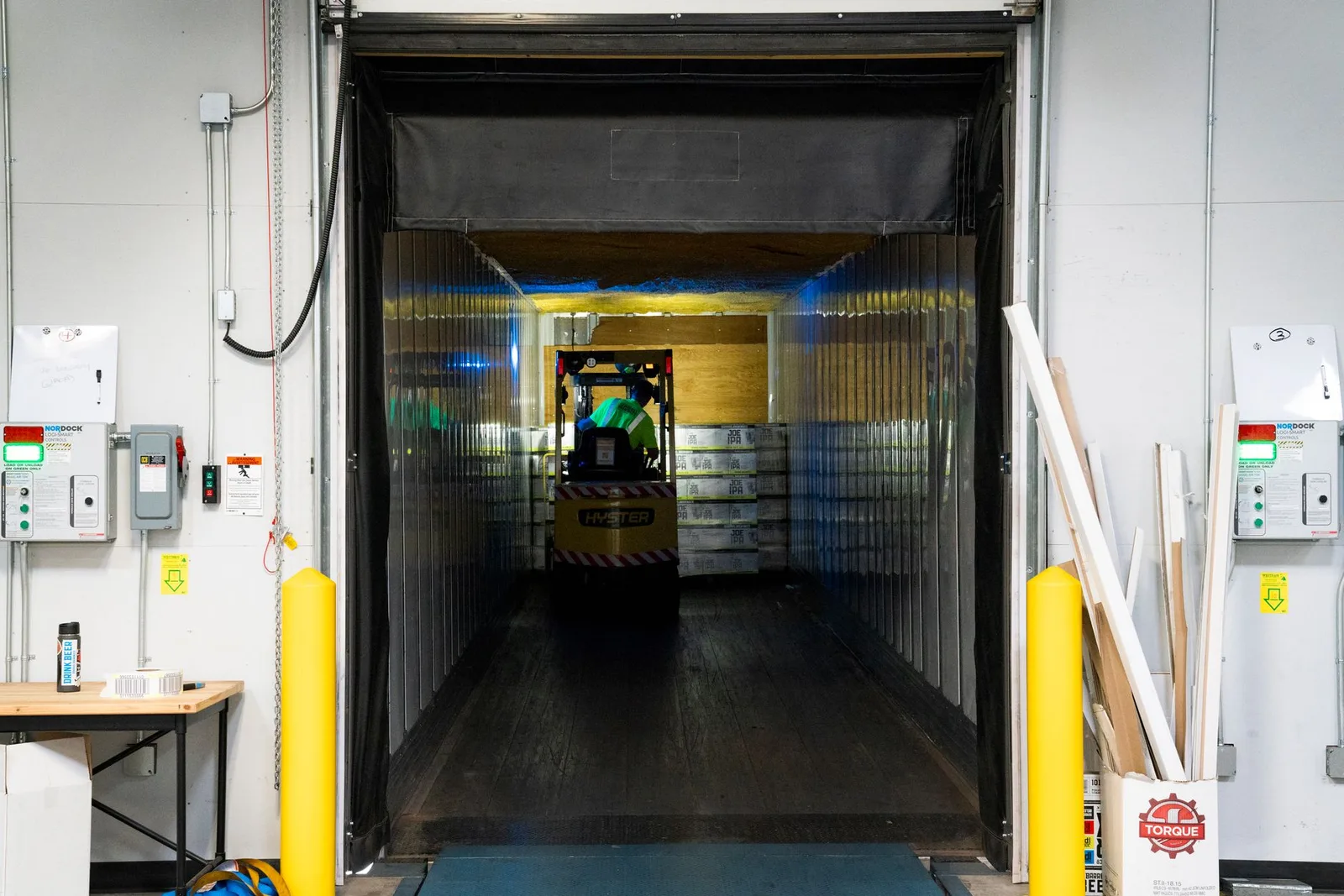
Busy distribution centers with continuous forklift traffic mandate high-speed insulated roll-up doors operating at opening speeds between 1.5 and 2.5 m/s. High opening velocities reduce open-door air exchange time by over 70%, dramatically cutting refrigeration compressor workload.
Modern high-speed cold storage doors incorporate soft-bottom edges with automated zipper track re-insertion systems. If a forklift strikes the descending curtain, the flexible door dislodges safely from its guide tracks. It re-feeds automatically on the upward cycle, completely eliminating downtime and repair costs.
Need Engineering Assistance Selecting Your Cold Storage Doors?
Send your clear opening dimensions, operating temperature delta, and daily traffic volume to the technical engineering team for custom door sizing and factory direct pricing.
3. Verifying Clear Opening Dimensions & Structural Clearances
A frequent error in cold storage door procurement is failing to account for building structural clearances around the doorway opening.
Calculating Horizontal Sideroom for Sliding Doors
Single sliding doors require clear horizontal wall space on the sliding side equal to the clear opening width plus 450 mm to 600 mm for track overtravel and motor brackets. If adjacent wall space is obstructed by structural columns or piping, specify bi-parting sliding doors, which divide the required sideroom equally across both sides of the door opening.
Additionally, verify floor slab flatness across the door travel threshold. Sliding drop-and-inward kinematics require a maximum floor level tolerance of ±2 mm over a 3-meter span. Floor depressions create localized air gaps beneath the bottom sweeper seal, permitting significant thermal infiltration.
Evaluating Vertical Headroom for Overhead and Roll-Up Doors
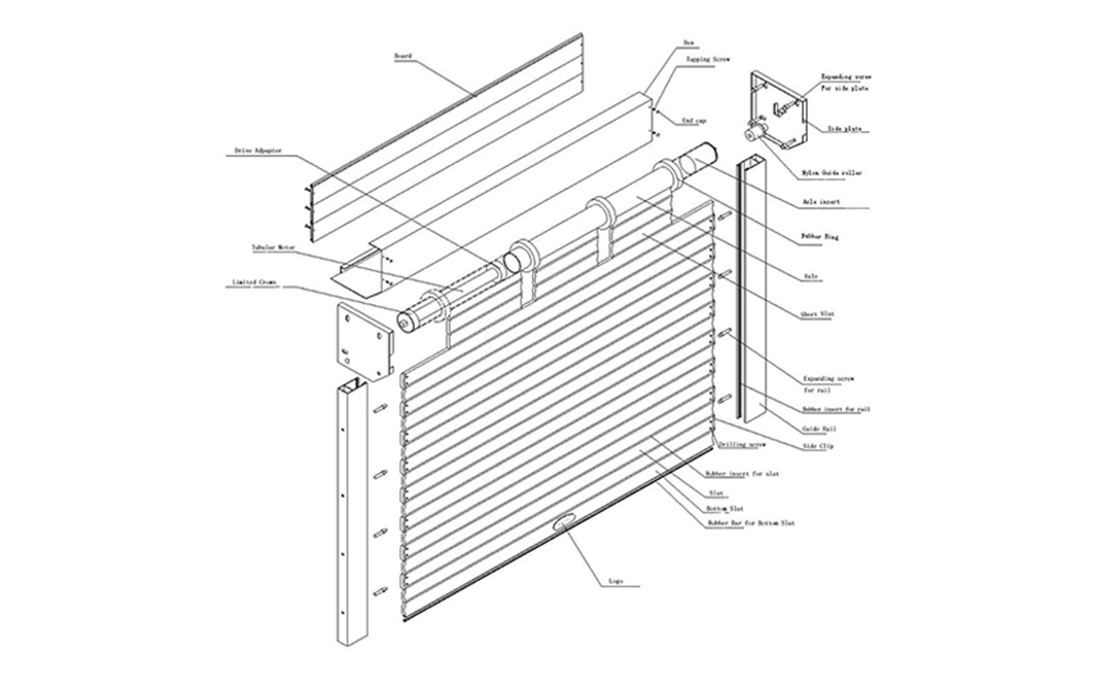
High-speed roll-up doors and vertical lift cold doors require substantial overhead headroom above the lintel (500 mm to 850 mm). This clearance accommodates the barrel curtain roll or vertical track radius. Ensure ceiling refrigeration evaporators, ductwork, and lighting conduits do not impede the upper door mechanism.
4. Specifying Anti-Condensation & Heating Cable Systems
When selecting doors for sub-zero freezer applications, active thermal management prevents gasket freezing and frame condensation.
Self-Regulating Perimeter Heating Cables
Freezer doors must incorporate self-regulating semiconductor electric heating cables producing 25 to 35 W per linear meter. These heating elements run inside aluminum channels along the four-sided perimeter frame and embedded floor threshold, maintaining the seal contact surface above the dew point (+5°C) to prevent gasket tearing.
Always specify dual independent heating circuits on sub-zero freezer entrances. Having an auxiliary backup heating element pre-wired inside the aluminum frame allows immediate changeover if the primary cable fails, preventing catastrophic frost lockup without disassembling the doorway frame.
Polyamide (PA66) Structural Thermal Breaks
Heavy-duty cold room door frames feature heavy-gauge extruded aluminum jambs separated by 24 mm to 34 mm structural polyamide (PA66 GF25) thermal barrier strips. This structural isolation mechanically disconnects the warm exterior aluminum profile from the sub-zero interior extrusion, eliminating sweat condensation on exterior walls.
5. Hygiene Standards & Material Metallurgy Selection
Food processing, dairy, seafood, and pharmaceutical facilities require door cladding materials capable of withstanding aggressive sanitation procedures.
Marine-Grade Stainless Steel vs Food-Safe Plastisol
For meat processing facilities and seafood cold storage where daily high-pressure chemical washdowns occur, specify AISI 304 or marine-grade AISI 316 stainless steel face sheets and hardware. In standard dry logistics warehouses, pre-painted galvanized steel with 120-micron food-safe plastisol coatings provides excellent corrosion protection at lower cost.
Seamless Gasket Profiles and Flush Leaf Design
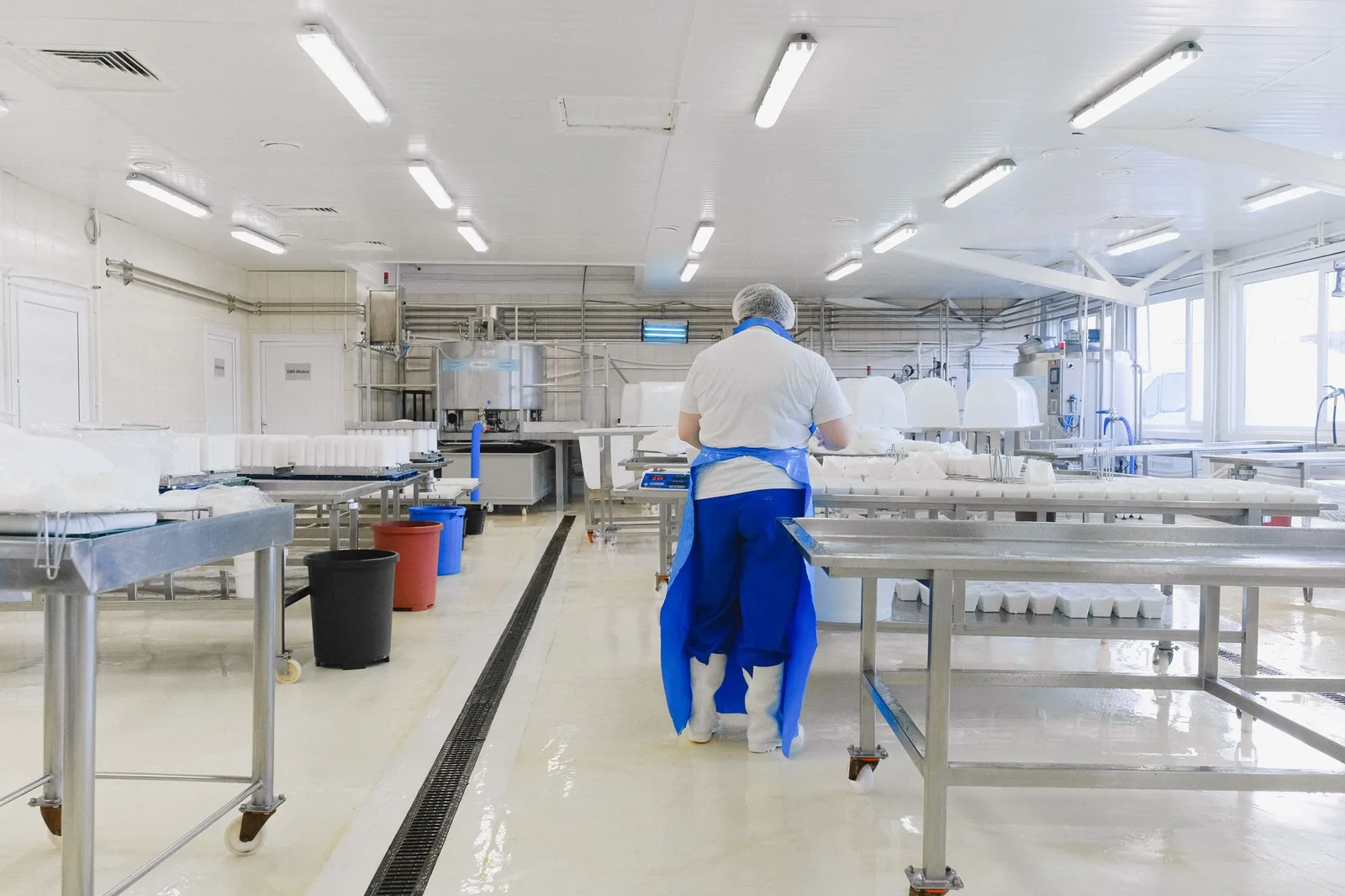
Hygienic cold room doors feature smooth, crevice-free panel profiles and snap-in multi-chamber EPDM rubber gaskets. This seamless design prevents organic residues, bacteria, and moisture from accumulating in frame recesses, ensuring compliance with strict HACCP and FDA food safety standards.
6. Impact Protection & Personnel Safety Integration
Heavy vehicular traffic in busy cold chain distribution hubs makes impact resistance and personnel entrapment safety top engineering priorities.
Heavy-Duty Bollards and Internal Frame Bracing
Protect door frame jambs by anchoring 150 mm diameter concrete-filled structural steel bollards 150 mm forward of the opening on both the warm and cold sides. Additionally, specify internal 6063-T5 aluminum perimeter box framework within the door leaf to absorb incidental pallet bumps without structural warping.
In high-speed logistics corridors, integrate active radar motion sensors and long-range overhead pull cords positioned 5 meters ahead of the doorway. Early activation allows the door panel to reach full clearance before the forklift arrives, ensuring seamless traffic flow and preventing impact collisions.
Emergency Inside Glow-in-the-Dark Safety Releases
Workplace safety standards mandate that all walk-in cold rooms feature an internal mechanical release mechanism. Solid stainless steel push rods equipped with photoluminescent glow-in-the-dark knobs allow trapped personnel to override external padlocks and open the door instantly without electrical power.
7. Master Decision Matrix: Cold Storage Door Selection
When determining how to choose the right cold storage door, use the engineering selection matrix below to match facility parameters to the optimal door configuration:
| Facility Environment | Operating Temperature | Recommended Door Type | Insulation Core | Key Selection Feature |
|---|---|---|---|---|
| Walk-In Cooler | 0°C to +10°C | Manual Hinged Swing Door | 75 mm to 100 mm PU | Cam-lift hinges & magnetic seals |
| Pallet Forklift Freezer | -18°C to -25°C | Automated Heavy Sliding Door | 120 mm to 150 mm PIR | Drop-inward track & 25-35 W/m heaters |
| High-Traffic Cold Logistics | -10°C to -30°C | High-Speed Insulated Roll-Up | 30 mm to 50 mm Composite | 1.5-2.5 m/s servo VFD & self-repair |
| Blast Freezer Tunnel | -35°C to -45°C | Heavy Sliding / Double Bi-Parting | 150 mm to 200 mm VIP/PIR | Dual heating cables & PA66 breaks |
Safety regulations from the Health and Safety Executive mandate regular testing of emergency inside release rods. Similarly, manufacturing guidelines from ISO recommend checking electrical heating circuits on sub-zero cold room doors.
8. Engineering Sizing Consultation for Your Project
Determining how to choose the right cold storage door requires balancing thermal insulation values, cycle frequencies, and physical architectural clearances. Conducting a thorough technical review before placing factory orders prevents costly downtime and ensures continuous temperature protection.
By investing in high-density PIR cores, polyamide thermal breaks, and automated high-speed operators, cold chain warehouse operators achieve substantial lifecycle energy savings while eliminating hazardous frost accumulation across logistics corridors.
Need technical assistance choosing the right cold storage door?
If you are designing a new refrigerated warehouse or upgrading existing walk-in cooler doors, the technical engineering team is available to review your clear opening dimensions, temperature requirements, and traffic patterns to configure an optimized cold storage door solution.
Frequently Asked Questions About Cold Storage Door Selection
How thick should a cold storage door be for a freezer room?
Standard commercial freezer rooms (-18°C to -25°C) require 120 mm to 150 mm PIR panel thickness, while ultra-cold blast freezers (-35°C to -45°C) require 150 mm to 200 mm insulation.
When should you choose a sliding door over a hinged cold room door?
Sliding doors are recommended for openings wider than 1.5 meters, forklift transit corridors, and tight areas where a swinging door would obstruct forklift traffic.
Why are heating cables mandatory on sub-zero cold room doors?
Perimeter heating cables prevent moisture from freezing on contact with the door frame, stopping rubber gaskets from tearing and preventing doors from freezing shut.
What speed is required for a high-speed cold storage door?
High-speed insulated cold storage doors operate at opening speeds of 1.5 to 2.5 m/s to minimize open-air duration and cut refrigeration compressor energy loss.
How much sideroom clearance is needed for sliding cold doors?
Single sliding doors require horizontal wall clearance equal to the clear opening width plus 450 mm to 600 mm on the slide side for track overtravel and motor brackets.