Every doorway that goods move through is a bottleneck, an energy leak, and a damage point at the same time. A traditional roller shutter handles the first problem badly, the second worse, and the third expensively. It opens slowly enough to stall forklift queues, leaks air around its curtain all shift, and wears its own slats every cycle as metal drags on metal. Facilities that move pallets all day eventually stop asking whether to upgrade the door and start asking which upgrade survives the traffic.
An aluminium speed door is the upgrade that answered all three complaints at once. It keeps the rigid-slat idea of a roller shutter — strong, secure, wind-stable — but rebuilds everything around it. Slats wind into a spiral without touching each other, a torque-balanced drive moves the curtain in about a second per meter, and seals actually close the boundary. RAX builds this door family as part of a 21-product high speed line opening at 0.8 to 2.5 meters per second. Every unit passes factory acceptance checks before it ships.
What Is an Aluminium Speed Door?
It is a rapid-roll industrial door whose curtain is built from rigid aluminium alloy slats rather than fabric or conventional shutter profile. In European practice, any door operating above 500 millimeters per second counts as a high-speed door, and these doors sit at the top of that band. RAX’s line opens at 0.8 to 2.5 meters per second, fast enough that a forklift never waits.
The name covers a family. PVC fabric speed doors use a flexible curtain for interior traffic and frequent impacts. The aluminium variant uses rigid, insulated slats for exterior walls, security, and wind; spiral hard doors are its premium form with the tightest winding and highest wind grades. The distinctions matter mostly at the specification stage, and the types of high speed doors guide maps the whole family. What they share is one identity: a door engineered around cycle speed, not curtain material alone.

How the Spiral Mechanism Works
The mechanism behind their second name, the spiral door, is the part worth understanding: it separates them from every roller shutter that came before. In a traditional shutter, the curtain winds onto a drum and each slat drags across its neighbors as it rolls. That dragging is where the noise, the scratching, and the wear come from. The spiral variant guides the slats along a shaped track so the curtain winds into a helix: each slat travels its own lane and never touches the next one.
The consequences run through the whole door. No slat-on-slat contact means no grinding wear and a fraction of the operating noise. The helical winding packs the curtain into a compact coil above the opening, which keeps headroom requirements modest. And because the slats are not being abraded every cycle, the curtain holds its surface finish and its seal geometry for years — the mechanism quietly protects every other component.

The Drive System and Torque Balance
The curtain does not move itself. The door pairs a motor with a torque-balancing system, typically a tensioning setup that stores energy as the door closes and returns it as the door opens. The motor then accelerates a balanced load instead of fighting the curtain’s full weight. That is what makes sub-second opening possible without a drive the size of the doorway, and it is why the door’s speed feels effortless rather than forced.
The asymmetry is deliberate. The door opens fast because traffic is waiting, and it closes more slowly because people and vehicles are passing through. A servo system controls both profiles precisely, accelerating and decelerating softly so the curtain stops without slamming into its own hardware. That soft-start logic is the same one that keeps wear out of the mechanism. RAX backs servo motors with a five-year warranty, the longest tier in its structure, because the drive is the component the factory most expects to outlive everything else.
Curtain Materials, Insulation, and Weight
The slats are aluminium alloy for reasons that compound. Aluminium is light, so the drive moves less mass and the structure carries less load. It is strong, so the curtain resists impact and holds its shape. And it does not rust, so the finish survives humidity without becoming a corrosion project. Each slat is typically filled with insulating foam, and glazed slats can be mixed in to let light and sightlines through the curtain.
The insulation is not a comfort footnote. A door between a heated hall and a loading yard is a hole in the energy budget every time it opens. A slow, leaky door keeps that hole open longer. Fast cycles, insulated slats, and real perimeter seals turn the doorway from the weakest thermal point into a managed one. That combination is why the aluminium variant earns exterior walls while the PVC variant stays inside.
Sealing and Wind Resistance on Facades
Speed means nothing if the closed door leaks. The door seals on all four sides: side guides with brushes or gaskets, a bottom seal that conforms to imperfect floors, and interlocking slat joints that close the curtain itself. The boundary then holds against drafts, dust, and temperature difference while the door is shut. On exterior walls, wind loading joins the list: the curtain has to hold its seal while the building breathes.
RAX’s spiral hard doors are rated for wind resistance Class 5, grade 12 storm exposure in the Chinese classification. That is the band where a doorway stays dependable on an exposed facade, not only in a sheltered courtyard. The rating belongs to the whole assembly, slats and guides and structure together, which is why wind grade is a factory specification and not a field upgrade.
Activation Methods and Control Options
The door opens before its traffic arrives, and the activation system is what makes that happen. Radar motion sensors trigger on approaching forklifts, and ground loops sense vehicles through the floor. Remote controls and pull switches serve drivers and pedestrians; push buttons cover manual doors and low-traffic times. The choices are not decoration — each one matches a traffic pattern, and mixing them is normal at a busy threshold.
The same control layer does the quieter jobs. Doors can sequence as an airlock pair so both never stand open together, hold open on a timer for shift change, or interface with access control. The boundary then doubles as a security line. Activation is where the door joins the facility’s logic rather than just its walls.
Safety Features That Keep Traffic Moving
A door that moves this fast owes traffic its safety systems. The bottom edge is a soft profile that detects contact and reverses the curtain before pressure builds. Sensors watch the threshold during closing, and the drive’s controlled deceleration means the door stops the way it moved: predictably. In Europe these functions fall under EN 12453, the safety standard for powered doors, and RAX documents its doors against it rather than describing safety in adjectives.
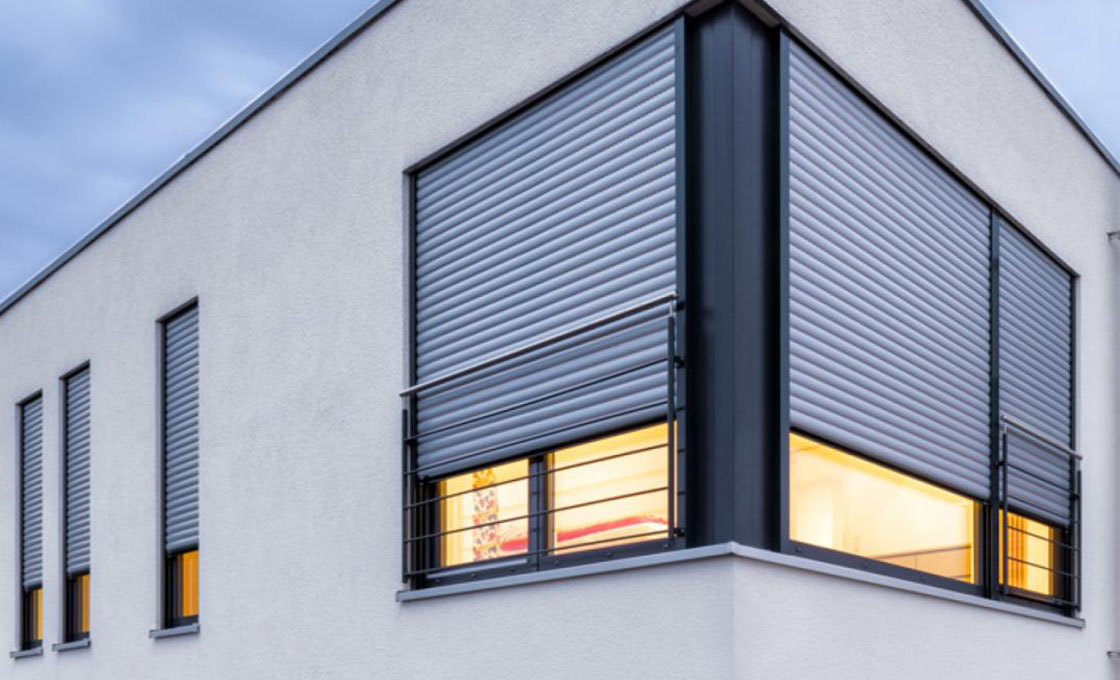
The comparison in the picture is the honest one. A traditional roller shutter is not unsafe — it is simply slow, which multiplies every crossing into queueing, heat loss, and impact risk around a half-open curtain. The safety case for the speed door is largely the speed itself, with the sensor stack underneath for the moments physics cannot prevent.
Where Aluminium Speed Doors Work Best
The fit is straightforward: high-traffic openings that need a rigid, secure, weather-tight boundary. Logistics hubs and distribution centers put them at dock faces, and manufacturing plants put them between halls with different climates. Food and pharmaceutical facilities use them where short opening times protect temperature and hygiene zones. Anywhere a forklift crosses a boundary dozens of times per shift, the math favors the fast rigid door.

The same math says where it does not belong. Interior openings with frequent curtain impacts belong to the self-repairing PVC door, whose fabric curtain takes a hit and resets. The fabric versus spiral comparison works through that trade in detail. Openings that need the view and the containment of an airlock pair with transparent laths get specialist treatment. This door is the exterior-wall workhorse of the family, and the RAX high speed door range covers the rest of the family alongside it.
Maintenance and Service Life Expectations
The spiral mechanism that eliminates slat wear also shrinks the maintenance list: no grinding surfaces to dress, no curtain to re-tension after a season of scraping. What remains is a short schedule: inspect the bottom seal, keep the side guides clear, and test the sensors and the reversing edge. The drive’s soft starts do the rest. Most of the checklist is verification, which is what a mechanism designed for low wear should read like.
Service commitments tell you what the manufacturer expects to fail and when. RAX covers the door for two years, operators and motors for three, and servo motors for five. Spare parts dispatch in 5 to 7 days, and production runs under ISO 9001:2015. Sampling takes 7 to 15 days and a first order 20 to 35 days, with single-door orders accepted — useful for trialing one doorway before refitting a whole dock face.
Frequently Asked Questions From Specifiers
How fast does this door open?
RAX’s line opens at 0.8 to 2.5 meters per second; European convention counts anything above 0.5 m/s as a high-speed door.
Is it the same as a spiral door?
A spiral door is the premium aluminium variant: slats wind into a helix without touching. Aluminium speed door is the broader family name.
Can it handle wind and outdoor walls?
Yes. RAX’s spiral hard doors carry wind resistance Class 5, rated for grade 12 storm exposure on exterior facades.
Aluminium speed door or PVC fabric door?
Rigid aluminium for exterior walls, security, and wind; self-repairing PVC for interior openings with frequent impacts. The comparison guide covers the trade.
What maintenance does it need?
A short schedule: inspect the bottom seal, clear the guides, and test sensors and the reversing edge. Warranty runs 2, 3, and 5 years by component.
Conclusion: A Roller Shutter Rebuilt
An aluminium speed door is a roller shutter rebuilt by people who watched what traffic does to one. The spiral winding removed the wear, and the torque-balanced drive removed the waiting. Sealing and safety systems then turned a fast curtain into a boundary a facility can trust with its energy and its people. Understanding the mechanism is the shortest path to specifying it well, and the family around it — fabric, spiral, stacking — exists because different doorways deserve different answers.