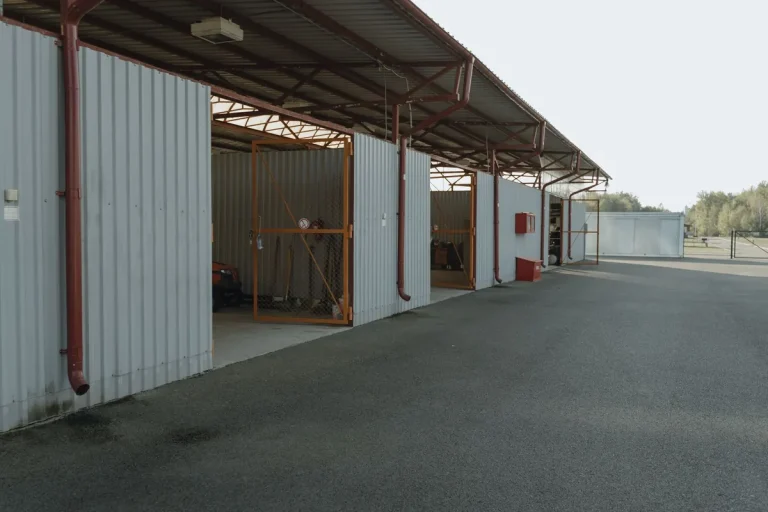
In high-traffic commercial facilities, cold storage warehouses, and busy logistics hubs, conventional roll-up doors create severe operational bottlenecks. Opening at slow speeds of just 0.15 to 0.25 m/s, standard steel doors force forklifts to idle, waste substantial climate-controlled air, and suffer frequent vehicle impact collisions. These slow cycle times directly inflate monthly heating and cooling bills while causing costly downtime.
The development of high-performance rigid spiral doors has completely transformed industrial material flow. Over two decades of industrial entrance manufacturing and servo drive testing, our engineering team has seen how rigid spiral doors solve these logistical headaches. By operating at velocities up to 2.5 m/s with non-contact circular tracks, these systems deliver instant access, high security, and exceptional thermal containment.
Key Engineering Takeaways:
- Ultra-Fast Velocity: Powered by intelligent servo drive units, aluminium speed doors open at speeds from 0.8 m/s up to 2.5 m/s—roughly 10 times faster than conventional roller shutters.
- Non-Contact Spiral Track: Precision circular or oval spiral rails guide slats into a coiled position where they never touch each other, eliminating surface friction, noise, and mechanical wear.
- Rigid Security and Insulation: Double-walled 6063-T5 aluminium profiles filled with high-density polyurethane foam deliver robust security and thermal U-values down to 0.33 W/m2K.
- High Wind Load Resistance: Interlocking extruded slats and heavy-duty vertical guides withstand wind loads up to EN 12424 Class 5 (typhoon resistance exceeding 120 km/h).
- Multi-Sensor Safety: Integrated infrared safety light curtains, microwave radar detectors, and wireless safety edges prevent door descent whenever obstacles are present.
What Is an Aluminium Speed Door?
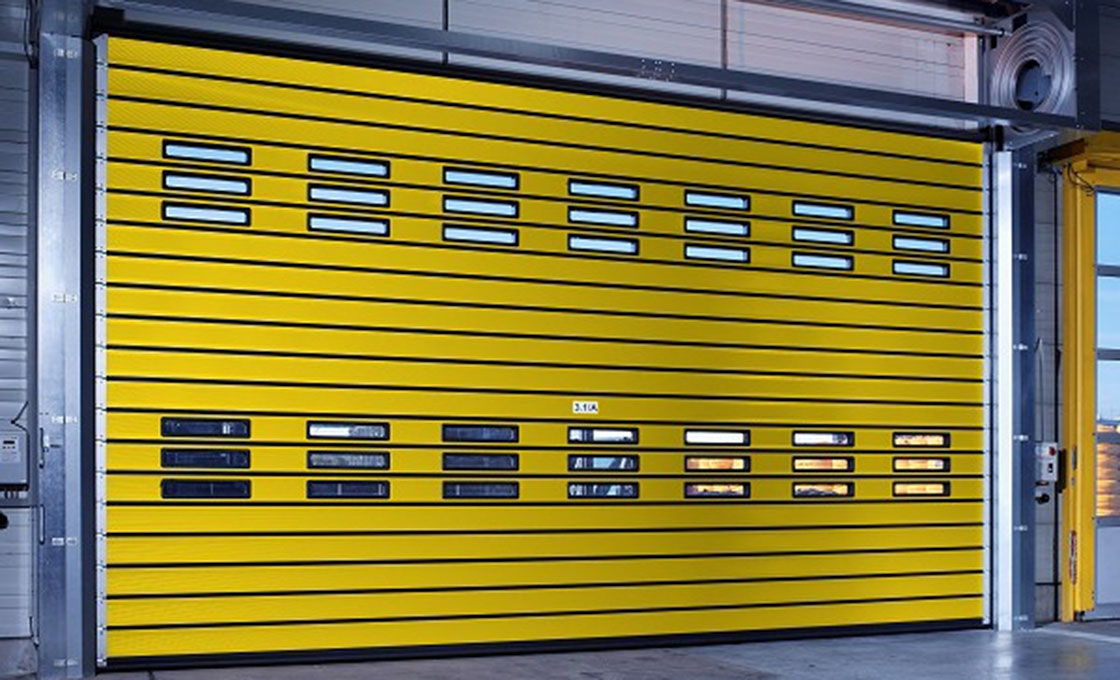
An aluminium speed door—commonly referred to as a high-performance rigid spiral door—is a motorized overhead barrier designed for intensive daily cycling. Unlike flexible PVC fabric doors that can tear or flutter in drafts, rigid speed doors utilize interlocking slats made from architectural-grade 6063-T5 aluminium alloy. These hollow profiles are typically injected with polyurethane insulation to provide structural rigidity and acoustic dampening.
The system combines the rapid cycle times of a high-speed fabric curtain with the physical security, climate barrier, and wind resistance of a heavy-duty security shutter. In modern facilities, this hybrid design eliminates the traditional requirement of installing a slow security shutter outside and a fast fabric door inside.
How the Non-Contact Spiral Track Works
The defining mechanical innovation behind rigid speed doors is the non-contact spiral guidance track located above the structural door lintel. On conventional rolling shutters, slats tightly coil around a central steel barrel, rubbing against each other and scratching their protective coatings with every cycle.
Circular Spiral Geometry Eliminates Slat Friction
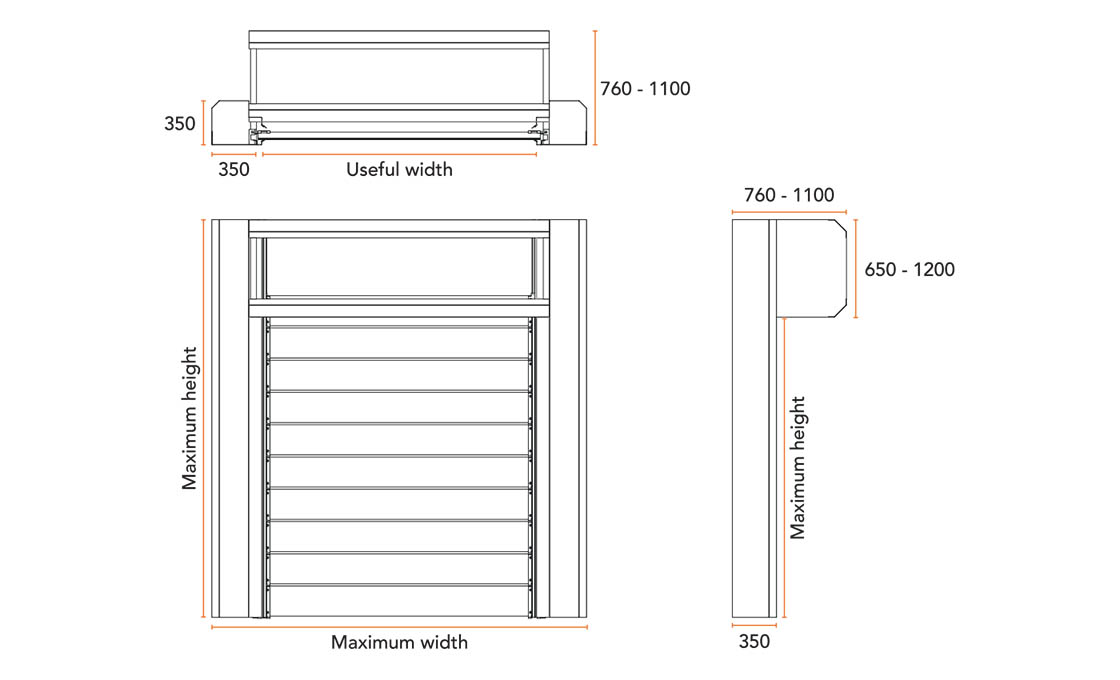
In a spiral speed door, vertical guide tracks transition smoothly into a circular or elliptical spiral at the top header. As the electric drive pulls the door upward, nylon rollers mounted to the slat edges follow this spiral path. The slats are guided into an open coil where each section remains physically separated by an engineered air gap.
Because the aluminium faces never touch, mechanical friction is virtually eliminated. This non-contact geometry allows the door curtain to accelerate smoothly past 2.0 m/s without vibrating, clattering, or scratching factory paint finishes. Furthermore, operating noise levels drop below 60 dB, creating a significantly quieter warehouse environment.
Smooth Slat Articulation and Hingeless Joints
Individual aluminium panels connect using precision interlocking hinge joints with continuous EPDM rubber seals. These flexible joints allow continuous articulation as slats travel along the curved track radius. The tight joint tolerances prevent horizontal panel shifting while sealing the entrance against airborne dust and driving rain.
The Servo Drive Engine: Achieving Speeds Up to 2.5 m/s
Achieving extreme velocity without shaking building framing requires sophisticated kinetic motor control. Rigid spiral doors rely on variable-frequency servo motors paired with high-resolution absolute encoders.
S-Curve Acceleration and Dynamic Inverter Braking
Standard industrial motors operate on simple on-off contactors, causing harsh mechanical shocks when starting and stopping. In contrast, intelligent servo controllers execute a smooth S-curve acceleration profile. The door starts gently, accelerates rapidly across the mid-travel zone at up to 2.5 m/s, and decelerates softly milliseconds before reaching full open limit.
This dynamic braking prevents slamming and reduces mechanical stress across motor gearboxes, drive belts, and counterbalancing springs. Consequently, high-performance aluminium high speed doors easily achieve over 500,000 duty cycles with minimal component fatigue.
Absolute Encoder Precision Positioning
Mechanical limit switches can slip over time due to temperature expansion or vibration. Speed door motors integrate multi-turn absolute encoders that measure shaft rotation down to fractions of a degree. The controller always knows the exact millimeter position of the bottom bar, eliminating drift and manual recalibration.
Active Safety Sensor Array: Radar, Light Curtains, and Loops
Because an aluminium door closes rapidly at 0.6 to 1.0 m/s, certified multi-layer safety systems are strictly required under European safety standards EN 12453 and CE EN 13241.
Full-Height Infrared Safety Light Curtains
Mounted inside the vertical guide tracks, an array of multi-beam infrared transmitters and receivers projects a dense optical grid across the clear opening up to 2.5 meters high. If a pedestrian or forklift breaks any single infrared beam during descent, the controller instantly halts downward motion and reverses the door to full open in under 0.2 seconds.
Motion Radar and Geomagnetic Induction Loops
To maximize logistics throughput, microwave Doppler radar sensors detect approaching vehicles from several meters away and trigger automatic opening before the forklift reaches the threshold. For specialized industrial bays, buried geomagnetic induction loops detect metallic vehicle bodies while ignoring pedestrian foot traffic, keeping climate-controlled air inside.
Need a High-Speed Industrial Door Specification?
Consult directly with our factory engineering staff for custom spiral track clearances, radar activation setups, or project CAD drawings.
Thermal Insulation and High Wind Resistance
Exterior entrance doors in commercial facilities must withstand harsh weather conditions without excessive thermal loss or structural bending.
Polyurethane Core and Thermal Barrier Slats
Each aluminium slat features a double-walled hollow extrusion injected with closed-cell polyurethane foam (density 40 to 50 kg/m3). Combined with polyamide thermal breaks and continuous perimeter EPDM weatherstripping, these insulated panels achieve overall heat transfer coefficients from 0.33 W/m2K to 0.55 W/m2K, lowering facility refrigeration expenses.
EN 12424 Class 5 Coastal Wind Resistance
Flexible PVC doors can blow out of their side tracks during severe storms. The high modulus of 6063-T5 aluminium alloy combined with heavy-gauge vertical guide tracks allows rigid spiral doors to achieve EN 12424 Class 4 and Class 5 wind ratings. They resist wind pressures exceeding 1,000 Pa, ensuring reliable operation during coastal typhoons with wind gusts up to 120 km/h.

Aluminium Speed Doors vs PVC Fabric vs Standard Shutters
Understanding which entrance technology matches your facility requires comparing speed, thermal efficiency, security, and long-term durability. The comparative matrix below outlines key operational differences:
| Performance Metric | Aluminium Spiral Speed Door | High-Speed PVC Fabric Door | Standard Steel Roller Shutter |
|---|---|---|---|
| Opening Velocity | 0.8 to 2.5 m/s (Extremely Fast) | 0.8 to 2.0 m/s (Fast) | 0.15 to 0.25 m/s (Slow) |
| Physical Security | High (Rigid Extruded Metal) | None (Cut-prone PVC Fabric) | High (Steel Slats) |
| Wind Resistance | EN 12424 Class 4–5 (Hurricane) | EN 12424 Class 1–2 (Moderate) | EN 12424 Class 2–3 (Standard) |
| Thermal Insulation | High (40mm PU Sandwich Core) | Low (Thin PVC Sheet) | Low to Moderate |
| Daily Duty Cycles | 1,000 to 2,000+ Cycles/Day | 500 to 1,500 Cycles/Day | 50 to 100 Cycles/Day |
| Track Wear Mechanism | Zero Contact Spiral (No Slat Wear) | Zipper / Guide Friction | Direct Metal-on-Metal Coiling |
According to machinery safety standards published by the ISO International Organization for Standardization, integrating non-contact automated door mechanisms substantially lowers occupational hazards in busy logistics corridors.
Key Industrial and Commercial Applications
Rigid aluminium speed doors serve environments where security, speed, and climate control are non-negotiable:
- Automotive Dealerships and Showrooms: Full-vision slats with transparent acrylic or polycarbonate glazing create impressive modern customer vehicle reception bays.
- Cold Storage and Food Logistics: Fast opening reduces air infiltration during forklift transit, preventing refrigeration unit frosting and cutting electricity consumption.
- Underground Commercial Parking: High opening velocity prevents traffic congestion at entrance ramps while acoustic spiral rails eliminate noise disturbance for building tenants.
- Heavy Manufacturing Facilities: Pairing fast cycle speeds with robust security roller shutter doors keeps outdoor dust, flying debris, and high winds away from precision production lines.

Routine Preventative Care and Maintenance Protocols
Although non-contact spiral doors require far less upkeep than conventional rolling shutters, establishing a regular inspection routine protects long-term mechanical reliability.
Semi-Annual Optical Sensor and Track Cleaning
Wipe the glass lenses of the infrared light curtains and radar sensors with a soft, dry microfiber cloth. Inspect vertical guide tracks and remove accumulated dust or packing strap debris to ensure unobstructed roller travel.
Spring Tension and Servo Brake Inspection
Test the manual emergency hand chain or release lever semi-annually to verify smooth counterbalance balance. Workplace safety directives from the Health and Safety Executive emphasize that high-speed motorized doors must undergo regular safety brake inspections to ensure continuous fail-safe personnel protection.
Engineering Verdict: Why High Speed Spiral Doors Are Superior
In conclusion, aluminium speed doors represent the pinnacle of modern entrance engineering. By combining non-contact spiral geometry, 2.5 m/s servo acceleration, robust 6063-T5 thermal insulation, and multi-sensor safety curtains, they eliminate the traditional compromises between speed, security, and energy conservation.
For facility managers and general contractors seeking to maximize operational throughput while slashing energy overhead, aluminium spiral speed doors deliver the lowest total cost of ownership across demanding commercial environments.
Frequently Asked Questions About High Speed Spiral Doors
How fast does an aluminium speed door open?
A high-speed spiral door typically opens at speeds between 0.8 m/s and 2.5 m/s, depending on the servo motor model and door size. This is roughly 10 times faster than conventional rolling shutters.
Why do the slats not scratch during high-speed coiling?
Rigid speed doors use a circular spiral track above the opening. The slats travel along this track into an open coil where they never touch each other, eliminating surface contact and scratching.
Can an aluminium speed door operate during a power outage?
Yes. All high-speed doors feature an integrated manual emergency release lever or counterbalance system that allows staff to easily push or pull the door open by hand without electrical power.