A high speed door opens hundreds of times a day above the same aisle where forklifts and people cross. That pace is why its safety features deserve a specification line of their own. When the spec sheet only records opening speed and cycle rating, nobody can say what stops the curtain before it meets a person or a vehicle.
This guide sets out the high speed door safety features a modern door must have, what each device protects, and the acceptance tests that prove it works. If you are new to how these doors move, our explainer on how a high speed door works covers the mechanics. The logic below follows EN 12453, the European standard for safety in use of power operated doors.
What Safety Means on a Door This Fast
A curtain weighing well over a hundred kilograms, moving at around a metre per second, carries real kinetic energy. No operator reacts that fast, so the door itself has to sense, decide and stop. Safety therefore comes in three layers that must work together.
The first layer is detection: devices that see or feel a person or vehicle before or at the moment of contact. The second is control redundancy: wiring and logic that stop the door when a device fails. The third is structure and warning: a curtain that tolerates a strike, and signals that tell traffic what comes next. A quote that lists sensors without explaining failure handling is only selling you the first layer.
EN 12453: The Force Limits Behind the Devices
Every detection device on a powered door exists to keep closing forces inside the limits set by EN 12453. Per HSE safety bulletin EPD1-2018, those forces stay basically below 400 N for crushing and 1400 N for impact. Where force limitation is the main safety measure, the forces should be as low as possible. These are the lines a door must not cross with a person in its path.

This is why acceptance matters more than the configuration sheet. After installation, the closing force should be measured with a force meter at the leading edge, not assumed from a parts list. The HSE also notes that the 2017 generation of standards is not harmonised, so the paperwork travels with the product: ask for the technical file and Declaration of Conformity. RaxDoor certifies its doors to CE EN 13241 and EN 12453, and we treat that documentation as part of the product, not an extra.
The Detection Devices and What Each One Protects
Buyers often see these device names used interchangeably, but each covers a different moment in the cycle. An active safety edge sits on the leading bottom edge and reverses or stops the door the instant it is compressed. It is the last line of defence. Under EN 12978 it is a safety device in its own right, so its failure must be detected.
Photo eyes and light curtains work without contact. A photocell throws a beam across the opening and a light curtain scans a field; either holds or reverses the door while the field is interrupted. They protect people and forklifts during closing, before anything is touched. The full set of high speed door safety features only works as a package.
Radar and motion sensors belong to a third family: they trigger the opening, which keeps traffic from queueing against a closed door. Radar typically responds to movement, so it should be paired with presence detection that holds the door for anything standing still. The table below sums up the division of labour.
| Device | Detects | Fails toward | Best suited to |
|---|---|---|---|
| Active safety edge | Contact at the closing edge | Must stop the door on compression; a broken edge should halt the cycle | Every door, as the final line of defence |
| Photo eye / light curtain | Presence across the opening, before contact | Blocked beam should prevent closing, not speed it up | Mixed pedestrian and forklift traffic |
| Radar / motion sensor | Approaching movement to trigger opening | Usually blind to stationary objects | Vehicle routes with predictable approach paths |
| Presence detection | Anything standing still in the opening | Holds the door open until the field clears | Paired with radar in busy doorways |

Self-Repairing Curtains: Toughness Is Not Person Safety
Many flexible high speed doors now use a self-repairing curtain. On impact the curtain rolls out of its side guides instead of resisting, then re-feeds itself on the next cycle. The door is back in service in seconds, which is why vendors lead with this feature.
It is important to read this feature for what it is. The breakaway curtain protects the door body and the continuity of your traffic flow; it does not sense anything. A door that shrugs off a forklift strike still needs the safety edge and presence detection that stop the strike from reaching a person. When a supplier presents self-repair as the safety concept, ask which devices protect people during closing. The two layers are complementary, and neither substitutes for the other.
Control Redundancy: What Happens When a Sensor Fails
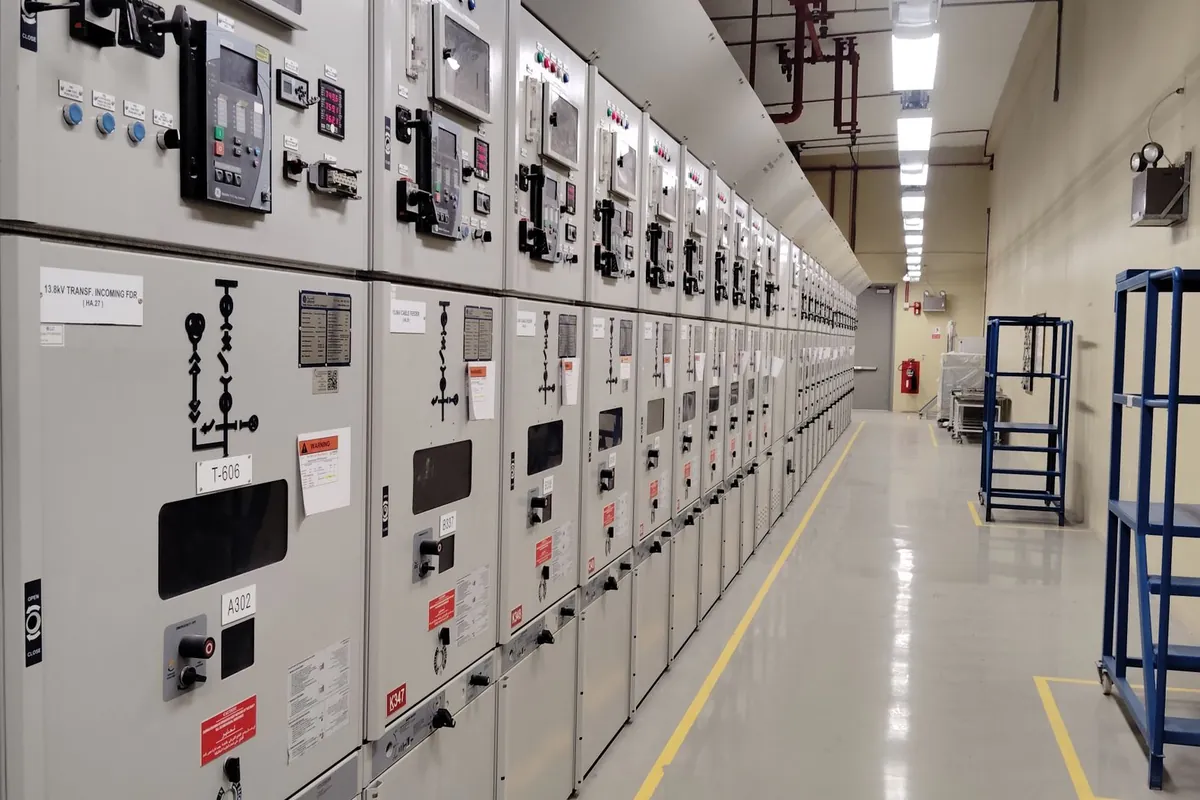
Devices only protect people while they work, which is why the control system matters as much as the sensor list. The HSE puts it directly: where technology permits, the safety function should be checked before each movement. On a modern controller that means a self-test every cycle, so a failed photocell shows up as a fault rather than as silence.
Wiring logic should fail toward safety. A broken beam, a disconnected edge or a contaminated reflector should hold the door where it is, not bypass the device and continue the cycle. Vertically moving doors carry a further requirement: measures that detect suspension failure and stop unintended curtain movement beyond 300 mm. A dropped component is caught before it becomes a falling one.
Ask each bidder to state, in writing, what the door does when each safety device fails. The answer should always be a stop or a hold, verifiable in a commissioning test you can watch. That question separates a door engineered for safety in use from a door assembled around a sensor catalogue. Our guide on how to choose high speed rolling doors covers drive selection, and the high speed door range page lists the certified configurations behind this article.
Warning Devices, Vision Panels and the Daily Test
Detection and control work in fractions of a second, but people still need to know what the door is about to do. Warning lights and sounders give traffic time to clear before movement. Vision panels let a forklift driver see what is coming through from the other side. The HSE is clear that warnings alone are not sufficient protection for significant risks, so treat them as a complement to detection, never a replacement.

Testing belongs in the daily routine, and it takes less than a minute. Run one full cycle and watch for smooth travel, then break the light beam and press the safety edge to confirm reversal. Log the result. Schedule an instrumented force measurement at the closing edge after installation and at service intervals, so the 400 N line stays a measured fact. Only trained people should operate and check the door, mirroring the HSE position on competent staff.
Specifying a Door That Meets the Safety Line
All of this compresses into four lines a buyer can paste into a specification. Require closing force compliance with EN 12453, verified by measurement at the leading edge. Require a named detection package: an active safety edge, presence detection across the opening, and triggering suited to the traffic. Require EN 12978 safety components with pre-movement self-checking and suspension failure detection, plus the technical file and Declaration of Conformity on delivery.
A door that carries these four lines is not a premium option; it is what modern means. The value of high speed door safety features never shows on the configuration sheet. It shows up in the force you measure at the closing edge, every time the door comes down.
Frequently Asked Questions
What safety features must a high speed door have?
At minimum, a door needs an active safety edge on the leading bottom edge and a non-contact presence detector across the opening. Add motion triggering, warning lights or sounders, and clear vision panels.
What does EN 12453 require for powered doors?
Closing forces should stay around 400 N for crushing and 1400 N for impact. Safety functions should be checked before movement where technology permits, and suspension failure detection should stop unintended movement beyond 300 mm.
Is a self-repairing curtain a safety device?
No. A breakaway curtain protects the door body and keeps traffic moving after a collision. Personnel protection still depends on the detection layer: the safety edge and the presence-sensing devices.
How often should high speed door safety features be tested?
Run the door through one full cycle daily and break the light beam or press the safety edge to confirm reversal. Schedule instrumented force testing after installation and at service intervals.
What is the difference between a safety edge and a light curtain?
A safety edge reacts after contact and is the last line of defence on the closing edge. A light curtain detects presence before contact, so it protects people and forklifts during the closing movement.