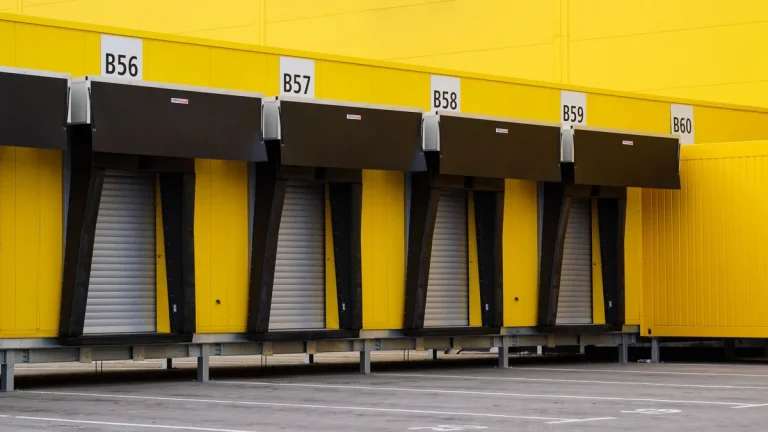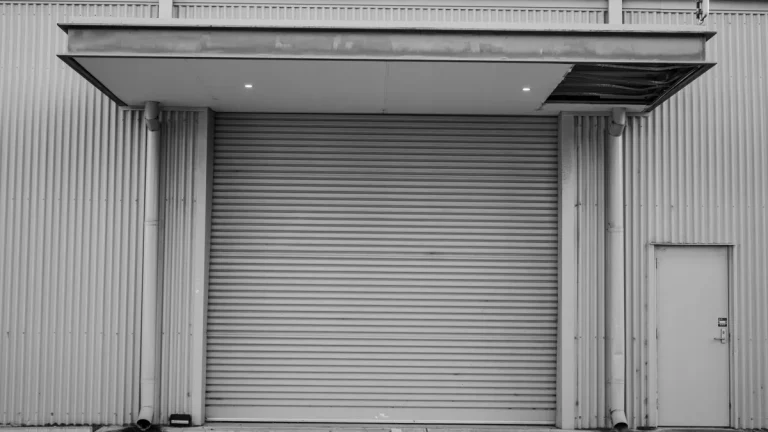
A loading dock loses money in seconds once its door stops moving. Ask any technician about a stuck commercial door: the first questions are never about the panel, but about the waiting line and the drive unit. The motor of an industrial door sits at exactly that point of failure, which is why it deserves more attention than any line item on a quote.
Treat the drive unit as an accessory and you will buy the cheapest one on the sheet. Treat it as the component that converts a barrier into a production asset, and buying becomes a ranking exercise. Rank the advantages by which pay you back fastest, and treat the rest as amplifiers. We build doors and their operators at our factory in Hebei, and the figures below come from our own production specifications.
Advantage 1: Cycle Duty That Matches Shift Traffic
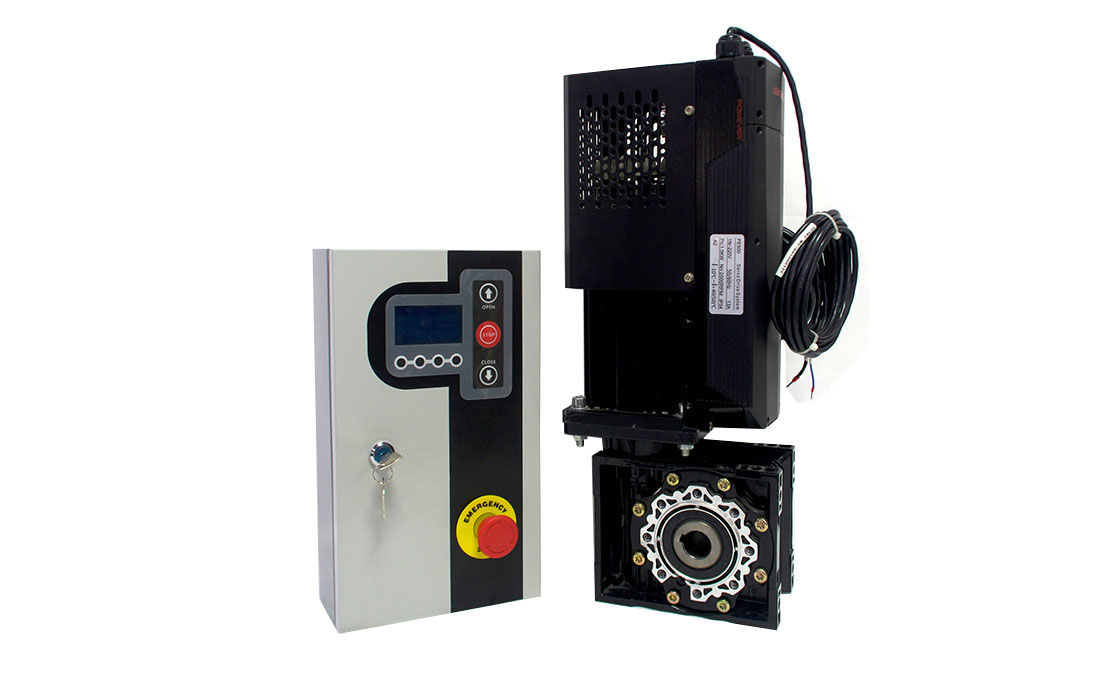
The first advantage is endurance under repetition. A distribution center door can cycle hundreds of times per shift. A drive unit sized for a garage workload will overheat, shed its gearbox or burn out long before the panel wears out. An industrial-grade operator is specified for that duty instead: continuous ratings, thermal protection and gearing for heavy leaf weights.
The door hardware around it has to carry the same promise. Our sectional torsion springs are rated for more than 30,000 cycles. A correctly matched drive unit is what lets the whole assembly reach those numbers instead of stalling halfway. High speed models push the logic harder. Opening speeds run from 0.8 to 2.5 meters per second, so the door is never the bottleneck in the flow of goods.

The payoff shows up in uptime. When the drive is rated for the actual traffic, cycle counts stop being a countdown to failure and become a figure you can schedule maintenance around. That is the difference between a door that supports a shift and one that taxes it.
Advantage 2: Safety Compliance You Can Design In
A powered door is a machine, and regulators treat it like one. EN 12453 is the safety standard for power operated doors, and EN 13241 is the product standard for industrial doors. Together they require a powered door to control the forces it applies, detect obstructions and reverse when it meets one. None of that is possible on a hand-chain door, because a manual leaf has no brain to interrogate an obstacle.
This is the quiet advantage of motorization: it makes safety a design parameter rather than an afterthought. Force limitation, auto-reversing and obstacle detection all exist because the drive can be programmed. Inspectors and insurers ask for exactly this. Operators of powered doors also carry a documented duty to keep protective devices working, as the UK’s health and safety regulator sets out for powered gates.
Our doors carry CE conformity under EN 13241 with EN 12453 for the drive side, backed by product liability insurance. When a facility manager signs the safety file for a powered door, that signature lands on a document the motor made possible.
Advantage 3: Soft Start That Protects the Whole Door
The third advantage is mechanical sympathy. A basic drive slams a heavy leaf from rest to full speed and back, and every hard start sends a shock through the springs, hinges, rollers and shaft. Soft start and soft stop replace that abuse with a ramp: slow departure, controlled cruise, gentle arrival.
Independent operator documentation describes the same effect. The feature minimizes mechanical shock and reduces stress on drive systems and structural hardware. Reduced shock loading also extends the life of belts, gears and door hinges. Think of it as the suspension on a truck: it does not move the cargo, but it decides whether the cargo arrives intact or shaken apart.
Springs rated beyond 30,000 cycles only deliver that life when they are not jarred at both ends of every travel. A ramped drive is therefore a warranty extender for everything it touches. On a door cycling all day, mechanical shock is not a comfort issue. It is a maintenance budget line.
Advantage 4: Connectivity That Turns Data into Uptime
A modern operator is also a network device. Our operator line runs to sixteen models with WiFi, Bluetooth and RS485 interfaces in IP65-rated enclosures. The drive unit therefore tolerates dust and washdown while reporting to the systems around it. That combination turns the motor of an industrial door into a sensor you can plan against.
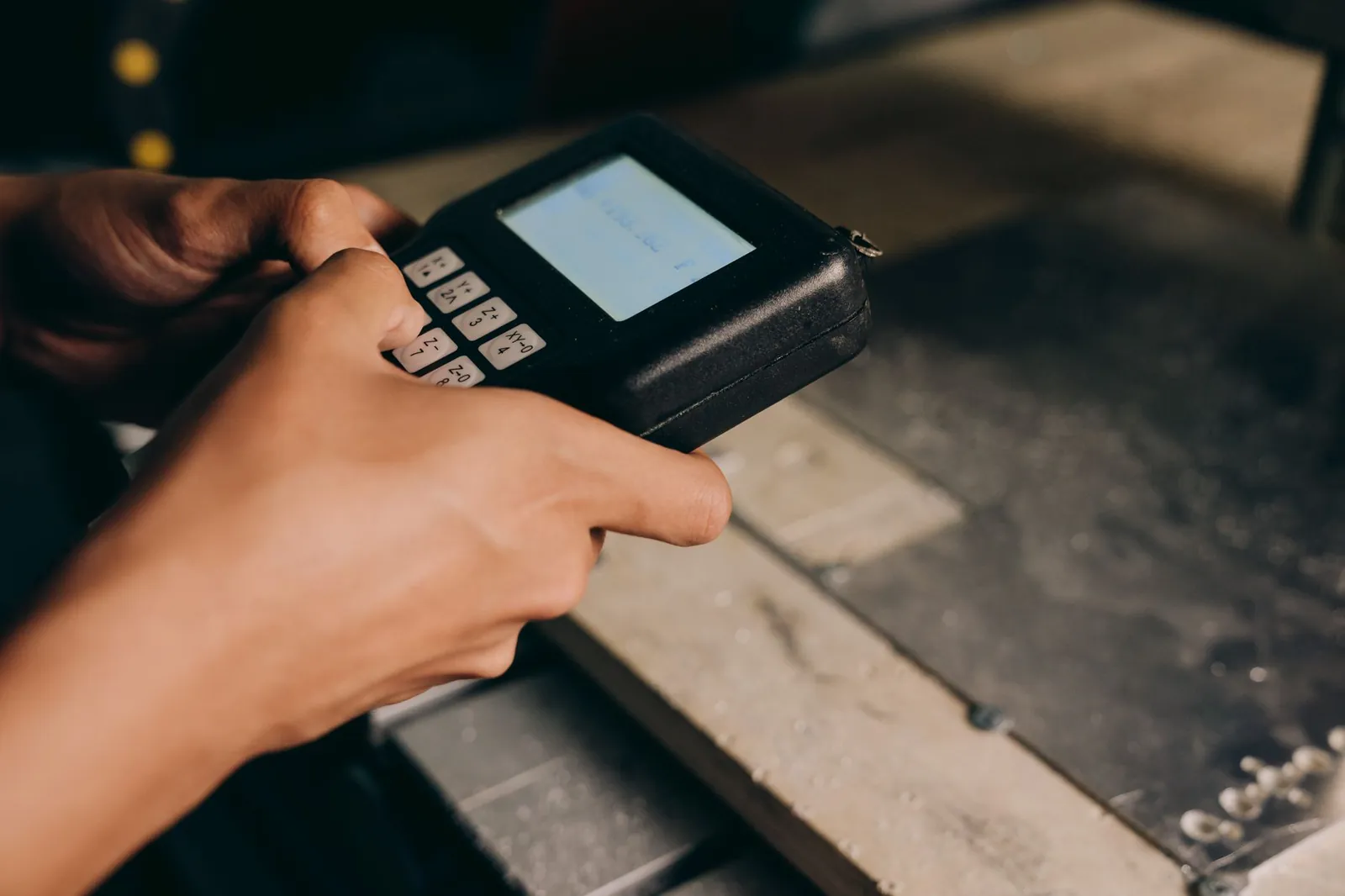
Connected drives let a facility tie access cards, cycle counters and fault logs into building management software. The practical win is early warning: a rising current draw announces itself in the log weeks before it stops the door. Heavy-duty operator vendors make the same argument, listing smart connections and remote monitoring among the core reasons to motorize.
Integration also removes the human error layer. Timed closing, interlocks and role-based access all execute without relying on the busiest person in the building remembering to press a button.
Advantage 5: Faster Openings and Smaller Energy Bills
The fifth advantage is thermal. Every second a climate-controlled opening stands open, conditioned air trades places with the weather. A motorized door fights that on two fronts: it opens fast, and it closes reliably the moment traffic clears.
The envelope does the rest. Our sectional panels use 40 to 50 millimeter polyurethane foam cores with U-values down to 0.33 W/m²K. Cold room and clean room models add sealed, anti-frost designs. A drive unit that completes its cycle in seconds protects that insulation value by keeping it inside the building where it was paid for.
Cold storage operators notice this first, because refrigeration load drops when open cycles shorten. The same logic scales down to a workshop: less dust, less noise and less heat loss, from a drive that treats every cycle as a cost to minimize.
Advantage 6: Warranty That Follows the Motor
The sixth advantage is contractual rather than mechanical, and it is the one competitors never put in writing. A manufacturer that trusts its drive unit will separate the warranty tiers and publish them. We cover door bodies for two years, operators and motors for three years, and servo motors for five years. In-warranty spare parts ship by courier within five to seven days.
That ladder tells you where the engineering confidence sits. The servo tier carries the longest coverage, and it protects the component doing the hardest work. A parts pipeline measured in days converts a warranty from paper into uptime. When you compare quotes, ask each supplier for the motor of an industrial door warranty separately from the door. The answer sorts serious manufacturers from box movers.

Matching the Motor Advantage to Your Facility
The six advantages are not equally valuable in every building, so weight them by what your operation loses when the door underperforms. The table below maps each advantage of the motor of an industrial door to the facility type that should bid hardest for it. You can browse our industrial doors range to see how the drives are packaged against each door type.
| Advantage | Payoff you should measure | Facility that values it most |
|---|---|---|
| Cycle duty | Cycles per shift reached without overheating | Warehouses and distribution centers |
| Safety compliance | EN 12453 force limits and auto-reverse on record | Any site with staffed traffic; audited plants above all |
| Soft start | Maintenance spend per 10,000 cycles | High-cycle sectional and shutter doors |
| Connectivity | Faults caught before stoppage | Multi-door logistics hubs; clean rooms |
| Speed and energy | Open-seconds per cycle; HVAC load | Cold storage and food or pharma plants |
| Warranty tier | Years of motor coverage; parts lead time | Overseas buyers and EPC contractors |
Two lessons sit behind the ranking. If you are new to the subject, start with our earlier piece on what the motor in industrial doors actually is, which covers the definitions. Our guide to what features make an industrial door then places the drive in the context of the full assembly. Second, sizing for a compact leaf follows different rules, which we detail in the piece on choosing a motor for a compact industrial door.
Ranked by buyer payoff, cycle duty and the warranty tier are the two advantages to settle first, because they decide your downtime risk and your contract protection. The other four are amplifiers: safety compliance keeps the inspector quiet, soft start protects the budget, connectivity removes surprises, and speed saves energy you already paid to condition. When you are ready to match a drive to a specific opening, send the door size, cycle count and site conditions with your inquiry. Those three numbers let an engineer quote the right motor the first time.
Each advantage rests on hardware you can verify — see the seven functional features of an industrial door motor for the checklist.
Frequently Asked Questions
What does the motor of an industrial door actually do?
It automates the leaf, controls opening speed and braking force, and carries the safety functions: force limitation, obstruction detection and auto-reversing. Connected models also report cycles and faults. In short, it converts a static barrier into a controllable machine that can be audited.
How many cycles can an industrial door drive handle?
It depends on the duty rating, not the horsepower sticker. Our sectional torsion springs are rated beyond 30,000 cycles, and operators are matched to leaf weight and traffic so the assembly reaches those figures. Ask for the duty rating at your door weight.
Which safety standard applies to the motor of an industrial door?
EN 12453 covers the safety in use of power operated doors, including force limits and auto-reversing, while EN 13241 is the product standard for the complete industrial door. Our doors ship with CE declarations for the assembly and drive.
What is soft start and why should I pay for it?
Soft start ramps the leaf up from rest and decelerates it before the limits, instead of jerking it to speed. That reduces mechanical shock to belts, gears, hinges and springs, which extends component life and cuts maintenance. It is cheap insurance on a high-cycle door.
How long is an industrial door motor warranty?
At our factory: two years on the door body, three years on operators and motors, and five years on servo motors. In-warranty spare parts ship by courier in five to seven days. Compare warranty tiers between quotes; they reveal where a maker’s confidence sits.