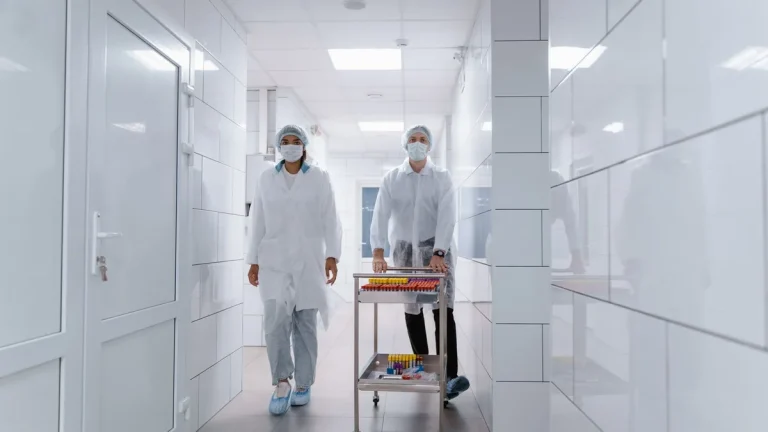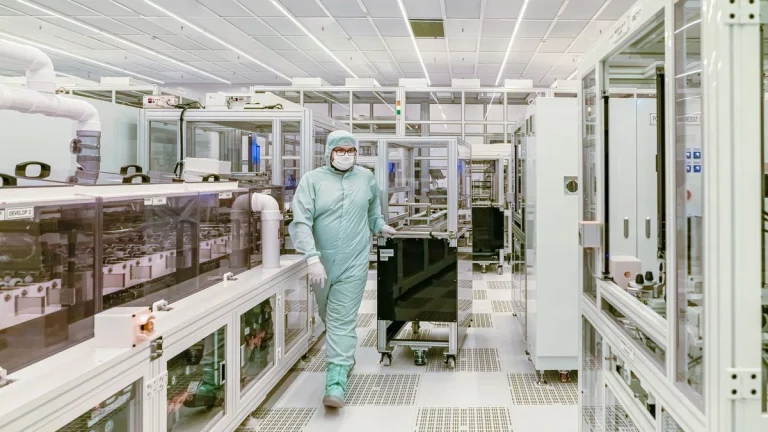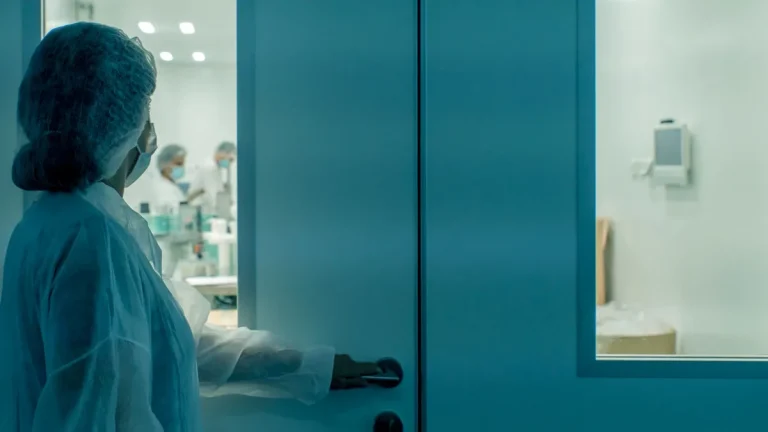
When engineering the architectural envelope of a modern pharmaceutical facility, semiconductor cleanroom, or biotechnology laboratory, wall partition selection represents a foundational containment decision. Partition walls do not merely define room boundaries; they form an unbroken biocontainment barrier that must withstand continuous static pressure differentials (15 to 50 Pa), resist aggressive daily sporicidal sanitizers, and integrate flush with cleanroom doors and pass-through chambers.
All too often, facility owners and general contractors treat partition panels as generic drywall or basic insulated warehouse cladding. However, utilizing porous, delaminating, or ledge-prone wall systems introduces catastrophic contamination hazards. Inferior surface coatings blister under vaporized hydrogen peroxide (VHP), core adhesives off-gas volatile organic compounds (VOCs), and protruding door framing profiles collect dust that triggers regulatory audit non-conformances during cGMP inspections.
Pairing high-performance modular wall panels with purpose-built clean room doors creates an airtight, hygienic barrier that satisfies ISO 14644-4 design guidelines. Below, we break down the engineering criteria, skin composites, core insulations, and door frame junction mechanics that facility engineers must evaluate when specifying cleanroom wall materials.
Where those walls take a window, the companion piece on clean room windows matches glazing and sealing choices to the same panel build-ups.

Core Performance Criteria for Cleanroom Partition Systems
Cleanroom wall systems must satisfy stringent architectural and contamination-control standards that far exceed commercial building codes.
Surface Non-Porous Integrity and Antimicrobial Properties
The outermost skin of a cleanroom wall partition serves as the primary defense against microbial colonization and particulate entrapment:
- Absolute Surface Impermeability: Panel faces must exhibit zero porosity, preventing cleaning chemicals, moisture, or bacterial endospores from penetrating into the composite substrate.
- Antimicrobial Surface Treatments: Advanced cleanroom panels integrate silver-ion or titanium dioxide matrices that actively reduce bacterial viability (achieving >99.9% reduction under ISO 22196 testing).
- Electrostatic Dissipation (ESD): In electronics and semiconductor cleanrooms, partition skins must incorporate conductive or dissipative surface coatings (surface resistivity 10^6 to 10^9 ohms/sq) to eliminate static charges that attract sub-micron airborne dust.
Structural Rigidity and Modular Demountability Engineering
Unlike permanent drywall construction, modern cleanrooms demand modular wall systems that accommodate future process reconfigurations:
- Demountable Tongue-and-Groove Interlocking: Prefabricated sandwich panels utilize extruded aluminum spline or cam-lock connections that allow individual panels to be removed and replaced without compromising adjoining room containment.
- Differential Pressure Deflection Resistance: Panels must maintain structural flatness under continuous 50 Pa static differential pressure gradients, restricting lateral deflection to less than L/300 of the unsupported ceiling height.
- Integrated Utility Chases: Modular panels incorporate pre-engineered vertical conduit raceways, enabling electrical, gas, and sensor wiring to route internally without surface-mounted conduits that collect dust.
Sandwich Panel Skin Materials: HPL vs Stainless Steel
The selection of the visible panel skin material balances mechanical impact durability, chemical resistance, and capital expenditure.
High-Pressure Laminate Resilience to Mechanical Impacts
High-Pressure Laminate (HPL) panels consist of multiple layers of phenolic-resin-impregnated kraft paper compressed under intense heat and pressure (over 9 MPa at 150°C), topped with a melamine protective wear layer:
- Superior Impact and Gouge Resistance: With a homogeneous core density exceeding 1,350 kg/m³, 4mm solid-core HPL resists severe strikes from heavy pallet carts and mobile equipment without denting or puncturing.
- Color Stability and Through-Color Integrity: Pigments are cured throughout the laminate thickness, ensuring that surface abrasions do not expose contrasting primer layers or raw metallic substrates.
- Non-Conductive Dielectric Safety: HPL provides electrical insulation in high-voltage equipment suites and battery manufacturing dry rooms.
Electropolished Stainless Steel Chemical Immunity Limits
Metallic sandwich panels feature skins fabricated from 0.6mm to 0.8mm cold-rolled austenitic stainless steel:
- AISI 304 vs AISI 316L Grades: AISI 304 provides robust protection in general processing rooms, whereas low-carbon AISI 316L (containing 2% molybdenum) is essential in suites exposed to daily chlorinated sanitizers or chlorine dioxide fumigation.
- Electropolished Hygiene (Ra < 0.4 µm): Mechanical polishing followed by electrochemical passivation removes microscopic surface peaks, eliminating anchor points for biofilm formation.
- Total Non-Combustibility: Stainless steel skins achieve Class A fire ratings, producing zero smoke development or toxic halogen gas emissions during thermal events.
Coated Galvanized Steel with Antimicrobial PVDF Films
In secondary pharmaceutical packaging and medium-grade electronic cleanrooms, pre-painted galvanized steel represents an economical alternative:
- Substrate Metallurgical Composition: Continuous hot-dip galvanized steel sheet (0.6mm thickness, Z275 zinc coating) provides structural rigidity and galvanic corrosion protection.
- Polyvinylidene Fluoride (PVDF) Topcoats: Factory-applied 25-micron PVDF fluoropolymer coatings resist chemical staining and withstand repeated scrubbing with alcohol solutions without gloss degradation.
“In sterile fill-finish suites, electropolished 316L stainless steel panels provide unparalleled chemical immunity, while HPL remains the premier choice for high-impact material transit corridors.”

Core Insulation Selection: Aluminum Honeycomb vs Mineral Rockwool
The core material laminated between panel skins dictates thermal conductivity, acoustic dampening, weight, and fire endurance.
Aluminum Honeycomb Ultra-Clean Non-Shedding Matrix
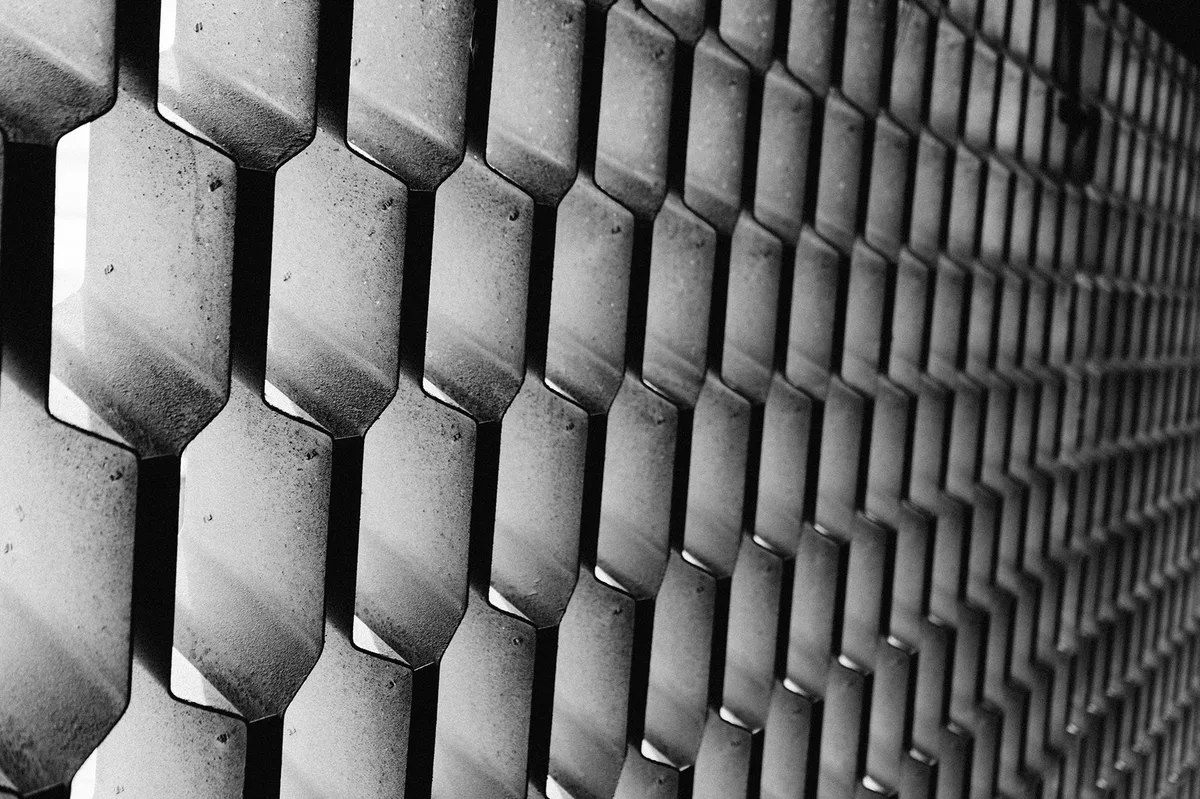
Aluminum honeycomb cores consist of expanded hexagonal cells fabricated from aerospace-grade 3003 or 5052 aluminum alloy foil (cell diameters 6mm to 19mm):
- High Strength-to-Weight Ratio: Honeycomb cores provide compressive strength exceeding 1.8 MPa while maintaining a total panel weight under 12 kg/m², significantly reducing dead-weight loads on facility structural trusses.
- Zero Particulate Shedding: If a panel is drilled or cut for pipe penetrations, the metallic honeycomb matrix does not generate airborne mineral fibers or friable dust, preserving ISO Class 5 cleanliness.
- Moisture and Mold Immunity: Metallic cell walls absorb zero ambient moisture, eliminating internal mold growth during humid warm-water washdown cycles.
Hydrophobic Rockwool Fire Protection Ratings and Density
Mineral rockwool insulation consists of basalt stone fibers bound with thermosetting resins and treated with hydrophobic silicone oils:
- Certified Fire Separation: High-density rockwool (100 to 120 kg/m³) provides certified EN 1364-1 fire resistance ratings from 60 to 120 minutes, serving as reliably firewalls between hazardous solvent storage and production suites.
- Acoustic Attenuation: Fibrous basalt structures deliver sound transmission loss (STC ratings > 38 dB), dampening mechanical noise generated by adjacent air handling units and compressors.
- Hydrophobic Repellency: Modern cleanroom rockwool cores achieve water absorption rates < 1.0 kg/m² under ASTM C1104 testing, preventing internal moisture retention in washdown suites.
Thermal Conductivity and U-Value Performance Comparison
Insulation selection directly impacts facility HVAC energy efficiency and condensation control:
- Low Thermal Conductivity of Mineral Wool: Rockwool cores exhibit a low thermal conductivity (lambda = 0.038 W/m·K), delivering a U-value of 0.72 W/m²·K on 50mm panels. This prevents dew-point condensation when adjacent rooms operate at different temperatures.
- Aluminum Honeycomb Thermal Bridging: While honeycomb cores offer superior mechanical rigidity, their metallic structure conducts heat more readily (lambda = 0.065 W/m·K), requiring secondary thermal breaks when separating refrigerated cold suites from ambient packaging halls.
Flush Interface Integration Between Walls and Door Assemblies
A cleanroom wall partition is only as effective as its physical transitions to doors, viewing windows, and floor finishes.
Extruded Aluminum Subframe Coving and Clip Interfaces
Door framing integration requires precision mechanical engineering to prevent particulate traps:
- Two-Piece Clamping Subframes: Cleanroom door frames utilize modular two-piece aluminum extrusions that wrap cleanly around 50mm or 100mm wall panel profiles, clamping the core without exposed fastener screws.
- Flush Alignment Geometry: The door leaf and wall skin must align on the same physical plane on the primary cleanroom side, eliminating 90-degree horizontal ledges where airborne particulates settle.
- Concealed Magnetic Hardware: Concealed mortise hinges, magnetic door position switches, and flush-mounted electromagnetic locks preserve smooth panel surfaces without protruding hardware.
Eliminating Dust Traps in Partition Door Jambs
Perimeter gasketing and sealant details must satisfy cGMP washability requirements:
- Continuous Non-Fungicidal Silicone Caulking: Gaps between door jambs and partition skins are filled with USP Class VI certified, non-outgassing silicone sealant tooled to a 45-degree bevel.
- Integrated Radius Coving: Internal corners between partition walls, ceilings, and floors utilize 50mm-radius aluminum or PVC coving profiles, enabling mop heads to clean wall junctions without friction skips.
Airlock Advisory: Protruding door frames that project 10mm to 20mm beyond the wall surface violate revised cGMP Annex 1 visual inspection standards. Always mandate flush subframe transitions in your architectural specifications.
Sanitization Chemical Resistance Across VHP and Chlorine Protocols
Daily cleaning regimens in biopharmaceutical and sterile packaging facilities expose wall panels to intense chemical degradation.
Accelerated Aging Under Hydrogen Peroxide Vapor Exposure
Decontamination testing ensures that wall skins do not blister or lose adhesion over decades of service:
- VHP Cycle Durability: Under cyclic automated decontamination (800 to 1,200 ppm H2O2 at 75% relative humidity), premium HPL and PVDF-coated steel panels endure over 2,000 exposure cycles without surface hazing, micro-cracking, or chalking.
- Chlorine Dioxide Tolerance: In viral vector and spore production suites, gaseous chlorine dioxide fumigation (1.0 to 2.5 mg/L) causes rapid oxidation in standard epoxy finishes, whereas fluoropolymer and 316L surfaces remain fully immune.
Testing Tip: Request ASTM D543 chemical resistance certifications for your facility’s specific disinfectant suite (e.g., LpH, Vesphene, Spor-Klenz) before approving partition submittals.
Cleanroom Partition Wall Materials Engineering Comparison Matrix
The following engineering matrix outlines the technical parameters, structural capacities, and operational trade-offs across common cleanroom partition materials:
| Engineering Parameter | HPL on Aluminum Honeycomb | 316L Stainless Steel on Honeycomb | Coated Steel on Rockwool Core | Standard Commercial Drywall |
|---|---|---|---|---|
| Skin Core Density | 1,350 kg/m³ solid laminate | 7,900 kg/m³ austenitic steel | 7,850 kg/m³ galvanized steel | Gypsum core (700 kg/m³) |
| Compressive Strength | >1.8 MPa (honeycomb) | >2.0 MPa (honeycomb) | 0.15 to 0.25 MPa (rockwool) | <0.10 MPa (crumbles) |
| Fire Resistance Rating | Class B-s1,d0 (up to 30 min) | Class A1 Non-combustible | EN 1364-1 EI 60 to EI 120 | Varies (requires multi-layer) |
| Impact Resistance | Exceptional (zero denting) | High (can dent under carts) | Moderate (thin skins dent) | Very low (punctures easily) |
| Particulate Shedding | Zero shedding under impact | Zero shedding | Low (fibers shed if pierced) | High friable gypsum dust |
| Chemical Resistance | Resists VHP & alcohols | Immune to all sporicides | Epoxy coat can micro-crack | Paints blister and peel |
| Door Frame Flushness | Two-piece flush clamp-in | Fully welded flush jamb | Two-piece clamp subframe | Protruding drywall trim |
Frequently Asked Questions About Cleanroom Wall Materials
What is the recommended panel thickness for modular cleanroom partition walls?
Standard cleanroom modular wall panels are typically 50mm thick for standard non-load-bearing room partitions, and 100mm thick for demising walls requiring internal utility chases and dual-sided flush door frames.
When should aluminum honeycomb cores be selected over rockwool insulation?
Aluminum honeycomb cores should be selected for ISO Class 4 and 5 environments requiring ultra-clean, non-shedding characteristics and lightweight construction, whereas rockwool is preferred for fire-rated walls.
How do modular partition panels prevent microbial growth at panel joints?
Modular panels feature precision tongue-and-groove joints sealed with non-outgassing antimicrobial silicone, creating an unbroken, airtight barrier that prevents moisture ingress and bacterial harboring.
Can modular cleanroom partitions be modified after initial facility validation?
Yes, modular demountable partition systems allow individual panels to be detached and swapped for pass-throughs, doors, or windows with minimal dust generation and significantly reduced re-validation times.
How do flush cleanroom door frames integrate into modular wall panels?
Flush door frames utilize two-piece extruded aluminum subframes that clamp around the panel edge, sitting perfectly flush with the wall surface on the clean side to eliminate dust-settling ledges.
Request Engineering Consultation for Modular Partition Integration
Designing a certified cleanroom enclosure requires holistic architectural alignment between partition wall systems, ceiling grids, and doorway assemblies. Selecting sub-optimal panel composites compromises differential pressure control, degrades chemical cleanability, and introduces costly validation delays during facility commissioning.
Our cleanroom engineering team manufactures precision cleanroom doors, flush subframe assemblies, and architectural interfaces compatible with major global 50mm and 100mm modular panel wall systems. Contact our engineering specialists today to review your cleanroom panel specifications, evaluate door frame submittals, and request comprehensive submittal packages.