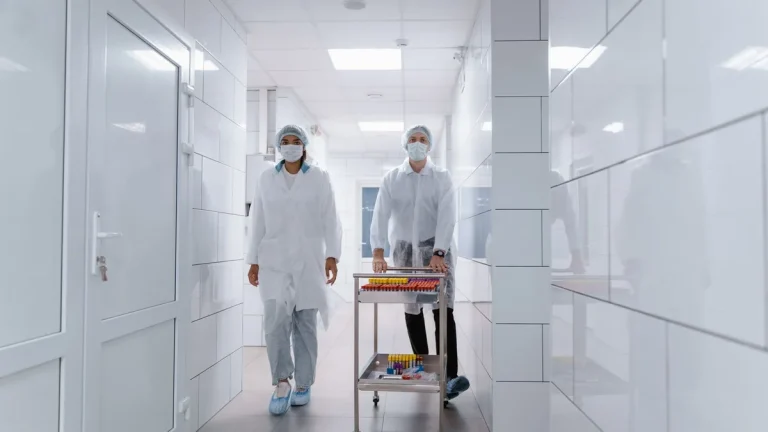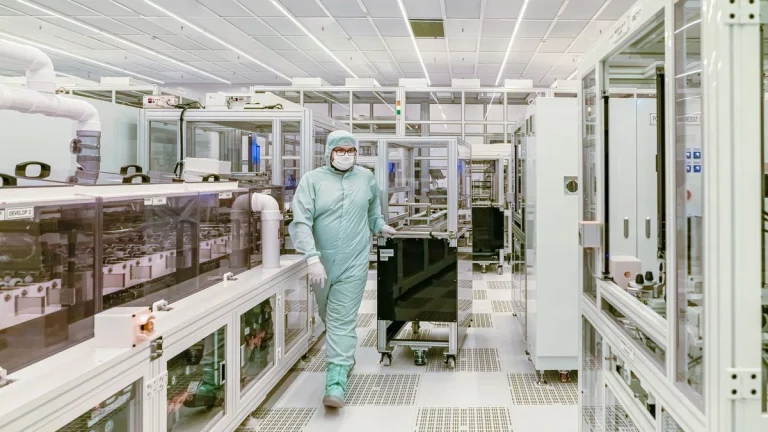
In high-acuity healthcare environments, aseptic pharmaceutical compounding suites, BSL-3/BSL-4 biocontainment laboratories, and radiopharmaceutical synthesis facilities, maintaining absolute environmental isolation is a critical regulatory mandate. Specifying standard commercial entrance assemblies invariably results in pressure decay, air leakage, and biohazard breach.
Table of Contents
- Drop-and-Slide Track Kinematics and Airtight Sealing Mechanics
- Hermetic Sliding Doors vs Sealed Swing Doors Selection
- Inflatable Gasket Systems vs Active Mechanical Compression
- Face Materials: Grade 316L Stainless Steel vs HPL
- Radiation Shielding: Lead-Lined Hermetic Door Engineering
- Touchless Drive Operators and Airlock Interlocking Logic
- Clean Room Hermetic Door Selection Specification Matrix
- Request Engineering Consultation for Hermetic Door Projects
Based on our engineering team’s extensive field experience designing, manufacturing, and commissioning ISO 14644 and cGMP-compliant cleanroom hardware, selecting the proper hermetic door configuration requires evaluating track kinematics, sealing physics, face metallurgy, radiation shielding, and automation drives. This engineering guide details how to choose the right clean room hermetic door assembly for your facility.
Hermetic hardware is one half of compliance; the purchase-side guide to ISO 14644 cleanroom door requirements covers the documents and acceptance script that make it auditable.
Drop-and-Slide Track Kinematics and Airtight Sealing Mechanics
Standard non-sealed architectural sliding doors leave an unavoidable 5mm to 10mm perimeter air clearance gap to prevent seal friction and rubbing during high-speed lateral travel, rendering them completely incapable of holding cleanroom pressure differentials. Hermetic sliding doors resolve this challenge through multi-axis track geometry.
“Under EN 12426 and ISO 14644-4 standards, true hermetic sliding doors utilize specialized drop-and-slide guide tracks that maintain zero contact during lateral movement, driving the door leaf 10mm downward and 8mm inward at the final closing position to achieve Class 4 airtightness under pressure differentials exceeding 100 Pa.”
45-Degree Dual-Axis Drop-and-Slide Track Engineering (10mm Down, 8mm In)
The precision kinematics of hermetic sliding doors operate through CNC-milled extruded aluminum overhead track profiles:
- Frictionless Lateral Traverse: Heavy-duty nylon rollers travel horizontally along an elevated aluminum rail, suspending the 50mm door leaf 8mm away from the wall frame.
- 45-Degree Track Notch Transition: As the leaf reaches within 50mm of the fully closed position, track rollers enter dual-angle downward ramps.
- Simultaneous Downward and Inward Cam Action: Gravitational and motor drive forces guide the leaf 10mm downward toward the finished floor and 8mm inward toward the stainless frame rebate.
- Four-Sided Gasket Compression: The continuous perimeter silicone gasket compresses uniformly around all four edges, achieving an airtight seal without scrubbing friction.
Continuous Molded Platinum-Cured Silicone Perimeter Gasketing
Unlike traditional segmented foam rubber tape seals that degrade, crack, and harbor microbial colonies under aggressive hospital chemical washdowns, cleanroom hermetic doors utilize continuous four-sided molded platinum-cured silicone perimeter gasketing engineered specifically for sterile environments:
- Seamless Corner Molds: 90-degree corners are injection-molded as monolithic units, eliminating joint gaps and particulate entrapment points.
- Multi-Lip Compression Profile: Dual hollow-chamber sealing lips provide progressive compression resistance across pressure ranges from -80 Pa to +120 Pa.
- Zero Seal Hardening: Resilient silicone elastomeric compounds retain >95% elastic recovery after 1,000,000 opening cycles under ASTM D395 test conditions.
Hermetic Sliding Doors vs Sealed Swing Doors Selection
Facility planners must carefully weigh spatial, ergonomic, and aerodynamic factors when deciding between hermetic sliding doors and sealed swing doors.
Spatial Envelope Efficiency and Wide Bed/Cart Passage in Surgical Suites
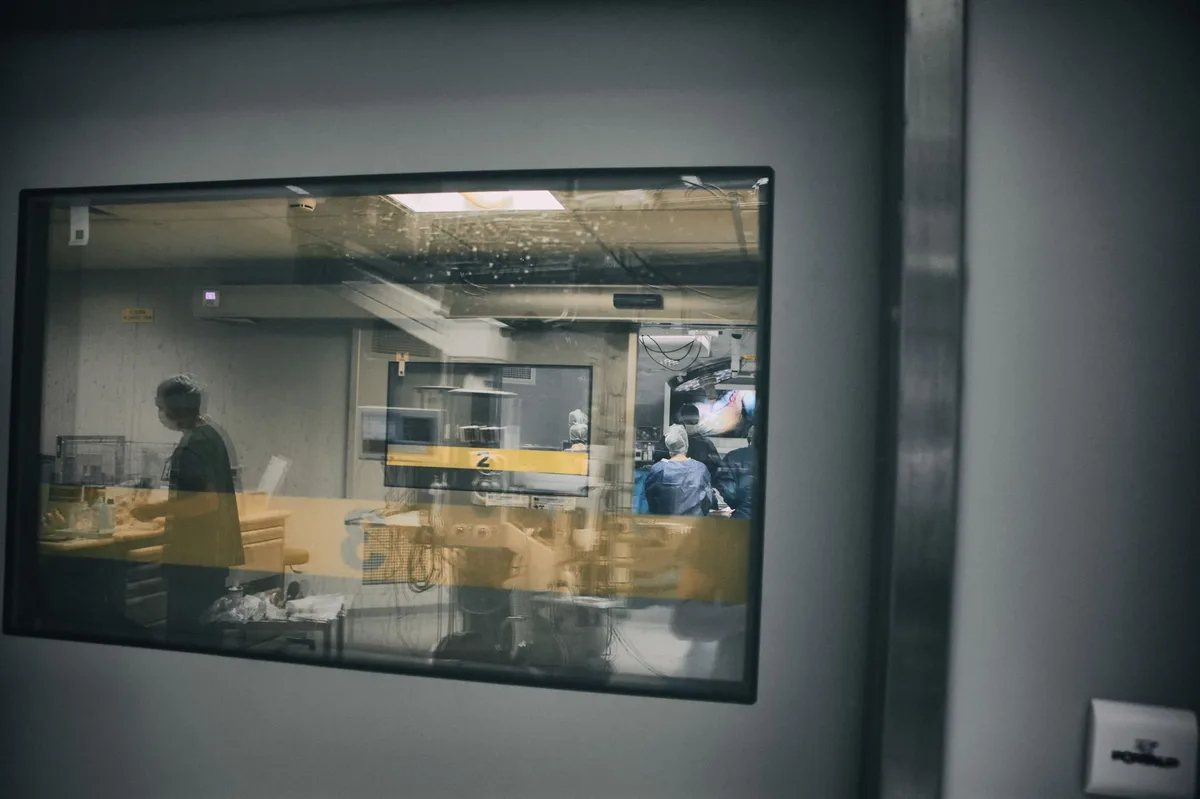
In modern hospital surgical operating theatres, sterile pharmaceutical packaging suites, and high-throughput material airlocks, the functional footprint and spatial swing clearance of entrance assemblies dramatically impact cleanroom spatial efficiency, air circulation patterns, and workflow productivity:
- Zero Swing-Arc Clearance Footprint: Sliding doors slide parallel against the corridor wall, preserving 100% of usable floor space inside tight cleanroom airlocks.
- Wide Clear Openings (Up to 2400mm): Single or bi-parting sliding panels easily accommodate wide surgical patient beds, heavy robotic imaging C-arms, and palletized cleanroom transfer carts.
- Reduced Air Turbulence Displacement: Swing doors displace large volumes of air (the piston effect) during rapid opening, disrupting laminar airflow, whereas sliding doors minimize room air disturbance.
Pressure Holding Directionality (Positive Isolation vs Negative Containment)
Pressure differential orientation dictates mechanical door behavior:
Pressure Directionality Notice: Swing doors seal tighter when room pressure pushes the leaf into the frame rebate, but can leak if pressure pushes against the latch. Hermetic drop-and-slide doors maintain identical Class 4 airtightness in both positive isolation (+50 Pa) and negative containment (-50 Pa) regimes.
Inflatable Gasket Systems vs Active Mechanical Compression
Depending on containment severity, cleanroom engineers specify either mechanical compression or pneumatic inflatable sealing systems.
Pneumatically Inflated Seals for BSL-4 and High-Containment Envelopes
In specialized Biosafety Level 3 (BSL-3) and BSL-4 high-containment laboratories handling dangerous airborne pathogens, specialized pneumatically inflatable silicone gasket systems provide the highest possible biological envelope isolation:
- Pneumatic Air Bladder Inflation: Compressed medical-grade air (1.5 to 2.5 bar) expands a continuous hollow silicone bladder outward, sealing clearance gaps up to 15mm.
- Zero Air Permeability: Exceeds EN 12426 Class 4 standards, providing 100% gastight containment during formaldehyde or chlorine dioxide room fumigation cycles.
- Automated Deflation Cycle: Before the door operator engages, a high-speed vacuum exhaust valve deflates the gasket within 1.5 seconds to prevent friction damage.
Maintenance-Free Mechanical Cam Drop Seals for High-Frequency Use
For hospital surgical theatres and pharmaceutical Grade B cleanrooms, mechanical drop-and-slide doors deliver superior reliability:
Mechanical Reliability Advantage: Mechanical drop-and-slide systems require zero compressed air supply lines, zero pneumatic solenoid valves, and zero backup air tanks, delivering maintenance-free operation across >1,000,000 opening cycles.
Face Materials: Grade 316L Stainless Steel vs HPL
The precise metallurgical and chemical composition of the door leaf outer face panel directly dictates long-term chemical biocide resistance, structural surface hygiene, impact resilience, and ongoing lifecycle cleanroom maintenance requirements.
Seamless Ra < 0.4 µm Electro-Polished 316L Stainless Steel
For pharmaceutical Grade A/B aseptic filling lines and sterile compounding pharmacies:
- Superior Metallurgy: Grade 316L stainless steel contains 2.5% molybdenum, providing maximum resistance against pitting corrosion from chlorine bleach and peracetic acid.
- Electro-Polished Surface Finish: Ultra-smooth Ra < 0.4 µm surface roughness prevents bacterial biofilm attachment and enables effortless wipe-down cleaning.
- Seamless Laser-Welded Corners: Door leaf edges feature continuous laser welding with zero open seams, rivets, or dirt traps under ISO 14644-4.
4mm Solid High-Pressure Laminate with Silver-Ion Antimicrobial Additives
For hospital operating theatres, patient isolation suites, and medical device assembly:
- High Impact Resilience: Solid 4mm thermoset phenolic resin panels absorb heavy impacts from hospital gurneys and stainless carts without denting or scratching.
- Embedded Antimicrobial Matrix: Silver-ion biocidal additives integrated throughout the resin core actively inhibit 99.9% of bacterial growth (MRSA, E. coli) under ISO 22196.
- Broad Color Palette: Available in architectural hospital pastels and clinical whites to support healthcare interior design standards.
Acoustic Attenuation (Rw 38 dB) and Airborne Noise Containment
Modern surgical operating theatres, animal holding vivariums, and automated cleanroom manufacturing suites generate significant ambient equipment noise:
- ISO 10140-2 Laboratory Certification: Multi-layer composite core assemblies achieve certified acoustic isolation ratings from Rw 34 dB to Rw 42 dB.
- Acoustic Glazing Integration: Flush observation sight panels incorporate dual laminated glass with acoustic PVB interlayers damping high-frequency machinery hum.
- Vibration-Isolated Drive Mounts: Overhead brushless DC drive rails mount onto elastomeric vibration-isolation dampeners, preventing motor hum transfer into structural wall panels.
Radiation Shielding: Lead-Lined Hermetic Door Engineering
In hybrid surgical suites, cardiac catheterization labs, and PET-CT scan facilities, hermetic doors must provide both airtight biological containment and diagnostic X-ray radiation shielding.
Continuous Internal Lead Sheet (1.0mm to 3.5mm Pb) Interlocking
Comprehensive diagnostic radiation attenuation requires complete, uninterrupted internal lead shielding engineered across every structural component of the cleanroom hermetic entrance assembly:
- Internal Monolithic Lead Cores: 99.94% pure virgin lead sheets (1.0mm, 2.0mm, 3.0mm, or 3.5mm Pb equivalency) laminate securely inside the 50mm door leaf core.
- Lead-Shielded Structural Subframes: Extruded aluminum or stainless steel frames incorporate matching internal lead linings that overlap the wall panel lead sheets by a minimum of 25mm.
- Radiation-Proof Hardware Cutouts: All lock mortises, roller brackets, and handle attachments feature lead-encapsulated backing plates to prevent radiation leak paths under NCRP Report 147.
Lead-Glass Sight Panels and Radiation-Proof Frame Rebates
Flush vision panels integrate high-density lead silicate glass providing certified 2.0mm to 3.5mm Pb equivalency, allowing surgical teams visual supervision while blocking scatter radiation.
Radiation Safety Regulation: Radiation-shielded doors must undergo physical radiation survey commissioning by a certified medical physicist prior to clinical operation, verifying zero radiation leakage across perimeter frame joints.
Touchless Drive Operators and Airlock Interlocking Logic
Advanced automated electric drive operator systems ensure completely hands-free, touchless sanitary passage for medical staff and rigorously enforce validated cleanroom airlock pressure cascade protocols.
24V DC Brushless Servo Drives with Obstacle Microprocessor Control
High-reliability electric drive mechanisms operate heavy hermetic leaves quietly and smoothly:
- Touchless Activation Pulse: A surgeon or operator waves a hand within 50mm to 300mm of an optical wave switch, sending a signal to the 24V DC brushless servo drive.
- S-Curve Acceleration Profile: The microprocessor controller drives the 200 kg leaf along a smooth S-curve velocity profile, accelerating up to 0.6 m/s without mechanical shudder.
- Obstacle Safety Reversal: Dual overhead active infrared presence sensors monitor the doorway threshold under EN 16005, instantly reversing door travel if an obstruction is detected.
- Controlled Deceleration and Hermetic Drop: As the leaf reaches the closing limit, the drive decelerates smoothly, dropping the leaf into the 45-degree track ramps for silent hermetic compression.
Commissioning Verification and Routine Gasket Maintenance SOPs
To ensure long-term regulatory compliance under cGMP Annex 1 and Joint Commission inspections, hermetic doors follow standardized validation procedures:
- Track Cam Drop Gauge Calibration: Measure vertical 10mm drop and horizontal 8mm inward travel using optical dial calipers to confirm uniform gasket compression.
- Smoke Visualization Pressure Decay Test: Conduct envelope smoke testing around all four perimeter edges to confirm zero airflow leakage under +50 Pa differential pressure.
- Safety Sensor Reversal Testing: Verify that active infrared presence sensors stop and reverse door travel within 100 milliseconds upon detecting an obstruction.
- Quarterly Silicone Seal Cleaning and Inspection: Inspect molded silicone perimeter gaskets for elasticity loss, residue accumulation, or chemical etching.
Compliance with Hospital Healthcare Standards (CDC & ASHRAE 170)
In healthcare surgical facilities and airborne infection isolation rooms (AIIR), clean room hermetic doors fulfill strict clinical engineering standards:
- ASHRAE 170 Table 7.1 Pressure Cascades: Maintains certified $\ge 2.5\, ext{Pa}$ ($\ge 0.01\, ext{in. w.g.}$) differential pressure across operating room boundaries.
- CDC Guideline for Environmental Infection Control: Flush, non-porous stainless steel and HPL surfaces prevent microbial colonization and endure continuous hospital-grade quaternary biocide wiping.
- FGI Guidelines for Design and Construction: 100% coplanar wall subframes eliminate dust-trapping architectural ledges throughout sterile corridors.
Clean Room Hermetic Door Selection Specification Matrix
The following engineering matrix compares technical specifications, airtightness classes, and application scopes across different clean room hermetic door assemblies.
| Specification Parameter | Hermetic Sliding Door (Single Leaf) | Bi-Parting Hermetic Sliding Door | Hermetic Swing Door | Inflatable Seal Biocontainment Door |
|---|---|---|---|---|
| Target Application | Operating Theatres & Aseptic Suites | Wide Transfer Airlocks & ICU | Small Sterile Airlocks | BSL-3 / BSL-4 Containment |
| Clear Opening Width | 900mm – 1800mm | 1800mm – 2600mm | 800mm – 1200mm | 900mm – 1400mm |
| Air Permeability (EN 12426) | Class 4 (<0.5 m³/h·m²) | Class 4 (<0.5 m³/h·m²) | Class 4 (<0.5 m³/h·m²) | Class 4+ (Gastight 100%) |
| Track Kinematics Mechanism | 45° Drop-and-Slide Cam | Dual Synchronized Drop Cam | Multi-Point Compression Hinge | Pneumatic Air Bladder (2 bar) |
| Face Panel Material Options | 316L Stainless / Solid HPL | 316L Stainless / Solid HPL | 316L Stainless / Solid HPL | Grade 316L Stainless Steel |
| Radiation Shielding (Pb) | 1.0mm – 3.5mm Pb (Optional) | 1.0mm – 3.5mm Pb (Optional) | 1.0mm – 2.5mm Pb (Optional) | Non-Shielded / Custom |
| Acoustic Isolation Rating | Rw 34 dB – Rw 38 dB | Rw 32 dB – Rw 36 dB | Rw 36 dB – Rw 42 dB | Rw 38 dB – Rw 44 dB |
| Drive Motor Automation | 24V DC Brushless Servo | Dual Synchronized Servo | Electro-Hydraulic Operator | Pneumatic / Electric Hybrid |
Frequently Asked Questions About Cleanroom Hermetic Doors
How do hermetic sliding doors achieve airtightness without gasket wear?
Hermetic sliding doors utilize a 45-degree drop-and-slide overhead track that suspends the door leaf away from the frame during lateral travel, dropping the leaf downward 10mm and inward 8mm only in the final closing position to compress seals without rubbing.
When should a facility choose hermetic sliding doors over hermetic swing doors?
Hermetic sliding doors are preferred in surgical operating suites and high-traffic cleanrooms because they eliminate swing-arc clearance dead zones, accommodate wider beds and carts (up to 2400mm), and minimize air turbulence during opening.
What lead thickness is required for radiology cleanroom hermetic doors?
Radiology and hybrid operating theatre doors typically require 1.0mm to 3.5mm pure lead sheet shielding (Pb equivalency) laminated inside the leaf, frame, and sight glass rebates under NCRP Report 147 guidelines.
What is the difference between mechanical hermetic doors and inflatable seal doors?
Mechanical hermetic doors use gravity and track cams to compress silicone gaskets, providing maintenance-free operation across 1,000,000 cycles, while inflatable seal doors use compressed air to inflate a silicone bladder for 100% gastight BSL-4 biocontainment.
Can hermetic doors integrate with cleanroom airlock interlock systems?
Yes, hermetic door microprocessor controllers easily connect to 24V PLC airlock interlock systems, enforcing sequential door cycling, air shower purge delays, and emergency fire alarm power-cut overrides.
Request Engineering Consultation for Hermetic Door Projects
Selecting clean room hermetic doors engineered with 45-degree drop-and-slide track kinematics, certified EN 12426 Class 4 airtightness, seamless 316L stainless steel or antimicrobial solid HPL faces, and lead radiation shielding ensures maximum biological containment and clinical workflow efficiency.
Our engineering division specializes in custom modular cleanroom doors, hermetic surgical entrance systems, and automated airlock assemblies tailored to ISO 14644, cGMP Annex 1, and hospital standards. Explore our complete clean room door product line or contact our hermetic door engineering consultants today to receive custom CAD/BIM submittal drawings, acoustic test data, and competitive project quotations.