In modern commercial and industrial facility design, selecting building envelope door assemblies is often treated as a standard structural architectural and hardware procurement decision. However, when specifying doors for pharmaceutical manufacturing suites, biotechnology research facilities, semiconductor clean rooms, and medical device assembly plants, applying standard industrial door specifications creates severe operational and regulatory failure modes.
Based on our engineering team’s experience designing both heavy-duty industrial entrance systems and certified cleanroom containment solutions, the mechanical differences between clean room doors and general industrial doors extend far beyond surface aesthetics. This engineering comparison guide analyzes the fundamental divergence in particulate shedding physics, airtight gasketing mechanics, material chemistry, and 10-year lifecycle economics between clean room doors and industrial doors.
Contamination Control and Particulate Shedding Standards
The foundational engineering distinction between cleanroom doors and standard industrial doors lies in active airborne particulate generation, mechanical friction shedding, and dynamic containment integrity during door cycling.
“Under ISO 14644-14 testing protocols, clean room doors must achieve Class 1 to Class 5 particle emission ratings, releasing fewer than 10 particles $\ge 0.5\,\mu\text{m}$ per cycle, whereas standard industrial doors release over 500,000 particles per cycle from friction points.”
ISO 14644-14 Class 1 Emission Ratings vs Warehouse Dust Generation
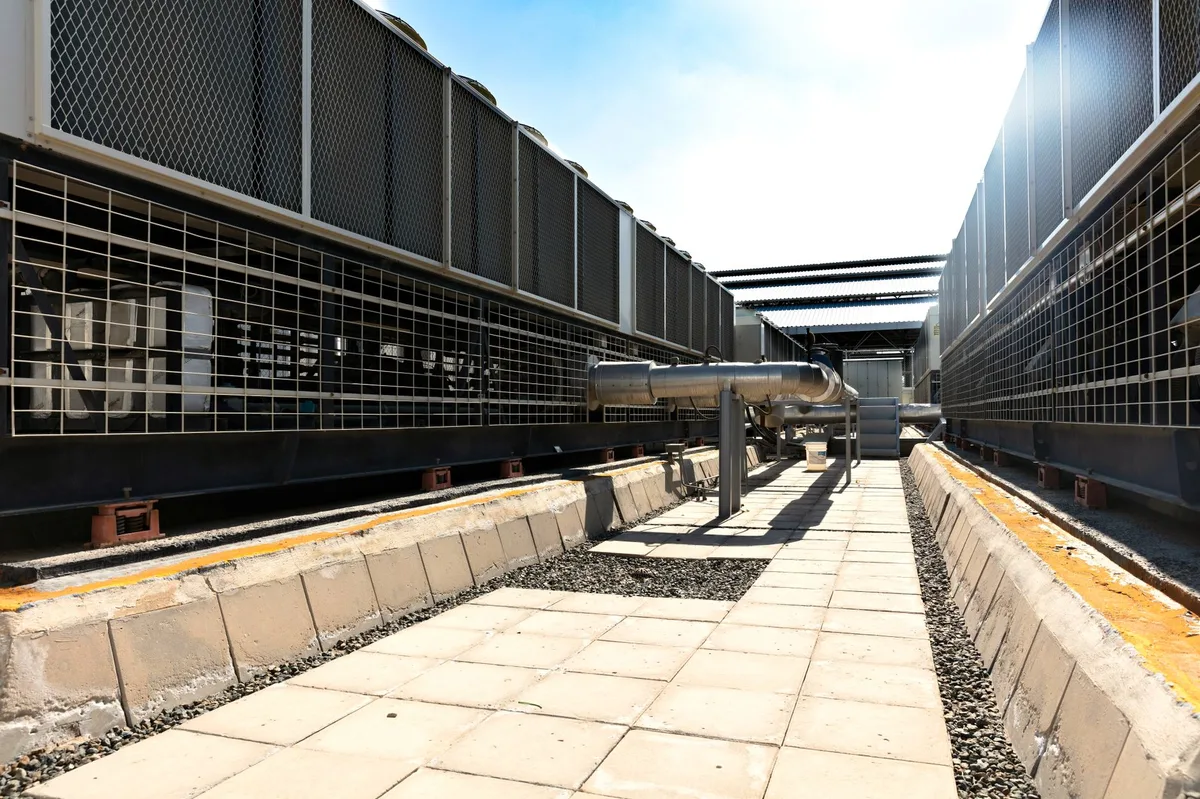
Industrial sectional overhead doors and standard steel rolling shutters rely on exposed steel roller chains, steel torsion springs, and unsealed track guides. Every time an industrial door opens, metal-on-metal friction and grease degradation shed millions of sub-micron metallic particles and carbon dust directly into the doorway slipstream.
- Zero-Friction Cleanroom Leaf Design: Smooth coplanar sandwich panels engineered with high-density aluminum honeycomb cores release zero internal fibers or particulates.
- Enclosed Drive Systems: Brushless DC servo actuators and concealed counterbalances housed within sealed, positive-pressure enclosures.
- Anti-Static Surface Resistivity: Surface resistivity maintained at 10⁹ to 10¹¹ ohms/sq to prevent airborne dust electrostatic attraction.
- Particle Deposition Prevention: Absence of horizontal ledges, exposed fasteners, or recessed tracks prevents dust accumulation.
Non-Shedding Aluminum Honeycomb Cores vs Exposed Mineral Fibers
Standard industrial fire doors and warehouse partition panels utilize loose unbonded mineral wool or raw polyurethane foam insulation cores. In high-traffic environments, mechanical cart impacts or puncture damage expose these fibrous materials, causing continuous particulate shedding into the ambient room air. If the outer steel skin is scratched or punctured, fibrous mineral particulates shed continuously. Cleanroom doors utilize structural aircraft-grade aluminum honeycomb bonded with non-outgassing structural epoxy, providing exceptional rigidity without particulate shedding risk.

Airtight Sealing and Differential Pressure Resistance
Cleanroom environments rely on continuous static pressure cascades (10 Pa to 50 Pa) to isolate sterile suites from adjacent corridors. Door perimeter sealing determines whether HVAC pressure cascades remain stable.
EN 12426 Class 4 Infiltration vs Industrial Perimeter Gaps
Standard industrial roller doors and sectional doors feature perimeter brush seals or loose vinyl flaps that allow air permeability exceeding 15 m³/h to 30 m³/h per m² at 50 Pa. Under EN 12426 standards, high-performance clean room doors achieve Class 4 airtightness, restricting total perimeter air leakage to under 0.5 m³/h·m².
Pressure Cascade Failure Warning: Installing industrial doors with brush seals across cleanroom airlocks causes continuous HVAC pressure decay alarms, requiring oversized air handling units and driving HVAC energy costs up by 30% to 50%.
Concealed Mechanical Drop Seals vs Floor Dragging Rubber Sweeps
Industrial doors frequently use bottom rubber sweeps that drag continuously across the concrete floor, generating rubber particulate debris and leaving air gaps at uneven floor joints. Cleanroom doors integrate active mechanical drop seals:
- Hinge-Side Actuation: As the cleanroom door leaf closes, an adjustable stainless steel plunger depresses against the frame jamb.
- Scissor-Linkage Downward Drive: An internal mechanical scissor linkage drives a multi-fin silicone gasket straight downward.
- Airtight Floor Compression: The silicone seal compresses 10mm directly against the smooth epoxy floor without horizontal sliding friction.
- Instantaneous Retraction: Upon handle actuation, an internal spring lifts the seal instantly, preventing dragging across cleanroom flooring.
Material Construction: 316L and HPL vs Galvanized Steel
Cleanroom surfaces must endure daily chemical washing and terminal gaseous sterilization routines that rapidly degrade standard industrial materials.
Chemical Inertness Against VHP, Bleach, and Sporicides
Industrial doors typically feature galvanized steel or standard polyester powder coatings that blister, peel, and corrode when exposed to pharmaceutical sporicides. Cleanroom doors are constructed from chemically inert face sheets:
- Grade 316L Stainless Steel: Contains 2% to 3% molybdenum, providing total resistance against concentrated sodium hypochlorite (bleach), chlorine dioxide, and VHP.
- Solid-Core High Pressure Laminate (HPL): 4mm solid phenolic resin leaf skins resist mechanical impact, alcohol wipe-downs, and quaternary ammonium biocides.
- Non-Porous Antimicrobial Finishes: Electro-polished Ra <0.4 µm stainless steel surfaces eliminate microscopic crevices where bacterial biofilms anchor.
Corrosion Resistance and Surface Porosity Under High Humidity
Standard industrial hollow metal doors frequently suffer from atmospheric moisture retention inside unsealed hollow frame cavities, leading to hidden internal rust and fungal growth. Cleanroom frames utilize 6063-T6 extruded aluminum with sealed internal coving or fully welded 316L stainless steel subframes that eliminate all moisture ingress paths.
Material Selection Tip: In facilities utilizing automated Vaporized Hydrogen Peroxide (VHP) decontamination at concentrations up to 1,500 ppm, specify 316L stainless steel or solid HPL with medical-grade silicone perimeter gaskets to prevent seal embrittlement.
Dynamic Opening Speed and Turbulent Wake Contamination Physics
In high-traffic manufacturing corridors, door transit speed directly influences particle migration. When large industrial sectional doors open slowly (0.15 m/s to 0.25 m/s), the prolonged doorway opening creates severe thermal air currents and turbulent wake vortices that draw unclassified ambient air deep into clean zones. In contrast, cleanroom high-speed roll doors and automated swing doors operate with calibrated kinematics:
- High-Speed Cycle Rates: Operating speeds up to 1.5 m/s to 2.5 m/s reduce doorway open duration by over 75%, minimizing airborne cross-contamination exposure.
- Soft-Start Vector Control: Variable-frequency drives (VFD) eliminate sudden acceleration jerks that shed particulate dust or disturb laminar airflow patterns.
- Self-Repairing Zipper Guides: Flexible curtain edges dislodge upon accidental cart impact and automatically reset into side tracks without mechanical track damage.
Hardware Engineering: Concealed Mechanisms vs Exposed Tracks
Hardware design represents another stark contrast between cleanroom and industrial door engineering.
Concealed 3D Stainless Pivot Hinges vs Greased Overhead Rollers
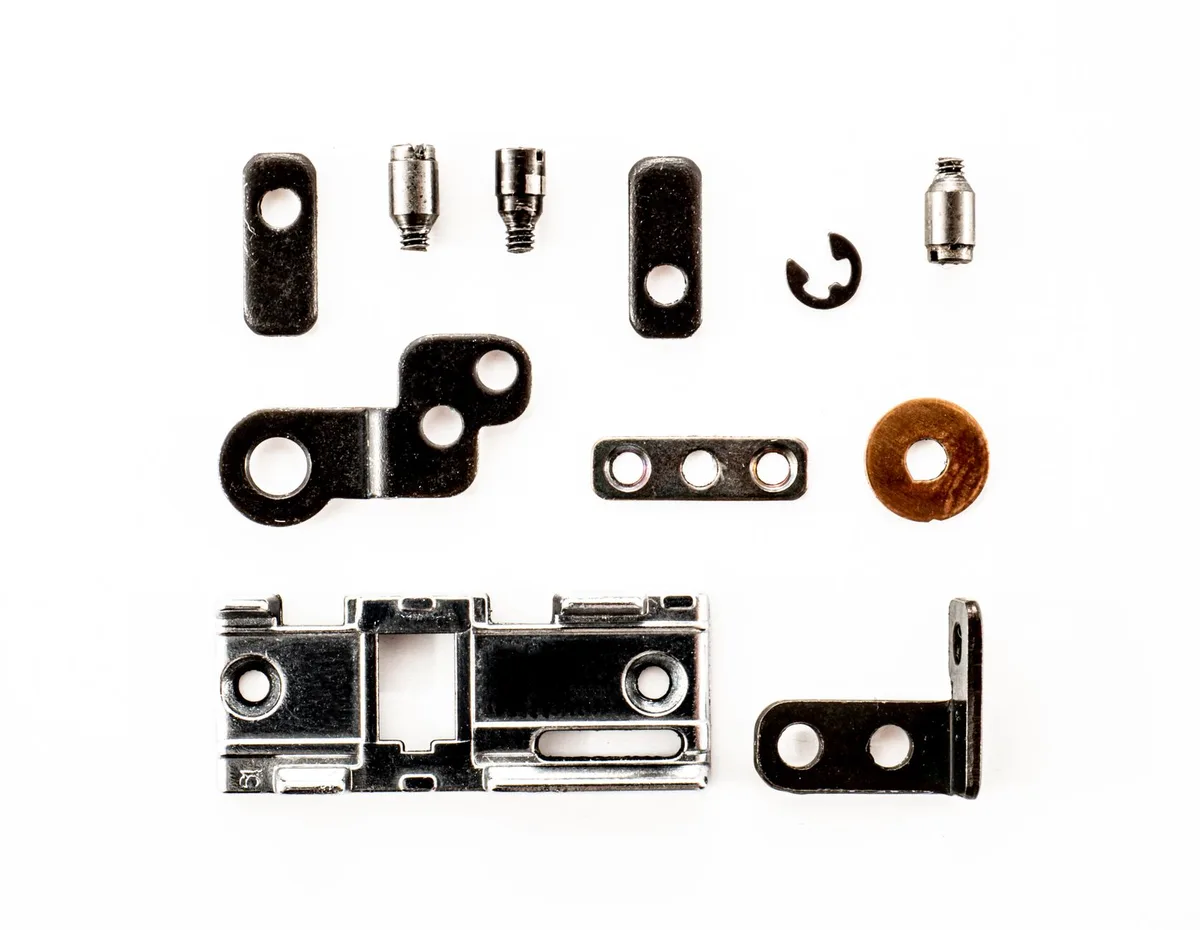
Industrial overhead doors rely on greased steel rollers running inside galvanized steel vertical tracks. These exposed mechanisms collect airborne contaminants and fling lubricant droplets during operation. Clean room doors incorporate fully concealed hardware:
- Concealed 3D Adjustable Hinges: Machined from solid 304/316 stainless steel, pivot hinges sit fully embedded inside the frame and leaf edge with zero exposed grease.
- High-Cycle Endurance Testing (EN 1191): Certified for over 1,000,000 continuous door opening cycles without leaf sagging, hinge play, or latch misalignment.
- Integrated Interlock Magnetic Sensors: Concealed 24V DC reed switches and monitored electromagnetic locks embedded within the frame header eliminate exposed conduit boxes.
- Flush Magnetic Latches: Solenoid-operated magnetic locks and flush roller latches eliminate dust-harboring mechanical strike plates.
- Integrated Flush Vision Panels: Double-glazed 6mm tempered glass units sit 100% flush on both door faces with 3A molecular sieve desiccants.
Microprocessor PLC Interlock Integration in Multi-Door Airlocks
While industrial doors operate independently via push buttons or pull cords, clean room doors in personnel gowning airlocks and material pass-throughs integrate intelligent microprocessor PLCs. These systems enforce sequential interlocking, traffic direction control, and automatic air shower purge timing to prevent cross-zone contamination.
Vision Panel Engineering: Flush Double Glazing vs Single-Pane Windows
Supervisor visibility and life safety require transparent vision panels. However, industrial doors typically utilize single-pane acrylic or polycarbonate viewports secured with protruding rubber gaskets, creating horizontal dirt traps and micro-crazing under chemical cleaning. Clean room doors incorporate pharmaceutical-grade vision engineering:
- 100% Coplanar Double Glazing: Dual 6mm toughened safety glass panes align flush with both door surfaces, eliminating dust-collecting window ledges.
- 3A Molecular Sieve Desiccant: Internal hollow aluminum spacers packed with synthetic zeolite desiccant permanently prevent internal glass fogging during facility washdowns.
- Zero-Degradation Optical Clarity: Inorganic tempered glass withstands daily wiping with concentrated bleach and sporicides without hazing or clouding.
Cutting HVAC Energy Costs from Door Air Leaks
While initial purchase prices for clean room doors exceed standard industrial doors, the total lifecycle cost equation overwhelmingly favors purpose-built cleanroom assemblies.
10-Year HVAC Infiltration Losses vs Initial Procurement Cost
Conditioned, HEPA-filtered cleanroom air is an expensive industrial commodity. Calculating the financial impact of continuous air loss through unsealed industrial doors demonstrates dramatic energy waste:
- Air Leakage Rate Comparison: An unsealed industrial door leaks ~25 m³/h·m² at 50 Pa, resulting in ~150 m³/h continuous air loss across a standard 2m x 3m doorway.
- HVAC Energy Expenditure: Conditioning and filtering replacement air costs approximately \.15 to \.25 per m³ annually in chiller and blower fan power.
- Annual Infiltration Penalty: Uncontrolled air leakage through one industrial doorway costs \,000 to \,500 annually in wasted HVAC utilities.
- 10-Year Total Cost of Ownership: Over a 10-year operational lifecycle, certified EN 12426 Class 4 clean room doors save over \,000 in HVAC operating costs per opening.
Audit Failure & Batch Rejection Risk: Beyond energy losses, installing unclassified industrial doors in sterile processing suites risks FDA warning letters, regulatory audit shutdowns, and compromised pharmaceutical batch product recalls costing millions of dollars.
Static Grounding and Electrostatic Discharge (ESD) Protection
In microelectronics fabrication and solvent-handling pharmaceutical suites, static electrical charges attract airborne dust particles and create dangerous explosive ignition risks. Standard industrial doors feature non-conductive rollers and unbonded tracks that generate electrostatic potentials exceeding 15,000 Volts. Clean room doors incorporate comprehensive static dissipation systems:
- Continuous Conductive Grounding: Stainless steel leaf skins and aluminum frames feature direct internal bonding cables providing <1.0 Ohm resistance to the facility earth ground.
- Static Dissipative Door Faces: Surface resistivity maintained at 10⁶ to 10⁹ ohms/sq under ESD STM11.11, instantly dissipating static charges upon operator touch.
- ATEX / IECEx Explosion-Proof Motors: Brushless DC drive motors and optical control sensors certified for Zone 1 / Zone 21 hazardous gas and dust environments.
Clean Room Doors vs Industrial Doors Specification Matrix
The following engineering matrix provides a direct technical comparison between purpose-built clean room doors and standard industrial doors across key mechanical and compliance parameters.
| Engineering Parameter | Clean Room Swing / Sliding Door | Industrial Overhead / Sectional Door | Cleanroom Rapid Roll Door | Industrial Roller Shutter |
|---|---|---|---|---|
| Target Environment | ISO Class 3 – ISO Class 8 | Warehouses & Loading Docks | ISO Class 6 – ISO Class 8 | General Factory External |
| Particulate Shedding (ISO 14644-14) | Class 1 / Class 2 Certified | Unclassified (>500k Particles) | Class 4 / Class 5 Certified | High Dust Generation |
| Air Permeability (EN 12426) | Class 4 (<0.5 m³/h·m² at 50 Pa) | Class 1 / Class 2 (>20 m³/h·m²) | Class 3 (<3.0 m³/h·m² at 50 Pa) | Unrated (>30 m³/h·m²) |
| Face Material Specification | 316L Stainless / Solid HPL | Galvanized Steel / Polyurethane | Non-Shedding PVC / TPU Fabric | Single-Wall Galvanized Slat |
| Hardware Construction | Concealed 3D Stainless Hinges | Exposed Steel Rollers & Tracks | Sealed Zipper Guide Tracks | Exposed Steel Chain & Guides |
| Chemical Biocide Durability | Resists 1,500 ppm VHP, ClO2, Bleach | Pitting & Paint Blistering | Resists Alcohol & Mild Biocides | Rapid Rusting & Oxidation |
| Airlock PLC Interlocking | Standard 24V Microprocessor PLC | Not Supported / External Relay | Standard Fast PLC Interlock | Manual / Independent Only |
| 10-Year HVAC Infiltration Cost | Minimal (<\ / Year) | High (\,500 – \,000 / Year) | Moderate (\ – \,000 / Year) | Severe (>\,000 / Year) |
Frequently Asked Questions About Cleanroom vs Industrial Doors
What is the main difference between clean room doors and industrial doors?
Clean room doors are engineered with non-shedding materials (316L/HPL), flush coplanar surfaces, concealed hardware, and certified EN 12426 Class 4 airtight seals, whereas industrial doors feature exposed tracks, chains, and loose seals that shed particulate matter and leak treated air.
Why cannot standard industrial overhead doors be installed in cleanrooms?
Industrial overhead doors shed metal and grease particulates from rollers and chains during operation, violate ISO 14644-1 particulate limits, lack chemical resistance to sporicides, and cannot maintain pressure cascades.
How do clean room doors maintain air pressure cascade stability?
Through four-sided airtight silicone gaskets, active mechanical drop-down floor seals, and warp-resistant aluminum honeycomb cores that withstand continuous static pressure differentials up to 50 Pa.
What materials are recommended for pharmaceutical cleanroom doors?
Grade 316L stainless steel (with electro-polished Ra <0.4 µm finish) for sterile injectable and API suites, and solid-core High Pressure Laminate (HPL) for biotechnology, healthcare, and medical device assembly cleanrooms.
How does cleanroom door airtightness affect long-term HVAC operating costs?
EN 12426 Class 4 airtight clean room doors prevent costly treated air infiltration into ambient areas, saving facilities \,000 to \,500 per doorway annually in HVAC chiller and fan power consumption.
Request Engineering Consultation for Cleanroom Upgrades
Specifying certified clean room doors engineered for zero particulate emission, certified EN 12426 Class 4 airtightness, and seamless PLC airlock interlocking ensures full cGMP and ISO 14644 compliance while slashing facility lifecycle energy costs.
Our engineering division designs and manufactures high-performance clean room door systems and heavy-duty industrial entrance solutions tailored to global manufacturing standards. Contact our technical engineering team today to receive CAD submittal drawings, airflow leakage calculations, and competitive volume proposals for your cleanroom project.