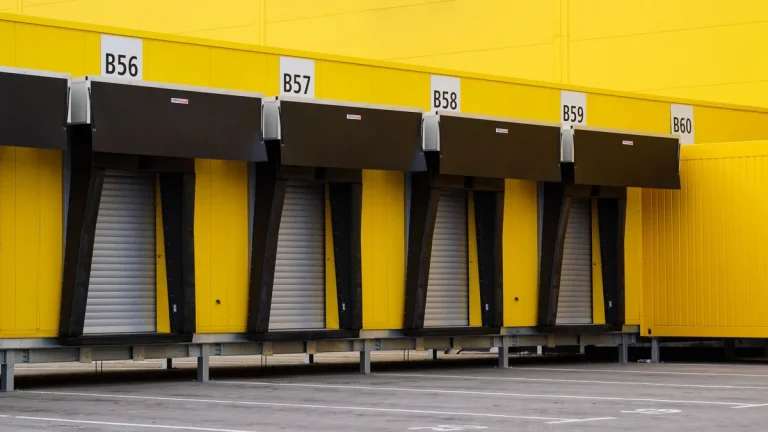
When operating motorized overhead entrance barriers in busy industrial facilities, mechanical failure risks present severe life-safety hazards. Heavy commercial roller shutters often weigh between 300 kg and 1,500 kg. If a primary drive chain snaps or a motor gearbox strips its internal gears, mechanical drive is lost. Gravitational forces can then cause the heavy door curtain to plummet in under 0.5 seconds.
Preventing catastrophic free-fall accidents requires installing an engineered electric roller shutter door anti-drop device on every overhead motorized barrel. In over two decades of manufacturing commercial entrance equipment and specialized safety hardware, field engineering teams have evaluated thousands of overhead door installations. Understanding the mechanical operating principles, European safety directives, torque calculations, and routine maintenance protocols of inertia safety brakes ensures your building remains fully compliant and safe.
1. The Critical Risk: Why Uncontrolled Curtain Free-Fall Occurs
Motorized commercial rolling closures operate through a high-torque mechanical transmission. The overhead barrel axle is driven by an electric motor via direct drive splines or heavy steel transmission chains. While these systems provide reliable service, mechanical components inevitably experience fatigue over time.
Three primary mechanical failure modes can trigger sudden curtain free-fall:
Drive Transmission Severance: Industrial drive roller chains can suffer catastrophic link fatigue or pin fracture under high starting torque, instantly disconnecting the overhead barrel from the motor brake.
Motor Gearbox Internal Stripping: Standard worm gear reducers experience continuous friction wear. Under severe continuous cycling, bronze worm wheel teeth can strip completely, releasing the barrel axle into free rotation.
End-Bearing and Axle Fracture: Extreme structural vibration or ungreased pillow block bearings can seize or fracture under heavy wind load pressure, dropping the drive shaft off its mounting bracket.
2. How Inertia Centrifugal Safety Brakes Work
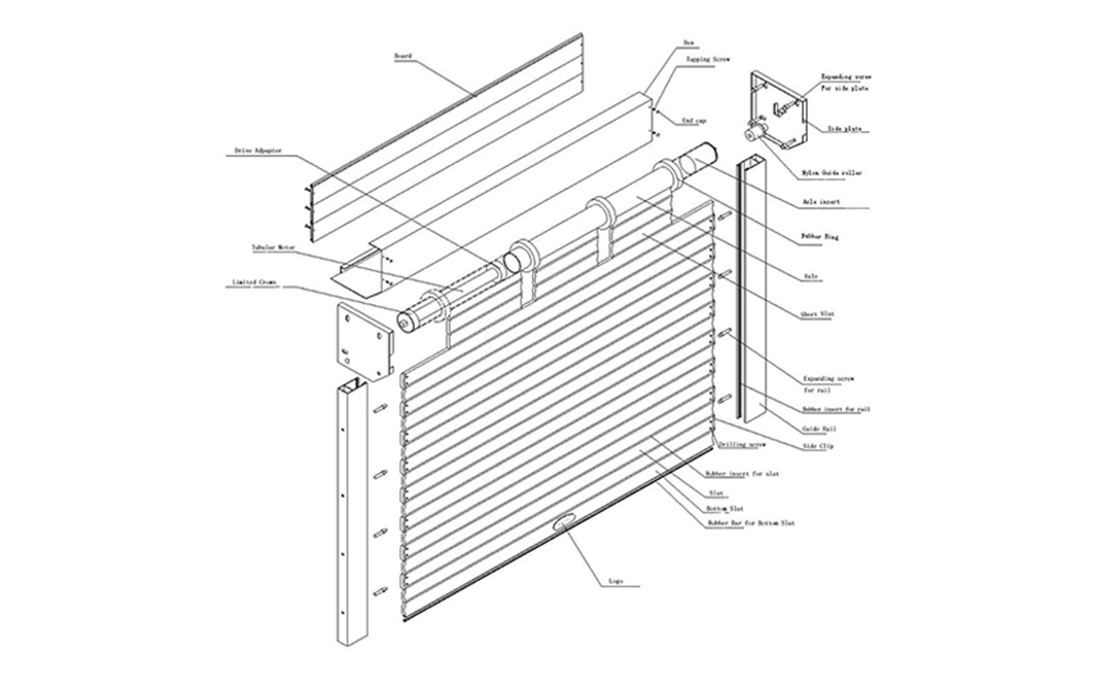
An electric roller shutter door anti-drop device is a purely mechanical fail-safe mechanism. It is installed on the non-drive idler end of the overhead barrel axle.
Under normal operational speeds, the central rotor turns synchronously with the door axle at approximately 15 to 25 RPM. Internal hardened steel pawls are held inward by precision calibrated retention springs, rotating freely within the outer housing without making contact.
If the drive transmission fails and gravity pulls the curtain into free-fall, the barrel axle acceleration rapidly increases rotational speed beyond 1.5 times nominal velocity. The resulting centrifugal force overcomes the spring retention, throwing the heavy pawls outward into deep locking notches in the heavy cast-steel housing.
This mechanical engagement locks the barrel axle solid within milliseconds. Simultaneously, an integrated safety microswitch instantly cuts electrical power to the motor control panel, preventing the motor from attempting to drive the locked shaft.

Need Certified Safety Brakes for Your Roller Doors?
Send your clear opening dimensions, curtain weight, and axle diameter to the engineering team for certified safety brake torque calculations and factory-direct pricing.
3. Compliance Standards: European EN 12604 and CE Regulations
Workplace health guidelines from the Health and Safety Executive strictly mandate that all power-operated overhead doors must incorporate secondary fail-safe systems to eliminate free-fall hazards.
European standard EN 12604 specifies mechanical safety requirements for industrial doors. It mandates that a single component failure must not allow the door leaf to drop more than 300 mm before being fully arrested.
Harmonized European machinery standard CE EN 13241 requires third-party certified laboratory testing of all anti-drop safety brakes. Manufacturers must prove that the safety brake can absorb the full dynamic shock load of a falling curtain without housing fracture or structural bracket detachment.

4. Sizing and Braking Torque Calculation for Heavy Curtains
Specifying an electric roller shutter door anti-drop device requires exact mechanical torque sizing. Selecting an undersized brake risks catastrophic housing fracture under dynamic shock loading:
The static holding torque is calculated using the total curtain mass, gravitational constant, and the outer radius of the fully coiled curtain roll:
Required Torque (Nm) = [Total Curtain Mass (kg) × 9.81 m/s² × Roll Radius (m)] × Safety Factor (1.5)
Commercial safety brakes are standardized into distinct torque ratings from 150 Nm to over 1,800 Nm. This wide range accommodates everything from compact retail shutters to heavy industrial hangar doors.
5. Safety Device Comparison: Inertia Brakes vs Bottom Edge Sensors
Facility planners often confuse active anti-crush sensors with passive mechanical anti-drop brakes. Both systems perform distinct, non-redundant safety functions mandated by safety directives:
| Safety System Feature | Mechanical Inertia Anti-Drop Brake | Active Safety Bottom Edge Sensor |
|---|---|---|
| Primary Hazard Protected | Curtain free-fall from drive component failure | Obstacle entrapment during normal powered closing |
| Operating Principle | Purely mechanical centrifugal pawl locking | Optoelectronic / pneumatic pressure contact |
| Power Requirement | Zero electrical power needed to arrest fall | Requires active 24V electrical supply |
| Governing European Code | EN 12604 (Mechanical aspects) | EN 12453 (Safety in use of power doors) |
| Response Time | Instantaneous (<50 milliseconds mechanical arrest) | Sensor signal triggers motor reversing cycle |
Quality directives from the ISO International Organization for Standardization emphasize that optical sensors cannot arrest gravity free-fall if the mechanical transmission severs.

6. Routine Inspection, Testing, and Resetting Protocols
To guarantee operational readiness, safety brakes must be inspected annually by certified overhead door technicians:
Inspect the mounting bracket bolts to verify structural rigidity against building steelwork. Check that the electrical microswitch wiring is securely connected to the motor emergency stop circuit.
Verify that internal damping mechanisms have not been contaminated by airborne dust or grease over-spray. The housing must remain cleanly sealed.
Post-Deployment Replacement Rule: If a safety brake ever deploys to arrest an actual high-speed free-fall event, the internal pawls, housing notches, and mounting brackets absorb tremendous kinetic energy. The safety brake assembly must be replaced immediately with a new certified unit prior to returning the door to operational service.
7. Engineering Safety Guidance for Your Facility
Installing a certified electric roller shutter door anti-drop device is a non-negotiable life-safety requirement for all commercial overhead closures. Pairing heavy-gauge curtain engineering with certified EN 12604 inertia safety brakes eliminates liability risks and protects facility personnel from catastrophic equipment failure.
Reviewing overhead door safety compliance for your facility?
If you are retrofitting older shutters or verifying safety brake torque sizing for new industrial bays, the engineering team is always available to review your curtain dimensions and verify certified safety hardware specifications to help you maintain full workplace compliance.
Frequently Asked Questions About Roller Shutter Anti-Drop Devices
What is an electric roller shutter door anti-drop device?
An anti-drop device is a mechanical inertia safety brake mounted on the barrel axle that automatically locks the door curtain in milliseconds if descent speed exceeds normal operating velocity, preventing free-fall.
Is an anti-drop safety brake legally required on commercial shutters?
Yes. Under European standard EN 12604 and CE EN 13241 regulations, all motorized overhead roller shutters operating in workplace environments must include a certified mechanical drop-prevention device.
Does an anti-drop brake require electrical power to lock the door?
No. The safety brake operates on pure mechanical centrifugal force and inertia. It locks the falling curtain instantly even during complete building power outages or electrical controller failure.
Can a safety brake be reset and reused after catching a falling door?
No. Deploying to arrest an actual free-fall event subjects the internal steel pawls and housing to extreme shock loading. Safety standards require replacing the brake with a new certified unit.
How often should roller shutter anti-drop brakes be inspected?
Safety brakes must undergo visual inspection and mechanical verification at least once every 12 months by certified overhead door engineers during routine facility maintenance audits.