
For decades, commercial facility managers and property owners faced frustrating compromises with overhead entrance systems. Standard steel doors in humid or coastal climates frequently rust and flake within years, while solid timber doors demand constant sanding and resealing to prevent rotting. Meanwhile, heavy door leaves place immense strain on springs and motor drives, leading to premature mechanical breakdowns.
The rapid rise of aluminium garage doors across modern commercial architecture reflects a fundamental engineering shift. Over two decades of entrance manufacturing, our engineering team has analyzed thousands of installations. In these trials, 6063-T5 aluminium alloy resolves traditional trade-offs through natural rust immunity, 45% hardware load reduction, and expansive glass capability.
Key Engineering Takeaways:
- Unmatched Corrosion Resistance: 6063-T5 aluminium alloy spontaneously forms an insoluble Al2O3 boundary, surviving over 3,000 hours of salt spray exposure with zero red rust.
- Longer Hardware Life: Cutting door mass by 45% lowers motor breakaway torque from 90 Nm to 50 Nm, extending torsion spring lifespan past 30,000 duty cycles.
- Expansive Glass Openings: High-modulus extruded profiles allow clean spans up to 6000 mm without center rail sagging.
- High Thermal Efficiency: Polyamide PA66 GF25 thermal breaks combined with 40 mm polyurethane core achieve composite U-values as low as 0.33 W/m2K.
- Zero Surface Painting: Factory Qualicoat Class 2 powder coatings eliminate the periodic scraping, priming, and repainting required by timber and steel.
Unmatched Corrosion Resistance for Coastal and Humid Climates
In aggressive environments near marine coastlines, standard galvanized steel doors frequently show severe edge rust beneath their paint within 3 to 5 years. Once atmospheric salt penetrates microscopic surface scratches, galvanic corrosion spreads rapidly beneath the coating. Consequently, steel panels flake, bubble, and lose structural strength.
Chemical Self-Passivation of 6063-T5 Aluminium Alloy
In contrast, structural aluminium alloy 6063-T5 contains almost zero iron. When exposed to ambient oxygen, raw aluminium reacts instantly to build a dense, microscopic aluminium oxide shield. Even if the surface suffers scrapes from heavy daily traffic, the metal re-passivates automatically on contact with air. Red rust simply cannot form on aluminium.
This natural oxide boundary remains tightly bonded to the underlying extrusion. Unlike iron rust, which expands in volume and peels away from the base substrate, the passivated aluminium barrier stays intact. This self-healing surface prevents airborne salt and industrial moisture from penetrating deeper into the structural lattice.
3,000-Hour ASTM B117 Salt Spray Durability Benchmark
When finished with architectural anodizing (AA15 or AA25) or Qualicoat Class 2 powder coatings, aluminium assemblies easily clear 3,000 hours of neutral salt spray testing. Testing protocols from ASTM International under ASTM B117 standards confirm long-term finish stability. Consequently, coastal facilities and car washes avoid recurring expenses for rust repairs.

Lightweight Construction That Extends Motor and Spring Life
From an applied kinematics perspective, physical material density dictates how quickly overhead hardware wears out. Structural steel has a density of roughly 7.85 g/cm3, whereas 6063-T5 aluminium alloy measures approximately 2.70 g/cm3. A standard 5000 mm by 2400 mm double door in steel weighs roughly 230 kg. An equivalent aluminium frame weighs only 120 kg.
Cutting Breakaway Drive Torque from 90 Nm to 50 Nm
This 45% weight reduction (see our structural analysis on the weight of aluminum alloy rolling shutters) dramatically decreases the counterbalancing inertia required from overhead torsion spring systems. Operating an aluminium door lowers initial motor breakaway torque from 90 Nm down to 50 Nm. Electric motor gearboxes, internal drive belts, and drive chains experience far less mechanical strain during daily cycling.
Extending Torsion Spring Lifespan Past 30,000 Cycles
Because counterbalancing springs work under less rotational tension, their fatigue lifespan increases substantially. Standard steel doors frequently exhaust their spring ratings within 10,000 to 15,000 cycles. Properly balanced aluminium doors reliably achieve 30,000 to 50,000 cycles before requiring mechanical replacement.
During sudden power failures, facility staff can easily open the balanced door by hand with just 10 to 15 kg of lifting force. For high-traffic logistics bays requiring rapid upward movement, pairing lightweight profiles with aluminium roller shutter doors ensures rapid opening without causing motor overheating. In wider industrial facility designs, specifying specialized heavy-duty industrial doors with non-ferrous components substantially lowers overall mechanical downtime.
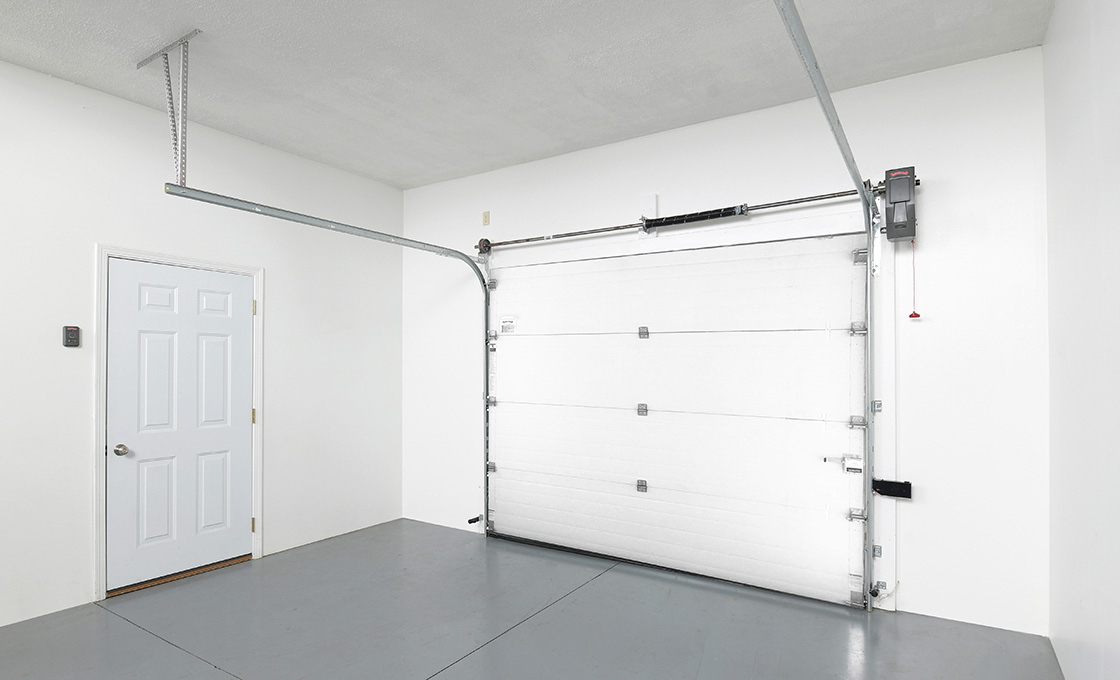
Modern Architectural Appeal and Full-View Glazing Options
Modern architecture prioritizes wide panoramic openings, clean sightlines, and abundant natural light. Traditional timber and roll-formed steel lack the structural stiffness required to hold large glass panes without becoming awkwardly thick and heavy.
High Section Modulus for 6000 mm Spans Without Sag
Precision hot-extrusion enables slim, high-strength stiles with wall thicknesses between 1.5 mm and 2.0 mm. Internal webbing inside the hollow profiles delivers strong bending resistance and a high moment of inertia. As a result, commercial garage openings up to 6000 mm wide remain perfectly straight without center sagging.
Glazing Configurations from Low-E Glass to Polycarbonate
These robust frames accommodate diverse glazing options. Choices include 5 mm tempered safety glass, double-glazed Low-E insulated glass, frosted privacy panels, and shatterproof polycarbonate sheets. Auto dealerships, modern fire stations, and upscale showrooms rely on full-view aluminium doors for clean styling and reliable wind resistance.
Energy Efficiency, Insulated Panels, and Thermal Breaks
Early metal doors had a reputation for letting heat escape due to high thermal conductivity. Modern composite panel engineering and structural thermal isolation have completely solved this deficiency.
High-Density Polyurethane Sandwich Core (U-Value 0.33)
Insulated aluminium panels use a three-layer sandwich design. Outer aluminium sheets encase a dense polyurethane foam core (40 kg/m3). The closed-cell foam bonds tightly to the metal skins, achieving composite heat transfer coefficients as low as 0.33 W/m2K to 0.55 W/m2K.
Polyamide PA66 GF25 Thermal Breaks and EPDM Seals
For glazed doors in extreme climates, polyamide (PA66 GF25) thermal breaks are inserted between exterior and interior extrusion chambers. This structural barrier interrupts conductive heat flow. It prevents condensation on internal framing and lowers seasonal facility HVAC power bills.
High-grade EPDM rubber seals around the top header, vertical jambs, and bottom astragal keep the entrance airtight even in severe weather. Specifying climate-controlled insulated sectional overhead doors ensures full compliance with local commercial building energy conservation standards.
Planning a Commercial Entrance Specification?
Consult directly with our factory engineering staff for custom wind load calculations, full-view glass layouts, or project CAD drawings.
Wind Load Resistance and Deflection Control for Wide Openings
Large exterior doors must withstand heavy atmospheric wind pressures without popping out of their tracks. Under European standard EN 12424, overhead doors are tested and rated from Class 0 up to Class 5 based on verified wind resistance.
Compliance with EN 12424 Class 3 and Class 4 Standards
Structural 6063-T5 aluminium alloy profiles feature an elastic modulus of roughly 69 GPa. With internal web stiffeners and continuous horizontal reinforcing struts, aluminium doors easily meet Class 3 (700 Pa) and Class 4 (1000 Pa) ratings. This ensures safe operation in typhoon-prone coastal regions subject to gusts over 120 km/h.
Heavy-Duty Horizontal Stiffener Trusses for 6-Meter Spans
Under maximum wind loads, door deflection must stay within 1/50th of the clear opening width. Precision-extruded aluminium stiles prevent panels from jumping out of vertical steel guide tracks. For openings wider than 6 meters, heavy-duty aluminium wind trusses are mounted horizontally across panel joints, adding immense stiffness without overloading the springs.

Low Maintenance and Long-Term Cost Effectiveness
True ownership cost includes the initial purchase price, routine upkeep supplies, and ongoing maintenance labor. Solid timber doors look great initially, but they demand sanding, sealing, and varnishing every 12 to 24 months to avoid rotting, swelling, and termite damage.
Aluminium assemblies never absorb moisture, rot, or twist out of shape. Over a 20-year operational lifecycle, wood doors often cost more in ongoing maintenance labor than their original purchase price. Steel doors in damp climates need frequent rust grinding and repainting. Aluminium completely eliminates these recurring material and labor expenses.
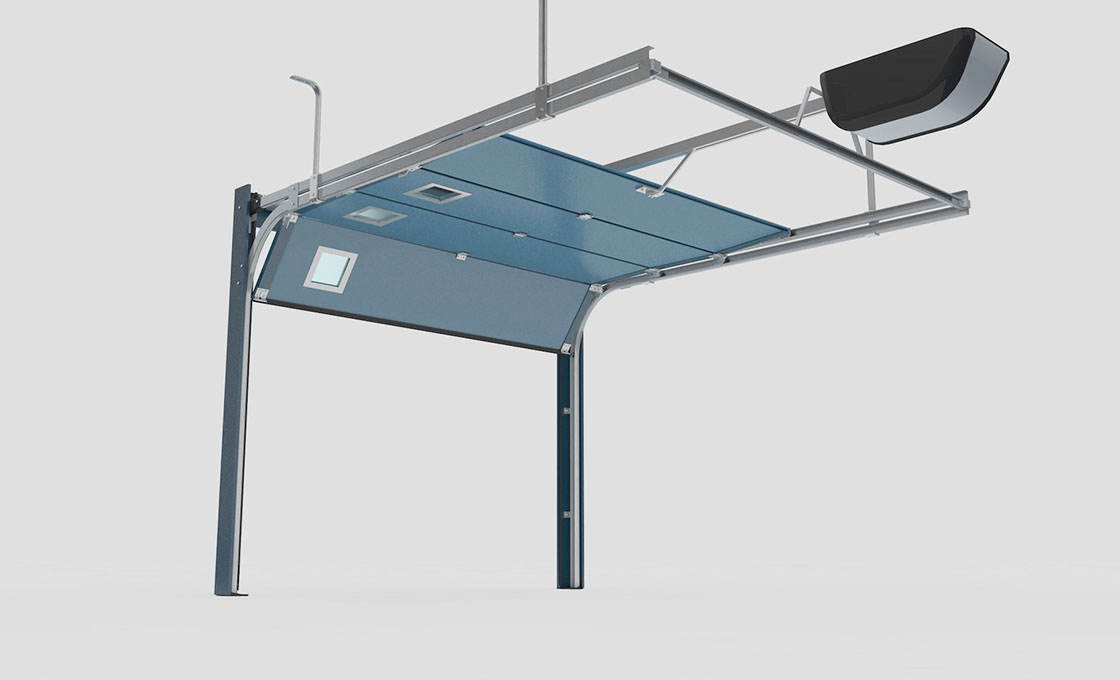
Material Comparison: Aluminium vs Steel vs Timber Doors
Choosing the right door material means balancing strength, weight, rust resistance, appearance, and upkeep. The engineering matrix below compares the four standard door materials across key performance benchmarks:
| Performance Property | 6063-T5 Aluminium | Galvanized Steel | Solid Hardwood Timber | Extruded PVC / Vinyl |
|---|---|---|---|---|
| Material Density | 2.70 g/cm3 (Lightweight) | 7.85 g/cm3 (Heavy) | 0.65–0.85 g/cm3 (Dense) | 1.38 g/cm3 (Light) |
| Corrosion Resistance | Superior (Self-passivating) | Moderate (Rusts if scratched) | Poor (Moisture rot risk) | High (No rust) |
| Hardware Wear Rate | Low (Reduces motor stress) | High (Heavy spring load) | Very High (Frequent tuning) | Low |
| Glazing Capability | Full-view panoramic glass | Small window cutouts | Small window inserts | Limited window area |
| Maintenance Routine | Mild soap water wash | Rust checks and touch-ups | Annual sanding and sealing | Periodic wash |
| Design Longevity | 20 to 30+ Years | 15 to 20 Years | 10 to 15 Years | 10 to 15 Years |
Engineering recommendations published by the ISO International Organization for Standardization emphasize that switching to lightweight, corrosion-resistant alloy assemblies substantially mitigates kinetic fatigue across high-cycle entrance mechanisms.
Key Procurement Standards for Commercial Project Specifiers
When evaluating aluminium garage doors for commercial facilities, industrial warehouses, or premium developments, specifiers should check four core engineering benchmarks:
Profile Wall Thickness: 1.5 mm vs 2.0 mm Extrusions
Always specify 6063-T5 alloy with at least 1.5 mm wall thickness for standard doors. For wide commercial openings over 5500 mm, require 2.0 mm thickness to eliminate wind flexure under storm conditions.
Surface Coatings and Certified Fall-Back Safety Arrestors
Ensure powder coatings meet Qualicoat Class 2 standards with 60 to 80 microns thickness. For direct oceanfront properties, specify Class 1 anodizing for maximum salt spray resistance.
Verify third-party safety testing under CE EN 13241 and EN 12453. All overhead doors must include bottom cable-break brackets and spring-break arrestors to stop doors from falling if a cable or spring snaps. Workplace equipment safety guidance from the Health and Safety Executive emphasizes that motorized overhead doors must incorporate certified fall-back protection devices to safeguard personnel.
Preventative Care and Routine Maintenance Protocols
While aluminium doors need far less work than timber or steel, a simple preventative maintenance routine keeps them running smoothly and protects manufacturer warranty coverage.
Semi-Annual Surface Neutral Washing Routine
Every six months, wash the aluminium frames and glass with a soft sponge and mild soap water. Avoid wire pads, strong alkaline washes, or harsh solvents that could scratch the protective powder finish.
Hardware Lubrication and Spring Balance Testing
Spray non-silicone lubricant on roller bearings, hinge pins, and spring coils twice a year. Keep vertical guide tracks clean of thick grease. Once a year, disconnect the electric motor and lift the door by hand to waist height; a well-balanced door should stay completely still without rising or dropping.
Engineering Verdict: Why Aluminium Is a Superior Investment
In conclusion, aluminium garage doors are far more than an aesthetic design choice. They represent an intelligent engineering upgrade over traditional materials. By eliminating rust corrosion, cutting hardware mass by 45%, and providing true thermal break options, aluminium delivers the lowest total cost of ownership across modern architecture.
For custom engineering consultations, wind calculations, or architectural shop drawings for your upcoming project, consulting with experienced entrance engineers ensures that your specifications meet exact structural and aesthetic demands.
Frequently Asked Questions About Aluminium Garage Doors
Do aluminium garage doors dent easily under impact?
Standard thin residential sheets can dent under blunt force. However, commercial doors utilize heavy-gauge 6063-T5 extruded framing (1.5–2.0 mm) or reinforced PU sandwich panels that deliver high impact resistance.
Can aluminium garage doors be finished in realistic woodgrain textures?
Yes. Modern heat-transfer powder coating technologies allow manufacturers to apply realistic woodgrain textures over aluminium profiles, providing the warmth of timber without rotting or resealing liabilities.
What is the typical lifespan of an aluminium garage door system?
With basic annual track lubrication and biannual surface rinsing, an architectural-grade aluminium garage door typically operates reliably for 20 to 30 years without experiencing rust or structural degradation.