Commercial and industrial aluminum roller shutters provide exceptional corrosion resistance, lightweight mechanical dynamics, and refined architectural aesthetics. Sourcing managers and contractors frequently encounter wide price variations in international supplier quotations. Baseline factory quotes often range from $45 to over $180 per square meter.
Understanding the engineering variables behind these cost differences is critical for securing high-performance entrance systems. This comprehensive aluminium roller shutter price guide breaks down raw material alloys, slat profiles, drive automation, and lifecycle value metrics to help commercial buyers make informed procurement decisions.
Executive Price Benchmarks and Real-World Cost Ranges
Commercial aluminium roller shutter price structures depend on surface area, slat profile design, wind load ratings, and motor packages. On an FOB factory basis, baseline costs fall into four primary categories tailored to specific operational requirements.
Single-skin extruded aluminum shutters offer an economical barrier for interior warehouse partitions and storefronts. Facilities requiring thermal control or high perimeter security demand double-skin polyurethane insulated slats or hurricane-rated reinforced profiles.
| Shutter Engineering Category | Typical Slat Specification | FOB Price Range (USD/m²) | Standard 3000x3000mm Unit Cost | Optimal Facility Application |
|---|---|---|---|---|
| Single-Skin Extruded Aluminum | 0.8–1.0mm 6063-T5 solid/perforated | $45 – $75 | $650 – $920 | Retail storefronts, kiosks, interior room partitions |
| PU Insulated Double-Skin Aluminum | 38–55mm profile, 40kg/m³ foam core | $75 – $120 | $950 – $1,380 | Commercial warehouses, food logistics, thermal bays |
| Heavy-Duty Hurricane / High Security | 1.2–1.5mm reinforced with end locks | $110 – $180 | $1,350 – $2,100 | Coastal ports, high-wind zones, secure distribution hubs |
| Full-Vision Polycarbonate / Aluminum | Aluminum framework with PC inserts | $85 – $145 | $1,050 – $1,650 | Commercial showrooms, bank lobbies, shopping malls |
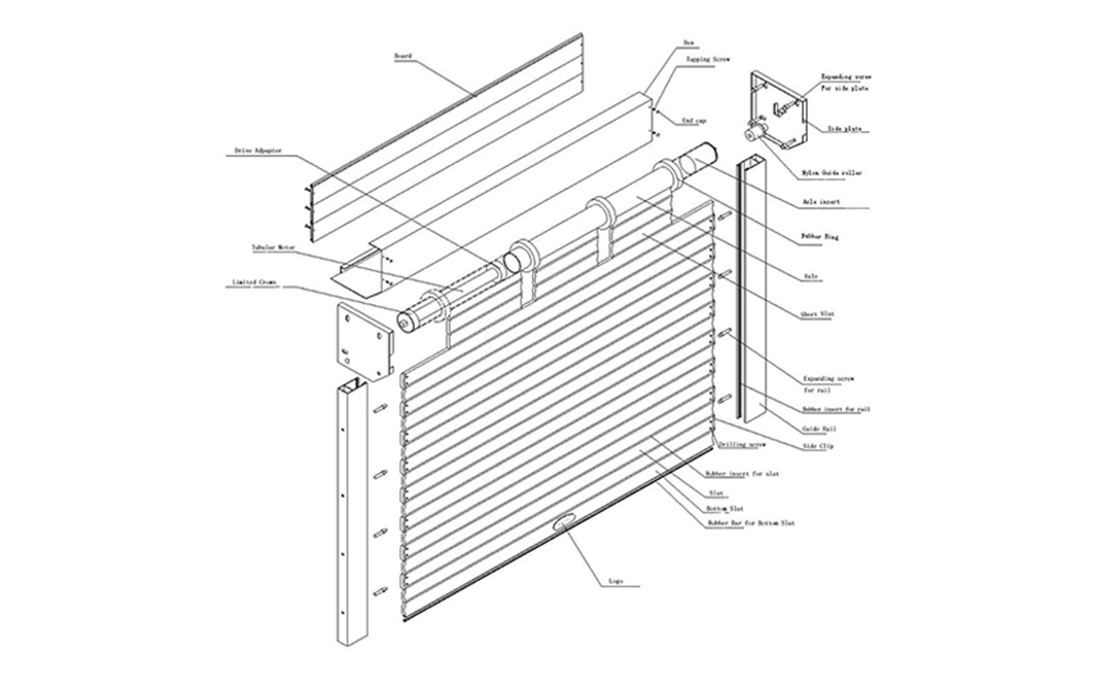
For a standard commercial bay measuring 3000 mm by 3000 mm, a complete motorized system averages between $650 and $1,380 FOB. This total package includes the assembled curtain, heavy-duty side guide rails, bottom profile with safety weatherstrip, tubular or side-mount motor, and basic electrical controls.

Material Engineering and Profile Gauge Cost Drivers
The primary driver of the aluminium roller shutter price is the raw material alloy quality and wall gauge. Industrial roll-up doors utilize extruded aluminum slats engineered to withstand repetitive mechanical deflection and wind pressure.
Top-tier manufacturers utilize virgin 6063-T5 architectural aluminum alloy. This material exhibits a density of 2.70 g/cm³ and a minimum tensile yield strength of 160 MPa. Low-cost suppliers often incorporate scrap recycled aluminum containing metallic impurities that cause premature stress fractures.
Slat wall thickness directly dictates raw material mass and structural rigidity. Increasing slat wall gauge from an economy 0.8mm profile to an industrial 1.2mm or 1.5mm profile increases raw aluminum weight by 35% to 50%. This structural upgrade directly impacts overall production costs.
Specifying verified alloy grades aligned with international standards, such as ASTM international standards, ensures structural integrity under continuous operational loading. This prevents sudden windstorm deflection failures.
Slat Construction: Single-Skin vs Insulated Polyurethane Profiles
Shutter curtain engineering divides into single-skin extruded profiles and double-skin composite slats filled with high-density polyurethane foam core insulation. Each design addresses distinct operational requirements and cost envelopes.
Single-skin aluminum slats are manufactured through direct continuous extrusion. They deliver high tensile stiffness, compact coiling diameters, and optional micro-perforations for ventilation. These profiles remain cost-effective for indoor installations where thermal insulation is unnecessary.
Insulated aluminum slats feature roll-formed or extruded double aluminum skins encapsulating a 40 to 50 kg/m³ polyurethane foam core. This composite structure creates an effective thermal barrier. It achieves overall heat transmission U-values between 1.2 and 2.2 W/m²K while dampening acoustic transmission by up to 18 dB.
Insulated double-skin curtains carry a 30% to 45% price premium over single-skin profiles. However, they substantially reduce thermal transfer around facility perimeters. The resulting HVAC energy savings frequently offset the initial capital premium within two to three operational years.
Motorization Drive Systems and Smart Control Packages
The choice of mechanical drive and electrical automation accounts for a substantial proportion of the total aluminium roller shutter price. Specifiers must balance cycle frequency, opening dimensions, and emergency manual override protocols.
Compact AC tubular motors (ranging from 50 to 120 Nm) integrate directly inside the rolling barrel axle. They are ideal for retail shops and light commercial bays with limited headroom. A reliable commercial tubular motor package typically adds $65 to $140 per opening.
For large industrial openings exceeding 5000 mm in width or weighing over 250 kg, external side-mount industrial gear motors are required. These heavy-duty drive units feature integrated safety drop brakes, mechanical limit switches, and manual emergency hand chains, adding $220 to $480 to the base manufacturing cost.
Integrating advanced automation sensors adds between $50 and $180 per doorway depending on integration complexity. Common options include microwave radar motion detectors, photoelectric safety light curtains, wireless remote keyfobs, and building management system interfaces.
Get direct factory pricing, structural CAD drawings, and wind load engineering reports for your commercial opening. Our application engineering team replies within 24 hours.
Selecting the proper drive system avoids premature mechanical fatigue. Facility operators should always consult engineering load charts to match motor torque with curtain weight and anticipated daily operational cycles.
Surface Treatments: Anodizing vs Architectural Powder Coating
Aluminum naturally forms a microscopic passivating oxide layer that prevents aggressive rust. Commercial installations require robust surface treatments to resist environmental abrasion, ultraviolet degradation, and chemical exposure.
Electrostatic powder coating utilizing architectural-grade polyester resin (60 to 80 microns thickness) is the most versatile option. It offers seamless matching across the complete RAL color spectrum. High-quality powder finishes provide dependable weather resistance for standard commercial facades at a baseline cost.
Architectural anodizing chemically converts the outer aluminum surface into an ultra-hard aluminum oxide layer (15 to 25 microns, AA15 to AA25 grade). Anodized finishes deliver superior scratch resistance and withstand over 3,000 hours of continuous salt spray testing, making them essential for coastal marine facilities and high-traffic public entrances.
Specifying premium architectural anodizing or fluorocarbon spray coatings adds approximately $12 to $25 per square meter over standard mill finish profiles. This investment delivers decades of maintenance-free cosmetic and structural protection.
Wind Load Engineering and Heavy-Duty Structural Hardware
Large exterior roll-up doors act as substantial aerodynamic surfaces during extreme weather events. Engineering a shutter to withstand high wind pressures requires specialized structural reinforcements that influence the final aluminium roller shutter price.
Under European standard EN 12424, commercial doors are categorized into wind resistance classes from Class 1 up to Class 5. Achieving Class 4 or Class 5 compliance requires extruded aluminum guide channels with wall thicknesses of 2.5mm to 3.5mm.
Additionally, wide-span hurricane shutters incorporate heavy-duty steel or cast-iron wind-lock end clips riveted to alternating slat ends. These wind locks engage deep structural pockets within the side guide tracks, preventing curtain blow-out under extreme negative suction forces.
For openings wider than 6000 mm, internal wind reinforcement struts or articulated mullion systems are integrated. These additions add $15 to $35 per square meter to ensure safe, deflection-free performance under gale-force atmospheric pressures.
Total Cost of Ownership: Aluminium vs Galvanized Steel
When evaluating roller shutter procurement budgets, savvy facility managers evaluate the Total Cost of Ownership across a 15-to-20-year operational lifecycle rather than focusing solely on upfront purchase price.
Galvanized steel roller shutters typically offer an upfront purchase discount of 15% to 25% compared to extruded aluminum models. However, steel curtains possess a structural density of 7.85 g/cm³—nearly triple that of aluminum (2.70 g/cm³)—which introduces significant long-term maintenance and operating costs.
| Operational Evaluation Metric | Extruded 6063-T5 Aluminium Shutter | Standard Galvanized Steel Rolling Door | Long-Term Financial & Operational Impact |
|---|---|---|---|
| Material Density & Curtain Mass | 2.70 g/cm³ (~10–14 kg/m²) | 7.85 g/cm³ (~22–28 kg/m²) | Aluminum reduces motor load and mechanical hardware stress by 45–50% |
| Atmospheric Corrosion Resistance | Immune to red rust; self-passivating Al2O3 layer | Prone to edge and perforation rust upon zinc breach | Steel requires rust treatment and repainting every 3–5 years ($400–$800/door) |
| Drive Mechanism & Spring Lifespan | Extended motor & spring life due to lower inertia | Accelerated spring fatigue and motor gear wear | Aluminum cuts drive mechanism replacement frequency by more than half |
| Operation Noise & Smoothness | Quiet gliding with nylon-buffered guide rails (<60 dB) | Metal-on-metal rattling during wind and cycling (>75 dB) | Superior acoustic comfort for commercial and residential environments |
| 15-Year Cumulative TCO Index | Lower overall cost (minimal service interventions) | Higher total cost due to paint maintenance & motor wear | Aluminum delivers superior net ROI despite higher initial capital expenditure |
Aluminum eliminates recurring rust painting across a 15-year lifecycle in coastal environments. Lower curtain mass and reduced spring fatigue make aluminum roll-up doors a highly cost-effective capital investment.
Buyers evaluating sectional door alternatives can review our technical guide on why aluminium garage doors are popular. You can also explore fabric rapid-roll systems in our analysis of high-speed doors versus roller shutters.
Hidden Risks and Substandard Material Shortcuts to Avoid
When reviewing unusually low international quotes for the aluminium roller shutter price, procurement officers must exercise diligence regarding common manufacturing shortcuts that jeopardize longevity and safety.
A prevalent cost-cutting tactic involves shaving slat wall thickness. Substandard suppliers often supply 0.6mm or 0.7mm profiles labeled as 1.0mm specifications, reducing structural rigidity by over 40% and leading to premature curtain bending during moderate wind events.
Another major risk area involves drive motor undersizing. Economy quotes frequently pair heavy curtains with undersized domestic tubular motors lacking adequate thermal overload protection, causing motor burn-out after brief periods of continuous cycling.
Commercial facilities must always verify that motorized shutter systems comply with established occupational safety standards, such as workplace machinery safety guidelines. This includes installing certified anti-drop safety brakes and optical bottom-edge sensors.

B2B Sourcing Strategy and Factory RFQ Specification Guide
Direct factory procurement allows commercial contractors, distributors, and facility owners to secure competitive tier-1 manufacturing pricing while maintaining rigorous quality control.
To eliminate ambiguity and receive precise quotation proposals for your aluminium roller shutter price, your Request for Quotation document should clearly specify eight critical engineering parameters:
- Clear Daylight Dimensions: Exact clear opening width and height in millimeters, plus available headroom and side room clearances.
- Alloy Grade and Slat Type: Virgin 6063-T5 alloy, single-skin extruded profile or double-skin PU foam insulated slat, specifying precise wall thickness (e.g., 1.0mm or 1.2mm).
- Surface Finishing Specification: Architectural powder coating with exact RAL color code or AA15/AA20 anodizing grade.
- Wind Load Engineering Class: Required EN 12424 wind resistance class or regional design wind speed (e.g., Class 3, 100 km/h).
- Drive Automation Requirements: AC tubular motor or external side-mount industrial gear motor, including operating voltage (220V/380V, 50/60Hz) and emergency manual chain override.
- Safety and Sensor Controls: Wireless optical safety edge, photoelectric light curtains, wall push-button switches, and remote transmitters.
- International Safety Compliance: Mandatory CE EN 13241 and EN 12453 manufacturing compliance certification with factory test reports.
- Export Packaging Standards: Heavy-duty steel crate or multi-layer bubble wrap with protective edge guards for secure containerized ocean transport.
Partnering with an agile manufacturing facility offering flexible low minimum order quantities (1 unit MOQ for bespoke custom sizes) ensures project flexibility. Fast sample prototyping (7 to 15 business days) and streamlined full container production (20 to 35 business days) provide dependable delivery schedules.
Facility Preventative Maintenance and Lifecycle Care Protocols
While aluminum roller shutters require significantly less maintenance than steel alternatives, adhering to structured preventative maintenance protocols maximizes service life and preserves warranty coverage.
Bi-annual inspections should focus on clearing debris from vertical guide tracks, inspecting bottom EPDM weatherseals for wear, and verifying optical safety sensor responsiveness during door descent.
Drive motors, bearing brackets, and counterbalance spring assemblies should be lubricated annually with non-greasy silicone or lithium lubricants. Avoid heavy oils that attract dust and abrasive particulate matter.
Frequently Asked Questions About Aluminium Shutter Prices
How much does a commercial aluminium roller shutter cost per square meter?
Single-skin extruded profiles range from $45 to $75 per square meter. Polyurethane insulated slats cost between $75 and $120 per square meter. Heavy-duty hurricane-rated profiles range from $110 to $180 per square meter on an FOB export basis.
Is an aluminium roller shutter more expensive than galvanized steel?
Aluminium roller shutters have an initial purchase price approximately 15% to 25% higher than galvanized steel. However, their superior rust resistance, lower curtain weight, and reduced motor wear deliver a lower total cost of ownership over 15 years.
What factors cause price variations in international supplier quotes?
Major cost factors include alloy purity (6063-T5 virgin alloy vs scrap aluminum) and slat wall thickness (0.8mm vs 1.2mm). Surface finishing (powder coating vs AA20 anodizing) and drive motor engineering also create significant price differences.