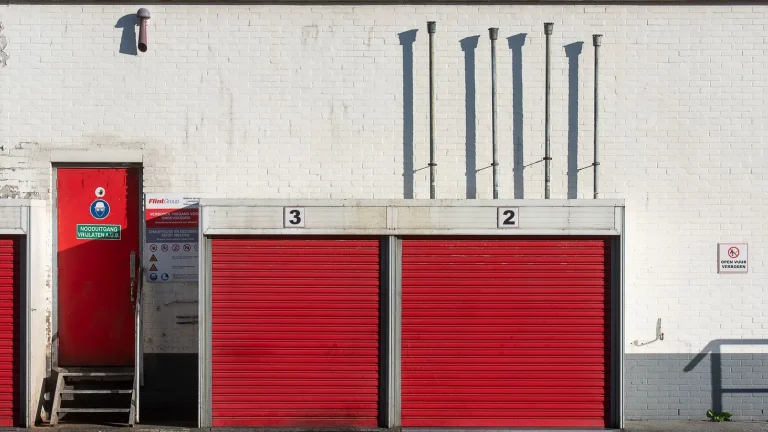







The commissioning sheet said pass, and for three months the pump room did its job in peace. Then the office that shares the block wall sent a written complaint. Every door cycle came through the plaster as a low thud, followed by a rattling duct, forty or fifty times a shift. Nobody had put a number against noise, so nobody had bought a number. That gap between a working door and a quiet enough door is what acoustic specification is for, and on high speed doors it is almost never discussed before purchase.
Our factory has built high speed industrial doors since 1999. The range covers 21 models at curtain speeds from 0.8 to 2.5 m/s. We build soft-curtain roll-up doors, insulated slatted doors and acoustic steel shutters on the same lines. That lets this page score high speed roll up door acoustic behaviour from production-floor experience rather than brochure copy. This page walks through the physics, the ratings worth asking for, and the openings where each construction earns its keep.
What Acoustic Insulation Means on a High Speed Door
High speed roll up door acoustic insulation means one thing: how much airborne sound the closed assembly stops from passing through it. A high speed roll up door blocks sound with mass and with airtightness; the heavier and more airtight the closed curtain, the less noise crosses. When a project needs a curtain that also holds temperature rather than just traffic, the logic points to an insulated high speed door. Mass, foam core and sealed edges do double duty there, against sound and against heat. What no fast door can do is stop the leakage paths, and leakage is decided at the perimeter, not in the middle of the curtain.
Two numbers describe the result: Rw is the weighted sound reduction index defined in ISO 717-1, measured in decibels across the speech-relevant frequency band. STC is the closely related American rating, measured against ASTM E90 in a laboratory. Both are single-figure summaries of a lab test, and both describe the door as installed in the test rig, gaskets compressed, no traffic, no cycles.
Rw and STC are close cousins rather than rivals: same test method family, slightly different frequency weighting. Do not compare an Rw figure from one supplier against an STC figure from another without converting one of them first.
Site-built assemblies always measure below their lab figure; one acoustic engineering reference puts the typical lab-to-field penalty at 3 to 7 points. Deduct that margin before promising an office a quiet wall.
It helps to separate two jobs that get bundled under one word. The closed door is a barrier, and its performance is measured in Rw or STC. The moving door is a noise source in its own right, decided by drive tuning, guide condition and cycle discipline. A quotation that quotes a barrier figure while ignoring the running noise has answered only half of the complaint that usually starts this conversation.
Where the Noise on a Roll Up Door Comes From
A rolling curtain makes noise in four places, and each one responds to a different fix. Knowing which source you are actually fighting prevents the classic mistake of paying for acoustic mass to solve a seal problem. The four sources below are listed in rough order of how often they generate complaints:
- Curtain slap at the guides. A soft PVC curtain vibrating laterally against the guide extrusion as it travels, loudest on wide curtains at high speed.
- The roll-up impact. The curtain hitting the barrel and the top stop each cycle, felt through the building steel as that low thud the office next door complained about.
- The drive train. Motor, gearbox and brake noise, mostly at start and stop, sometimes amplified by a light-duty frame.
- Wind flap and whistling seals. On external walls, pressure flutter on a slack curtain and air forced through worn brush seals.

Only the first two are genuinely acoustic-transmission questions. The last two belong to the wear side of industrial doors, the same guide and seal condition topics that maintenance teams already track. The perimeter matters more than the panel: a curtain that stops 30 decibels in the middle but leaks at a worn seal delivers the leak, not the 30. Our guide to high speed roll up door sealing breaks down where each seal sits and how it wears. It is the companion piece to this page for exactly that reason.
A decibel figure quoted for a door describes the closed, sealed assembly. No rating covers the door while it is moving, and at hundreds of cycles per day the moving noise is what neighbours actually hear. Fix cycle timing, guide condition and closing speed before buying mass.
What Rw and dB Ratings Actually Tell You
Ratings earn their place in any high speed roll up door acoustic specification, because they let you compare two quotations on the same scale. The scale is roughly logarithmic in effort: each doubling of panel mass adds around 6 STC points. That is why the jump from a thin fabric curtain to an insulated slatted curtain dwarfs the difference between two grades of fabric. Workplace noise law gives the other anchor: the UK’s noise regulations set action at 80 dB(A) for risk assessment and 85 dB(A) hearing protection zones. The exposure limit sits at 87 dB(A), and a door specification sits inside that framework, not outside it.
Published door figures put the ladder in perspective. One European door maker’s benchmarks run to about 40 dB for a heavy steel entrance door, 32 dB for an interior door and 25 dB for a garage door. Our own acoustic steel shutter range is quoted from 25 to over 40 dB depending on construction. A standard soft-curtain roll up door sits below all of them as a barrier, because a single 900 g/m2-class PVC membrane is closer to a tarpaulin than to a panel. Treat any single-figure Rw for a fabric rapid curtain as a prompt for the test report; a real report names the lab, the standard and the construction tested.
| Assembly | Quoted sound reduction | Source basis |
|---|---|---|
| Heavy steel entrance door | about 40 dB | One European door maker’s benchmark |
| Interior door | 32 dB | Same benchmark series |
| Garage door | 25 dB | Same benchmark series |
| Acoustic steel shutter | 25 to over 40 dB | Our published range |
| Standard fabric rapid curtain | No published Rw | Below panel class; ask for the report |
The insulation story has the same shape. Buyers often ask us for a U-value on a fabric curtain, and the honest answer is that no soft curtain approaches panel performance. Our own sectional door panels, 40 to 50 mm of PU foam, measure 0.33 W/m2K, and the guide to sectional door insulation and the U-value explains what that figure includes. Insulated slatted high speed doors move toward that number; single-skin PVC does not.
How Curtain Construction Changes Noise and Heat
Construction is where high speed roll up door acoustic performance is actually decided, because the curtain sets both the acoustic and the thermal result. A standard fabric roll-up curtain is a single PVC-coated membrane with a transparent window section, wind-stiffened but acoustically transparent in practice. The next step up is a double-layer curtain: two fabric layers, separated by an air gap or foam core, add mass, damp guide slap and slow heat transfer. The top of the roll-up family is the insulated aluminium slat curtain, typically around 40 mm of profile with PU foam injected inside. One manufacturer’s guide credits that construction with thermal break behaviour and two-to-five-second cycles, against twenty to thirty seconds for a standard industrial door.
The physics behind the ladder is mass law. Every doubling of surface mass buys about 6 points of sound reduction. Foam cores add damping on top of the mass, which is why an insulated slat curtain feels dead next to a lively fabric curtain in the same opening. The same core slows conduction, and the slat-to-slat interface, when properly profiled, narrows the air paths that turn a curtain into a filter.
Damping matters as much as the headline mass figure. A slatted curtain dissipates vibration in the foam and in the friction between slats, while a tensioned fabric curtain stores it and releases it at the guides. Two doors with identical curtain weight can therefore behave differently in the same opening. That is why we ask for the construction cross-section rather than the curtain weight line when quotations are compared.
- Single fabric curtain: fastest, lightest, near-zero insulation, slap noise audible at the guides; right for internal traffic separation.
- Double-layer or foam-backed curtain: mid mass, audibly quieter travel, some temperature buffering; right for openings between conditioned zones.
- Insulated aluminium slat curtain: panel-class mass and thermal behaviour, quietest running of the three, heavier drive and frame; right for external or climate-boundary openings.
- Acoustic steel shutter: the barrier specialist, 25 to 40+ dB in our range, slower and heavier; right where sound itself is the boundary condition.
Heat has one more trap that noise does not: the thermal bridge. Even a well-insulated curtain loses heat through its steel guides, its bottom edge and the barrel housing above the opening, so the frame specification matters as much as the curtain. Ask where the thermal break sits, not just whether the brochure prints the word.
Rule of thumb from our quotations: fabric for traffic, insulated slats for climate, steel shutters for sound. When one opening carries two of those duties, price both constructions and compare, because the wrong compromise always costs more two winters later.
High Speed Roll Up Doors vs Standard Shutter Doors
The comparison buyers actually face is not high speed versus slow, it is fast-and-light versus slow-and-heavy on the same opening, a choice that recurs across industrial doors projects. A standard manual or chain-driven roller shutter has panel-class mass and respectable barrier performance, but every cycle costs twenty to thirty seconds and a dose of operator goodwill. A high speed roll up door trades some of that mass for hundreds of extra cycles a day, and the acoustic properties follow the construction you choose. The acoustic insulation properties then follow the construction you choose within each family. The honest comparison looks like this:
| Property | Standard roller shutter | Fabric roll up high speed | Insulated slat high speed |
|---|---|---|---|
| Acoustic barrier | Panel-class mass, solid figure with seals | Weak as a barrier; leakage at perimeter | Mass plus foam core, clearly above fabric |
| Thermal behaviour | Single-skin steel, uninsulated | Near-zero, open fabric | PU-foam slats, approaches panel class |
| Cycle speed | 20-30 s per movement cited | 0.8-2.5 m/s curtain speed in our range | 2-5 s per movement cited for the type |
| Running noise | Slow, but rattling guides age loudly | Slap at guides on wide curtains | Quietest travel, heavier start torque |
| Best duty | Night security, rarely-used openings | Internal traffic lanes, hundreds of cycles | Climate or noise-sensitive frequent openings |
Read the table by column, not by row: each construction is a coherent package. The expensive mistake is wanting the barrier figure of the shutter with the cycle count of the fabric door, then buying whichever brochure claims both. Where noise reduction across many openings is the project goal, our overview of industrial door noise reduction covers the plant-level moves that pair with the door choice.
Where Acoustic High Speed Doors Earn Their Keep
Application decides how much of the high speed roll up door acoustic and thermal potential the opening truly needs, and the honest answer for many internal lanes is: not much. A fabric curtain between two production bays at equal pressure is not a noise boundary, it is a traffic tool, and overspecifying it wastes budget. The openings where acoustic construction pays back are specific and recognisable. Across the industrial doors we ship each year, the same four situations account for most of the insulated and acoustic specifications we quote:
- Plant and pump rooms beside occupied space. Frequent access plus continuous machinery noise; an insulated slat door keeps cycles fast while adding real barrier mass across the shared wall.
- Workshops adjacent to offices or laboratories. Where a partition carries voices and duct rumble, the door is the weak point of the wall, and the weakest door in the wall sets the wall’s rating.
- Zones next to cold or conditioned areas. Thermal performance leads, acoustics follow free, because the same foam core and sealed edges serve both.
- External openings in mixed-use buildings. Traffic noise and weather together push the choice to insulated slat construction with a heated, sealed frame.
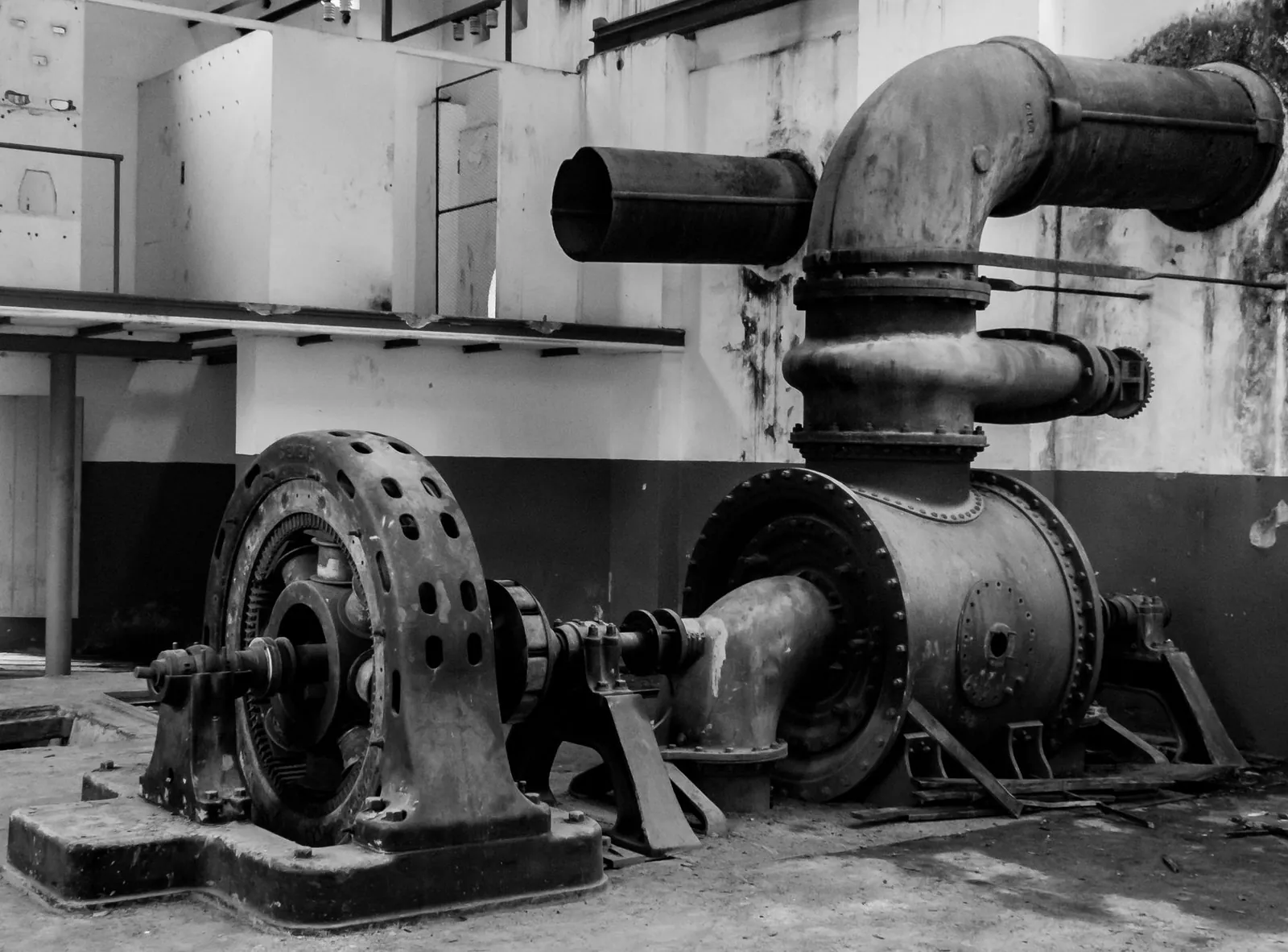
The wall is only as quiet as its weakest square metre, and at a busy opening that square metre is the door.
When an opening needs more barrier than any high speed door can give, the right answer is a dedicated acoustic door rather than an overstretched rapid curtain. Our guide to industrial acoustic doors and STC selection covers that tier, where ratings run from the mid-20s to 40-plus dB and the door stops pretending to be fast.
What to Verify Before You Shortlist a Door
Acoustic and thermal claims are easy to print and hard to compare, so the verification list matters more than the brochure. Run every candidate quotation through the same six checks, and the differences between suppliers surface on paper before they surface in your building:
- Ask for the test basis: which standard, which laboratory, which construction, and whether the figure is Rw or STC. No report, no number on the drawing.
- Deduct the field penalty yourself: take 3 to 7 points off any lab figure before you promise the result to the office next door.
- Inspect the perimeter package: guide seals, bottom edge seal and the threshold detail, because leakage there erases curtain performance.
- Locate the thermal break: ask where the frame interrupts conduction, not just whether the curtain contains foam.
- Check the drive and closing profile: soft start, adjustable close speed and a well-damped barrel cut the noise neighbours actually hear.
- Plan the maintenance: seals are wear parts on all industrial doors, and the acoustic figure holds only as long as the seals do. Warranty terms on the curtain and the operator belong in the same conversation.

Scored this way, high speed roll up door acoustic insulation stops being a mystery word on a quotation. The complaint that opened this page was avoidable for the cost of one sentence in the specification: a number for the closed door, a plan for the moving one. Bring us the opening, the wall it shares and the cycle count. We will tell you which of the three constructions it needs, or honestly tell you that it does not need one at all.
Frequently Asked Questions
Do high speed roll up doors block noise?
Standard fabric curtains block very little as a barrier. Insulated slat curtains add real mass and a foam core, while dedicated acoustic steel shutters reach 25 to over 40 dB depending on construction.
What is Rw on a door?
Rw is the weighted sound reduction index defined in ISO 717-1, a single-figure decibel summary of a laboratory transmission test. STC is the closely related American rating measured to ASTM E90.
Do insulated high speed doors have a U-value like panels?
Insulated slat doors approach panel-class performance, but no soft curtain matches a 40-50 mm PU panel, which measures 0.33 W/m2K in our sectional range.
Why is the installed door quieter-rated than promised?
Lab figures assume a sealed test rig. Field installations typically measure 3 to 7 points lower, and worn perimeter seals widen that gap over time.
Which door should I choose for a plant room next to an office?
An insulated slat high speed door for frequent access, or an acoustic steel shutter where the machinery noise dominates and cycles are fewer. Compare both on the same opening before deciding.