







This week, somewhere on a desk, a buyer works down a high speed door quote line by line, and the inverter row is where the pen stops. It adds cost to the quote, it looks optional next to the curtain and the operator, and nothing on the document explains what it actually does. Striking it feels like trimming fat. On most busy doorways, it is trimming the suspension.
We build high speed doors and the operators that move them on one line. Every door we ship leaves it with a factory acceptance report covering opening speed, noise, and insulation resistance. Those test benches have shown us the same door model run with an inverter and without one, and the difference is not subtle. Once you have watched both start curves on an identical door, the inverter row on a quote stops looking optional and starts looking structural.
Why Fixed Speed Punishes a Fast Door
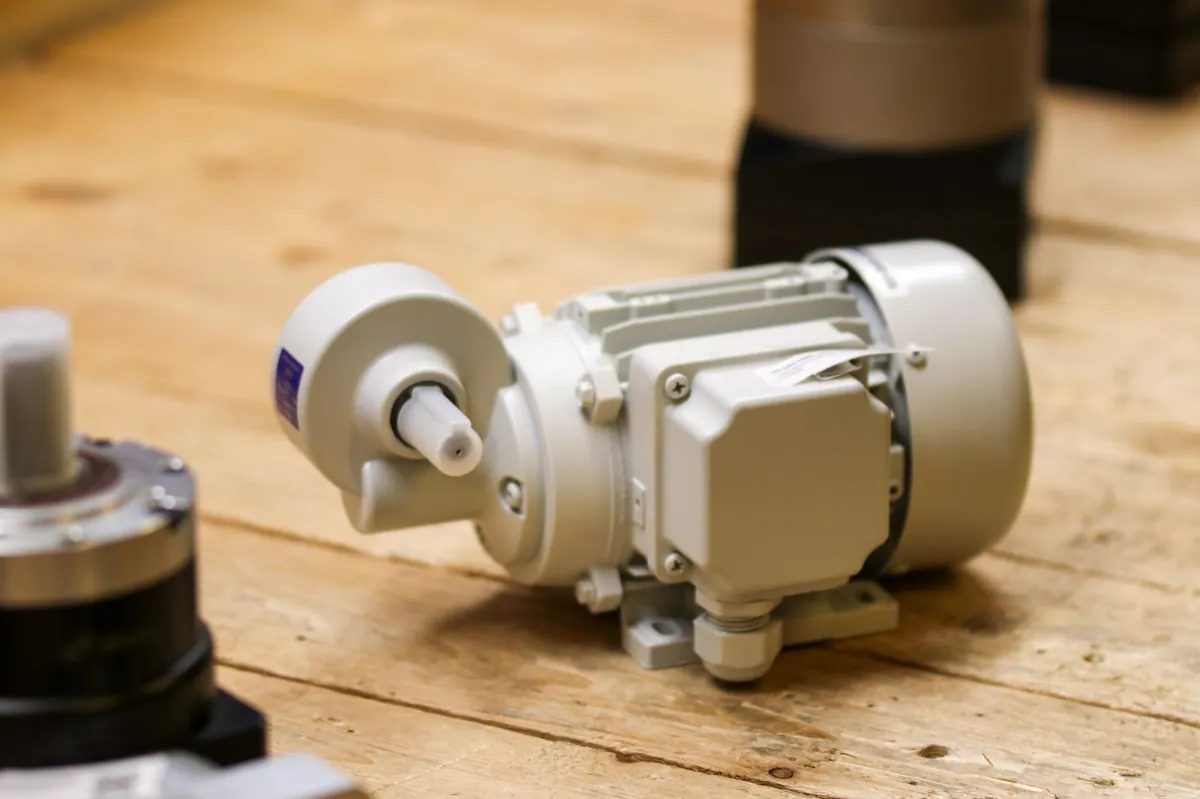
A standard motor has two states: off, and flat out. Door-industry technical pages describe the fixed-speed arrangement in those terms, because direct-on-line starting applies full torque the instant the contactor closes. Nothing ramps and nothing eases in. No nameplate prepares you for it. The gearbox takes the entire load within milliseconds, and the curtain is yanked from standstill toward full speed before the guides have anything to say about it.
Picture a driver dumping a clutch at full throttle from a standstill. The car lurches, the driveline clunks, and every component between the engine and the wheels absorbs the shock once. Now imagine paying that penalty every single time the car moves, hundreds of times a day, for years. That is what a fixed-speed start does to a busy dock door, where high cycle rates turn each shock into a cumulative pattern.
The parts that absorb this are not exotic. Gear teeth see load reversals they were never ramped into, base fasteners work loose under vibration, and the curtain bottom slams through its guides at full speed. A duty that looks modest on paper, repeated across a full shift, is what separates a door that runs from a door that gets repaired. The test bench simply makes visible what the maintenance log later proves.
Our position is blunt. You are not buying speed when you spec a high speed door inverter, because motor and curtain design set the top speed long before the electronics. What you are buying down is the shock bill, the charge that every start and stop levies against the drivetrain and the seal edges. On a door that runs all day, that bill is the real operating cost.
The Three Part Speed Curve
A high speed door inverter replaces those two states with a shaped curve, and door-industry technical pages break the curve into three phases. Soft start ramps torque up across a tuned acceleration window instead of hitting full load at the moment of switching. The door then cruises at its rated speed, which is where the throughput you actually paid for gets earned. Before the limit, soft stop decelerates the curtain so it settles into position instead of crashing into it.
- Soft start: torque climbs along a set ramp instead of arriving all at once.
- Cruise: the leaf runs at rated speed, where every second of opening time is earned.
- Soft stop: deceleration begins before the limit, so the final approach is slow and precise.
Each phase protects a different set of components. Ramped starts shield the gearbox and the drive chain, where shock loads concentrate hardest. The cruise phase does the productive work. Soft stops are where our practice keeps finding the most underrated benefit. The stop position is also the seal position, so a controlled final approach compresses the bottom seal evenly instead of crushing one side and leaving the other loose.
The same curve logic shows up across the whole door family. We describe how the same drive logic applies to sliding leaf operators in another article, because once you understand the ramp, every driven door reads the same way. The hardware changes; the physics does not.
Ramp times are set at the factory against the door’s weight and duty, not left to guesswork on site. A ramp tuned too soft leaves traffic queuing at the threshold, while one tuned too aggressively hands the shock back to the gearbox. The resulting speed and noise figures are captured on the acceptance report before the door ships, so you know the curve you bought is the curve you got.
Where the Savings Compound Daily
In our practice we frame the economics as a product rather than an average. Shock per cycle multiplied by cycles per day gives the wear bill a doorway pays, and it is the honest way to price a high speed door inverter. A modest per-cycle improvement becomes structural on a door running dozens to hundreds of times a day. One door-industry technical page makes the matching argument from the energy side. A standard motor draws full power the instant it is energized, while an inverter supplies only what the cycle requires, cutting heat buildup in the windings over a long shift.

Energy on demand matters most in facilities with many doorways or long operating windows, because the draw difference repeats with every start. In a plant with a dozen active doorways, the same repeat lands a dozen times per shift on the same energy invoice. Noise follows the same compounding logic. Door-industry technical pages note that controlled motion runs measurably quieter, which matters most in hospitals, cleanrooms, and workspaces where people sit near the door. Neither benefit requires exotic assumptions to be worth having.
The table below keeps the comparison to what actually changes from one cycle to the next. None of the rows involve exotic engineering. They are the four differences any test bench logs when it records a start curve.
| Per cycle factor | Fixed speed start | Inverter driven start | Why the cycle count matters |
|---|---|---|---|
| Starting torque | Full load torque the instant the contactor closes | Ramped up across a set acceleration window | The shock repeats with every start |
| Current draw | Full inrush current on every start | Drawn to match what the cycle needs | Heat builds over a full shift |
| Curtain travel | Yanked from standstill toward full speed | Accelerated evenly through the guides | Guiding wear scales with daily cycles |
| Stop | Coasts hard into the limit | Decelerated to a controlled halt | Stop accuracy and seal life hold |
When You Actually Need One
Walk the floor before you decide, because duty tells the truth that spec sheets omit. A cold store bay where forklifts queue at the doorway all shift is a different machine from the back exit that opens twice an hour. Industry technical notes judge the question on three inputs, and each one moves the value of a high speed door inverter up or down for your specific doorway.
- Cycle frequency: doorways running dozens to hundreds of cycles a day show the clearest gains.
- Door mass and inertia: heavier leaves and wider openings benefit most from ramped torque.
- Environment control: climate-controlled and clean spaces need fast cycling with controlled deceleration, not raw pace alone.
A chilled dispatch corridor in a food plant is the textbook case for full inverter control: high cycles, a heavy leaf, and a temperature envelope that punishes every sloppy stop. The honest reverse matters just as much. A small, light door cycling a few times per hour runs perfectly well on direct starting, and that inverter budget would do more work elsewhere in the building.
The cost asymmetry explains the rule of thumb. An inverter on a needy doorway costs a little and returns a lot. On a lazy doorway it costs the same and returns nothing. That asymmetry, not the technology, is the decision.
We would rather tell you that now than upsell a component you will never feel. Match the control to the duty, not to the option list. Duty, mass, and environment are the three questions; answer them before you open a single drive datasheet.
Open Fast and Close Measured
Inverter control also lets one cycle run two different speeds. An operator manufacturer’s product engineering page describes the standard setup: open at maximum speed to clear traffic, close at a moderate speed that protects people and preserves the seal. Picture a pedestrian approaching the threshold while a forklift waits on the far side. Maximum closing speed wins nothing in that moment, and a moderate closing ramp keeps the doorway predictable for everyone standing near it. The setting lives in the drive parameters and can be retuned in minutes without touching the hardware.
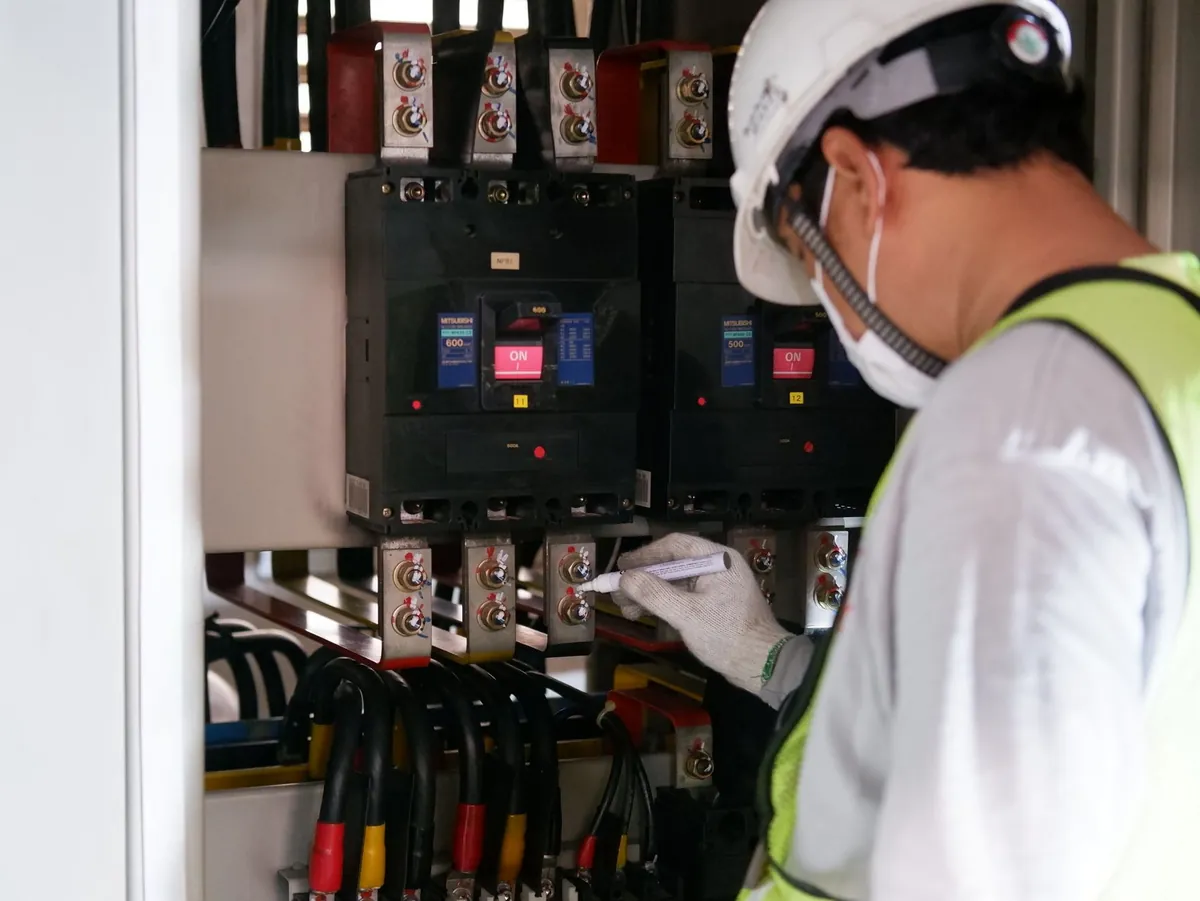
Closing toward people changes the design priority, and that holds double where the doorway forms part of an escape path. Exit-route door rules expect openings along a route to stay passable for people leaving. A door that decelerates gently toward its seal fits that expectation better than one that drops at full speed. The engineering intent is simple: closing speed is a safety setting, not a throughput setting.
Opening speed earns its own analysis, and we break down how opening speed is selected in a separate article. The closing stroke follows the same sizing logic with the priorities reversed. Fast belongs to the open stroke, control belongs to the closing one, and the high speed door inverter is what makes the two settings independent instead of locked together. Most doorways only need the settings done once, at commissioning.
Planning an Inverter Upgrade for Your High-Speed Doors?
Share your door models, cycle rates, and power supply details, and our engineers will specify the right inverter and control setup.
What Fails Without an Inverter
Our own service and inspection records tell this part plainly, and we label it as our practice rather than a laboratory finding. When doors with fixed-speed starts come back for service, the wear clusters in the same four places, and the pattern is consistent enough to predict before the teardown. The table shows where the stress lands and what a high speed door inverter changes about it.
| Failure point | Without an inverter | With ramped control |
|---|---|---|
| Gearbox teeth | Shock loads chew the mesh at every start | Ramped torque keeps mesh loading low |
| Base fasteners | Vibration works the bolts loose over months | Softer starts keep brackets tightened |
| Curtain edge seals | Hard travel tears the leading edge against the guides | Controlled pass-through protects the seal edge |
| Motor windings | Full-current starts bake heat into the windings | Lower draw keeps winding temperature down |
None of these failures announce themselves on day one. They accumulate quietly until a noisy gearbox appears on the maintenance schedule and nobody can name the single event that caused it. Ramped control does not make a door immortal. It removes the one load pattern that accelerates all four failure points at once, which is why the work order entries look unrelated until the drive history is known.
The practical read for a facility manager is simpler than the physics. Doors that generate the most service work are the ones that start hardest, and the fix is not more frequent greasing. It is changing the shape of the load itself.
Choosing the Right Inverter Match
Sizing starts with the door itself, because the inverter, the operator, and the curtain perform as one matched system. That matching is simplest when all three are engineered together, as they are across our high speed doors. It is also why the warranty stands at 3 years for operators and motors and 5 years for servo motors. One factory owns the whole curve, so a ramp that needs retuning has one place to go.
The operator side deserves equal scrutiny in the comparison. Our operator range spans 16 models rated IP65, so dust, washdown, and outdoor exposure become selection criteria rather than surprises. An inverter paired with an operator that cannot survive its own environment is a matched system on paper only.
- Door weight and inertia, which set the torque ramp the drive must deliver.
- Expected cycles per shift, which decide whether the inverter earns its row on the quote.
- Closing speed and safety needs at thresholds where people cross.
- Integration with your traffic control or building management system.
Whatever the configuration, the order ships with English installation manuals, CAD drawings, and wiring diagrams. The drive side of the catalogue is covered in detail on our compact motor options page. Large custom doors start from a single unit with no minimum order. Send us the doorway dimensions and the duty profile, and we will tell you straight whether the inverter row belongs on your quote.
Frequently Asked Questions
Does an inverter make a high speed door faster?
No. Peak speed comes from the motor and curtain design; our models run 0.8 to 2.5 m/s. The inverter shapes acceleration and deceleration, so the door reaches its rated speed without hammering the drivetrain on the way.
How does an inverter extend door life?
It removes full-torque starting shocks, so the gearbox, fasteners, and seal edges absorb ramped loads instead of sudden jerks. Lower shock loads mean slower wear, and slower wear means fewer service interventions over the life of the door.
Is an inverter worth it on a low traffic door?
Often not. A small, light door cycling a few times an hour runs well on direct starting. Spend that budget on the curtain or the seal, and revisit the inverter if traffic at the doorway grows.
What is soft start and soft stop?
Soft start ramps motor torque up across a set acceleration window instead of applying full torque instantly. Soft stop decelerates the curtain to a controlled halt just before the limit, which protects the seal and the limit switch.
Can the door open and close at different speeds?
Yes. A common setup opens at maximum speed to clear traffic. The closing run moves at a moderate speed that protects people at the threshold and keeps the seal compressing evenly as the curtain lands.