
Substituting a specialized cold storage door with a standard commercial steel door is a severe error. Plant managers attempting to cut capital expenditure by installing standard steel doors in cold rooms quickly encounter massive condensation. These facilities face frozen door frames, ruined rubber gaskets, compromised inventory, and escalating power bills.
A specialized cold room barrier is an engineered thermodynamic system designed to manage extreme temperature deltas and vapor pressure. Comparing cold storage doors vs standard doors reveals seven engineering differences: core chemistry, thermal breaks, anti-frost heating, EPDM gaskets, drop-and-inward kinematics, pressure relief valves, and 10-year economics. In over two decades of factory engineering and custom cold room doors production, specialized cold barriers consistently deliver verified thermal protection and maximum efficiency.
1. Thermal Insulation Core & U-Value Divergence
The primary functional requirement of any refrigerated partition is preventing thermal energy from transferring into the cooled space via conductive heat transfer.
Fourier Heat Conduction Physics and Core Chemistry
Conductive heat transfer through a door panel is governed by Fourier’s Law: Q = (λ / d) × A × ΔT. In this formula, Q is heat transfer in Watts, and λ is thermal conductivity (W/mK). The variable d is thickness in meters, A is area in m², and ΔT is the temperature delta.
Standard industrial doors typically utilize paper honeycomb, expanded polystyrene, or low-density mineral wool cores (40 mm to 50 mm thick). These materials exhibit thermal conductivities between λ = 0.038 and 0.045 W/mK, yielding overall heat transfer coefficients (U-values) between 1.20 and 1.80 W/m²K. Consider an external temperature of +25°C and a freezer temperature of -20°C (ΔT = 45 K). A standard 40 mm door permits continuous conductive heat gain exceeding 350 to 480 Watts. This continuous heat gain forces refrigeration compressors to run uninterrupted.
In contrast, high-performance cold storage doors utilize high-pressure injected, closed-cell polyisocyanurate (PIR) or polyurethane (PU) foam with a uniform density between 42 and 45 kg/m³. Formulated with zero-ODP blowing agents, this rigid closed-cell structure achieves an exceptionally low thermal conductivity of λ = 0.020 to 0.022 W/mK. Panel thicknesses range from 75 mm for chillers up to 150 mm for deep freezers (-18°C to -25°C). These specifications deliver ultra-low U-values between 0.14 and 0.22 W/m²K. Under identical operating conditions, conductive heat gain drops to less than 45 to 60 Watts, representing an 85% reduction in conductive thermal load.
Closed-Cell Vapor Barrier Integrity vs Moisture Absorption
Beyond bulk thermal resistance, insulation core chemistry dictates moisture vapor transmission. In cold storage environments, high external atmospheric vapor pressure constantly forces ambient moisture through porous barrier materials toward the low-vapor-pressure cold interior. Standard mineral wool or open-cell core materials absorb ambient moisture readily. Once moisture condenses and freezes inside the core, ice crystals increase thermal conductivity by up to 400%. This internal icing destroys insulating capacity within 12 to 18 months.
When analyzing cold storage doors vs standard doors, core cell structure is critical. Specialized cold storage PIR cores maintain a closed-cell content exceeding 95%. This high density completely blocks moisture absorption, ensuring consistent thermal resistance over decades of continuous service.

2. Polyamide Thermal Break Framework vs Solid Metal Bridges
Even the thickest insulated door panel becomes ineffective if the surrounding perimeter door frame acts as an uninsulated thermal highway.
The Physics of Thermal Bridging and Surface Condensation
Standard hollow metal commercial doors utilize continuous pressed carbon steel or galvanized sheet metal door jambs. Because steel possesses a high thermal conductivity (λ ≈ 50 W/mK), heat rapidly conducts from the exterior warehouse atmosphere through the metal jamb directly into the refrigerated chamber. This thermal bridge cools the exterior frame surface below the ambient air dew point.
In a typical food processing facility with an ambient warehouse humidity of 70% to 85% RH, the dew point is approximately +16°C to +19°C. When a standard steel door frame cools to +5°C due to internal freezer contact, heavy moisture condenses continuously along the outer perimeter wall. This persistent sweating promotes toxic black mold growth, rots surrounding insulated wall panels, and creates severe slip hazards on warehouse floors.
Structural PA66 GF25 Polyamide Isolation Technology
Specialized cold storage door frames feature high-strength 6063-T5 extruded aluminum profiles split into two independent inner and outer extrusions. These metallic sections are mechanically joined by 24 mm to 34 mm structural polyamide (PA66 GF25) insulating bars reinforced with 25% glass fiber. Polyamide exhibits a thermal conductivity of only λ = 0.30 W/mK, representing a 160-fold reduction in heat transmission compared to solid steel.
This structural thermal break completely isolates the warm exterior frame profile from the sub-zero internal casing. Thermal analysis confirms that the exterior surface temperature of a PA66-isolated frame remains within 1.5°C of ambient room temperature. This thermal barrier completely eliminates surface condensation under 85% relative humidity without requiring auxiliary frame heaters in medium-temperature applications.
Evaluating Cold Storage Doors vs Standard Doors for Your Facility?
Send your operating temperature parameters, wall panel thickness, and opening dimensions to the technical engineering team for custom thermal break sizing and ROI energy calculations.
3. Active Anti-Frost Perimeter Heating vs Gasket Freeze-Up
When operating temperature boundaries cross the freezing threshold (0°C to -40°C), thermal breaks alone cannot prevent localized ice formation caused by transient air infiltration during doorway cycling.
The Ice Lockup Phenomenon in Standard Doors
Standard industrial doors have zero provision for electrical heating. When warm ambient air enters a walk-in freezer during routine door cycling, moisture condenses along the cold metal door rebate and floor threshold. Within minutes of door closure, this moisture freezes solid, bonding the door leaf tightly to the frame. Staff members attempting to force the frozen door open frequently tear the perimeter gaskets, bend handle linkages, or warp door panels, resulting in emergency shutdowns.
Self-Regulating Semiconductor Perimeter Heating Cables
Specialized cold storage doors integrate internal electric heating cables. These run through aluminum channels along all four frame sides and beneath the stainless steel threshold plate. The heating element consists of a self-regulating semiconductor cable producing 25 to 35 Watts per linear meter at 230V.
As local temperatures drop, the polymer core of the heating cable contracts, creating additional electrical paths and increasing thermal wattage. As the frame warms to +5°C, the core expands, reducing power consumption automatically. In deep-freeze tunnels, dual independent heating circuits are installed with automatic changeover relays. This design provides 100% redundancy, ensuring uninterrupted operation even if the primary heating circuit suffers an electrical fault.
4. Specialized Low-Temperature EPDM Gaskets vs Standard Seals
The sealing gasket represents the primary mechanical barrier against convection heat gain and moist air infiltration.
Polymer Glass Transition Temperature and Embrittlement
Standard commercial doors utilize inexpensive PVC, neoprene, or standard thermoplastic elastomer (TPE) weatherstripping. These polymers have a glass transition temperature (Tg) between -5°C and -10°C. When exposed to continuous freezer temperatures of -20°C to -35°C, plasticizers leach out rapidly. The material hardens, loses all elastic compression recovery, and shatters under mechanical impact.
Once the gasket cracks, cold dense air cascades out of the bottom of the doorway. Simultaneously, warm buoyant air rushes in through the upper seal, introducing massive sensible and latent heat loads into refrigeration evaporator coils.
Virgin Multi-Chamber EPDM Elastomer Profiles
Cold storage doors exclusively employ virgin multi-chamber EPDM rubber formulated with specialized paraffinic low-temperature plasticizers. This elastomer maintains a glass transition temperature below -55°C, preserving 100% mechanical elasticity across extreme operating cycles from -45°C to +80°C.
The gasket geometry incorporates dual-bulb hollow chambers that provide primary and secondary sealing redundancy. When compressed against the door frame, the multi-chamber profile absorbs structural tolerances up to ±4 mm while maintaining continuous hermetic contact. Mounted in snap-in aluminum retaining channels, technicians can replace damaged sections in minutes without removing the door panel.
5. Dual-Axis Drop-and-Inward Kinematics vs Linear Sliding
Mechanical movement dynamics create a crucial operational distinction when comparing cold storage doors vs standard doors.
The Friction Dilemma of Linear Sliding Doors
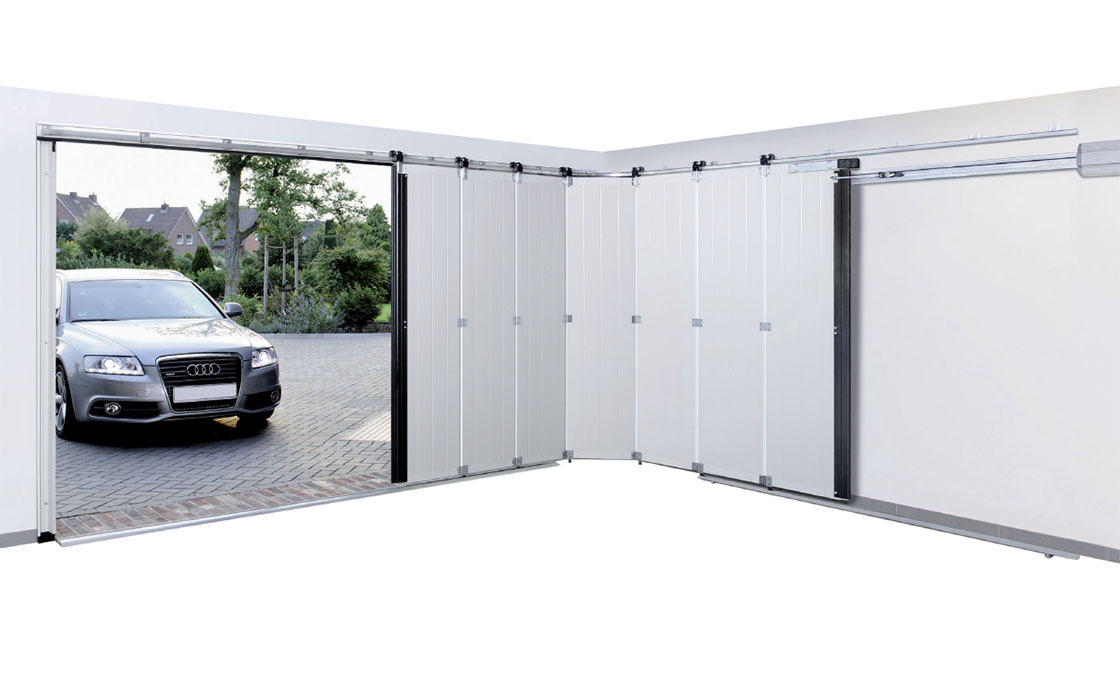
Standard industrial sliding doors travel along a single flat linear plane parallel to the wall. To achieve an airtight seal, perimeter gaskets must remain in constant physical contact with the door frame throughout the entire stroke. This friction causes rapid gasket abrasive wear, increases motor torque requirements by over 200%, and causes rubber scuff marks on wall surfaces.
Dual-Axis 45-Degree Drop-and-Inward Kinematics
Specialized sliding cold storage doors solve the friction dilemma through precision dual-axis kinematics. The heavy extruded aluminum overhead track features CNC-machined 45-degree drop notches. During horizontal travel, the door panel remains suspended 10 mm off the floor and 8 mm away from the frame, ensuring zero gasket friction and whisper-quiet travel.
During the final 50 mm of closing travel, roller carriages glide down the 45-degree angled track ramps. This motion lowers the door leaf 10 mm vertically downward and shifts it 8 mm horizontally inward toward the wall. Gravity assists this motion, pressing the multi-chamber EPDM gaskets firmly against the stainless steel jambs with uniform compression force. Upon opening, the initial pull effortlessly rolls carriages up the ramps, lifting the door away from the frame before horizontal translation begins.
6. Internal Safety Releases & Heated Pressure Relief Valves
Operating a sealed enclosure under sub-zero conditions introduces severe atmospheric pressure differentials and human safety risks that standard commercial doors cannot manage.
Atmospheric Vacuum Pressure and Heated Relief Ports
When warm air enters a cold room during door opening and the door subsequently closes, refrigeration coils cool the trapped air rapidly from +20°C to -20°C. According to Gay-Lussac’s Law, air volume contraction creates a vacuum of 200 to 500 Pascals. This equals 20 to 50 kg of suction force per square meter of door surface.
On a standard commercial door, this vacuum force locks the door shut tightly. This suction makes manual opening impossible and causes thin insulated sandwich walls to bow inward structurally. Specialized cold storage installations incorporate bi-directional heated pressure relief valves. Equipped with internal 15W to 25W heating elements, valve flappers open at ±25 Pa. This action equalizes air pressure instantly and protects wall panels from structural deflection.
Fail-Safe Photoluminescent Emergency Inside Release
Accidental entrapment inside a commercial freezer (-20°C) presents an immediate life-threatening hypothermia hazard. Standard commercial doors fitted with external padlocks or deadbolts lock completely from the outside, leaving trapped personnel with no physical means of escape.
Specialized walk-in cold storage doors mandate compliance with international safety codes (including EN 179 and OSHA workplace regulations). The latch assembly incorporates a solid stainless steel push rod extending through the insulated core to an interior photoluminescent glow-in-the-dark release knob. Pushing the luminous knob mechanically disconnects the external strike latch, allowing trapped personnel to escape immediately even if the exterior handle is padlocked shut.
7. Master Engineering Comparison: Cold Storage vs Standard Doors
When evaluating cold storage doors vs standard doors, the engineering specification matrix below illustrates the comprehensive physical and operational differences between the two entrance systems:
| Engineering Parameter | Specialized Cold Storage Door | Standard Commercial Steel Door | Performance Impact |
|---|---|---|---|
| Insulation Core | 42-45 kg/m³ Injected PIR/PU (75-150 mm) | Honeycomb paper / Mineral wool (40-50 mm) | 85% lower conductive heat gain |
| Thermal Rating (U-value) | U = 0.14 to 0.28 W/m²K | U = 1.20 to 1.80 W/m²K | Eliminates continuous refrigeration waste |
| Frame Construction | Extruded 6063-T5 with 24-34 mm PA66 break | Solid hollow metal carbon steel jamb | Zero exterior sweat at 85% RH |
| Anti-Frost Systems | 25-35 W/m self-regulating heating cables | None (Unheated cold metal contact) | Prevents ice lockup & gasket tearing |
| Gasket Material | Multi-chamber virgin EPDM (-55°C Tg) | Standard PVC / Neoprene (-10°C Tg) | Maintains 100% elasticity without cracking |
| Track Kinematics | Dual-axis 10mm drop / 8mm inward stroke | Single linear plane (Constant friction) | Zero seal drag during travel |
| Life Safety Hardware | Photoluminescent EN 179 inside release rod | Standard exterior keyed lever lockset | Eliminates personnel entrapment risk |
| Pressure Equalization | Heated two-way relief port (±25 Pa) | None (Subject to vacuum locking) | Prevents structural panel deflection |
Workplace safety regulations enforced by the Health and Safety Executive and manufacturing standards from ISO prohibit unheated standard doors on walk-in freezers. Non-breakaway standard hardware in sub-zero environments violates basic life safety requirements.
8. 10-Year TCO & Energy Efficiency Payback Analysis
When comparing cold storage doors vs standard doors, evaluating the initial purchase price in isolation creates a misleading financial picture. The true financial cost of a door system must be assessed over a 10-year Total Cost of Ownership (TCO) lifecycle model.
Direct Refrigeration Energy Loss Calculation
Consider a commercial freezer doorway (2.0 m wide × 2.5 m high = 5.0 m²). The room operates at -20°C inside an ambient +25°C warehouse (ΔT = 45 K). The facility operates 300 days per year under standard industrial operating conditions.
A standard industrial door (U = 1.50 W/m²K) generates continuous conductive heat transmission of 337.5 Watts. Adding perimeter air infiltration through hardened PVC gaskets yields an additional 850 Watts, resulting in a total continuous thermal load of 1,187.5 Watts. Over 300 operating days, this inefficiency consumes over 4,275 kWh of additional refrigeration electrical power.
In contrast, a specialized cold storage door (U = 0.18 W/m²K) allows only 40.5 Watts of conductive heat transmission and 65 Watts of minor infiltration. Adding intermittent heating cable operation (120 Watts), the total load is only 225.5 Watts (811.8 kWh annually). This thermal integrity achieves an 81% net reduction in annual refrigeration power consumption.
Maintenance Downtime and Compressor Wear
A standard door installed in a sub-zero freezer requires frequent gasket replacements and technician visits to chip away frame ice. It also increases refrigeration compressor wear due to continuous cycling. Over a 10-year operating horizon, maintenance costs and emergency repairs on a standard door escalate dramatically. A heavy-duty cold storage door requires only annual synthetic lubrication and periodic gasket inspection.
A specialized cold storage door carries a higher initial price. However, cumulative energy savings and reduced repairs fully amortize this price premium within 14 to 18 months. This investment generates sustained positive cash flow over its 15-to-20-year service life.
9. Engineering Selection Consultation for Cold Enclosures
Understanding the rigorous engineering boundaries between cold storage doors vs standard doors empowers architects and facilities directors to design reliable, energy-efficient temperature-controlled facilities. Performing comprehensive heat load calculations and spatial clearance audits prior to placing factory orders prevents catastrophic field failures.
Need technical assistance selecting doors for refrigerated facilities?
If you are designing a cold storage warehouse or replacing doors in walk-in freezers, our engineering team is available. We review temperature parameters, structural wall thicknesses, and traffic cycles to recommend an optimized cold door solution.
Frequently Asked Questions About Cold Doors vs Standard Doors
Can you use a standard commercial steel door in a walk-in cooler?
No, standard doors lack thermal breaks and thick insulation, causing massive condensation, severe mold growth, and high refrigeration power loss.
Why do standard doors freeze shut when installed on freezer rooms?
Standard doors lack perimeter heating cables, allowing ambient moisture to condense on cold metal frames and freeze solid within minutes of door closure.
What is the U-value difference between cold storage and standard doors?
Cold storage doors achieve U-values between 0.14 and 0.28 W/m²K, whereas standard industrial doors have U-values between 1.20 and 1.80 W/m²K.
Why do cold room sliding doors drop down when closing?
The 45-degree drop tracks lower the door 10 mm vertically and 8 mm inward to compress gaskets tightly against the frame without dragging the bottom seal.
How quickly does a specialized cold storage door pay for itself?
Through an 85% reduction in thermal energy loss and the elimination of emergency repairs, a specialized cold door pays for its price premium within 14 to 18 months.