







Every supplier page lists the same parts for an electric roller shutter: a motor, a remote, some guides, a few seals. What the lists rarely explain is which parts have to be chosen together. A remote that shares the frequency but not the coding pairs with nothing. A motor sized without the curtain weight runs hot. A bottom seal bought by width alone will not seat on the lath, because matching, not listing, is where accessory purchases succeed or fail.
At our factory, every motor and control box ships with a test report recording opening speed, noise, and insulation resistance. Insulation resistance is the number buyers rarely ask about. It is also the one that catches bad electrical matching between a motor, its cable, and its controller. The same habit of recording what actually fits shapes the six families below.
Six Part Families Behind Every Powered Shutter
Group the parts by the job they do and the list becomes navigable. One Spanish door engineer’s technical page splits a shutter into seven assemblies: curtain, guide rails, motor, barrel, brackets, safety devices, and accessories. The accessories themselves fall into six working families, and each family answers one question about the door.
The families are not independent. A manufacturer supplying steel electric shutters puts it plainly: select the curtain, guides, shaft, and motor as one assembly. Raising slat thickness alone does not establish the performance of the complete door. Barrel diameter follows the opening size and the slat type, which is why one motor model never suits every door on the same site.
| Family | Typical accessories | The question it answers |
|---|---|---|
| Drive | Tubular motor, drive adaptor, collars | What turns the barrel |
| Manual backup | Override eyelet, crank, chain drive, release clutch | How the door moves in a blackout |
| Control | Wall switch, remote and receiver, group controller | Who commands the door, and where it stops |
| Load bearing | Bearings, cheek plates, end caps, dummy ends | What carries the curtain weight |
| Guidance and sealing | Guide rails, brush seals, bottom seal, wind locks | What keeps the curtain straight and sealed |
| Safety | Safety edges, photocells, anti-drop brake | What stops the door on an obstruction |
Read the table as a checklist for a complete door, not a shopping list for a broken one. A door that runs and seals well may need a single replacement part from a single family. A new build or a motorization upgrade usually touches four or five families at once, and the crossings between them are where orders go wrong.
The families also map onto how doors are bought. A single replacement touches one family and needs one set of records. A motorization retrofit touches drive, control, and safety together, and a new line of industrial doors touches all six. The family view travels just as well between a maintenance team and a purchase office.
The Motor and Its Manual Backup Chain
The drive family of electric roller shutter accessories starts with the tubular motor hidden inside the barrel. Published industry bands run from 10 to 60 Nm for standard curtains, climbing to about 120 Nm for wide or heavy ones. Supplies are typically 230 V with 60 or 70 mm shafts. Torque selection is arithmetic before it is shopping: curtain weight in newtons multiplied by the barrel radius in metres.
Worked through as an estimate, a 30 m² curtain at the commonly quoted 3 to 4 kg per square metre weighs around 100 kg. That is roughly 1,000 N acting on a 35 mm barrel radius, or about 36 Nm before friction and wind load. In practice the door takes a 60 to 120 Nm motor, because a motor run at its ceiling all day overheats and ages early. Duty multiplies the heat on industrial doors where a forklift passes a dozen times an hour.
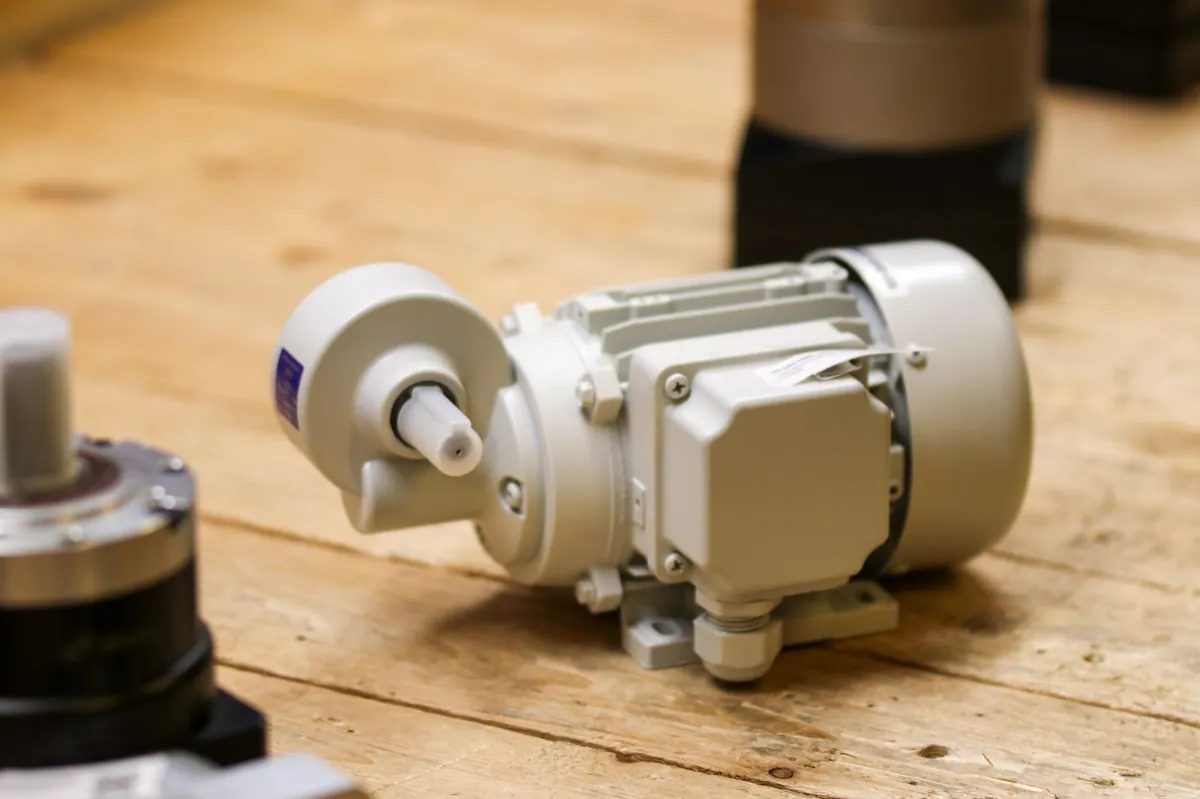
The manual backup chain rides on the same shaft. A manual override eyelet in the motor head accepts a hand crank, some motors carry a built-in emergency release, and wider doors add a chain drive beside the curtain. One motor maker’s guide calls the emergency release essential for blackouts, and site practice agrees. The accessory costs little on order day and decides whether a closed yard keeps moving during an outage.
Sizing the whole drive set against the curtain is a service, not a guess. Our roller shutter tubular motors are specified with the barrel, adaptor, and override arrangement they need to match, with a 3-year warranty behind the sizing.
Controls From Wall Switch to Smartphone
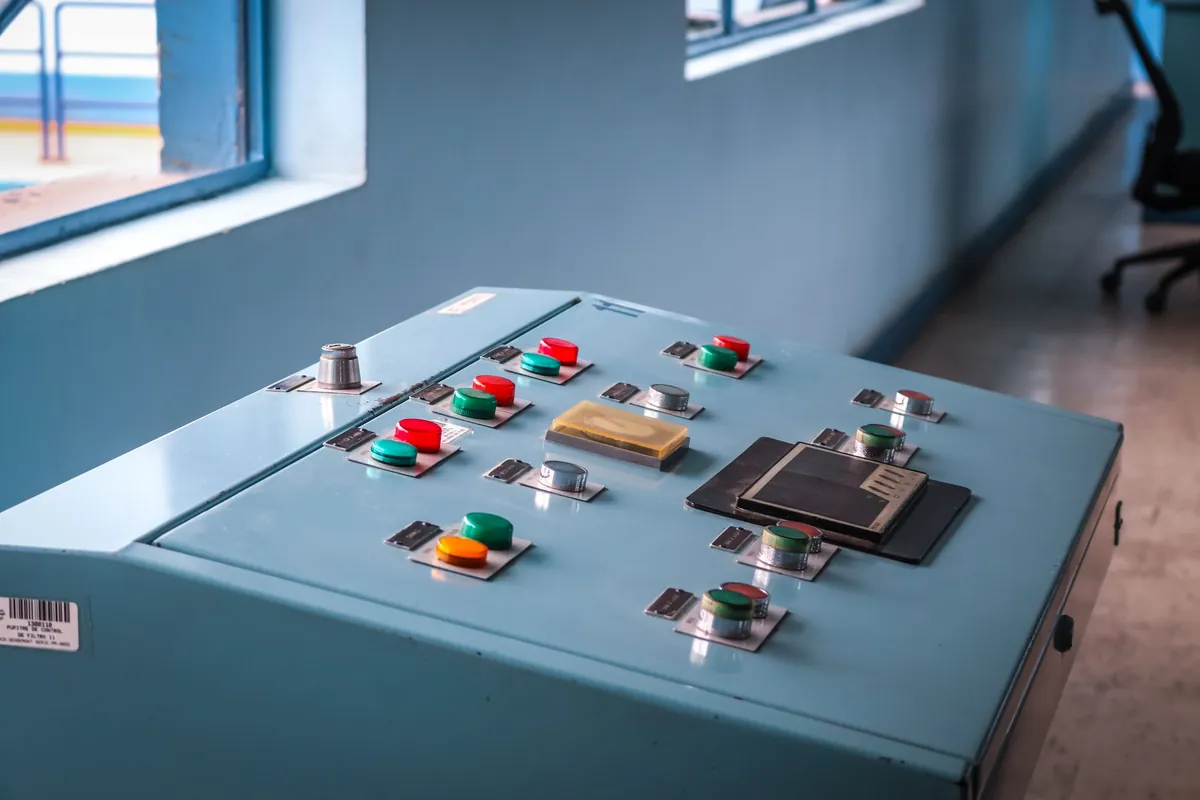
Commands reach the door three ways: a hard-wired wall switch, a radio remote, or a controller on the building network. Our own door operators add WiFi, Bluetooth, and RS485 options in IP65-rated enclosures. That is what lets a facility run a row of doors as a group from one panel or one PLC line.
The radio side is where accessory budgets die. Bands sit at 433 MHz, 315 MHz, and 365 MHz, and the frequency is a hard boundary, but it is not a sufficient one. A UK parts supplier states the rule that matters: a matching frequency does not prove that two radio products are compatible. Coding systems, protocols, and receiver generations differ on the same nominal band.
Coding comes in three broad layers. Fixed-code handsets carry their code on physical switches inside the case, learning-code units pair to the receiver through a learn button, and rolling-code systems change the transmission on every press. The layers do not interchange, even on one frequency.
In catalogs of electric roller shutter accessories, the rest of this family hides between the remotes and the switches. It spans limit adjustments on the motor, safety inputs on the board, and antenna placement where steel racking blocks radio. Those quiet accessories decide whether the door stops where the operator expects, so they belong on the same order as the handsets.
One motor-parts supplier records what happens when the layers get ignored. A European contractor imported a bulk batch of 433 MHz handsets for a retrofit and found 365 MHz receivers on the existing motors. Not one remote paired, and the project stalled until dedicated units were air-freighted in. Ask the receiver what it accepts, never the remote. The full signal path from button to barrel is traced in our guide to how electric roller shutters work.
Bearings Brackets and Barrel End Hardware
The load-bearing family is small, cheap, and unforgiving. A bearing lets the roller tube rotate freely, and cheek plates carry the full curtain load into the building structure. Drive collars lock the motor shaft to the barrel, while end caps close the tube against dust and moisture. A fitter’s parts guide warns that bracket misalignment rarely shows on installation day; it surfaces months later as premature bearing wear.
The trap in this family sits at the non-drive end. Dummy end and lost bobbin assemblies that look nearly identical come in 93 mm, 97 mm, and 120 mm sizes. A UK supplier’s warning is blunt: they are not interchangeable just because they fit the same general type of shutter. Measure the barrel, the shaft, and the bearing arrangement before ordering, not after the part arrives.
Above the barrel, the family continues into the headbox. The box hides the coil, the receiver, and the drive end from weather and from view, and its depth follows the coil diameter the same way the barrel does. Cheek plates then tie the assembly back to the wall, and their fixings deserve the same respect as the bearing they hold. A plate that pulls loose drops its end of the load.
Guide Rails Seals and Wind Locks
Guidance and sealing accessories decide how the door feels in daily use. U or H section guide rails bolt to both sides of the opening and hold the curtain line. Nylon brushes inside them kill rattle and wipe grit. On exposed industrial doors, wind locks stop gust pressure from pushing the curtain out of the guides.
Seals follow profiles, not widths. A bottom seal is selected by the curtain or bottom-lath profile, and the retention shapes have names: T-shaped, arrowhead, bulb. A UK parts guide tells buyers to compare the cross-section against the product photographs and to measure the fixing channel and the length. A seal that is right in width and wrong in section simply will not seat.

Brush seals and bottom rubber are also the consumable face of this family, and our guide to guide rail brush seals covers where they beat plain rubber. On our own curtains, slats roll in galvanized steel, aluminium, or stainless from 0.8 to 1.5 mm thick, on openings up to 12,000 mm wide. The seal set is matched to the slat profile at order time rather than picked from a shelf.
Safety Edges Photocells and Anti Drop Devices
Safety accessories are the family nobody shops for and everybody needs. European rules write the numbers down. EN 12453 caps closing forces at about 400 N for crushing and 1,400 N for impact, a reading drawn from the UK safety regulator’s bulletin. For industrial doors these limits belong in the purchase document, not in a promise made after delivery.
How Closing Forces Are Limited
Three device families enforce the numbers. Safety edges come as optical profiles with a transmitter and receiver in the rubber, or as resistive profiles commonly monitored through an 8.2 kΩ circuit. The two are not interchangeable, because the controller input decides what it can read. Photocells reverse the curtain before contact ever happens. Current sensing stops and reverses on a spike from trapped debris, though one installer’s guide is honest that it is an upgrade option on some motors rather than a given.
Behind the sensors sits the mechanical backstop. A centrifugal brake locks the barrel on overspeed, and industrial shutters add a fall-arrest clamp that grips the axle outright if a drive part fails. Our guide to anti-drop devices covers how those units are built and tested.
Sensing hardware needs the same matching discipline as the other electric roller shutter accessories. An edge must suit the door and the controller together, and its length must suit the opening. That is why the label on the old edge is the first thing to record before a replacement is ordered.
Which Parts Does Your Door Line Still Miss
Request our component checklist with the factory test items we record on every motor, and our engineers will map each accessory to your door specification.
Matching Parts by Specification Not Appearance
Put the six families side by side and one rule covers all of them: electric roller shutter accessories are matched by specification, never by appearance. The same symptom can come from a failed remote, receiver, control panel, safety device, or power supply. The UK parts supplier’s order of operations holds for any family: diagnose the system before replacing the most expensive component.
| Part | It must match | Common mismatch cost |
|---|---|---|
| Remote handset | Receiver frequency and coding type | Handsets that pair with nothing on site |
| Tubular motor | Curtain weight, barrel diameter, supply voltage | Overheating and early wear on heavy curtains |
| Bottom seal | Lath profile and fixing channel | A seal that never seats and leaks |
| Safety edge | Controller input type and edge length | Protection that never triggers |
| Dummy end | Barrel size and bearing arrangement | Hardware that looks right but will not mount |
The same discipline applies before money moves. When every remote has died at once, the receiver or its antenna is the likely patient. A wall panel that still works while the radio fails narrows the fault to the receiver side before any part is ordered. A wall panel that also refuses to respond moves the suspicion to the supply or the board instead.
The rule cuts the other way too: do not replace a working part because it looks old. Brush seals and rubber seals age on the surface while their profile keeps doing its job, and a control board with discolored components may be perfectly healthy. The record discipline in the next section separates aging from failing.
Treated this way, the phrase electric roller shutter accessories stops being a search term and becomes a spec-sheet line. Each family contributes named parts with measurable attributes, and the measurements are what travel on the purchase order.
Five Records That Prevent a Wrong Part
Five records turn a guess into an order that fits. Three come from the door itself, and the last two come from watching how the door fails before anything is unbolted.
Photograph the Identification Labels
Photograph the motor label, the control panel reference, and the inside of the remote’s battery compartment. A parts specialist lists what matters most: manufacturer, model, voltage, power, torque, control panel reference, and any visible part number. If one handset still works, treat it as the reference unit and photograph its labels first.
Measure the Original Component
Dimensions separate parts that look almost identical. Measure the barrel diameter, the lath profile, the guide channel, the fixing centres, and, for drive parts, the shaft and adaptor arrangement. Write each number against the part name so the supplier receives specifications instead of guesses.
Confirm the Fault Before Buying
Symptoms lie about which part failed. Test the door from the hard-wired wall control where it is safe to do so, and check whether one remote or every remote is affected. Isolate the circuit before anyone opens the control box, following lockout or tagout procedures for the energized side. A part bought for the wrong link in the chain solves nothing and delays the real fix.
Worked this way, an order carries its own proof: every line arrives with numbers a supplier can check against. On industrial doors a wrong part is not an inconvenience, it is an opening that stands unsealed overnight. Ten minutes of record keeping earn their place on every job.
Frequently Asked Questions
Does the same radio frequency mean any remote will work?
No. The receiver also has to share the coding system, whether fixed, learning, or rolling code, and the same receiver generation. A handset on the right frequency with the wrong coding pairs with nothing, which is how whole batches of remotes end up unusable.
Can I choose a replacement part from a photograph?
A photograph identifies the candidate, but dimensions decide the order. Measure the barrel, the seal profile, or the fixing centres, and record the label data. Two parts that look identical can differ by a few millimetres that decide whether they fit.
What torque does my tubular motor need?
Multiply the curtain weight in newtons by the barrel radius in metres, then add margin for wind load and friction. A 30 m² curtain needs roughly 36 Nm before margin, which is why 60 to 120 Nm motors are common on industrial doors.
Are optical and resistive safety edges interchangeable?
No. The controller input decides. A resistive edge is commonly monitored through an 8.2 kΩ circuit, while an optical edge carries a transmitter and receiver in the profile. Swapping types without matching the controller input leaves the protection dead.
What is the difference between a limit switch and a safety edge?
A limit switch is a position device: it knows where the curtain should stop. A safety edge or photocell is an obstacle device: it stops the curtain on whatever it meets between the limits. A powered door needs both to run safely.
Which electric roller shutter accessories wear out first?
Treat remote batteries, guide brush seals, and bottom rubber seals as consumables. Their replacement intervals follow duty, dust, and weather rather than a calendar, so inspect them on the same schedule as the door log.