








Two quotations for the same warehouse opening sit on your desk, and the insulated one costs visibly more. Both sales sheets lean on the word insulation, yet neither states a test method behind its savings percentage. The premium actually buys three things: the core inside the slat, the seals around it, and the drive matched to the extra weight. Until those three are separated, the price gap is a matter of faith.
We manufacture insulated curtains by foaming polyurethane into double-skin aluminium slats on our own line, and every curtain passes checks on core quality and thermal parameters before release. That routine is why we treat the insulated vs non-insulated roller shutters decision as a verification problem rather than a slogan contest. Ask what the premium buys, then measure each item against your opening.
What Separates the Two Constructions
A non-insulated shutter is a single skin of steel or aluminium rolled into profile. It carries no core, so its thermal value comes from the metal alone and from the air film behind it. An insulated shutter bonds two skins around a core, either polyurethane foam foamed in place or a fitted backer board in budget builds. Every other difference in the insulated vs non-insulated roller shutters debate grows out of that one construction step.
Our insulated aluminum roller shutter uses double skins of extruded 6063-T5 aluminium around a high-density polyurethane core. The core is foamed in place on an automatic line, so the cavity fills without voids. Sealed guide tracks with weather seals and an insulated bottom rail with a thermal break close the edges where heat would otherwise bypass the slat. The curtain metal matters as much as the core, which our guide to roller shutter slat materials covers in depth.

The core also stiffens the curtain. A foamed sandwich resists bending and denting better than a single skin of the same metal. It runs quieter too, and that stiffness returns later in the security discussion.
How the Thermal Numbers Are Actually Rated
Start with the term that gets abused most. R-value measures how well a material resists heat traveling through it, and the higher it goes the better the insulation performs, as ENERGY STAR defines it. It is a material-level figure calculated for the layer, not tested on your installed door.
For shutters specifically, ISO 10077-2 sets the calculation method for thermal transmittance, and its scope covers the thermal resistance of shutter profiles and roller shutter boxes. That makes it the reference for comparing slat constructions on paper. Whole-assembly performance is a different measurement: EN 12428 tests the complete installed door, guides, seals, and box included.
The practical step is to match the number to the question. A slat-level figure compares constructions, while a door-set report predicts the energy bill. Our curtains are validated for service from -30 to +50 degrees Celsius. Before signing anything, ask which standard a quoted thermal figure was measured or calculated under, then ask for the report with the delivery documents.
Seals deserve equal billing in any thermal conversation. Heat bypasses a rated curtain at the guide rails, the bottom rail interface, and the box. That is why sealed guides and a thermal-break bottom rail ship standard on our insulated model. A quotation that prints a big slat number but leaves the edges bare is answering a narrower question than the one you asked.
Insulated vs Non-Insulated Roller Shutters: Side-by-Side
Judgment gets easier in a table. The rows below condense both constructions into the attributes buyers weigh first. Each row is expanded in the sections that follow.
| Attribute | Insulated | Non-Insulated |
|---|---|---|
| Curtain build | Double skins around a foamed polyurethane core | A single rolled steel or aluminium skin |
| Thermal basis | Slat calculation per ISO 10077-2; door-set test per EN 12428 | Metal skin only, no rating to quote |
| Weight and drive | Heavier curtain, motor matched to measured load | Lighter, manual or smaller motors viable |
| Security basis | Stiffer slat; locks and guides still decide | Same hardware decides, slat less rigid |
| Upfront position | Higher, buying core, seals, and thermal break | Lower, buying the barrier alone |
| Best suited to | Occupied or heated spaces, temperature-sensitive goods | Ambient stores, car parks, security-only openings |
The price gap buys only part of the right-hand column. The insulated vs non-insulated roller shutters decision is a lifecycle comparison: purchase premium, then energy, then maintenance, then the cost of an opening that never holds temperature. Quotes rarely show the last three items, so buyers who fill them in themselves make the calmer choice. We ask for the duty pattern and the use of the space before pricing either construction. Drive choice interacts with this decision; see the drive decision for the full comparison.
Verification beats assertion at every row of that table. Ask each supplier which standard backs the thermal row and how the drive row was sized, then compare the answers side by side. The construction that survives those two questions is usually the one worth its premium.
Weight, Motors and Hardware Load
Foam and a second skin add real mass to every square meter of curtain. That weight passes through the barrel, the motor, and the guides on every cycle, so an insulated curtain raises the load the hardware was sized for. A single-skin curtain runs lighter, which keeps manual operation and smaller motors viable on small openings.

On a motorised opening we size the operator to the measured curtain weight and the daily cycle count, not to the opening size alone. High-frequency bays need margin above the nameplate rating, because an undersized motor fails early and takes the door out of service with it. Our warranty terms, two years on the door leaf, three on the operator, and five on the servo, assume that matching was done at order stage.
Buyers comparing quotes should ask one question: how was the motor selected? A supplier who answers with the measured curtain weight has engineered the door. A supplier who answers with a default chart has priced a guess.
Guide wear belongs on the same list as motor sizing. A heavier curtain leaning on worn or undersized guides chews them faster, and the first symptom is a shutter that slows or squeals partway up. During survey we measure the curtain and check the guide section against the daily cycles before recommending either construction.
What Happens to Noise and Security?
The foam core damps vibration in the curtain, so an insulated shutter rattles less as it runs and drums less when wind or rain hits the outer skin. A denser curtain also passes less street and yard sound into the space. Both effects are real, and both are the first things occupants notice after installation.
How much sound stays out still depends on the seals, because a thick core with a worn bottom seal leaks noise along the floor line. Brush seals in the guides close the gaps that rigid weather seals cannot reach. Our guide to roller shutter brush seals explains where they beat rubber and how to fit them.
Security needs a sharper breakdown than the brochures give. The core stiffens the slat against prying and denting, but the break-in fight happens at locks, guides, and end locks, and those are specified independently of the core. Two shutters with identical hardware differ far less in security than their price tags suggest.
Still Holding Two Quotes That Disagree on Insulation?
Send the opening size, the duty cycle, and how the space is used, and our team will price the insulated and plain curtains against the same measured load.
When a Non-Insulated Shutter Still Wins
There is a sound engineering case for the plain curtain, and pretending otherwise helps nobody. Where the space holds ambient stock, the opening works as pure security, and the budget is fixed, a single skin does the job at lower weight and cost. Car parks, plant rooms, and seasonal stores belong in the same column.
Large spans argue the same way more often than buyers expect. Steel curtains run from 0.8 to 1.5mm and reach widths of 12,000mm in heavy-duty sections. A wide opening on an ambient warehouse does not automatically need a core. For those jobs the insulated vs non-insulated roller shutters trade-off settles on traffic and contents, not on thermal arithmetic.
Maintenance stays simpler too. There is no core to worry about at a damaged slat, replacements cost less, and the lighter curtain is gentler on guides and operators. We quote the single-skin construction without hesitation when the survey says it fits.
Manual operation also deserves an honest mention. A light curtain can be pushed up by hand during a power cut, which some sites still value as their fallback. An insulated curtain on a wide opening rarely offers that option, so plan the drive and the backup around the real duty.
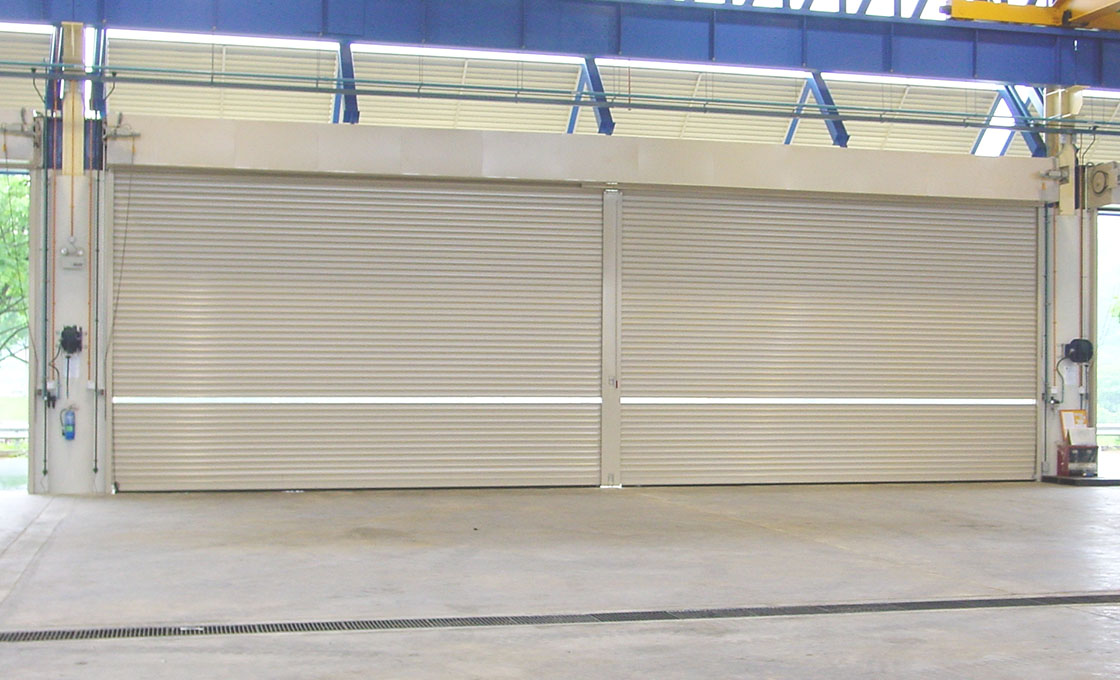
Choose it knowingly rather than by default. A plain curtain bought for the reasons above is a correct purchase. The same curtain sold to save money across a heated workshop wall is not.
Five Questions That Settle the Choice
Five questions settle most purchases without a spreadsheet. Answer them in order, because each answer narrows the next. The table is the version we use in order reviews with procurement teams, and the insulated vs non-insulated roller shutters verdict usually lands inside the first three rows.
| Question | Lean insulated | Lean plain |
|---|---|---|
| Do people work beside the opening for long stretches? | Insulated, for comfort and noise | Plain is acceptable |
| Are the goods temperature-sensitive? | Insulated, paired with sealed guides | Plain, if goods tolerate the swing |
| Does the opening cycle many times a day? | Insulated with a matched motor | Plain, if cycles are few |
| Is the curtain motorised or manual? | Motor sized to the heavier curtain | Manual stays realistic on a light curtain |
| What shape are the guides and seals in? | Fix seals first, then the core works | Worn seals waste any core you pay for |
When the verdict leans insulated, the place to start is the range of industrial roller shutter doors, where curtain builds match opening sizes and duty. Send the survey data with the enquiry so the motor and springs are priced against the real curtain. That one habit prevents most mismatched orders.
The running-cost side of the decision is worked through in our guide to how roller shutters lose and save energy. Read it after the table, not before. A verdict without a duty pattern is just a preference.
Frequently Asked Questions
The six questions below come up in almost every enquiry about this choice. Each answer names the mechanism rather than a slogan. Where a real boundary exists, we say so.
Are insulated roller shutters worth it for a warehouse?
Worth it where people work beside the opening or goods react to temperature. For ambient storage with rare cycling, the plain curtain does the job, and the budget is better spent on seals and hardware.
Can I add insulation to existing non-insulated shutters?
In most cases, no. The polyurethane core is foamed into the double-skin cavity at manufacture, and a single-skin slat has no cavity to fill. Upgrading means replacing the curtain, not adding a layer.
What U-value should I ask for in a quote?
Ask which standard backs the number: slat calculations follow ISO 10077-2, while the whole installed door is tested to EN 12428. The insulated vs non-insulated roller shutters decision rarely turns on one printed figure.
Do insulated shutters need a bigger motor?
They need a motor matched to the measured curtain weight and the daily cycle count, not a bigger one by default. High-frequency bays should carry margin above the nameplate rating.
Are insulated shutters harder to break into?
The core stiffens the slat against prying, which helps. Locks, guides, and end locks decide the outcome, and those are specified the same way on both constructions.
How do I keep either type performing well?
Check guide seals, the bottom rail, and the slat faces at each service visit. Worn brush seals are a cheap renewal that protects whatever you spent on the curtain.


