






Two quotations for the same opening sit on your desk and differ by a noticeable sum. Both sales teams point to insulation, yet neither can say exactly what the extra money buys. Every pitch leans on that word because it is the easiest lever in the trade. The big R-value printed on the quote sheet is a calculated panel-section number, not the tested performance of a complete installed door.
We build both constructions on one production line. The same line pours polyurethane cores for one range and fits polystyrene boards for another, and both door types cross the same test bench before release. That routine is why we treat the insulated vs non-insulated garage door decision as a measurement problem. The premium must be measurable, so the gap between two quotes can be verified instead of guessed.
What Separates the Two Constructions
Construction is the first separator. A non-insulated door, often called a pan door in the trade, is a single steel skin rolled into profile. An insulated door adds layers: two skins around a polystyrene board, or three skins with polyurethane foam poured between them. That is the whole mechanical difference, and every claim in the insulated vs non-insulated garage door debate grows out of it.
Our sectional range shows what the insulated side looks like in production. We pour a 40–50mm polyurethane core between galvanized steel skins that run from 0.4 to 1.5mm, and the tested whole-door U-value reaches 0.33 W/m²K. Core thickness, more than anything on the label, drives that result, as our guide to garage door panel thickness explains. A pan door carries none of this mass, which is why it behaves differently in every test that follows.
Side-by-side judgment is easier than prose. The table below condenses both constructions into the attributes buyers weigh first. Each row is expanded in the sections that follow.
| Attribute | Insulated | Non-Insulated |
|---|---|---|
| Layers | Two skins around a core, or a skin with a backer | A single rolled steel skin |
| Core | Poured polyurethane or fitted polystyrene boards | None |
| Weight | Heavier, so springs must match the measured door weight | Lighter, with smaller lifting loads |
| Typical published R range | R-6 to R-9 with polystyrene, R-12 to R-18 with polyurethane, commonly published | No insulation to rate |
| Best suited to | Attached garages, workshops, and conditioned spaces | Detached garages, mild climates, and budget builds |

How R-Value and U-Factor Actually Differ
The two ratings measure different things with different methods, and mixing them up costs money. R-value is calculated on a door section while U-factor is tested on the complete installed assembly, and the two are not reciprocals, as DASMA Technical Data Sheet 163 explains. The R calculation works on paper, from the material types and thicknesses in one section. The U test runs the whole door under ANSI/DASMA 105, with section joints, frame, hardware, and seals attached.
Behind both numbers sits a material property called thermal conductivity. The k-factor of the foam core is measured in a laboratory with a heat flow meter, the method standardized as ASTM C518. The lab value feeds the R calculation, while the installed test captures everything the paper leaves out. That split is why the insulated vs non-insulated garage door debate produces so many meaningless comparisons.
Published ranges still set expectations, so they deserve honest framing. Polystyrene doors sit between R-6 and R-9 and polyurethane doors between R-12 and R-18 in commonly published ranges, with no single authority behind any specific figure. A quote that prints one dramatic number without naming its test basis deserves a question, not a signature. Manufacturers who quote a section R-value alone are answering a narrower question than the one you asked.
Where the Insulation Premium Actually Goes
The premium buys four things you can actually verify. First, the space behind the door holds a steadier temperature through the day instead of swinging with the weather outside. Second, rooms that share a wall or floor with the garage carry a smaller heating and cooling burden. Third, a warmer interior panel surface suppresses condensation, because the panel stays near room temperature and drops below the dew point less often.
Rigidity is the fourth gain, and it gets its own section below. The honest boundary belongs in the same breath. When the garage stands detached or is never heated, the energy return is small because there is no conditioned space to protect. Vendors who promise a fixed number of degrees gained over the outside temperature are repeating a marketing pattern, and the real figure changes with every building.

Condensation deserves one more note before we move on. The first places it appears are section joints, side rails, and the bottom seal, where warmth escapes and cold surfaces form first. Insulation slows the process at the panel face, and seals finish the job at the edges.
The Noise Gap Buyers Underweight
Noise is the benefit buyers mention least and notice fastest. The foam core damps panel vibration, so the door rattles less when it runs and drums less when wind or rain strikes the outer skin. A denser leaf also passes less street and yard sound into the space. Buyers who test both doors back to back usually feel the difference before they can put a number on it.
How much sound stays out depends on the core and the seals working as one system. A thick core with worn bottom seals still leaks noise along the floor line. Our guide to acoustic insulated garage doors walks through that chain, from panel damping to perimeter seals. Check the seal condition on your own opening before paying for extra core that worn seals will waste.
Still Weighing Two Quotes That Disagree on Insulation?
Send your opening size, climate zone, and how the garage is used, and our team will size the core, springs, and seals to match the duty instead of the upsell.
Panel Strength, Dents and Hardware Load
Strength differences start inside the panel. Poured polyurethane expands as it cures and bonds to both steel skins, turning the section into a rigid sandwich that resists dents, oil-canning, and wind pressure. Polystyrene boards sit loose inside the cavity without bonding, so the stiffening effect is smaller. That bond, more than the R-value, is what you feel when you push on a finished section.
The extra mass has to be engineered for rather than ignored. An insulated door weighs more than its pan equivalent, so torsion springs must be sized to the actual door weight instead of a default chart. We rate our torsion springs for at least 30,000 cycles and match every set to the door it will lift. Openers follow the same logic, because a heavier leaf raises the load on every cycle. Our warranty terms, two years on the door, three on the operator, and five on the servo, assume that matching is done.
Buyers sometimes ask whether hardware cost hides inside the insulation premium. Part of it does, and that part is real engineering rather than padding. Ask any supplier how the springs on their quote were sized, and the answer tells you how the door was engineered too.
When a Non-Insulated Door Wins
There is a correct engineering case for the non-insulated door, and pretending otherwise helps nobody. If the garage stands detached, holds only parked cars, and sits in a mild climate, a single skin does the job at lower weight and lower cost. Budget-limited projects and short-term buildings belong in the same column. In those conditions, the insulated vs non-insulated garage door question ends quickly, and the honest answer is the cheaper door.
The pan door also carries practical advantages that have nothing to do with money. It weighs less, which goes easier on springs, openers, and the crew fitting them. Repairs stay simple because there is no core to cut and no foam to match. For storage sheds, equipment bays, and seasonal buildings, we quote the single-skin construction without hesitation.
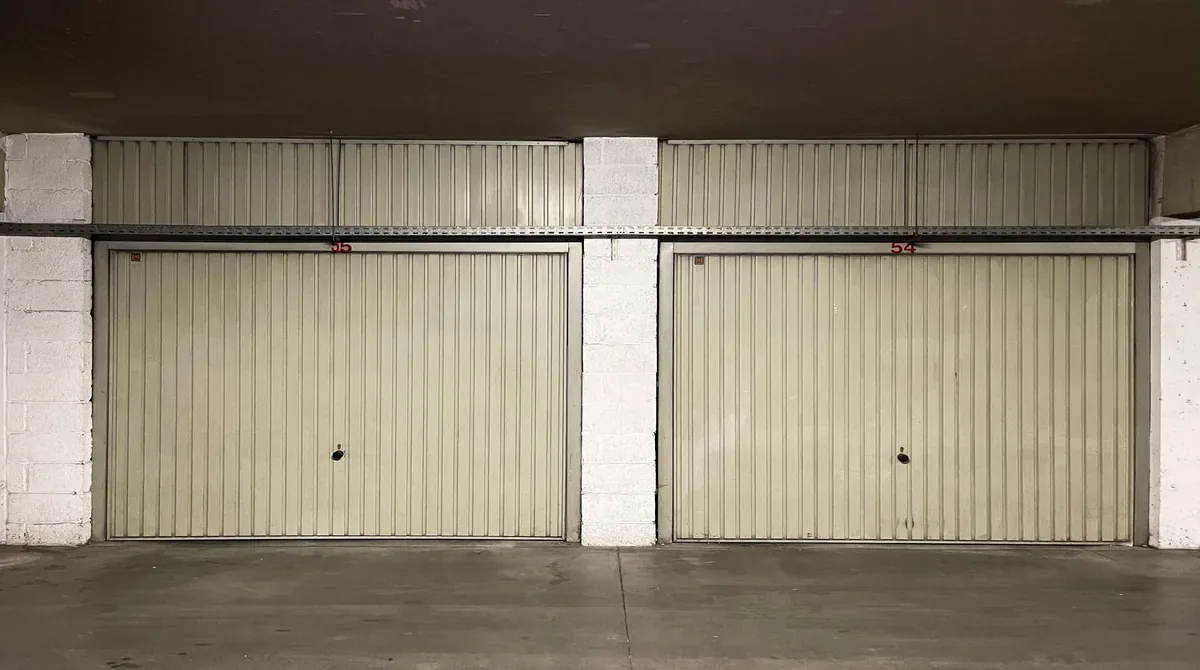
Choose it knowingly rather than by default. A non-insulated door picked for the reasons above is a sound purchase. The same door sold to save money on a wall shared with a bedroom is not.
Five Questions That Settle the Choice
Five questions settle most purchases without a spreadsheet. Answer them in order, because each answer narrows the one that follows. The table below is the version we use in order reviews with procurement teams.
| Question | If yes | If no |
|---|---|---|
| Is the garage attached to the house? | Insulation earns its keep | Non-insulated is usually enough |
| Is there a bedroom or office above or beside it? | Insulated, for noise and temperature | Non-insulated is acceptable |
| Do you spend long stretches working inside? | Insulated, with attention to seals | Non-insulated will feel raw |
| Does your climate reach freezing or sustained heat? | Polyurethane core over polystyrene | Polystyrene may be enough |
| Are the perimeter and bottom seals in good shape? | The insulation performs as rated | Fix the seals before paying for core |
When the answers lean insulated, our insulated sectional doors span the range from polystyrene boards to poured polyurethane cores, with springs and seals sized to the door you order. A quote for the non-insulated route gets the same treatment, and we will say so plainly. Either answer, written down with its reasoning, beats a service call six months later.
Frequently Asked Questions
The six questions below come up in almost every inquiry about this choice. Each answer states the mechanism rather than a slogan. Where a real boundary exists, we name it.
Is an insulated garage door worth it for a detached garage?
Usually only partly. The temperature gain is small without a heated space to protect, and the rigidity benefit is minor for light use. We would spend instead on a quality bottom seal and decent hardware, unless the building’s role will change.
Can I insulate my existing non-insulated door?
Retrofit kits exist, but they have limits. The boards bond loosely, so the R-value and rigidity never reach a factory-poured core, and the section joints and seals stay as they were. We treat retrofitting as a partial improvement, not an upgrade.
What R-value do I actually need?
There is no single correct number, and the insulated vs non-insulated garage door decision rarely turns on one. Mild climates and unheated spaces need little, attached garages in cold ones need more, and the whole-door U-factor is the tested figure that matters.
Do insulated doors need different springs or openers?
They need springs matched to the heavier door, not a different type of spring. We size torsion springs to the measured door weight and rate them for at least 30,000 cycles. The opener should also be specified for the real load.
Why is my insulated door still cold?
Check the seals before blaming the core. Worn bottom seals, loose jamb seals, and thermal bridges at section joints and side rails leak warmth faster than the panel loses it. Seals finish the job that insulation starts at the panel face.
How long do insulated panels last?
We do not quote a service life, because usage, climate, and maintenance decide it. What you can check is the condition of the skins, the bond at section edges, and the seals at each service visit. Any of those can be renewed.