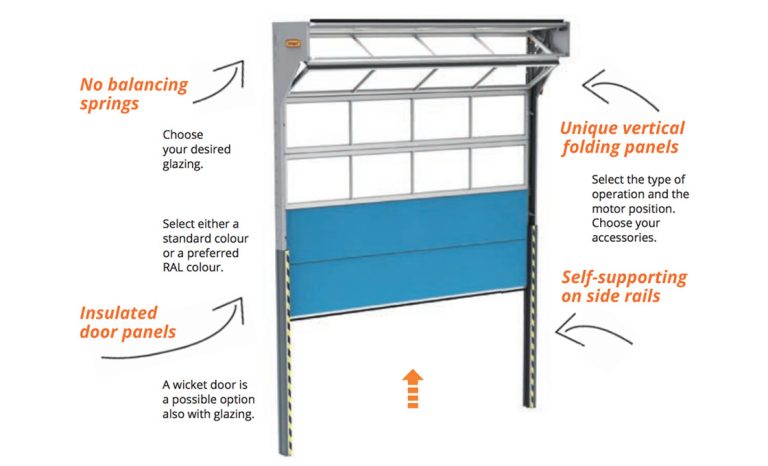
Choosing the correct sectional garage door panel thickness dictates structural durability, thermal insulation efficiency, and acoustic sound dampening. Installing thin single-skin doors in freezing climates causes high heating bills, while choosing heavy 3-layer insulated sections requires properly matched counterbalance springs.
This technical garage door panel thickness selection guide breaks down common residential and commercial panel dimensions. Drawing from our factory testing protocols across 24V DC and commercial motor platforms, precision drive operators maintain quiet performance below 45 dB. They deliver dependable motorized lifting across 25,000 continuous duty cycles.
Why Panel Thickness Matters for Your Garage
A garage door is the largest moving structural element in a modern building. Panel thickness directly governs three performance factors:
Structural Rigidity and Dent Resistance
Thicker multi-layer door panels resist physical impact from basketballs, hail, and vehicle bumping. The internal core foam bonds to exterior steel skins, creating a rigid composite sandwich that eliminates panel flexing.
Thermal Insulation and Sound Dampening
Thick insulated door panels prevent thermal transfer between outdoor elements and conditioned interior rooms. Furthermore, dense polyurethane foam cores absorb street traffic noise, keeping attached living spaces quiet.

Single-Layer vs Two-Layer vs Three-Layer Doors
Sectional garage door construction falls into three distinct structural layer categories:
Single-Layer Non-Insulated Steel Doors
Single-layer doors consist of a single stamped sheet of 24-gauge or 25-gauge galvanized steel with exposed interior hardware. They offer zero thermal insulation (R-0 to R-2 rating) and dent easily upon impact.
Single-layer panels are best suited for unheated detached garages, freestanding garden sheds, or budget-focused agricultural outbuildings.
Two-Layer: Steel Plus Polystyrene Foam
Two-layer doors add a layer of rigid expanded polystyrene (EPS) foam board glued to the interior face of the steel skin. The foam is protected by a thin vinyl or nylon backer sheet.
This design delivers moderate thermal performance (R-6 to R-9) and operates significantly quieter than bare single-layer steel panels.
Three-Layer: Steel Sandwich Construction
Three-layer sandwich doors feature a heavy steel front skin, a high-density foam core, and a full steel interior backer sheet. They deliver superior structural stiffness, high R-values (R-12 to R-18+), and maximum dent resistance.
We manufacture 40mm and 50mm PU-insulated sectional panels, whisper-quiet 24V DC belt operators, and industrial motors. Get direct factory pricing, CAD drawings, and export crating.
Comparing Panel Thickness: 1-3/8 vs 2 Inch
When reviewing this garage door panel thickness selection guide, compare the two primary residential panel thicknesses:
1-3/8 Inch (35mm): Economy Residential Standard
A 1-3/8 inch (35mm) panel thickness is common in temperate climates with mild winters. These panels weigh between 10kg and 14kg per square meter, allowing the use of standard 1/2 HP operators.
While 1-3/8 inch doors provide adequate everyday durability, wide double-car openings often require horizontal steel struts to prevent panel sagging.
2-Inch (50mm): Premium Residential Standard
A 2-inch (50mm) panel thickness is the benchmark for high-performance residential construction. The additional cavity depth accommodates high-density injected polyurethane foam, achieving R-16 to R-18.4 thermal ratings.
Furthermore, 2-inch doors deliver exceptional wind-load resistance, remaining rigid during severe coastal storms and hurricane-force gusts.

Polyurethane vs Polystyrene Insulation Cores
The type of internal insulation core heavily influences thermal efficiency and structural longevity:
Injected Polyurethane Foam: Superior Strength
Liquid polyurethane is injected under high pressure between steel skins, expanding into every void and chemically bonding to the metal. This core provides an impressive R-value of 7.0 per inch of thickness.
Expanded Polystyrene (EPS) Foam Boards
Polystyrene consists of rigid white foam sheets inserted manually into panel channels. EPS delivers approximately R-4.0 per inch of thickness, representing a budget-friendly option for moderate climates.
To accurately calculate door dead load mass, consult our technical guide on aluminum rolling shutter weight.
Steel Gauge Thickness: 24 vs 27 Gauge
In addition to panel thickness, evaluate the gauge thickness of the exterior steel sheet:
24-Gauge: Heavy-Duty Commercial Steel
In steel sheet sizing, smaller gauge numbers represent thicker metal. A 24-gauge steel skin (0.6mm thickness) offers maximum dent resistance and rigid fastener holding strength.
27-Gauge: Lightweight Residential Steel
A 27-gauge steel sheet (0.4mm thickness) is lightweight and cost-effective. In 3-layer composite sandwich panels, 27-gauge steel gains structural backing from the dense foam core.

Panel Thickness and R-Value Comparison Chart
Review this technical specification chart comparing common sectional garage door panel configurations:
| Panel Configuration | Thickness (mm / in) | Insulation Core Type | Thermal R-Value | Recommended Application |
|---|---|---|---|---|
| Single-Layer Steel | N/A (Single Skin) | Non-Insulated | R-0 to R-2 | Detached unheated garages |
| Two-Layer Insulated | 35mm (1-3/8 in) | Polystyrene (EPS) | R-6.5 to R-8.5 | Temperate climate garages |
| Three-Layer Sandwich | 40mm (1-5/8 in) | Injected Polyurethane | R-12.0 to R-14.5 | Standard attached garages |
| Three-Layer Premium | 50mm (2.0 in) | High-Density PU | R-16.0 to R-18.4 | Cold climates and living spaces |
| Commercial Heavy-Duty | 75mm (3.0 in) | Industrial Polyurethane | R-22.0+ | Cold storage and logistics bays |
How to Choose the Right Panel Thickness
Consulting this garage door panel thickness selection guide ensures optimal thermal comfort and durability. Always partner with an ISO 9001 certified manufacturer to guarantee certified thermal testing, continuous hinge reinforcement, and export packaging.
For complete installation steps, consult our detailed garage door opener installation guide. To compare drive mechanisms, review our guide on how to choose a garage door opener.
When designing custom garage openings or specifying insulated sectional panels, our technical engineers provide complimentary CAD reviews, U-factor thermal calculations, and wind-load verifications.
Frequently Asked Questions About Panel Thickness
Is a 2-inch garage door better than 1 3/8?
Yes. A 2-inch panel provides superior thermal insulation (up to R-18), higher dent resistance, and greater structural rigidity in high winds.
What is the standard thickness of a residential garage door?
Standard residential garage door panels range from 1-3/8 inches (35mm) for economy doors to 2 inches (50mm) for premium insulated doors.
What R-value should I choose for an attached garage?
For an attached garage, choose an R-value of at least R-12 to R-16 to reduce thermal heat loss into adjacent living spaces.
What is the difference between polyurethane and polystyrene insulation?
Injected polyurethane bonds directly to steel skins and delivers twice the R-value per inch compared to loose polystyrene foam sheets.
Does a thicker garage door require a bigger motor?
Not necessarily. While thicker doors are heavier, properly calibrated counterbalance torsion springs offset 90% of the door weight.